Succession Planning for Productivity: Stop Losing When People Leave - With Meridith Elliott Powell
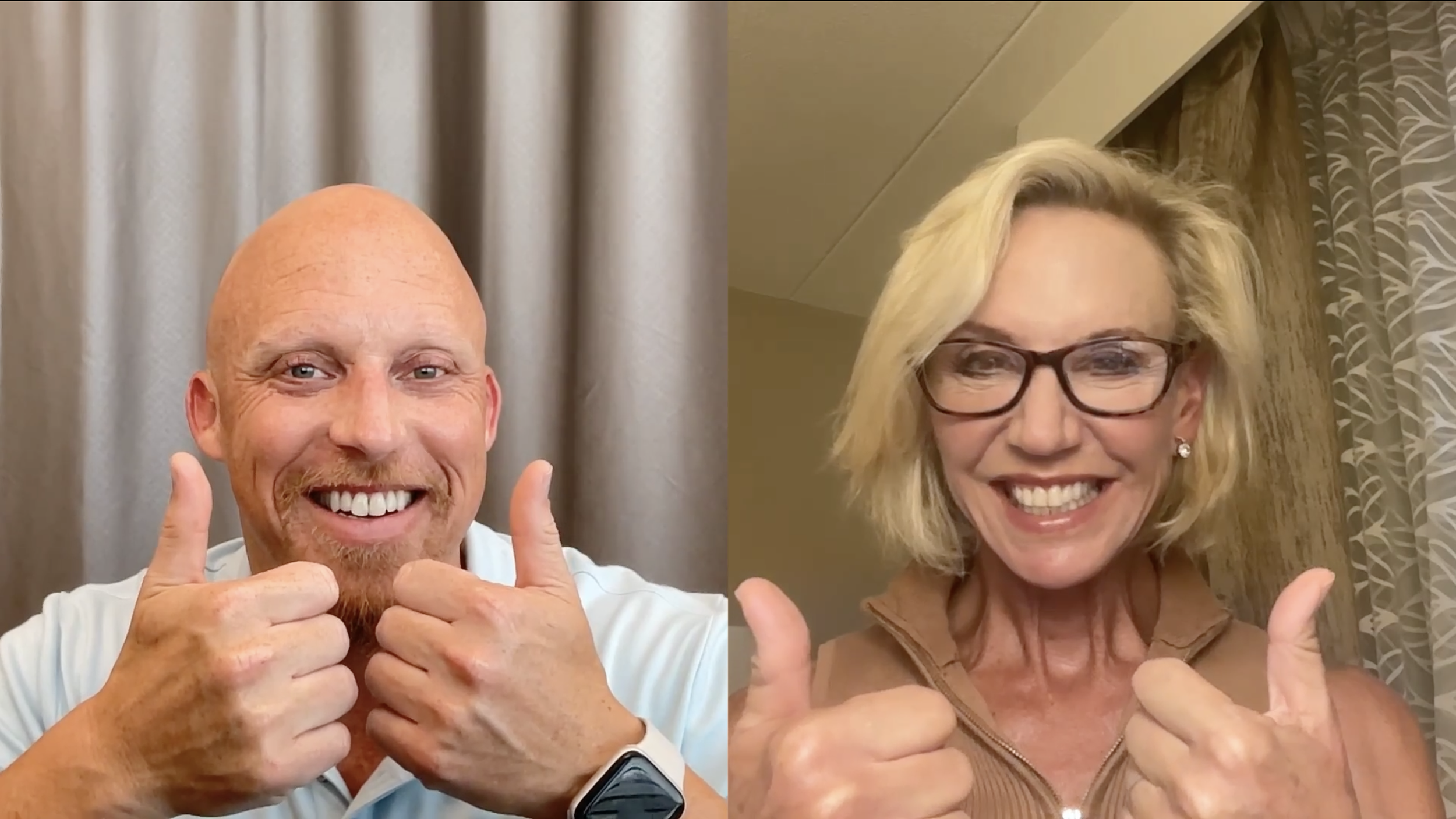
Meridith Elliott Powell breaks down how to tackle "talent interruption" head-on so you can stop losing critical institutional knowledge when your top performers walk out the door.
Imagine opening your email on a Friday afternoon and seeing a two-week notice from the one person on your team who actually knows how everything works. Panic sets in, right? That feeling is exactly why this episode is so incredibly urgent.
"Right now we are facing one of the biggest succession gaps we have ever faced in our history," warns business growth strategist and Hall of Fame speaker Meridith Elliott Powell. Over the next three and a half years, an entire generation of experienced professionals will be eligible to walk out the door, taking their wisdom and institutional knowledge with them. Yet, a shocking 86% of companies are completely unprepared for it.
I invited Meridith onto the show to talk about the massive hidden cost of what she calls "talent interruption." One of the biggest takeaways from our conversation is how wildly we misunderstand succession planning. We tend to think it's this giant, bureaucratic binder that only the C-suite needs to worry about. But Meridith completely flips that script. In fact, she dropped a fascinating truth bomb about executive egos: "If the CEO has done a really good job, he or she is not the most critical person," she explains. "I wouldn't even start with them."
Meridith and I had an absolute blast unpacking the everyday leadership habits that either build a resilient culture or secretly destroy it. We laughed about her "bottle of liquor" test—a brutally honest (and highly relatable) way to identify the true linchpins in your organization. We also tackled the "Dean Smith vs. Michael Jordan" approach to talent, exploring why leaders who can build other great leaders are infinitely more valuable than solo superstars. As Meridith puts it, "A talented person is valuable to an organization. A talented person who can develop other talented people is invaluable."
We didn't just talk theory, though. We laid out a practical roadmap for anyone managing a team today. Meridith introduced the concept of the "Leader Avatar" to help you start your planning immediately, and she shared a hilarious throwback analogy—the "Encyclopedia Rule"—which perfectly illustrates why constantly spoon-feeding answers to your team is a terrible long-term management strategy. "They didn't tell you to look it up because they didn't know the answer," Meridith jokes about our parents. "They did that because they didn't want you living in their basement the rest of their lives. They saw their role as developing you."
If you are tired of feeling like your team's success hinges on one or two people, or if you just want to finally take a real vacation without constantly checking your inbox, you cannot miss this conversation.
The Video
The Audio/Podcast





References In This Episode
Meridith Elliott Powell on LinkedIn – Connect with Meridith on her most used socialmedia channel.
Meridith’s website: https://www.meridithelliottpowell.com/
Key Resources:
Who Comes Next – Meridith's book built for executives to start and develop a succession plan, available on Amazon.
You Next: A Step-By-Step Guide To Taking Charge Of Your Career – Meridith's book about putting yourself in the driver's seat and taking 100% charge of your own career, available on Amazon.
Concepts & Frameworks:
The "Bottle of Liquor" Test – A way to identify critical people by asking who would make you go home, get a bottle of liquor, and cry all night if they walked out the door.
The Leader Avatar & Gap Conversation – Developing an ideal leader profile and having an honest conversation to grade an employee against that avatar to create a development plan.
The Encyclopedia Rule – An analogy to parents telling kids to look things up in the encyclopedia because they wanted to develop them, similar to how leaders should teach employees to think rather than just giving answers.
Talent Interruption – The cost and disruption that occurs when you lose a critical person and their knowledge walks out the door.
The Dean Smith vs. Michael Jordan Approach – The idea that recruiting a coach like Dean Smith who can produce and develop talent is more valuable than just recruiting a single talented individual like Michael Jordan.
The C-Suite Reality – Meridith's belief that succession planning at the C-suite is the least critical place to start, because a truly good CEO is not the most critical person.
JP Morgan Chase vs. The Four CEOs – Real-world examples highlighting the success of Jamie Dimon's crisis succession plan versus a company of four CEOs that lost employees and customers when two founders suddenly left.
Knowledge Mode vs. Learning Mode – The concept that leaders must transition from relying on what they know (knowledge mode) to constantly learning (learning mode) in a fast-changing world driven by AI.
Cross-Training vs. Succession Planning – The difference between teaching someone the physical skills to do a task temporarily and teaching them to think cerebrally and make decisions in a role.

Brian Nelson-Palmer and Meridith Elliott Powell
Chapters
00:06 Introduction to Succession Planning for Productivity
04:13 The Importance of Talent in Succession Planning
08:27 Common Productivity Mistakes in Succession Planning
18:29 Characteristics of an Effective Succession Plan
23:00 Empowering Leaders and Knowledge Sharing
27:34 The Importance of Developing Leaders
28:39 Creating a Leader Avatar
31:48 Gap Conversations for Development
34:14 The Role of AI in Leadership
35:35 Succession Planning vs. Cross-Training
38:35 Managing AI and Human Skills
40:40 The Evolving Skill Set for Leaders
43:44 Taking Action on Succession Planning
45:25 Books and Resources for Succession Planning
Today’s Guest
MERIDITH ELLIOTT POWELL
Business Growth Strategist, Sales Futurist, and Hall of Fame Speaker
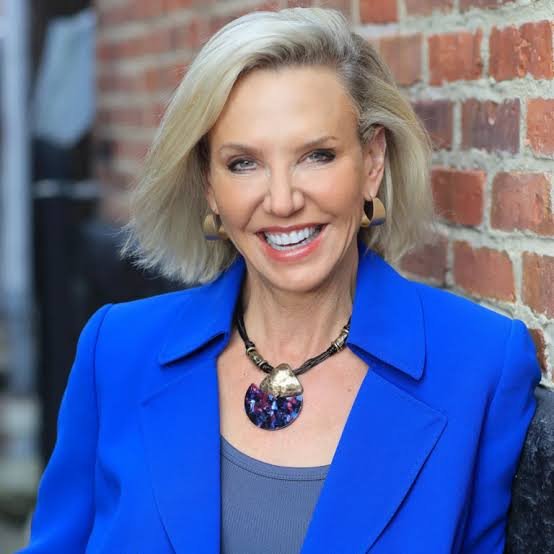
Meridith Elliott Powell is a business growth strategist, sales futurist, and Hall of Fame speaker who specializes in helping leaders navigate uncertainty and its impact on business, sales, and talent. She is a fierce advocate for proactive succession planning, teaching organizations how to eliminate the massive costs of "talent interruption" before their critical people walk out the door. Meridith is deeply passionate about helping professionals shift from a protective, knowledge-hoarding mindset to a culture of continuous learning and development.
Known for her dynamic approach and ability to tie talent strategy directly to bottom-line profit, Meridith’s expertise is forged from years of researching uncertainty since 2016. She consults with a wide range of organizations, from credit unions and financial services to the manufacturing industry. She is the author of multiple books, including Who Comes Next?, written for executives developing succession plans, and You Next, designed to help employees take 100% charge of their own careers.
What sets Meridith apart is her absolute refusal to treat succession planning as an overcomplicated, C-suite-only exercise. Instead, she provides a unique blend of highly practical insights—like creating a "Leader Avatar" and evaluating the true cost of turnover—that leaders can implement immediately to develop their frontline teams. She truly believes that a talented person is valuable, but a talented person who can systematically develop other talented people is invaluable.
Connect with Meridith:
LinkedIn: Meridith Elliott Powell
Books: Who Comes Next? & You Next

Why Subscribe To The Email List: Brian shares separate hacks, tips, and actionable learning exclusively for his email subscribers. Sign up so you don’t miss out!
About The Creator/Host: I’m Brian. At age 4, I was diagnosed with insulin dependent (type 1) diabetes and told that my life was going to be 10-20 years shorter than everyone else. As a kid I took time for granted, but now as an adult, time is the most precious thing that I have. After spending a career hands-on in the trenches as a leader at all levels, I now train Productivity Gladiators to level up their careers. Graduates wield superpowers in time management, practical leadership, communication, & productivity. If what you’ve seen here intrigues you, reach out, let’s chat!
“Time is the currency of your life, spend it wisely.”
Transcript
Brian Nelson-Palmer (00:00.566)
I'm Brian Nelson Palmer. On this show, I share personal practical productivity skills that will make you more productive and advance your career. And in this episode, we're talking about succession planning for productivity. How do you stop losing that knowledge when people leave? And with me on the show today is Meredith Elliott Powell, who is a business growth strategist, a sales futurist, and a hall of fame speaker. Meredith, thanks so much for joining me on the show.
Meridith Elliott Powell (00:33.072)
Thank you. I got a lot going on, don't I?
Brian Nelson-Palmer (00:35.374)
I was gonna say that's a lot of titles. And and for those people who might not be familiar with you, so how are you relevant? We're gonna talk about succession planning. So talk about how you're kind of relevant for the person listening. How are you relevant to this discussion we're about to have?
Meridith Elliott Powell (00:38.201)
Yeah.
Meridith Elliott Powell (00:50.298)
Yeah, so I have been really focused more on uncertainty and how it impacts business today. And it impacts I've been studying and researching that since 2016. And it's relevant in the fact that it impacts companies holistically. It impacts sales, it impacts leadership and talent, and it impacts strategy overall. So right now we are facing one of the biggest succession gaps we have ever faced in our history. In the next three and a half years.
Every single baby boomer will turn 65. That means in the next three and a half years, a little less than, they will be eligible to walk out the door and take with them all the wisdom, experience, knowledge, and confidence they have. Add to that, we are replacing entry-level jobs with AI. And the highest unemployment rate is in young professionals. So everybody's focused on technology right now. I think you need to be focused on talent.
Brian Nelson-Palmer (01:49.775)
True story. And man, ever I think if if you're listening, you probably have somebody in your workspace that is, you know, that they're gonna retire or that that time is coming up. So I think it's it's very relevant, especially if you've been if you haven't already been through this, it's coming, where somebody leaves and then you realize, gosh, there was a lot that that person took with them when they walked out the door. So I definitely relevant.
Meredith, I love this. And I I will say that there are people who talk about, you know, succession planning. And you're not the only person who talks about this, but do tell I I want to know what what would you say makes you different from other people or organizations that the person listening might have heard of or be familiar with.
Meridith Elliott Powell (02:35.876)
Yeah, there's a there's a couple of places I really think. I'm different than most people. Most people talk about succession planning at the C suite and executive level. And I think, in my opinion, it's the least critical place to be talking about it. Talk about controversial is that I think succession planning is an organizational strategy. You need to be thinking about succession planning the way the military does. And they're worried about losing any critical person at any time. And so they make
succession planning part of their culture, meaning that if I was an officer and you came in behind me, I would immediately have to start training you to take my job because I can't be promoted without that. And so, you know, the other place I really think that I'm different is I feel like people treat succession planning as a strategy that's separate from profit and bottom line results. And I think it is very integral to
To profit and bottom line results. I think talent interruption is one of the biggest costs we have in organizations today. And it's one of the biggest costs we ignore. Nobody ever calculates turnover. Do you know the average life of a CEO these days is less than three years? Do you know how much it costs to recruit a CEO, to hire a CEO, to bonus a CEO, to move a CEO? And then he or she walks out the door in three years.
So to me it's it is like again, I think everybody's focused on technology. And I'm like, you all have your head in the sand. You need to be focused on talent.
Brian Nelson-Palmer (04:13.762)
Yeah. Totally agree. Well, I can't wait to get into this discussion with you because also from a I mean, for me, when I work with organizations from a productivity perspective, it's w it's there's a an amazing overlap, I think, between succession planning in the future and just where do you keep your processes and how do you keep them and make them efficient? And my gosh, there's so much that we can talk about on that front. So let's dive in on that one. And with that fur I kind of want to zoom out first.
So when we're talking about succession planning now, what what when you when you think about it and when you talk about what are we really talking about here? You you already said it's not C-suite. We're talking about the troops, but kind of dive into that a little more. What are we really talking about?
Meridith Elliott Powell (04:57.466)
Yeah, if I had to put it in really simple forms, I think what we're talking about is eliminating talent interruption. And and what I mean by that is let's assume you have somebody who handles insurance claims in your company and they are phenomenal at handling insurance.
Claims. You know that if anything happened to them, that next phenomenal person can step right into their shoes and you see no interruption in the amount you're getting in collections. If you have an unbelievable salesperson, you know that you have two or three people around them that if they picked up and went to another company, your sales wouldn't take a dip because you planned for that. So I call it eliminating talent interruption.
Brian Nelson-Palmer (05:41.863)
You know, can I ask? I have a I I tend to think about when I'm looking at I think about it from there well, what am I trying to say? What I'm trying to say is I find most organizations tend to focus on recruiting great people. And I think that there's to me, as I've gotten into Lean Six Sigma, Black Belt, process improvement, all of the ways to do things better, I think.
If you're just looking for good people, then as soon as that person leaves, it's like a constant battle. Whereas I think if you really want to kind of catapult to the next level as an organization, it sounds like the same thing you're saying, but that's where if you have really good processes in place where you can take Susie out and put Joe in and keep going, or do a rotation program or somebody takes a two-week vacation and nothing changes or
We don't have to wait while they're gone. Like though that kind of thinking is great processes and and structure around that is also what's gonna kind of help with succession planning. I don't know, is that similar to or is that a different lens for what you're talking about?
Meridith Elliott Powell (06:53.434)
Now I think it's similar to, but I am gonna put a different spin on it. When I go in and I work with organizations, when we define talent, we define and reward talent very differently. And what I mean by that is I may be in cr let's assume you and I are the top sales performers in the company. And as the top sales performers, we would be graded and bonused equally. But when I go in and work with a company, I would alter.
If I was a great salesperson, but you were a great salesperson who also developed great salespeople, I would bonus and reward you higher than I would bonus and reward me. I would create the incentive plan in the company that performance and development of people are equal and you can only have the two to advance in the company. Does that make sense? So like
Brian Nelson-Palmer (07:50.648)
God.
Meridith Elliott Powell (07:52.337)
The only way you can create a s a culture of succession is not to attract talent. Everybody's trying to attract talent. And attracting really great people is like getting diamonds in the rough. What you want to do is get really great people. You know, it's kind of like if you recruited Michael Jordan or you recruited, I'm gonna forget, I'm God, this is like this is like sacrilegious in the state of North Carolina where I'm from. Dean Smith. There I go.
Or you could recruit Dean Smith. You want Dean Smith, because Dean Smith can produce Michael Jordan's, right? Now, not everybody's going to be Michael Jordan, but he can build a team around that creates the Michael Jordan. And everybody's trying to find Michael Jordan.
Brian Nelson-Palmer (08:38.882)
Yeah. So it find the find the coaches, find the people who can build that talent, that that culture of continuing.
Meridith Elliott Powell (08:45.658)
Let no like I make it a non-negotiable that nobody gets into a leadership position without a track record of developing other people. Because a talented person is valuable to an organization. A talented person who can develop other talented people is is invaluable to a company.
Brian Nelson-Palmer (09:08.49)
Absolutely. Got okay. That makes sense. well then let's zoom in. So let's get practical. So what are the biggest productivity mistakes you're seeing when it comes to succession planning? Dive into that.
Meridith Elliott Powell (09:25.456)
Well, I think the number one, I think I was thinking about this when you were introducing it. It is probably the problem I hear talked about the most and the problem that the least amount is done on. Do you know that 86% of companies say they their their huge fear is that they do not have the talent to produce what they need to produce in the next 86%. Yet four less than fourteen percent have succession plans in place.
So number one, it is a problem that is talked about all the time and a problem that very little action is ever taken around.
Brian Nelson-Palmer (10:05.39)
True story. Gosh, what a gap. Eighty six percent and fourteen percent. That's
Meridith Elliott Powell (10:10.97)
Yeah. And I and I think I think it's because we overcomplicated. Like we think we think it either has to be all or nothing. Like you have to create a full blown succession plan, which is another place I feel like I'm really different than other people. Other people come in and like credit unions right now are under a federal mandate that they have to have succession plans in place. And so you see these consultants going around creating these huge succession plans that in my opinion are never going to get executed.
And are never going to get implemented. So the productivity mistake is that they make it too big and too complicated and they overwhelm people. When I go in and do a succession plan with a company, I'll just say, give me your top three critical people. It may be the CEO, it may not be the CEO. If the CEO's done a really good job, he or she is not the most critical person. I I wouldn't even start with them. Some CEOs might take that as an insult, but when you have reached the level that the team can function without you.
You are a damn good CEO, right? You told me I could slightly swear on this podcast. But but but you know, give me the three critical, you know, positions. If you've got a head of IT that is just so, so good and she doesn't have a backup, let's start with her. Let's start with your chief commercial officer that's bringing revenue in, whatever whatever it is, but give me those three positions and let's just start with their. So another productivity hack is I think that people just over.
Brian Nelson-Palmer (11:14.894)
Thank you.
Meridith Elliott Powell (11:39.344)
Get overwhelmed with it.
Brian Nelson-Palmer (11:42.188)
Yeah. So is it one page? When you talk about making it simpler, what is the succession plan? What does it look like?
Meridith Elliott Powell (11:49.745)
Yeah. It starts out again, it starts out really small, just really you know, we go in and we do it twofold. We run it side by side. Number one, we start with the three critical positions for for a couple of reasons, Brian. Number one is I want people to have a win. You know, I want them to to to feel the momentum of it. Because if they have a small win, they'll take the second piece of it. They'll see that it that it isn't hard.
So while we're doing it on that part, the other is we work with human resources or whoever's working in human resources to make succession planning part of the criteria for advancement, what I mentioned before. So we bake it into the culture going forward that starting at this date, since I started consulting with you, starting now, nobody will get promoted that doesn't have a proven track record of developing other people. And so we let the team know.
We're gonna be a succession culture organization. We're gonna be an organization that's dedicated to promoting within. And in order to do that, we need everybody to get on board. And the way that everybody gets on board is we want you to get promoted. But in order to get promoted, you have to help the other people around you and you have to train the people that are gonna move into your position.
Brian Nelson-Palmer (13:10.786)
Yeah. What what does that look like when you say they have a proven track record of developing other what's the what are the metrics like for that?
Meridith Elliott Powell (13:18.928)
Yeah. So they can come in and they can show you, literally walk you through number one, how and why they have one or two people ready to move into their position and why those people are ready to move into their position. And number two, they have a track record of one or two people on the team. They've helped get better at their position. So for example, Brian, that might be a brand new hire.
Who just got into their position and they took that brand new hire under their wing and they mentored and they you know, they they developed them. They took somebody who just got promoted into a role that maybe even worked into another department, but they helped them, you know, learn how to work with their department and get comfortable with the things that they needed in order to be successful. So it's that they can show you literally what they've done,
to get people ready to take their position as well as help other people on the team be successful.
Brian Nelson-Palmer (14:20.098)
Yeah. Cre what would you say to the person then who I I've heard discussions where some people think, well, if I make myself invaluable because they can't function without me, then that's job security for me. And that seems to run right in the face of the discussion we're having right now. But at the same time, the current environment is a little worried about job security for a lot of the people that are out there. So
What are what are your thoughts on that sort of competing? Like on the one hand, you develop people so that you are not the only the the only person. And then the other attitude is, well, if they can't survive without me, it's job security. I don't know. What are your thoughts on?
Meridith Elliott Powell (15:03.376)
Yeah, I get that question all the time. And I'm gonna answer it two ways. I'm gonna answer it in a way that I've already answered it. Is if I'm sitting in an executive board meeting and I'm deciding who's the most valuable to the company, Meredith or Brian? Meredith is phenomenal at her job. Brian is phenomenal at his job, but Brian just produced three other Brians as good as, if not better, than he. Who was more valuable to the Carolina basketball team? Michael Jordan or Dean Smith?
Some people might say Michael Jordan, uh-huh, it was Dean Smith, because Michael Jordan would tell you he wouldn't have been Michael Jordan without a coach like Dean Smith. So that's number one. The other is, you know, the pace of change has increased 183% in the last four years. We're moving 183% faster than we did just four years ago. If you don't think that there's going to be opportunity for you in a company if you continue to grow and expand your skills.
Then you're not thinking very big. The only way that you can become irrelevant is to become protective, is to just ball in and get so fearful. I am telling you, if you can show that you can develop people and you're good at it, people will hire you all day long. Is their biggest, it is their biggest pain point right now. Nobody focuses on developing other people. And if you can produce at your own job,
and then help other people produce, I just you're worth so much money to that company.
Brian Nelson-Palmer (16:37.848)
Yeah.
There's something you said earlier I want to go back to, which is you talked about identifying the critical people. You said, give me the the organization, give me the three most valuable people to you or most critical people to you right now. What are describe a little more what you mean by critical. You mentioned like an IT person or somebody that's not replaceable, but what what is that actually if I'm if you if I'm sitting here and I'm in an organization and I'm looking around at all the people
in my division or in my part in my organization, who who am I looking for that's like critical? What does that look like?
Meridith Elliott Powell (17:17.306)
Yeah. So I always say to the executives that I work with, if I sent you home right now, tell me who would be leaving your organization that you would go home, you would get a bottle of liquor, and you would cry all night long if they told you they were walking out the door. That's your critical person. But let me get a little more let me get a little more granular because you know who they are. You know, you you is, you know. I don't
Brian Nelson-Palmer (17:41.687)
It's true. I mean, I get it. Though that that gives you an initial list, right? Like we know who those people are, but there's emotions tied up in that. Like if I'm getting liquor, it's because I love that person. There's that, but there's some people who might be critical who I don't necessarily love that person, but they're critical and we should so like what else besides that?
Meridith Elliott Powell (17:46.992)
Yes.
Meridith Elliott Powell (18:03.418)
Yeah, so let me tell you, there's no CEO crying because they love somebody. That's not why they're crying. There because a a CEO is on the line every day for bottom line results. So, number two, think about every CEO I work with rides horses. They ride their horses. And what I mean by that is when you have a problem, who do you go to? Who do you call? It isn't necessarily the person who runs that division, it is the person.
That you count on. It is the person you rely on. The person you know will give you honest feedback. The person you know will get it, will get it done. When you look at the numbers you've got to hit for that quarter, who directly contributes to it? I don't want to say like a commercial sales manager is the most critical person in the company. If it's one salesperson who's really pulling the numbers in, I could care less if that commercial sales manager leaves. I'm gonna cry.
If that top performing salesperson leaves, right? If you've got a really, really good IT person who is on top of everything, really handling your cyber as well as really keeping you up to date on the AI and the things that you need, then like think about your organization and really think about, gosh, I mean, who's really running it? You know, Brian, it's back to that 80-20 rule. Life runs on the 80-20 rule. And 20% of the people in your company, you cannot live without.
You better have a succession plan in place for them.
Brian Nelson-Palmer (19:33.347)
Got it. Okay, that that's a little clearer. I'm seeing that. So then what next? Now I've looked around. I know who some of the critical people are. What does the succession plan look like? It's not a is a one page document. Is it a bunch of tasks? Is it a like what what is it what does it look like when you come into an organization and you're like, show me, tell me, describe for me an organization that's like, wow, they have good succession plan.
What does that look like? And then what does it look like when it's I mean it's not? Dive into that.
Meridith Elliott Powell (20:06.992)
Yeah. So I think the best example of a great succession plan that I have seen in a long time is is Jamie Diamond and and and JP Morgan Chase. And so what does a good succession plan look like? Number one, it was developed long before the CEO ever thought about walking out the door. It was done immediately, pretty much
I don't know when exactly, but let's just assume pretty much when Jamie Diamond took the job, right? it it also was really thought of. Could it be one person or does it need to be more than one person who needs to understand how to how to do this job? It is a plan that has been practiced so that it doesn't have to go into action only if something happens to the CEO. It is a plan that
Everybody knows and understands. If the CEO is not there or the critical person, this is what happens and this is everybody's role. Now, why do I say that's the best succession plan I've ever seen? Is because Jamie Diamond is not only the CEO, he is the face of JP Morgan Chase. He is literally a celebrity. Hardest succession plan to have is a celebrity.
When JP Morgan, when Jamie Diamond had a heart attack, an out of the blue heart attack rushed to the hospital, JP Morgan Chase did not miss a beat. And they did not miss a beat because two executives knew exactly what to do, exactly what their role was. Every executive around them understood, and every executive underneath that understood how to handle it with employees, how to handle it with customers, and how to handle it with
with the press. So what was happening was, gosh, I mean, people didn't even know if Jamie Diamond was going to survive. But what they did know was JP Morgan Chase was going to survive. It that organization was sustainable. Now I'll give you an example of an organization that did not do it very well. And that was an organization, it was a group of young men that called me. They were all in their 50s, four CEOs that ran a company and they called me
Meridith Elliott Powell (22:30.138)
Literally two of them called me because they thought they were gonna lose their company. And they called because they had bought this company 10 years ago. They had decided to run it as four CEOs. Other consultants had told them they should think about a succession plan. They said they did not need a succession plan because there were four of them. They didn't need a succession plan because they were in good health. They didn't need a succession plan because they were all in their early 50s at that time.
I got the phone call because in a matter of 48 hours, the healthiest of the four dropped dead of a heart attack. The other of the the the second of the four got caught embezzling within the 24-hour time frame of the other dying. And to the public, the two facing were the two that were gone from the company, they lost 33% of their employee base and over 28% of their customer base because
They didn't know what to do because it was six months of panic. And employees got scared, they wouldn't have a job. Employees and customers just thought, what about me and my, you know, I've got to, I've got to, I mean, I feel for them. I love those guys, but I gotta take care of my assets. So that's it's those are two examples. And so what you have to, what you have to make sure of, and what you have, you know, is as a leader, you have to say, you know, Brian, you could be the janitor.
And you have three other people working for you. And people think, well, that's an that's an who cares? Well, it matters because people can't walk into that building it being dirty. But I have to empower you and I have to instill in you that if anything happened to Brian, those floors are going to be cleaned. Those three guys under you are going to know what to do, and there's going to be no confusion at all. I know who to call if I need somebody to come and clean my office. Like
And and that's why JP Morgan Chase just ran like beautifully, because everybody just knew what to do. And nobody even knew if Jamie Diamond would ever be coming back, including Jamie Diamond.
Brian Nelson-Palmer (24:39.606)
Yeah. So was that written down somewhere? Was it drilled multiple times? Was it what is that actually from the experience now, if you're working on this team that has a good succession plan, what is that what's that like?
Meridith Elliott Powell (24:56.41)
Yeah. So number one, it is written down. I mean, you know, it's written like a crisis communication plan. You've got to write down. You've got you have to you have to label it. I'll tell you another productivity mistake I see companies make is they're like, Well, Brian's gonna be my successor, but I don't wanna state Brian to be my successor because I don't wanna hurt Gina's feelings. You know what I mean? Like people they won't state it because they don't wanna hurt the other person's feelings. Well
This isn't about saving people's feelings. If I think Brian is the best person to run this company, I need to state that Brian is the best person to run this company. And I just need to do it, right? And so it is written down and then it is practiced. And what I mean by practiced is I can't hope you can do my job if I'm not there. I need to let you in to do my job. So when I'm on vacation in Europe for two weeks, I'm sending you to the board meetings.
I'm letting you make decisions. I'm okay with you making a mistake. Because the the confusion we have with succession planning is that we think we're teaching people to do a job. And we're not teaching people to do a job. What we're teaching people to do is to be able to think when they're in that role. They need to be able to think like a leader. And the only way to think like a leader is not for you to tell me what to do, it's for me to try it out to fail a little.
to fix it, to do it again, or to even do it my way, which may be different than you.
Brian Nelson-Palmer (26:30.722)
That, well, I, you know, one of the the other thoughts I'm having about this is it's written down. And, you know, Meredith, it's written down where? I I have a real hard time with organizations that, and you you probably worked in one if you're listening. You've been in a place where they tend to run their operation through email and PDFs. They probably have a PDF somewhere and it might be in a shared drive or it might not.
But you can't find that information. So the best organizations, if you really want a simple system, all of the knowledge and the processes have to be in a central place that everybody can access. It's not a a private shared drive. It's not a we're not keeping things confidential or siloed. Like if if we need if I need Meredith to step in and do my job because I had a heart attack, like Jamie Diamond did, then
She's got to be able to get to all of the information. And if she spends days just trying to get access or find where everything is, that's not going to work. So we I I have a hard time with organizations like that. Is that part of the conversation when you're talking with teams? Are you looking at it going, we have got to get you out of these PDFs and you need to get an intranet so that everybody can find the stuff? Or what's what else goes with that?
Meridith Elliott Powell (27:50.491)
Yeah. Yeah, absolutely. I mean, people need to have access to the information, but I tell you, one of the big things that I require is that people fundamentally understand. If you are in a leadership position, you need to fundamentally understand how the business works. And what I mean by that is that you need to understand how the business makes money. You need to understand how the business loses money. You need to understand, you know, what the cash flow cycle of the company is. You need to fundamentally understand.
the business. You want to empower leaders, really get with them at that level and you're going to see unbelievable change.
Brian Nelson-Palmer (28:28.034)
Yeah, gosh, you know, on that topic, I would I think it would be so valuable for leaders to spend some time doing the budget process and doing the procurement process and the contract process and understanding. So, how does the money come in? How do we make agreements with other suppliers? Because you you don't do it all yourself. Like how does the actual business part of it work? Because then
Later on, especially if you need to make decisions or or advise people on things, you know, how does the money come in? How is it spent? What's the budget like? How does that process work in my organization? And so if you're listening and you don't have a pretty good understanding of that, that's an opportunity for you to make some friends in some other departments and educate yourself just in making yourself more able to step in in those situations.
Meridith Elliott Powell (29:23.418)
Yeah. You know, years ago I worked for a gentleman that at that time was the best boss I ever had and the most frustrating human being I ever worked for. And he was those two things because anytime you ever went to his office, his first response to anything you asked him was, I don't know, what do you think we oughta do? And it got to the point where you just never went into Jeff's office without some solution in your head, whether it was right or whether it was wrong. And
Brian Nelson-Palmer (29:31.862)
Yeah.
Meridith Elliott Powell (29:53.179)
And what I realized was when Jeff got promoted when he went to corporate headquarters out of our division, what I realized was that we didn't need him. And and I realized that because he did not teach us to do a job. He taught us to think. So when he wasn't there, we could think our way through things because of the discussions that he had had with us. You know, Brian, it reminds me of when we were all kids, and this is probably really gonna date me.
Given AI and everything now. But when we were kids, you know, you would go ask your mother or your father what something meant. And they would tell you to go look it up in the encyclopedia, right? And the and they didn't do that because they didn't know the answer. They didn't do that because they didn't like you. They did that because they didn't want you living in their basement the rest of their lives. And they wanted you to grow up to be productive adults. They saw their role as developing you.
That's what leaders need to do today. They need to develop the people. I think it's the highest and best use of a leader today is to develop the people around you.
Brian Nelson-Palmer (31:00.13)
Yeah. So on that topic then, let's talk about if you're good. So let's say you're in a leadership role, whether it's a team lead or a project lead or a something, and you want to start getting your team ready for something like this. What what meredeth, what's your advice to that person on like, all right, do you just do you start by writing it down? Do you just think about, well, if I was gonna take a two week trip to Europe.
Who's gonna need to do what? And let's go ahead and loop them into those meetings. Do we write the documents first and then have the meetings? Do we talk to the people and then write the documents and then do that? Like what's it, what it where do you start if you don't want to wait for your organization to decide succession planning is important and you want to do it for yourself, for your team?
Meridith Elliott Powell (31:50.129)
Yeah, so you know, there's number one is I'm gonna back you up further than that. And when I back you up further than that, what I mean by that is I want you to first first and foremost, I want you to develop your leader avatar. And what I mean by that is when you think of the best leaders, it just like you deal build an ideal customer profile, you know who your best customer is. You need to know who your best leader is. Because a leader
That's the right fit for your organization won't necessarily be the right fit for my organization. So you need to begin by building your avatar. What qualities, what characteristics do they have? You know, so that you're starting out with kind of at least 50% of the way there, right? You're kind of over, you're starting with the right right skill sets and right values and right characteristics because
If you're just gonna, you know, I think that's another place where people make a mistake. They look at hiring leaders and they look at resumes. And resumes don't tell you how somebody would act in a situation. They don't tell you, you know, the things that really make the difference with you know, really make the difference with with a leader. So you need to start with your avatar. And then once you know your avatar, you're looking out at your organization and first of all.
coaching people according to that avatar. You need to put the value in the organization on that avatar. Here's what we're looking for. I call it a criteria for advancement. Here's what we're looking for in our future leaders. And let's talk about what skills you have, what skills you don't have, and what skills you need, you know, you need to learn and you need to you know, you need to develop in order, in order to become that avatar.
Brian Nelson-Palmer (33:45.857)
Okay. So you you got a leader avatar, and that's where you start. And I'm really thinking about the person because oftentimes we as intelligent workers know that succession planning is important if for nothing else then we want to take two week vacations and not have to check our work email while we're gone. So like it that's it. It starts with that kind of simple look, but like where do we where do we start besides the ideal avatar, then
What? Where do you go from there?
Meridith Elliott Powell (34:18.48)
Well, first of all, let's assume that I had my ideal avatar. I'd sit down and I would have a gap conversation with you against that avatar. I mean, I would say, you know, I want you to grade yourself against how you think you come up against this avatar, and I'm gonna grade you against this avatar. And then let's work on a development plan for you to become more of this avatar. So basically I've got you on a development plan to become my successor.
But I've had an honest, bold conversation with you about where you're phenomenal as a leader and where you need to develop. And we're working on closing that gap.
Brian Nelson-Palmer (34:57.996)
Okay. So we got an ideal avatar. We ta have those gap conversations. Then what?
Meridith Elliott Powell (35:06.064)
And then I've got to slowly, so I've got to we gotta see if you're moving along that continuum. Just because I tell you what you need to develop. You know, I think another place where people make a mistake is they lead people's potential rather than leading the individual. Just because you tell me I have potential to be a leader doesn't mean I'm gonna do the things I need to do to become that leader. So you need to get out of my way and see if I if I rise to the occasion, right? you know, Jack Welsh, a legend legendary leader of GE.
One reason he always he always had three or four successors in mind is he wanted to have a choice. He wanted to pick the best of the best, right? And so you want to have you want to have, you know, more than a few coming through there. But as you're doing those things, you're slowly getting out of the way. I mean, I mentioned my job my boss Jeff. And so what he would do would be he would go on vacation and he would send me to to the board meeting.
Brian Nelson-Palmer (35:44.056)
Sure.
Meridith Elliott Powell (36:00.775)
You know, when the chairman of the board was coming in town, he'd have me present in front of the chairman of the board, kind of t getting me used to being the leader while he was still there to catch the net.
Brian Nelson-Palmer (36:17.016)
Sure. At what point in all this do you actually write a succession plan of some kind? Would that have happened? In the very beginning?
Meridith Elliott Powell (36:24.71)
I think you should always succession plan. I think it needs to be Yeah, I think it needs to be stated somewhere. Now, but a succession plan is not a guarantee. Just because I say I believe that Brian is going to be my successor doesn't mean that Brian's going to be my successor. You know, at any time you could screw up along the way or somebody more talented could come in, you know, like you know, those things can change. But I think it's important to state it, write it down.
Brian Nelson-Palmer (36:34.646)
Yeah.
Brian Nelson-Palmer (36:45.998)
Yeah.
Brian Nelson-Palmer (36:51.64)
Yeah. In shifting gears a little bit, in what way has AI changed this conversation, if at all?
Meridith Elliott Powell (36:58.554)
I I think it's made it more important than I think it's made it more important than ever. And the reason I think it's made it more important than ever is that I think what AI is doing is making the human skills more important and more emphasis on those human skills and those critical thinking skills. So I think it's gonna change what we look for in CEOs. I think it's gonna change what we look for in our in our future.
leaders. It's gonna have to be people that have the ability to communicate, have the ability to connect, have the com the ability to, you know, rather than be in knowledge mode, be in learning mode. You know, executives today are probably more frustrated with their senior level leaders than they've ever been frustrated because senior level leaders are in knowledge mode rather than in learning mode. And knowledge mode doesn't work in a world that is changing this fast. You can't do it the same way you did it last year.
You have to be constantly moving forward and constantly changing. So I think that it makes this type of thing even more and more important because we're gonna have to have really high quality leaders to help people navigate this amount and this pace of change.
Brian Nelson-Palmer (38:15.885)
Yeah.
What's the difference between succession planning versus just like cross training people? Cause you were talking about the example where your boss used to put you in and take you to the to the board and let you present to the board and that kind of stuff. And on the one hand, that seems like just logical cross training where you have people who could pick up if somebody has to leave or if they get sick or something like that. But there it seems like there's a nuance or a little bit of a difference. Can you expand on that?
Meridith Elliott Powell (38:46.736)
Yeah. I do think there I do think there's a difference. So I think about cross-training is teaching me to do skills, you know, like my boss teaching me to do the budget, right? That's cross training. succession planning is teaching me to holistically do his job. Like if you're cross-training me, then I can step in and do if you go away on vacation and I need to, you know, update your accounts while you're gone. I can I can handle that.
Brian Nelson-Palmer (38:57.667)
Yeah.
Meridith Elliott Powell (39:16.432)
But succession planning means you go away for two weeks and I can literally step into your job and handle anything that comes down and you feel confident letting me do it. Whatever decisions I made stand, whatever those, so I'm ready to move into the role.
Brian Nelson-Palmer (39:34.582)
Okay. So it's it's more about it's not just doing the function. It's not just following the process. It's making decisions about the process that might go on beyond when I come back from vacation. Is that or am I missing the point?
Meridith Elliott Powell (39:51.549)
Yeah, I think it's I think it's the No, I think it's the difference between physical and cerebral, right? Like physical is training me to do the skills. cerebral is is training me to think my way through and you know, and and and do the job. Like, you know, you might if we're on a construction site, you might teach me to hammer, you know, nails or, you know, or or do a little bit of drywall or something like that. But if I were the successor, I'd understand how to pull the project together and to get all the
Brian Nelson-Palmer (40:00.398)
Yeah.
Meridith Elliott Powell (40:20.9)
You know, to get all the subs going and everything they need to do.
Brian Nelson-Palmer (40:24.492)
Yeah.
Brian Nelson-Palmer (40:28.088)
Do you think about like on the one hand, where AI is a really or big topic of conversation and agents, agentic AI, that kind of stuff, is coming in. And I I feel like this is one of the best I I was I was at a conference and I was listening to a woman talk about her perspective on the workforce now in AI. And I think it was a woman from Microsoft, and she mentioned that there is
You have the old school way to look at it was you have robots and you have people. And so you have people that would manage the robots and you have people managers. And now there's a digital labor category that's almost like a third category because managing AI agents, it you do need somebody to do that. You can't the robots just function on their own, but AI agents sometimes go haywire and hallucinate and that kind of stuff. So is that
i do you agree like what is how does succession planning does cause well let me the bottom line the reason I'm bringing this up Meredith is I feel like there's this attitude in the business world right now where if we get agents to do this, we don't need people anymore. So that makes us more fireproof and not need a succession plan. And I think that's not I think that's really short sighted and that works for six months until an agent breaks and you don't have anybody
Who knows how to so I don't know, I'm I'm conflicted on that. Share your thoughts on
Meridith Elliott Powell (41:59.515)
Yeah, this is what it reminds me of is is a million years ago, my father in law worked for Daniel International, which now has become Floor Daniel, and he came up through high school as a draftsman, knew how to do it by hand, and everybody he worked with did it on CADCAM. This was thirty thirty five years ago. And they were on a huge project in Argentina, massive project in Argentina, and the because it was Argentina.
the electrical grid went down. and they had no ability to get anything done. Now they were trying to work and get it done in the States. But Wayne worked there and did it all by hand and got everything taken care of because he was the only one who knew how to do it. Now, you know, I don't know, you know, it kind of reminds me of going through the checkout at the grocery store and you still have the person there. And how many times do you run something through and you self check out because you love doing it.
You love not having to, you know, wait in the other lines and everything, but you have a problem almost every time you're there. Almost every time you're there. And you're so grateful that there's somebody standing right there to come over, put their little card on the machine and to fix it. Do I know if we're going to be like that in 25 years? I don't know. But I know right now somebody to manage that is incredibly important. I also think you have to have somebody managing the process of get of really thinking through.
What are the the tasks that AI should take over? Not only because they make the most sense from a productivity standpoint, but they make the most sense from a customer standpoint. I mean, the amount of AI that I have to deal with on a phone or a computer is maddening to me. And somebody in just some office decided that they didn't need a human being anymore. And I find it incredibly frustrating because I scream into telephones.
that the three options they're giving me and that she's telling me she can help me with, she cannot help me with. And that's not the reason I'm calling. So I think that the companies that really figure that out are gonna do a really good job with it.
Brian Nelson-Palmer (44:07.67)
Yeah. How does your succession planning discussions change now that AI is a part of the discussion?
Meridith Elliott Powell (44:15.162)
Yeah, I think that it's you know, it definitely changes what are the what are the critical skills and it also puts more emphasis on the development of people. I mean, the amount of retraining that's gonna have to happen because of AI. I mean, I'll just use I work a lot in the financial services industry. But you look at like tellers, they've been very task focused. You look at manufacturing, and a lot of those manufacturing jobs have been very task focused. And AI can come in and take over those tasks.
Now, the financial institutions, the manufacturers aren't necessarily gonna let go of people, but they're gonna have to retrain those people to do something different, and they have to be retrained. So I think it puts more emphasis on what that avatar looks like and what we value from a succession.
Brian Nelson-Palmer (45:02.37)
Got it. So what what is it does that mean in your succession planning your
Just I mean it you said it it puts more value on the people part of it.
Meridith Elliott Powell (45:17.98)
I mean it puts more value on I said that you're gonna need to it you're gonna need to rethink the avatar. Like what AI does is I can't have I can't have somebody in a succession position that moving into moving into a leadership position who isn't isn't learning oriented, somebody who isn't curious, somebody who doesn't have a track record of of taking a risk.
Brian Nelson-Palmer (45:18.648)
Be expand on that. Tell me more.
Brian Nelson-Palmer (45:25.452)
Yeah.
Meridith Elliott Powell (45:45.114)
somebody who isn't a systems thinker or a strategic planner. It changes the it changes the skill set that people need in order to be in a leadership position.
Brian Nelson-Palmer (45:59.769)
Got it. Okay. So even more continuing to learn. I mean, you really are a lifelong learner. These days in the workforce, you are a lifelong learner. And if you thought that you were gonna escape from being a lifelong learner and just do your same job, if you haven't noticed, AI is a new thing and you can't escape it, and you're gonna have to learn it. So yes, you're gonna have to learn new things. And it but
Being more well-versed and more cross-trained and more abil able to function in those different roles, I'm I'm seeing what we're saying with the succession planning piece. You you need to be able to, if you're gonna step up to another level, you need to understand what the people are doing and you need to understand what the AI agents are doing in that workforce and be able to speak to those and so get get in with that. Yeah. So if
Meridith Elliott Powell (46:35.418)
Yes, very much.
Meridith Elliott Powell (46:49.883)
Yes.
Brian Nelson-Palmer (46:53.804)
If the person listening could do just we talked about a lot today and there's a lot of opportunity. I like what we said with the what you can do now, because I think there's a lot of value in just doing it for your own team. There's a lot of organizations where the C they don't have succession plans, but that doesn't mean that you can't have a succession plan for your team. If nothing else, then then everybody gets to use their vacation time.
Because you have a succession plan. Like they there's there's so much good in that. So if you want to get started and you're not the C level executive to make the decision for succession planning or whatever, what's what's the one thing the person listening could do today to start this process, Meredith?
Meridith Elliott Powell (47:40.667)
Yeah, I think the number one thing that they can do, the most important thing that they could do, is to make succession planning a a critical element for for leadership growth in your organization. Meaning start right now in your company that nobody moves into a position of leadership without a track record of without a track record of developing people.
Brian Nelson-Palmer (48:08.29)
Got it. Okay. So making that change. And if you're not in a position to make that change, would your advice be different for the one thing they can do today?
Meridith Elliott Powell (48:18.576)
I'd start developing people. Because if your company doesn't value it, I'd take it to a company that does. I mean, I would like I would wear it front and center like a badge. Like if my company didn't value it, if I went up for a leadership position and I showed them that I had my successor in place and that I developed the people around me and I still didn't get the position, I would move on.
i I would move on and I would I would I would go into that next interview and when they said what's the you know what's the number one reason we should give you this job, I would say the number one reason you should give me your j this job is you think I would say because I'm really good at what I do. But the more value I have to you is I'm not only good at what I do, but I can develop other people just as good as I am. And that's the only thing holding you back from growth is talent. That's it. If you had enough talent
You can do whatever you want to do and I'm the person to help you get that down.
Brian Nelson-Palmer (49:15.106)
Yeah. So starting out with the training of the people and the cross training, you've in your own team. Like how can you develop your people so that if you leave, they can take over your role, whether that's for a two week vacation or for a promotion or something like. Get who are who are those people and could you leave for a two week vacation today and your team could function without you? And if that's not the case, then start right now and put all the police
Meridith Elliott Powell (49:30.576)
Yeah. Yep. Yep.
Brian Nelson-Palmer (49:44.13)
Pieces in place so that you can do that. Got it. Now, talk about you have some books on this topic. Share a little bit about that.
Meridith Elliott Powell (49:51.087)
I do. Yeah. So two books that I think would be really relevant. and one is understandable. It's called Who Comes Next, that's built for executives to really start and develop that succession plan. And and then I have another book, if you're not lucky enough to work in an organization that's dedicated to a succession plan, it's called You Next, How to Put in the Driver's Seat and 100% in charge of your own career and your life.
Brian Nelson-Palmer (50:20.074)
Ooh. I feel like I want to read both of those for different reasons. I like it. I feel like you wrote one and you're like, I'm missing a whole group of people over here. So then you wrote the second one, didn't you? I got
Meridith Elliott Powell (50:30.66)
Well, I feel like here's my problem with employee engagement strategies is employee engagement is about a bunch of executives trying to figure out how to engage people. And you can't engage people. They have to engage themselves. And engagement works better when it's coming from both sides. So when I build engagement strategies for companies, I not only work with executives to help them build the right culture, but I work with employees to say it's your life, your career, man, fuck up and take charge of it.
Right. So that you have that energy coming from both directions. I mean, you know, Brian, it'd be like if we went to marriage counseling and you were the only one trying to save our marriage, chances our marriage are gonna be saved. Right. We both have to be working on it. So for succession plans to work, for engagement plans to work, they have to be working from both sides.
Brian Nelson-Palmer (51:11.584)
Ha ha ha.
Yeah.
Brian Nelson-Palmer (51:23.202)
Yeah. So you have a book for each side. Got it. I love that. That's awesome. Well, Meredith, here's what I love. I love that we had a chance to talk about this specifically because right now I feel like there's and this is the story in my head, but I feel like there's a lot of focus on AI and AI taking jobs and AI agents, and it's a lot about AI. And I think we're losing track of the succession planning piece, which is
Meridith Elliott Powell (51:25.838)
I do. Yes.
Brian Nelson-Palmer (51:51.403)
Organizations are going to continue on regardless of the AI platform, and your team is going to continue on regardless of what happens with the AI stuff. And so that story hasn't changed that much just because we introduced AI. It's still a human factor, it's still all of that. And so I love that you have these books and these resources. And I love that you talk about this stuff with organizations to help.
continue that because I Meredith, that work is important. So thanks for doing what you do and thanks for being on the show and sharing with
Meridith Elliott Powell (52:25.552)
Thank you for thank you for having me on the show. It was a great conversation. And I'm so passionate about the topic.
Brian Nelson-Palmer (52:32.47)
Yeah. And for people who want to keep in touch with you after this, where should they go?
Meridith Elliott Powell (52:36.548)
I'm a big believer. Build your network. Change your life. If you reach out and connect with me, I will connect with you. You can find me probably social media channel on LinkedIn the most. And as well as you can reach me at my website, which is just the words value speaker dot com, just the words value speaker dot com. And my books are on Amazon.
Brian Nelson-Palmer (52:55.404)
Very cool. And I will put those links will be in your episode notes for this. So you'll be able to access those links right down there. And for you tuning in, think about someone in your life who struggles with this topic of succession planning. Is it a coworker? Are you on a team with that person? Or does it remind you of some other person? Or even if it's somebody from your past where you faced this in the past and you had these kind of conversations, who if
If it's even if it's somebody who you haven't talked to in a while, would you share this episode specifically with them? Because I know Meredith and I would love to know that our conversation today helped someone who needed to hear this. And frankly, we would love, she said networking is important. She just said it. We'd love to be your excuse to reconnect with those people. So please reach out to them. If you're if you want more productivity insights, every
Beyond the podcast, my email subscribers get access to everything I create. So come join the email list if you haven't already. And I love sharing Productivity Gladiator with you because together, these productivity skills are gonna change your life. That's a wrap.