Permission Is the New Productivity Tool: Stop Waiting & Start Getting Things Done - With Dr. Cindy McGovern
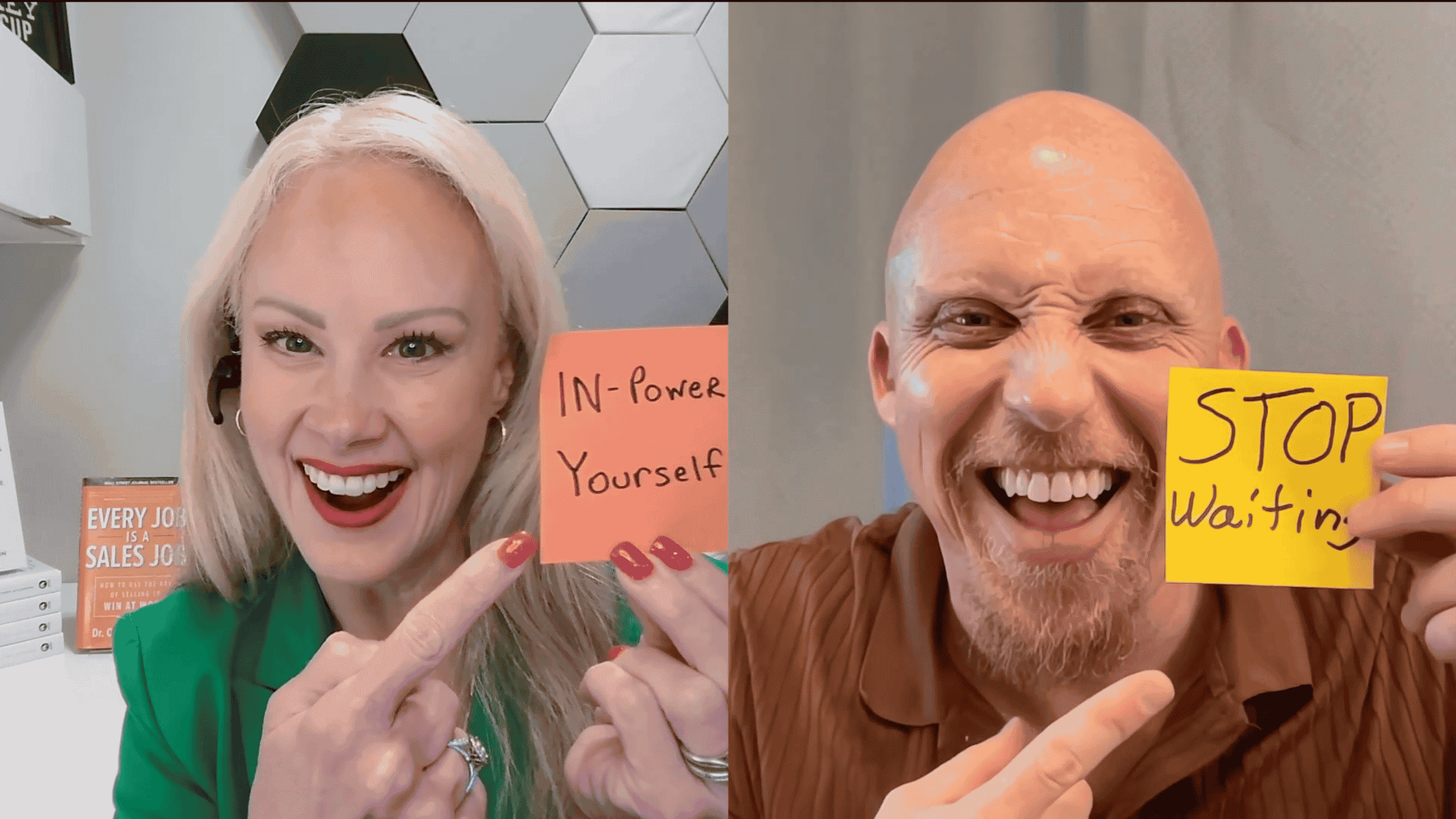
Dr. Cindy McGovern explains how the "invisible velvet rope" and mental "backup singers" hold us back from making decisions, setting boundaries, and leading effectively.
Think about the last time you delayed making a decision at work. Did you tell yourself you were just "gathering more information" or waiting for the "perfect moment"? That feeling is exactly why this episode is an absolute must-listen.
"Permission is procrastination dressed up a little bit," warns international public speaker, CEO, and best-selling author Dr. Cindy McGovern. We constantly wait for confidence or someone else's approval before taking our next step, creating a massive, hidden productivity killer in our day-to-day lives.
I invited Dr. Cindy onto the show to unpack the psychology of why we hesitate. One of the biggest takeaways from our conversation is how wildly we misunderstand confidence. We tend to think we need it before we act. But Dr. Cindy completely flips that script. "Confidence doesn't come first. Confidence actually follows action," she explains. "You don't think about throwing free throws and then you start doing it really well. You have to get out there and actually practice."
Dr. Cindy and I had an absolute blast unpacking the mental roadblocks that keep us stuck. She brilliantly psychoanalyzed the "backup singers" in my own head—the loud inner voices shaped by past experiences (like a bad performance review from 20 years ago!) that still make me second-guess myself today. We explored the "invisible velvet rope" holding us back, and tackled how managers inadvertently train their teams to wait for approval rather than empowering them to act.
We didn't just talk theory, though. We laid out a practical roadmap for anyone looking to reclaim their time and empower their team. We discussed my $25/hour rule for setting boundaries, the brilliant $5,000 rule for speedy decision-making, and why feeling Imposter Syndrome every single week is actually the ultimate indicator of success. As Dr. Cindy puts it, "Imposter syndrome only shows up when you're at your growth edge. It's only when you're at the edge of your comfort zone that that shows up."
If you are tired of overthinking, over-apologizing, or managing a team that constantly waits for your permission before making a move, you cannot miss this conversation.
The Video
The Audio/Podcast





References In This Episode
Dr. Cindy’s website: https://drcindy.com/
Key Resources:
The Permission Mission – Dr. Cindy's book diving into the psychology of why we wait, and how to finally give yourself permission to succeed, available on Amazon.
Every Job Is a Sales Job & Sell Yourself – Dr. Cindy's other best-selling books, available on Amazon.
Orange Leaf Academy – Dr. Cindy's online academy featuring 24/7 online workshops for leadership and growth: https://orangeleafacademy.com/
Concepts & Frameworks:
The "Invisible Velvet Rope" – The imaginary, self-imposed barrier that keeps us from taking action, which we often view as a solid wall even though it can easily just be unhooked.
Backup Singers – The chorus of voices in our heads—made up of past experiences, fears, and other people's opinions (like a bad performance review!)—that cause us to second-guess our decisions.
The $25/Hour Rule – Brian's framework for assigning a monetary value to your time, allowing you to logically give yourself permission to say "no" to tasks that aren't worth your hourly rate.
Confidence Follows Action – The reality that you cannot wait for confidence to arrive before taking a step; just like shooting free throws, you have to practice the action first to build the confidence.
Imposter Syndrome as a Growth Edge – The reframe that feeling like an imposter isn't a warning sign to stop, but rather a positive indicator that you are right at the edge of your comfort zone where real growth happens.
The $5,000 Rule – A leadership framework for empowering teams: if a decision will cost less than $5,000 to fix if it goes wrong, employees should have the permission to make the call without asking.
AI as a Toddler – The analogy that when adopting new technologies like AI, leaders must treat the learning process like a toddler learning to walk—giving themselves and their teams the grace and permission to stumble.
Learn more about Brian's speaking and workshops: https://www.productivitygladiator.com/speaking-and-intensives

Brian Nelson-Palmer and Dr. Cindy McGovern
Chapters
00:06 Introduction to Permission as a Productivity Tool
02:38 Understanding the Concept of Permission
05:38 The Role of Permission in Time Management
08:29 Overcoming Hesitation and Imposter Syndrome
11:13 Practical Productivity Mistakes and Solutions
13:35 The Importance of Saying No
16:24 Navigating Decision-Making and Backup Singers
24:06 Deciding When Enough is Enough
26:30 Empowering Team Decision-Making
30:05 Creating a Culture of Permission
33:18 The Importance of Iteration and Permission to Fail
36:26 Success Stories of Permission in Action
41:11 Final Thoughts on Taking Action and Growth
Today’s Guest
DR. CINDY MCGOVERN
First Lady of Sales®, CEO, and Best-Selling Author

Dr. Cindy McGovern, known as the First Lady of Sales®, is an international public speaker, CEO of Orange Leaf Academy, and best-selling author who specializes in helping leaders and professionals get out of their own way. She began her career as a college professor armed with three degrees in communication before realizing that sales is not just a business skill, it's a life skill. Today, she is a fierce advocate for quieting the internal "backup singers" that cause us to second-guess our decisions. She teaches people how to "IN-power" themselves and activate the power they already have, rather than waiting for permission or external validation to start creating the success they deserve.
Known for her dynamic approach and ability to make sales and leadership feel authentic, ethical, and fun, Dr. Cindy's expertise is forged from decades of experience as a sales consultant and coach. She consults with a wide range of organizations, helping them build cultures where employees have the "permission to fail" and the autonomy to make swift decisions without over-preparing. She is the author of multiple award-winning books, including The Permission Mission, which dives into the journey of reclaiming your own voice, as well as the best-sellers Every Job Is a Sales Job and Sell Yourself.
What sets Dr. Cindy apart is her highly relatable approach to the psychology of hesitation and her mission to help professionals "sell themselves without selling their souls." Instead of treating Imposter Syndrome as a weakness that needs to be suppressed, she reframes it as a powerful, positive indicator that a leader is right at their "growth edge." She provides a unique blend of practical insights, like her 5-Step Formula, unhooking the "invisible velvet rope," and using the "$5,000 rule" to speed up decision-making, that managers can implement immediately. She truly believes that confidence doesn't come before action; confidence follows action.
Connect with Dr. Cindy:
LinkedIn: Dr. Cindy McGovern
Website: https://drcindy.com/
Academy: https://orangeleafacademy.com/
Books: The Permission Mission, Every Job Is a Sales Job, & Sell Yourself

Why Subscribe To The Email List: Brian shares separate hacks, tips, and actionable learning exclusively for his email subscribers. Sign up so you don’t miss out!
About The Creator/Host: I’m Brian. At age 4, I was diagnosed with insulin dependent (type 1) diabetes and told that my life was going to be 10-20 years shorter than everyone else. As a kid I took time for granted, but now as an adult, time is the most precious thing that I have. After spending a career hands-on in the trenches as a leader at all levels, I now train Productivity Gladiators to level up their careers. Graduates wield superpowers in time management, practical leadership, communication, & productivity. If what you’ve seen here intrigues you, reach out, let’s chat!
“Time is the currency of your life, spend it wisely.”
Transcript
Brian Nelson-Palmer (00:06)
I'm Brian Nelson Palmer. On this show, I share personal practical productivity skills that will make you more productive and advance your career. And in this episode, we're talking about permission is the new productivity tool. Stop waiting and start getting things done. And with me on the show today is Dr. Cindy McGovern, who is an international public speaker and a best-selling author of The Permission Mission. Dr. Cindy, thanks so much for joining me on the show today.
Dr Cindy McGovern (00:34)
Thanks for having me, Brian. I'm excited to be chatting with you today.
Brian Nelson-Palmer (00:38)
Yeah. And I think the the title of the book's kind of a giveaway, but for those people who aren't familiar with you, I like tell them why you're related to our topic today.
Dr Cindy McGovern (00:49)
So I run a consulting company, Orange Leaf Consulting in an online academy. And when I was doing coaching over the last 10 years, I started noticing a little bit of a pattern where people were waiting, especially newer leaders or folks in a leadership position where they weren't quite taking the steps. It's like they'd been given the seat at the table, but they wouldn't sit down. And I was trying to figure out why. And at first I thought it was confidence.
And I was like, nope, not confidence. Then I thought it was maybe a skill gap. I'm like, nope, not a skill gap. What I recognized over time in coaching thousands of people is it was permission. And so that's what led me to write what it became my third book because I figured I gotta help people understand what's holding them back from really reaching their own goals.
Brian Nelson-Palmer (01:38)
Yes. Well, I can't wait to dive into that you know, on this show we talk about productivity skills and being more productive. And if there's any part of you that's waiting to be more productive or advance your career or anything, that's gonna be this weird thing that's holding you back. And it doesn't matter how good I get you at email or to-do list or any of that. you have to want it and you gotta go get it. And you can't be waiting. So this is I think this is like super relevant.
I'm excited to dive into this. So what would you say makes you different from the other people in this space?
Dr Cindy McGovern (02:09)
So this book is a bit of a departure from my other books that I've written and sort of more of a, I'd say it straddles the fence between a business book and a self-help book. And this is really steeped in research. So I was kind of about 10 years in the making because it was based on my coaching that I was doing with folks and leadership. But I did a really deep dive. I went back to my nerd PhD roots and did a whole bunch of research, and there's 400 citations, and I promise it's not a nerd book, but
I
really wanted to find where the source was coming from and why people weren't giving themselves permission. So it was really a journey for myself too to really dig into this. So that's really what's different is it's not just a motivational book. It's actually steeped in science and psychology.
Brian Nelson-Palmer (02:55)
Interesting. Well, I can't wait to dive into this thing. first let's zoom out. So, when we talk about giving yourself permission, what exactly are we talking about here, Dr. Cindy? Like what what what does waiting for permission actually look like in the workplace to that to the person listening? Like, what are they gonna see? What are the things people are doing that are what we're talking about?
Dr Cindy McGovern (03:18)
Yeah, so a lot of times it's hesitation. It's it's dressed up as hesitation, but it's really kind of permission is procrastination dressed up a little bit in that we sort of talk ourselves out of something. So if you're hesitating, if you're over-explaining, if you're over-apologizing, if you're overthinking, those are all things where you want might want to look at it and say, Is it really just the fact that I haven't given myself permission? What am I waiting for? And I call it the invisible velvet rope.
It's like we've put this velvet rope up. And I mean, we've all seen velvet ropes. You just kind of click it, walk her on through, but we look at it as a barrier. And we can't quite figure out why. And that's where the psychology comes in is where did that come from? Why did that velvet rope even get put there? But it really shows up in a number of ways in the workplace, as well as in your life, but especially in the workplace as that pause before you leave.
Brian Nelson-Palmer (04:14)
Gosh, yes. And so most people think about productivity then it's it's like systems, time management, like inbox, that kind of stuff. But why is permission actually foundational to like all of that?
Dr Cindy McGovern (04:28)
So what's funny is you have to have permission before you can manage your time. You have to have permission before you can step into whatever that action is. And we forget that. We think, well, you know, you're in a leadership role. Of course you can do this. But it's self permission. The only permission you need is your own. And it's that conversation with yourself that needs to happen for you to be able to manage your time. For example, let's take a leader.
Who is struggling with time management? What leader isn't, right? There's not enough hours in the day.
Brian Nelson-Palmer (05:00)
Yeah. Yeah.
Dr Cindy McGovern (05:01)
But it's about saying no, it's about setting boundaries. It's about protecting your time. It's about knowing what your time is worth and claiming that. And often we feel like, ooh, but I can't do that. I need to be there for my people. Or, I have to be available. I have to answer the phone. If I don't, then our customers won't come back. You have to give yourself permission to set that boundary. No one else is going to.
And we talk ourselves out of it a lot. And so I think that's a big piece of that keeping you from being as productive as you can is the conversation in your own head. I call them our backup singers. Like we all have Like they're these like
voices.
Brian Nelson-Palmer (05:38)
Backup singers. I love that's
like I've heard of them referred to a lot of ways, but backup singers is a
Dr Cindy McGovern (05:44)
Yeah.
Brian Nelson-Palmer (05:46)
new one. I love that. Yes, there are plenty. I I know I've got at least three. I've got the little devil on my shoulder
Dr Cindy McGovern (05:51)
Yeah, I
Brian Nelson-Palmer (05:53)
backup singer that's like, no,
Dr Cindy McGovern (05:55)
Totally.
Brian Nelson-Palmer (05:56)
do it, Brian, go for it. And then I got the other one that's like, You should be nicer. No, they probably didn't get back to you yet because it's taking and then there's like
I I feel like and then there's like a mom. I don't know. It's and now I'm having a really
Dr Cindy McGovern (06:09)
Yeah.
Brian Nelson-Palmer (06:09)
good time going down with the backup singers.
And you know what resonates with what you still said too is that I did a TED talk on the value of your time that got picked by the team at TED and got a lot of views, and that was a really cool experience. And in the talk, I mention that it's it's all about the value of your time and how do you actually make better decisions with your time if you put a value on it.
And what's funny is the whole reason I came up with that was to get people to look at their time through a different lens to give them permission to say no. So I explain it as if your time is worth $25 an hour and you could get your groceries delivered for a $5 delivery fee, then and it's going to take you an hour, then you have permission to say no if you.
want to because your time is worth more than that. So like that's it's exactly the same conversation. It's just funny because I I had to give people a number because sometimes people are very good at saying no to money or no to spending money they don't want to spend. But it's different when it's permission, especially about the soft stuff. So I I love this. Yeah.
Dr Cindy McGovern (07:19)
Yep.
Yeah. It's right up there. It's the same concept that you're sharing. But it's funny that you you assign that value to it and the monetary value because it is easier if we can assign or prescribe something to it. And what ends up happening is for most people that can't give themselves permission, they can't figure out why they can't. And so that's what I noticed in the coaching that I was doing. So I'll tell you a really quick story. There was a gal that I was coaching and she was the owner of her own company. And she had an employee that
For all intents and purposes, should not have been employed any longer. I won't go into why, but it was very, very abundantly clear there were HR violations here. Okay. So there was no question. She called me and she says, Hey, I need to book a coaching call. I need to talk about this. And we talked through it. And I said, Stop right there. Like you just named 17 different reasons why this person should not work there. Why is she still employed? And then she started negotiating with herself.
it came down to the fact that she had not given herself permission to manage her own time in her own business by saying, This person is taking too much of my time to manage their bad behavior.
Brian Nelson-Palmer (08:29)
Yeah. Absolutely.
Dr Cindy McGovern (08:29)
Same thing. But
she really struggled with that. And so in the end, she did let that person go. But it was hard for her to recognize like this was costing her money to manage somebody that was not really performing.
Brian Nelson-Palmer (08:44)
Yeah. Gosh, it's so relevant to the permission thing is big for a lot of it ties in so many ways. Imposter syndrome, you know, or you don't you like fear of making the wrong choice. And so then you don't make the choice and then all of that stuff. And and when it comes to productivity and being productive, it's about making smart decisions and doing the thing, getting it done.
And then that gets you to here. And maybe for oftentimes for people, they need to make a couple of decisions and that gets you up to here. I I describe it as being able to see around the corner. You can't see what's around the corner yet. You have to make two or three decisions and make two or three moves before you're going to get to the point where you can see around the corner as to whether this is going to be good or not. You can't do it from back here. You have to move forward so you can see around the corner.
And it's like it's so it all is connected back to that sort of permission thing. So I I all right, we've nerded out on the zooming out. Now let's zoom in.
Dr Cindy McGovern (09:45)
Love this.
Brian Nelson-Palmer (09:46)
let's get practical. What are the biggest productivity mistakes you see people making because they're waiting on permission or mistakes in general?
Dr Cindy McGovern (09:54)
So a lot of times, especially in leadership, we're waiting for that perfect moment or we're waiting to have enough confidence. We're waiting for the the right thing to say. There's gonna be mistakes. And part of what people don't realize is confidence doesn't come first. Confidence actually follows action. And we get that wrong, right? So we think, well, if I just had the confidence, I could do it. Think about learning a sport. You don't
Think about throwing free free throws and then you start doing it really well. You have to get out there and actually
Brian Nelson-Palmer (10:25)
Right.
Dr Cindy McGovern (10:26)
practice. So, as a leader, as a human at work, when you're thinking about what muscles you need to flex to get better at that skill, you gotta do it. And so, where we get stuck, if we're really zooming in, where we get stuck is over preparing. 90
ways to Sunday, we truly do overthink it, as I mentioned earlier.
But we're also looking for the validation sometimes. We're like, but I just need to know this is the right thing to do, especially if you're new in your leadership role. Asking too many questions, asking too many opinions. You're the leader. You were put in that role for a reason. Yes, it's good to get feedback from others, but you have to make that decision. And what ends up happening is when you solicit too many of those opinions.
They
also become backup singers. And so then you're then you've orchestrating an entire chorus back there, right? So you've got
Brian Nelson-Palmer (11:19)
Uh-huh.
Dr Cindy McGovern (11:20)
to kind of get them singing in harmony so you can make the decision. But we get in our own way because we start second guessing in that manner. And you prolong your decision making cycle because of that too. And that costs money in an organization also.
Brian Nelson-Palmer (11:37)
So what is on this topic? Because I know waiting to make a decision is one of the biggest things. And if and if you're listening or watching this right now I want you to think about this for yourself. And I also want you to think about this for the people that work with you and work for you. Who are the people that ask they won't make a decision, they are constantly asking you for your thoughts first.
This is this is that person. That's what we're talking about. Or if you don't make decisions and instead you're like, well, let me check with this person first. And I'm not saying you should never do that, but if that is your default, is before I make a move, I better check with some people. This book is for you. This episode is for you. Like that's that's exactly what we're talking about. And maybe it's not for you, maybe it's for that person that you work with, but you're gonna see this.
what is the right amount of hesitation before you make a decision? Because what I also, everybody's also afraid that like, well, if I just go out and just make all the decisions, and then I make a wrong one, and then I'm going to get in trouble and then I'm not going to get the promotion. And then there's like that dominoes that happen in your head of like,
Dr Cindy McGovern (12:43)
Mm.
Brian Nelson-Palmer (12:44)
No, no. So what happens? You go back to asking for permission for everything because that's a safe space. So we're we're t you what you're saying is stop staying in your safe space and go out and be uncomfortable. But what is what is the line where, okay, that's fair and what's too much? Can you paint a picture
Dr Cindy McGovern (13:03)
Yeah.
Brian Nelson-Palmer (13:04)
of that?
Dr Cindy McGovern (13:05)
Absolutely. So this is where you mentioned imposter syndrome a little while ago. This is where that comes in, right? So imposter syndrome is where we feel like, gosh, they're going to figure out that I don't actually know what I'm doing or I didn't really deserve this role. But we have to remember that imposter syndrome only shows up when you're at your growth edge. So if you think about it, it's only when you're at the edge of your comfort zone that that shows up. So I I always say give it an A.
Right? Like mine's Kara. And I'm like, buckle up, Kara, because we're doing this thing
anyways. Like,
Brian Nelson-Palmer (13:35)
Okay.
Dr Cindy McGovern (13:36)
bring it. But we have to think about like, why is that here? Because that's the part that's keeping you from making that move. Your your person, your backup singer. So recognize that. But then the key is to in power yourself. I in power yourself. Yes, I made up a word. I know that, Brian. But stay with me. Stay with me. So yeah.
Brian Nelson-Palmer (13:57)
I'm here. Let's do it. Where are we going? Okay.
Dr Cindy McGovern (14:00)
But we think that we have to be empowered, empowered from other people. No, it's about you trusting your own voice. And that's why it's a journey of permission. That's why I called it the permission mission. You have to go on a mission to find and reclaim your own voice and trust that. Because chances are we've all been here. You know your spidey senses go up, and when you go against them, you kick yourself later, don't you?
Brian Nelson-Palmer (14:26)
Mm-hmm.
Dr Cindy McGovern (14:27)
That's because that inner voice is the is the mix of all those backup singers. All that life experience in one has made your inner voice. So you have to in power yourself enough to quiet those other backup singers to listen to that voice. That's the only pause you should be making, is to stop, listen to that voice, and then take your action.
Brian Nelson-Palmer (14:52)
Yeah. Gosh. You know, you you said this and the thought I keep coming back to right now is when was the last time that you felt imposter syndrome? Because for a lot I mean, I s I speak to a lot of group
Dr Cindy McGovern (15:04)
All the time.
Brian Nelson-Palmer (15:06)
You're never gonna be really good.
At free throws until you start throwing some free throws. And you're like imposter syndrome is the beginning of getting good at something. You need to be uncomfortable doing that thing. So if you at work haven't felt imposter syndrome in a while, and what by a while, let's put a number on that, Dr. Cindy. What are we saying? Two weeks? If it's been two weeks since the last time you felt imposter syndrome, I mean, that's what?
Dr Cindy McGovern (15:32)
Would say it's gotta be
weekly. Weekly.
Brian Nelson-Palmer (15:34)
I mean, I think weekly
is a good mark. I think one out of five days was a good pace. And you know what? I can hear if you you're listening, you probably you're watching this, you're like, man, every week? You want me to feel that every week? I don't like that. Like, that's the yes. Yes, I totally want
Dr Cindy McGovern (15:50)
Yes.
Brian Nelson-Palmer (15:50)
you to feel that every week. I want you to step out beyond whatever that is and feel the imposter syndrome. Because here's the thing. And I think this is.
And tell me, Dr. Cindy, you're totally allowed to disagree with me here. But as I'm running down this path, this mental path, what I'm thinking is there is a difference between the feeling of imposter syndrome and I shouldn't be here. Imposter
Dr Cindy McGovern (16:10)
Yes.
Brian Nelson-Palmer (16:11)
syndrome is you like are halfway in there. You're like, there's a good portion of this that I am right for, but then there's a part of this that I haven't already done before, and that's where the imposter syndrome is.
But if you're outside completely where you have not done anything, like you have never done any kind of development whatsoever, and you're about to lead a team of developers and teach a course on development, that would be a different feeling than going in and doing an AI thing with some other people who have written prompts too. And yeah, that might not be your powerhouse, but that's the difference between imposter syndrome and I this is too far.
And so when we're talking about impostor syndrome, that once every five days, once a week, I think that for one meeting once a week, look at your calendar right now. When are you gonna feel imposter syndrome? And if there is no imposture syndrome on your calendar for the next few weeks, two weeks, well, we said every week. If there's no impostor syndrome on your calendar for next week and the week after, then go talk to your boss, find something that's gonna give you imposter syndrome and
Put it on your calendar and go do it. Like you gotta, that's where the my God, that's what we're talking about. I love this. Yes.
Dr Cindy McGovern (17:24)
Love
it. Yeah. I agree with that. And it's funny because if you read a lot of books on imposter syndrome, they'll tell you, you have to quiet that voice. You have to tell that voice to sit down and shut up. I totally disagree with that. I actually think that's a good thing. That voice is letting you know you're on the edge of something pretty cool and you're gonna learn something. And you might fail. That's okay. We've all fallen on our faces. We've all been told no, we we didn't die. You know, like we're still here. So keep
going. And I think especially as a leader, when you can share those vulnerabilities, it actually makes you more trustworthy as a leader too. Where you can share and say, Hey, I I wasn't always perfect at this. I had to try this. I had to learn this. I had to do this. And I find that that allows people to want to follow you because it makes you human. As a leader, we always think we have to be this perfect thing. I disagree.
I I think you have to be human and show people your human side and that makes them wanna follow you because they wanna be able to emulate it and they also know it's okay to fail. They know it's okay to stumble along the
Brian Nelson-Palmer (18:28)
Totally. Yeah. I think, you know, it's funny we're now we're talking about this as permission right now. if you've been in one of my sessions and you know that we talk about life balance, one of the parts of life balance is growth And permission, imposter syndrome is growth. When I plan my week in advance every week, I'm looking at it's funny, I it actually says this the growth is the category. And then
The first bullet on that. And I look at it every week and I've looked at it for more than 10 years. So this is why it's like permanently. I'm picturing it right now as I'm talking to you, Dr. Cindy. This is, and it says the very first bullet is: what are you doing that makes you uncomfortable this week? Outside your comfort zone.
Dr Cindy McGovern (19:08)
Take that.
Brian Nelson-Palmer (19:09)
And that's imposter syndrome. That's permitted, that's like all the stuff we're talking about. It's right. So
Dr Cindy McGovern (19:12)
Love that. Mm-hmm. It is.
Brian Nelson-Palmer (19:15)
love this. Yes, absolutely.
I think what I love is I I feel like we've made this really sort of tangible. But what about you also talked about that's permission to do the thing, but let's also talk about permission to not do the thing. Like giving yourself permission to say no is also something that people really struggle with. So what is it like talk more about what that looks like going the other way now?
Dr Cindy McGovern (19:43)
Yeah, and this is especially important as a leader because you have to have like prioritization down to a science, like ruthless prioritization almost, where
Brian Nelson-Palmer (19:53)
Yeah.
Dr Cindy McGovern (19:53)
you are so protective of your time and you owe that to the company that you work for, right? It is that ROI, it is, you know, you shouldn't be spending time doing things that are a $10 an hour task. You make $25 an hour. So you look at it in terms of that return on time investment. But it's also about prioritizing yourself.
And this is one of the things that I found a lot in my coaching, where the leaders were putting everybody else first, which is great. It's lovely little, you know, human skill set, but they were burning themselves out in the process of it. Self-care isn't selfish. We all know this, but it's really hard to do it. And especially as a leader, because we think, my gosh, it's gonna fall apart if I go away. I really believe that the true sign of a leader is that everything still runs great.
If you just pick yourself up and take yourself out of it, that's a good leader because everybody knows their job, they know what they're supposed to be doing, and they can do it. And you've trained them, you've given them the power and the skills to be able to do it. But we think, God, well, I c what if, what if, what if? There's always gonna be a what if. Let it go. Let your team soar. And that stretches them, it shows them that you trust them.
And it allows them to really flex some skill sets that maybe they don't get the chance to flex when you're there too. But you have to say, no, I'm gonna take time off. No, I'm not gonna answer my phone. No, I'm
Brian Nelson-Palmer (21:20)
Yeah.
Dr Cindy McGovern (21:21)
not gonna check email when I'm on vacation. So those are just some of the boundaries that I see leaders really struggle with giving themselves permission to create. But they are some of the most powerful ones that a leader can create as well.
Brian Nelson-Palmer (21:36)
Gosh, yes. Saying no so that you can do the thing that you need to be doing instead of what everybody else tries to pull you into. That's a that's a huge one. And you know, here's a here's a simple one for you. This is a this is a check for you listening, you watching. If do you work with your inbox open on a screen? Because if you work with your inbox open.
This is for you. Because when that email comes in, what do you do? You look at the screen, you look at that new thing, and then you have to make a decision about do I answer that? Do I need to jump on that? And you get distracted over and over and over again. So if you're a leader and you work with your inbox open on your screen, stop it. Read Dr. Cindy's book, listen to what we're saying, stop it. Because
You need to focus on the things you need to be doing. And that email can wait. If it's an email, it can wait. It can wait for an hour. It can wait. Like if they really need you and it's that urgent, they would call, they would send you a Teams chat. They would call you on Teams or Slack. there's another way that they would reach out to you if they really, really needed you and it couldn't wait until you finish what you're doing. That's a thing. That's such a thing. You know.
Dr Cindy McGovern (22:58)
Love that.
Brian Nelson-Palmer (22:59)
Dr. Cindy, I want to come back to one thing you just said about you talked about the chorus, the backup singers.
Dr Cindy McGovern (23:04)
Mm.
Brian Nelson-Palmer (23:05)
Can you give a sort of an answer on when do you have enough information to make a decision?
You can't ask all the backup singers because that would take forever and you'd get all the different voices and that wouldn't work.
Dr Cindy McGovern (23:15)
Yeah. Yeah.
Brian Nelson-Palmer (23:17)
But if you just go off map, I think there's a lot of people who still worry about when am I being a maverick and just making a call that's going to come back and bite me in the butt because I didn't take a B. Like for me personally, that's been that was my performance review for a long time in my early part of my career. Was I just I went for it, I did the thing and I didn't
Ask other people. I didn't, you know, develop a coalition. I didn't check with people for I didn't have any top cover basically before I would do some of these things. And it would get me into trouble occasionally. And what sucks is it all it takes is that one, right? I would do that. And for the the 35 times that I did it, it was very good that I did it. And then for the one that wasn't, you know what made it under my freaking performance review was that
Dr Cindy McGovern (24:04)
Yeah.
Brian Nelson-Palmer (24:05)
one.
thing. And so then I'm like, well, dang, maybe I just need to not. So I lose the 35 good ones because of the one that showed up on performance. And like that just pisses me off.
Dr Cindy McGovern (24:16)
So this is something that I coach a lot of leaders on when we're working together. And I ask them, you know, what additional information would actually change your course? Is there
Brian Nelson-Palmer (24:26)
Mm.
Dr Cindy McGovern (24:26)
some piece of information that you don't have that would literally make you change your mind? And when you stop and actually think about that, usually the answer is no. And you have all the information. Now
Brian Nelson-Palmer (24:39)
True story.
Dr Cindy McGovern (24:39)
Do
you need to validate? Maybe that's the key, right? To get some of that top cover, like you were saying. Maybe you validate it with someone or you kind of bounce the idea off of somebody. But where you really know, okay, I'm ready, is you pause and just ask yourself that question. Because if there is more information that wouldn't change your decision, what are you waiting for? Unclick that velvet rope and walk on through. But we will stand there and suffer. And
We and I have seen it happen a million times, Brian, where leaders especially, you will toil over a decision because you are terrified that there is a 1% chance that you could be wrong. You're going to make mistakes and you're going to learn from those mistakes. But do it. Make the decision. Because we also have to remember as leaders, non action is action. So you are teaching your team.
Something by doing that too.
Brian Nelson-Palmer (25:37)
Yeah. That's really true. I love that that instinct of what information would change your decision. What that also does is if there is something that comes up in there, that's gonna be a finite number of things. So most
Dr Cindy McGovern (25:54)
Absolutely.
Brian Nelson-Palmer (25:54)
people's most people's idea is gonna be to check with all the backup singers and there's a whole chorus back there, and you could check with the whole team and get everybody's opinion.
And the reality is if there's just one thing that would make it, then that's one person you check with, one thing you run down, and then you make the decision. But not five people, 10 people, don't set three more meetings and talk about it some more. if there's something that you need in order to make the call or some information that would change your decision. That's a great, I love that. That's the line. I love that. That's great.
a lot of this has been focused on the individual, your own decision making. And as leaders, now let's switch over to now you're the manager. Now you got somebody underneath you. Now somebody who's reporting to you. So for the managers listening, how do you create an environment where your team feels like they have permission? Because guess what? The example I just gave.
I made 35 right decisions and I made one wrong one and that showed up on my performance review.
how do you create that environment where they feel empowered and yet not everything doesn't come off the wheels because now they're doing all this stuff and
Dr Cindy McGovern (27:06)
Right.
Brian Nelson-Palmer (27:06)
you lose control? Like that's the that's the fear. So talk about that.
Dr Cindy McGovern (27:10)
So what's funny is you are still holding on to that one performance review. It's become a backup singer. That
Brian Nelson-Palmer (27:17)
It has.
Dr Cindy McGovern (27:18)
one, that one performance review has become a backup singer for you. And my guess, and not to diagnose you on your own show, but here we go.
Brian Nelson-Palmer (27:27)
let's do it. I'm in. I have no shame. Let's go.
Dr Cindy McGovern (27:31)
You probably check with that backup singer sometimes when it's a circumstance, maybe like that one that you made the decision. So if it was a fairly cavalier decision,
Maybe the next time you're going to make a fairly cavalier, you're like, ooh, should I? You're going to pause. There's a little bit of a velvet rope. Doesn't say you still don't do it, but there's a little bit of a velvet rope there, right? So as a leader and as a manager, part of it is around what environment have you actually created? Have you inadvertently trained your team to wait for your permission? And this happens with a lot of leaders where they don't even realize they've done it, but you
you have this check and balance in place where you haven't empowered them to make a decision. And so a lot of it is just coaching and playback and saying, well, Brian, what do think you should do? Great, go. You know, it's making sure you start trusting your own decision making power. Second part of that though is are you criticizing them when they do make a mistake? Have they done 35 things right and one that wasn't quite on the mark? Did you use it as a coaching opportunity?
Or did you just say this is the thing that you screwed up on and not acknowledge the thirty five that were right?
Becomes a backup singer, right? And and making those sort of boundaries or expectations of their role really clear too. Like where can you get to to make a decision before you do need to check with your leader? And I'll give you a quick example. There's a bank that we were consulting to, and there was some friction between accounting and sales. No surprise there.
Brian Nelson-Palmer (29:03)
Yeah.
Dr Cindy McGovern (29:03)
And sales.
Had authority from the CEO up to a certain amount of money, accounting didn't quite believe that. They thought it was a little loose in terms of the amount. It was very clear that that was the authority, but it was the they weren't bought into it. They didn't trust it. So part of our job when we were consulting to this organization was just cleaning up those expectations and the boundary and saying, okay, so here you go, accounting, up till this amount of dollars.
Sales doesn't have check with you. You're not in charge. They get to make a decision, anything under this amount of money. And after that, then they do need to check. But if that's unclear, that's where people start to second guess themselves. They backpedal, they don't know what to do, they lean on you. And that actually bogs you down as a leader, too. Not a good use of your time, Not a good ROI for the organization. But have you
inadvertently diminish their power simply by setting it up that way. So that's a good thing to ask yourself as a leader.
Brian Nelson-Palmer (30:05)
Yeah. I love that. the thought that just popped into my head while you were describing that too was about it was about me and that going back to my 35 good decisions and one bad decision. Now when I hear that one backup singer, you know what I do? I go, I ask myself, all right, if this goes sideways, who should I have checked with first? And
Dr Cindy McGovern (30:26)
There you
Brian Nelson-Palmer (30:27)
that's my
It's almost like in chess where you like move the knight so that they can't take out the queen. Because it's like
Dr Cindy McGovern (30:32)
Yeah.
Brian Nelson-Palmer (30:34)
I have that, I make one little move to make sure that I have a backstop so that it wasn't Brian going out and being a map. Like, I got one, I got somebody else who's coming down with me now. If this doesn't and but that and and not to like make it sound like I'm just making a maverick decisions and sinking ships here, but like that's the the thinking. And honestly, that's served me pretty well because now.
it isn't that I went out and made that Maverick decision. And you know, for the leader too, the other thing I want to ask is that my question for you when that person makes a decision and it's bad, there are three sides to every story? And if the person makes a lot of good decisions, are you the type of manager that looks for the other three sides to the story?
Or do you just because accounting got upset about this one thing, then you dogpile on and say, well, no, they you shouldn't, you shouldn't do that. And if you're a dogpiler, if you're a leader that's a dogpiler, then you probably can't take two-week vacations because your team can't survive without you. So stop that. Like that's the this is where we're at. If you don't in power them, if you don't have that structure, I love what you said about having the it's the permission, right? Here's the parameters. You have permission, you are empowered.
What is it? The Ritz-Carlton, you are empowered. Even the janitors, every member of the staff is empowered up to $50 to solve the problem. And so if you don't have that written somewhere in permission, that's helpful. And then if something goes sideways, do you automatically assume that your person screwed up? Or do you find the the three sides to the story first? And do you ask them what thought went into it? Because that's gonna be like that's the type of leader who has empowered people.
The one who doesn't
Dr Cindy McGovern (32:17)
Yeah.
Brian Nelson-Palmer (32:18)
dogp.
Dr Cindy McGovern (32:18)
Well, and you make a really good point on that too, is have you created an an environment where they have permission to fail? Because if I don't have permission to fail, I'm going to keep stalling making a decision. And that slows productivity. So if you've
Brian Nelson-Palmer (32:34)
Yeah.
Dr Cindy McGovern (32:35)
created a system where I f I am terrified of failure, I am pausing before taking action. That's expensive for an organization. And we don't think about it like that.
Right. We think, well, they're just checking things out or they just wanna be double sure. No, that's money.
Brian Nelson-Palmer (32:51)
Yeah. You know, a place that I see this right now, I'm I'm heavily involved in helping organizations implement AI agents, AI. I mean, I'm the productivity guy and AI is a productivity thing. So it's no surprise that I am neck deep in helping with AI. And one of the things I see so much everybody wants the AI agent to be absolutely perfect before you roll it out.
Dr Cindy McGovern (33:16)
Yeah.
Brian Nelson-Palmer (33:18)
AI can read all the policies, it can read the document, it can provide recommendations. Then you as a human.
It's not like the agent just does it without you. The agent provides recommendations, and then you, as the human, carry it through. So there's no reason not to roll out the AI agent before it's perfect. And then when you get examples, like think of it almost like you have to iterate, right? The first version 1.0 of this agent
Dr Cindy McGovern (33:44)
Mm-hmm.
Brian Nelson-Palmer (33:46)
is not going to be perfect. But
Then version 1.1 is gonna be better, 1.2 is gonna be better, 1.3 is gonna be better. And by the time we get to 2.0, my gosh, you're gonna be so much productivity gained. But if you spend six months and you still don't have version one point out because everybody hasn't said, okay, great, I it's just and so that's that's one of the really interesting things about this too, is that like,
It's the permission to fail. It's the permission to do something that isn't perfect. And that's another, I'm it's funny that we're just doing things that I'm bitter about in my earlier past performance
Dr Cindy McGovern (34:25)
Yeah.
Brian Nelson-Palmer (34:26)
reviews. But there's a like I was all I told a lot to take a beat. You should perfect it. Make sure, go back and reread. Make sure everything you do is perfect. my gosh. I I
I never truly followed that advice. I never did. Because it wasn't productive. Like the difference between 95% right and 100% right, it's still an A. It's still a good. Like, is that gonna make and so don't get me wrong, if whatever I'm doing, if there are implications, I loved it. One of the one of the COOs that I used to work for said this one time and it was like a huge light bulb moment. He said, if whatever decision you make,
Is not gonna cost more than five thousand dollars to undo, then please for the love of God make the decision. And like that has
Dr Cindy McGovern (35:17)
Love it.
Brian Nelson-Palmer (35:17)
always that was 20 years ago. That has always stuck with me because
Dr Cindy McGovern (35:20)
It's awesome.
Brian Nelson-Palmer (35:21)
wow, like, yes, make the call. Like, roll out the
Dr Cindy McGovern (35:24)
Yeah.
Brian Nelson-Palmer (35:25)
AI agent. And then if it's gonna like if the consequences are bigger than five thousand dollars, then okay. But otherwise,
Dr Cindy McGovern (35:32)
We'll deal with it.
Brian Nelson-Palmer (35:33)
like you could always take the agent offline, you could tell people to stop. Like, there's no
There's not a lot of risks. So what are we doing waiting?
Dr Cindy McGovern (35:39)
But I think you make a really good point. I think it's really important for people to recognize you can be incredibly gifted at this skill set and be a great communicator as a leader, but still be struggling with giving yourself permission in this kind of skill set. We're toddlers here, we're adults here. AI is a toddler. So
We have to give it some permission. If you think about a toddler learning to walk, you're not going to scold them every time they stumble or wobble. You're going to give them a chance. So the same thing kind of goes with permission, too. If you're practicing giving yourself permission in one of these areas of your leadership or your management skill set, give yourself a little bit of grace. You need both grace and grit, I think, to kind of get through it. A little bit A, a little bit of B. But
Brian Nelson-Palmer (36:24)
True. Yeah. Yeah.
Dr Cindy McGovern (36:26)
But
I think people think they're just supposed to be absolutely perfect at this, especially when people get in a leadership role. And what's funny is we run into this and you know, running a consulting company for the last almost twenty years. We go into organizations and we'll be assessing the teams, we'll be talking with them about what they're doing. And one of our questions is, Well, what leadership training did your leaders get? Well, they should know.
Brian Nelson-Palmer (36:49)
Ha ha.
I hear that so much too. Like why is that?
Dr Cindy McGovern (36:51)
right? And I and I always
laugh. I'm like, said who? Like, okay, so I don't know an Olympian without a coach. I don't know a sports team without a coach. What coaching did you give your pr your people? And so also as you're giving yourself permission, remember that even though the organizational structure may not have that, you need to give yourself that permission. Give yourself that grace to learn. You might be a toddler.
Brian Nelson-Palmer (37:17)
can you share a story on like what I'm thinking about is like a success story on sort of paint a before and after picture of what it looks like.
And what does it look like on the front side and what does it look like on the backside?
Dr Cindy McGovern (37:29)
Yeah, so I have stories galore in the book because I wanted to make sure we had examples for folks. And some of them are famous people, some of them are just regular old folks like us. But one of the ones that really sticks out is a gal that I knew years ago and she wanted to stop her day job to run her own company. And her mother was quite conservative, quite opinionated, and she went to her mom and said that she was gonna do this.
And her mom said, Well, I wouldn't do that if I were you. And her response was not defense. It was not, you know, explaining or over explaining. She simply said, I know you wouldn't.
That was the moment she gave herself permission. And there was a lot of coaching that went into that to get her to that spot, but she was super unhappy in her day job. She wanted to make a move. She knew what she needed to do. Her backup singers were singing in harmony. But mom approval that she needed to work through. Mom's backup singer voice was the loudest. And so she had to come to a way to say that. This woman went on to build not one but two companies on her own and
Wildly successful, you would actually know one of them. And it's funny though to look at it now because she struggled with this. And you think this successful woman that you know in the world was afraid of her mom.
Brian Nelson-Palmer (38:49)
Right? Yeah.
Dr Cindy McGovern (38:51)
And it's because that was a loud backup singer for her. And I think it's just an amazing thing when we think about where we get stuck and where that story comes from that we keep telling ourselves. And so I'll give you another quick example.
There's another client that we have, and it's a current client. And there was a manager in place that shouldn't have been in the role. Just wasn't a good fit. And so we moved that person out. We put somebody else in the role. And much better fit. And by the way, the person we moved out is way happier because they
Brian Nelson-Palmer (39:24)
Nice.
Dr Cindy McGovern (39:24)
they were not in the right role. But it took probably about almost five months for the
Senior leadership to be okay with the move because they thought we can't do this. It's gonna upset the Apple cart. The market isn't right to do this. They kept second guessing themselves. They had to get to the point where they gave themselves permission to make the move. What also happened is the person that we moved out had to give themselves permission to admit that they were not happy in that role. They were square peg round hole the entire time and they knew it. And we recognized it. And we're like,
Dude, you hate this. Why are you doing this to yourself every day? And
Brian Nelson-Palmer (40:01)
Mm-hmm. Yeah.
Dr Cindy McGovern (40:03)
when when we opened the space to have an honest dialogue about it, they were very honest. And it was like, yeah, this isn't my jam. Move them out, move this other person in. Not only did productivity go up for the whole team, they actually grew by 22% last year. Now,
Brian Nelson-Palmer (40:21)
Dang.
Dr Cindy McGovern (40:22)
this is somebody we're still working with in a way because we're kind of.
Exiting at this point. But this is a client that really did not see the path because they thought we put this person in this role. We can't make them move. It would be terrible. We would show, you know, this isn't working. This person had all the backup singers saying they're going to be a failure if they step out. No, they actually gave themselves permission to chase the thing that made them the happiest, which was going back to sales.
Brian Nelson-Palmer (40:48)
Man, permission. Such a powerful thing, permission. Well, Dr. Cindy, if the person listening only did one thing, they I mean, you and I have gone I hope you took away more than one thing from this episode because my gosh, I feel like we dropped a lot of truth bombs and a lot of little nuggets throughout this thing. But if they only did one thing, Dr. Cindy, what would you hope that they do?
Dr Cindy McGovern (41:11)
The
next time you pause, listen to your inner voice. Quiet the backup singers, listen to your inner voice, take the step.
Brian Nelson-Palmer (41:19)
Take the step. The next time you pause, listen to your inner voice and take the step. The in power thing. Yep.
Dr Cindy McGovern (41:26)
That's right.
Brian Nelson-Palmer (41:27)
And for me, I I say this in every one of my sessions. I do so much work with teams on life balance and stuff. And the thing we talked about today that just continues to show up is: if you don't have one thing on your calendar that makes you feel imposter syndrome, that's your task.
If this week and next week, if there's if there hasn't been any of those, it's time. You're not really getting the growth that you need, and you gotta keep growing because that's where it happens. So, man, find that imposter syndrome. I've never called it that before. We've always been, you know, how are you growing? How are you changing? But I love I love using that phrase. So that's I hope you do that too from this one.
Dr Cindy McGovern (42:12)
Awesome.
Brian Nelson-Palmer (42:12)
Well, Dr. Cindy.
Here's what I love. I love that you you've written this book and you did all the nerd stuff and you found the research for us
Dr Cindy McGovern (42:19)
Yeah.
Brian Nelson-Palmer (42:20)
and you and you're and you talk about this stuff and you're working with people and you're coaching. And I love that you have managed to package this concept that seems really everybody knows that they should give themselves permission. Like everybody says that, but I feel like what you've done and what we've really done here is like made that tangible.
Here's how you do that. So thanks, thanks for doing that. That's I just I love that you did that.
Dr Cindy McGovern (42:48)
Thank you for having me. This was really fun.
Brian Nelson-Palmer (42:51)
Yeah, do we now you have talked about you you've got the book, and I know there's and you mentioned courses back in the very beginning. So if if people wanted to dive into more about this with you, what are the paths that they have?
Dr Cindy McGovern (43:05)
So I've got three books that they can find anywhere books are sold. And we can put them in the show notes. every job is a sales job, sell yourself, and then of course the permission mission. And I run Orange Leaf Consulting, which helps organizations to grow. And then I also have an online academy, Orange Leaf Academy, that's twenty-four-seven online workshops.
Brian Nelson-Palmer (43:25)
Very cool. So if you if you took the one step that Dr. Cindy said and the one step that I said and you're ready to take one more step, there's a course and a book and you should check those things out because that would certainly be helpful. And I know that we would both love that you did that. So for those that peop people that want to keep in touch with you after this, where should they go?
Dr Cindy McGovern (43:49)
doctor Cindy dot com. Super easy.
Brian Nelson-Palmer (43:52)
Dr Cindy C I N D Y dot com. Dr
Dr Cindy McGovern (43:55)
But that's it.
Brian Nelson-Palmer (43:56)
Cindy.com. Very good. And of course, all of these things that we just talked about will be in the show notes. I'll I'll put links to all this stuff in there for you so you can jump right to it from wherever you're checking this out from. And for you tuning in, I want you to think about someone in your life who struggles with this topic, this permission. Who's the person that you thought about that never feels imposter syndrome? Who's the who's the person that works with that you work with?
Who is always asking for permission? Who is that? Maybe it's a colleague or a friend, maybe it's somebody you haven't talked to in a while. would you share this episode specifically with them? Because I know Dr. Cindy and I would love to know that our conversation helped someone who needed to hear this about permission. And frankly, we'd love to be your excuse to reconnect with that person.
Also, if you want more of the productivity insights beyond just this podcast episode, my email subscribers get access to everything I create. So come join the email list if you haven't already. And I love sharing Productivity Gladiator with you because together, these productivity skills are gonna change your life. That's a wrap.