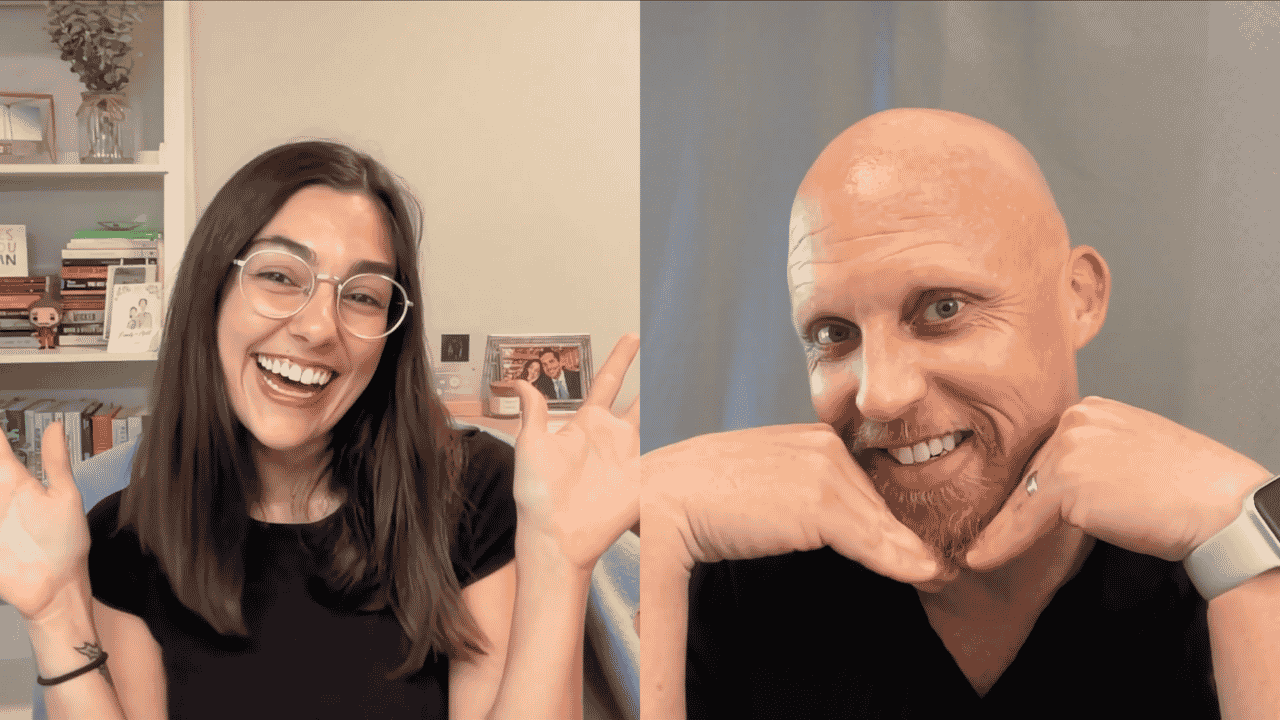
Emily Guerra breaks down why your lack of "discipline" isn't the problem, and how energy management and practical ergonomics can save you from remote work burnout.
Have you ever stared at your to-do list on a Tuesday afternoon, knowing you technically have the time to finish a task, but possessing absolutely zero mental capacity to actually get it done? You end up rereading the same email five times, and by 5:00 PM, you feel like a total couch potato.
That exhausting cycle is exactly why this episode is a must-listen for anyone who works from home.
"So often I will have a new coaching client come to me and they will say, 'I just need more discipline and my whole day will be better,'" explains certified productivity coach Emily Guerra. But Emily completely flips the script on that toxic mindset. "If you look at the most successful people in the world, they don't always have the best discipline. What they do have is structure. That structure creates discipline."
I invited Emily onto the show to unpack the massive difference between simply having hours in the day and actually having the energy to use them. One of the biggest takeaways from our conversation is how wildly we misunderstand our own biological rhythms. We constantly try to force Time Management when what we really desperately need is Energy Management.
Emily and I had an absolute blast nerding out over the physical and psychological boundaries required to thrive in a remote environment. We swapped hilarious and practical strategies for separating our workspace from our living space. Emily shared a brilliant "lighting border" hack for creating a fake commute when your office is crammed into a tiny studio apartment, and I shared the "work mode" safe word my wife and I use to avoid accidental midday meetings in the hallway.
We didn't just talk theory, either. I brought out my ultimate 5-step ergonomic masterclass to physically upgrade your desk space (yes, it involves using yoga blocks to fix your screen height). But Emily dropped a fascinating truth bomb about the real cost of a bad desk setup: "When you're looking down, you're actually hurting your confidence," she warns. "If you're constantly looking down when you're on your meetings, you are hurting your confidence physiologically and psychologically."
If you are tired of relying on sheer willpower to get through your remote workday, or if you are a manager trying to figure out how to support a work-from-home team without turning into a micromanager, you cannot miss this conversation.
The Video
The Audio/Podcast





References In This Episode
Emily Guerra on LinkedIn
Emily's Website & Coaching: https://theproductivityflow.com/
Emily’s The Energy-Based Task Planner
Key Resources:
The Energy-Based Task Planner – Emily's AI-powered planner designed to help you easily track your energy patterns and apply them to your daily scheduling.
Free WFH Resources – Checklists, workbooks, and tools available on Emily's blog for sustainable work-from-home routines.
Ergonomic & Workspace Gear Mentioned In This Episode: (If you want to upgrade your work-from-home setup, here are the tools and hacks Brian and Emily discussed!)
Herman Miller Office Chairs – The ultimate ergonomic chair for all-day comfort. (Brian highly recommends checking Facebook Marketplace to snag one secondhand for a fraction of the cost!) | Shop Herman Miller on Amazon
Yoga Blocks – The ultimate cheap desk hack! Perfect for raising your monitor to eye-level or resting your feet if your desk is too high. | Shop Yoga Blocks on Amazon
The "Tank" Laptop Riser – A heavy-duty, no-shake laptop stand to keep your camera steady and your screen at the perfect height. | Brian’s Heavy Duty Reinforced Laptop Riser (no longer available, just for reference) | Shop Heavy-Duty Laptop Risers on Amazon
External Flat-Panel Monitors – Stop leaning forward and squinting at a 16-inch laptop screen. Grab a large external monitor. | Shop External Monitors on Amazon
Floor Torch Lamps – A cheap, $10 lighting hack (like the ones from Walmart) to flood your office with light and eliminate awkward video shadows. | Brian’s inexpensive Floor Lamp from Walmart | Shop Floor Torch Lamps on Amazon
300W+ Equivalent LED Bulbs (3000K/2700K) – Pair these warm, insanely bright bulbs with your torch lamp so you always look perfectly lit on camera. | Brian’s Bulbs He Uses In His Floor Lamps | Shop Bright LED Bulbs on Amazon
Separate Wireless Keyboard & Mouse – Essential for keeping your hands resting at the proper elbow height instead of reaching up to a laptop. | Shop Laptop Keyboard & Mouse Combos on Amazon
Overhead Monitor Light Bar – An inexpensive light that attaches behind your monitor and curves over your screen, perfect for dark apartments or cloudy days. | Shop Monitor Light Bars on Amazon
Squishy Wrist Rests – A cushioned pad for your keyboard and a mini version for your mouse to prevent wrist strain and red marks. | Shop WeeGeeks Wrist Rests on Amazon
Folding Room Dividers – An easy, inexpensive way to create a physical "do not disturb" boundary for your home office in a shared living space. | Shop Room Dividers on Amazon
Concepts & Frameworks:
Time Management vs. Energy Management – The critical difference between scheduling a task because you have an open hour, versus scheduling it during your peak biological focus times.
Discipline vs. Structure – The concept that discipline is simply making a task easier to follow through on by building the right physical and mental structures around it.
The "Lighting Border" Hack – Using strategic desk lamps to simulate "turning on" and "turning off" your office when your workspace is in a shared living area.
The 5 WFH Ergonomic Upgrades – Brian's non-negotiable rules for remote desk setups: a chair you can sit in all day, eye-level screen height, a large external monitor, elbow-height keyboards, and a separate mouse.
The "Superman Pose" Posture Rule – The psychological reality that looking down at a laptop breeds poor posture and low confidence, whereas looking up builds physiological confidence.
The "Multiple Choice" Management Strategy – A leadership framework for correcting behavior (or offering resources like an ergonomic assessment) by giving employees three choices, all of which lead to the manager's desired result without micromanaging.
Explore Brian's Keynotes & Signature Sessions (including "Planning Your Week in Advance"): https://www.productivitygladiator.com/speaking-and-intensives
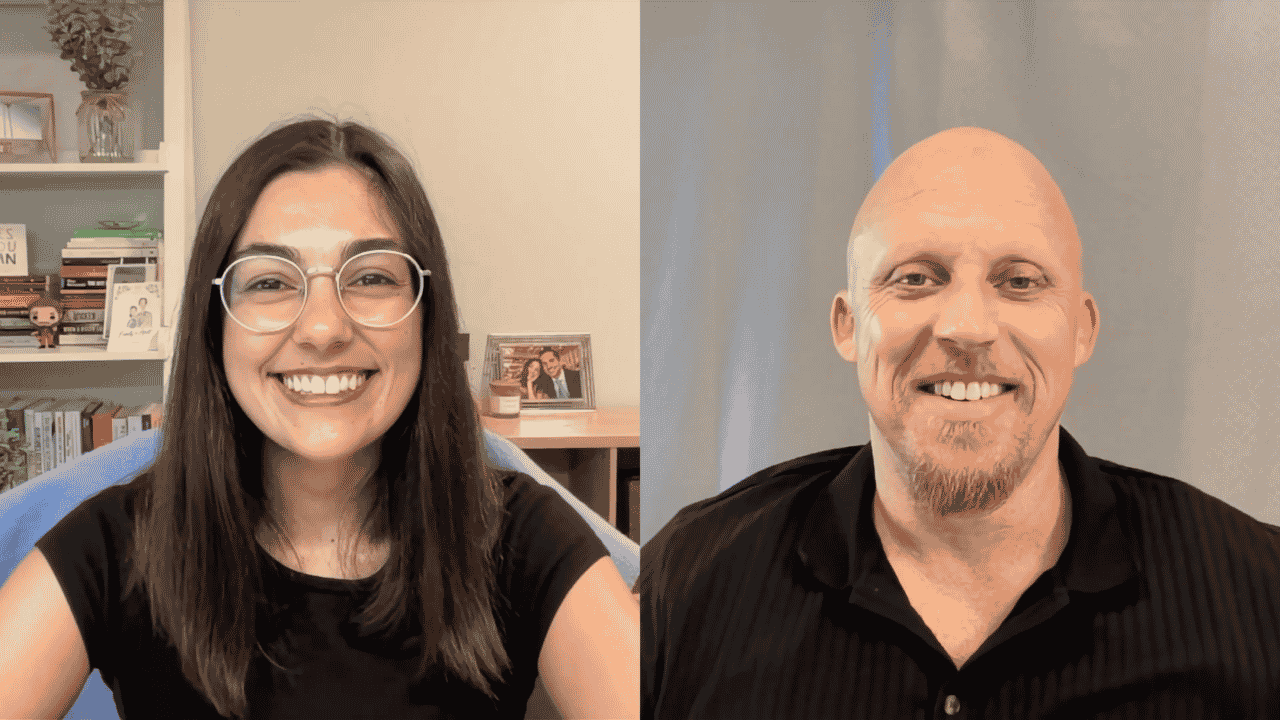
Brian Nelson-Palmer and Emily Guerra
Chapters
00:06 Introduction to Work-from-Home Productivity
02:59 Understanding Productivity Coaching
05:14 Identifying the Audience for Productivity Tips
07:42 Discipline vs. Structure in Productivity
10:46 Energy Management vs. Time Management
13:30 Recognizing Personal Energy Patterns
16:14 Creating a Dedicated Workspace
18:52 Practical Tips for Work-from-Home Success
26:54 Establishing Boundaries in Shared Workspaces
28:52 The Importance of Ergonomics
36:37 Understanding Screen and Keyboard Setup
46:13 Ergonomics and Desk Setup Essentials
50:41 The Importance of Personalization in Workspaces
54:37 Managerial Strategies for Team Productivity
01:03:13 Fostering Open Communication and Support
01:08:00 Closing Thoughts on Productivity and Connection
Today’s Guest
EMILY GUERRA
Mindful Productivity Coach, Speaker, and Founder of The Productivity Flow

Emily Guerra is a mindful productivity coach, speaker, workshop facilitator, and the founder of The Productivity Flow. She specializes in helping remote professionals, solopreneurs, and corporate teams move from constant overwhelm to clarity, focus, and sustainable high performance without burning out in the process. She is a fierce advocate for ditching the hustle culture that leaves remote workers feeling exhausted, teaching individuals and organizations how to build routines that prioritize work-life balance and mental well-being so that workdays actually end.
Known for her unique approach that blends traditional time management with neuroscience and therapeutic principles, Emily’s expertise is forged from her own experiences navigating the modern work world. After graduating during the pandemic and facing the hard truth that burnout isn't a personal failure, she spent years studying and testing neuroscience-backed productivity methods in real life. Today, she consults with a wide range of professionals, helping them stop fighting against their natural brain functions. She is also the creator of the Energy-Based Task Planner, an AI-powered tool designed to help users track their energy patterns and plan their days accordingly.
What sets Emily apart is her absolute refusal to teach hustle-culture productivity or push rigid systems that ignore real life. Instead of treating a lack of discipline as a character flaw or a motivational issue, she reframes it as a structural problem. She provides a unique blend of practical, human-centered insights—from tracking circadian rhythms and establishing firm household boundaries to making better decisions with less mental fatigue—that remote workers can implement immediately. She truly believes that productivity is not about how many hours you work, but how well you manage your energy.
Connect with Emily:
LinkedIn: Emily Guerra
Website: https://theproductivityflow.com/
About Emily: https://theproductivityflow.com/about/
Tools: The Energy-Based Task Planner

Why Subscribe To The Email List: Brian shares separate hacks, tips, and actionable learning exclusively for his email subscribers. Sign up so you don’t miss out!
About The Creator/Host: I’m Brian. At age 4, I was diagnosed with insulin dependent (type 1) diabetes and told that my life was going to be 10-20 years shorter than everyone else. As a kid I took time for granted, but now as an adult, time is the most precious thing that I have. After spending a career hands-on in the trenches as a leader at all levels, I now train Productivity Gladiators to level up their careers. Graduates wield superpowers in time management, practical leadership, communication, & productivity. If what you’ve seen here intrigues you, reach out, let’s chat!
“Time is the currency of your life, spend it wisely.”
Transcript
Brian Nelson-Palmer (00:06)
I'm Brian Nelson Palmer. On this show, I share personal practical productivity skills that will make you more productive and advance your career. And in this episode, we're talking about work-from-home productivity. How do you set yourself up to actually get things done? And with me on the show today is Emily Guerra, who is the founder of The Productivity Flow and a Productivity Coach. Emily, thanks so much for being here.
Emily | The Productivity Flow (00:33)
Thanks so much, Brian. I'm honestly so excited to be on with you.
Brian Nelson-Palmer (00:36)
And now for those folks who aren't familiar with you, introduce yourself and talk about how you're related to our topic today.
Emily | The Productivity Flow (00:44)
Yeah, for sure. So I, like Brian said, I'm the founder of the Productivity Flow and a certified productivity coach. And so basically I am all about helping people who work from home either full time or part-time actually work from home in a productive way, in a sustainable way that makes sure that they do not end the day feeling like they just want to be a couch potato and have no energy for real life, right?
That's not the point of working from home, right? So my job
Brian Nelson-Palmer (01:11)
Sure. Yeah.
Emily | The Productivity Flow (01:13)
is to really help you find the systems, the routines, the habits, the mindsets that enable sustainable productivity and better work from home life balance.
Brian Nelson-Palmer (01:23)
Got it. And now you're not the only productivity coach that's out there. So what what would you say
Emily | The Productivity Flow (01:30)
At all.
Brian Nelson-Palmer (01:30)
makes you different from all the other ones that the person watching or listening
Emily | The Productivity Flow (01:33)
Ooh, yeah.
Brian Nelson-Palmer (01:34)
might have heard of or seen before?
Emily | The Productivity Flow (01:36)
Yeah, for sure. So I feel like I love bringing in kind of two different approaches to all of my productivity coaching that a lot of other products productivity coaches don't necessarily think of. One approach is therapeutic principles. I personally have been in therapy since I was a little kid, and I'm still in therapy to this day. And I fully believe that a lot of the practices that are taught in therapy also have to do with your productivity and your work from home lifestyle and all of the things that enable
A sustainable approach to working from home, right? So bringing in that therapy lens is one reason what why my coaching is a little different than a lot of other people's coaching. I think the second lens that adds a little bit more of a nuance there is I'm a big nerd. I love learning about neuroscience and the brain and how the brain works. And I will do all of the reading so that way you don't have to. And I will just basically tell you.
How your brain is functioning, right? How your body is functioning and some changes that you can make to actually align your approaches with the way you naturally function instead of fighting against yourself, which is arguably what you're probably doing right now, right? So bringing in that neuroscience lens and that therapy lens along with the time management, the energy management, all the productivity hacks that we kind of normally think of with productivity, uniting those three, that's what my coaching is.
Brian Nelson-Palmer (02:59)
Gosh,
yes. Boy, Emily, you and I are like two peas in a pot. I can tell this is gonna be fun because what's
Emily | The Productivity Flow (03:04)
Ha ha
Brian Nelson-Palmer (03:05)
funny is I'm not big into the energy stuff. And I truly believe in therapy, but that's not part of the productivity that I do. For me,
Emily | The Productivity Flow (03:12)
Mm-hmm.
Brian Nelson-Palmer (03:13)
it's all about hands-on practical takeaways, like let's make a difference right now kind of stuff. And so we
Emily | The Productivity Flow (03:18)
Love that.
Brian Nelson-Palmer (03:19)
we overlap a lot and not completely, which is why I think this conversation is gonna be really good. So
With I mean,
Emily | The Productivity Flow (03:25)
Totally.
Brian Nelson-Palmer (03:26)
let's let's dive in. I want to zoom out first just for a second, because our topic today, when we talk about structuring your work from home day and
Emily | The Productivity Flow (03:35)
Mm.
Brian Nelson-Palmer (03:35)
how to be more productive, who are we talking to and what exactly are we talking about here?
Emily | The Productivity Flow (03:41)
Yeah,
for sure. So I think we're really honestly we're talking to kind of everybody, right? I mean, if you work from home in some capacity, whether you are a professional who is working towards a promotion, whether you're a manager, or honestly, even if you're like a college student, Working from home comes at all different levels and all different phases. And so I think that is kind of why I love coaching with people who work from home because it's it should be different for everybody.
And it's going to look different for everybody. And I think that's kind of the point, a little bit, right? And so secondarily though, instead of focusing just on all of the like routines that we kind of think of when we think of working from home, Sure, that's one part of a work from home structure. But I think we also kind of overlook a lot of the other things that really matter for work from home structure, such as boundaries,
And I mean boundaries that you have externally for other people, but also your own boundaries that you need to follow for yourself, So that's a big piece of it. I think mindset is very much a big piece of it, And part of that is also connection. Working from home is pretty isolating, And the more isolated you are, the less productive you're going to be, And so tapping into kind of the holistic lifestyle when working from home.
That's really what I am talking about when we're talking about work from home structure. And again, that should look different for everybody because what works for me is not gonna necessarily work for you, And so that's really what I am referring to when I talk about work from home structure.
Brian Nelson-Palmer (05:14)
Absolutely.
So first, I wanna talk about you as an individual contributor who works from home some of the time or all the time. Like you said, the people that Emily just
Brought up, if you are a college student, if you are a person who's hybrid and works from home one day, two days, three days a week, if you are a fully remote person that works remotely all the time, as an individual, I want to give you some real tangible takeaways with this episode. And then the second thing is if you are a supervisor who works from home some of the time and has a team that works from home or works remotely.
I want to give you some tangible things that you can talk about too, because that that's the two lenses I want to make sure we we dive into. So with all of that, let's zoom in. Let's start with the individual perspective. Let's be selfish. Let's talk about ourselves. So, Emily, for the individual, what are the biggest work from home, whether it's mistakes that you've seen or best practices that you want to share? Let's just kind of go back and forth and have a discussion. What it what comes to mind?
Emily | The Productivity Flow (06:19)
Yeah. So firstly, I just want to say you should absolutely be selfish. I love that you said that because I think so many of us are so focused on other people's priorities, other people's urgencies, other people's deadlines, other people's needs, right? And we allow other people's whatever to dictate our own work from home schedule, to dictate where our priorities are, And that's honestly, that's not how it should work, you know?
So I love that you said that because I think that is very foundational to a lot of the productivity change that I see in my coaching clients, that I've seen in myself, that I've seen in friends and family. It's it is a little bit about getting selfish at first, So I just wanted to say that before I get into the the nitty-gritty details here.
Brian Nelson-Palmer (07:03)
Love it.
Emily | The Productivity Flow (07:04)
but yeah, I think some of the biggest mistakes that I see, honestly, over and over and over again. Number one, this almost obsession with.
Discipline, And what is so interesting. Yeah. So what's so inter
Brian Nelson-Palmer (07:16)
Hmm. Say more. Yeah, discipline in what way?
Emily | The Productivity Flow (07:21)
and I think that's the big question, So so often I will have a new coaching client come to me and they will say, I just need more discipline and my whole day will be better. I just need more discipline and I I'll be able to hit my goals. I just need more discipline and everything else will be easier, As if your discipline and your quote lack of motivation.
is the problem always. And that's not really true. If you look at the most successful people in the world, they don't always have the best discipline. But what they do have is structure. And that structure creates discipline, So kind of overcoming this idea that discipline is really the biggest thing and the only thing that you really need to improve your life, to make some changes, to hit whatever goal it is that you want to hit.
I wanna reframe that, you know, instead of discipline, I want you to be asking yourself, how can I make this easier to follow through on? Cause ultimately that's what discipline is. It's making something easier so that way you actually do it. And so I think that's one mistake. And that's a big, honestly, mindset mistake, I would call it, that I see so often in almost every single one of my coaching clients. And I think
Brian Nelson-Palmer (08:34)
Yeah.
Emily | The Productivity Flow (08:35)
go for it. Were you gonna say something? Yeah.
Brian Nelson-Palmer (08:36)
Well, I I wanted to I wanted
to say I love
Emily | The Productivity Flow (08:38)
Please.
Brian Nelson-Palmer (08:38)
that you the difference between discipline and structure. I
Emily | The Productivity Flow (08:43)
Yeah.
Brian Nelson-Palmer (08:44)
love that because I feel like that plays right into the discussions I've had. One of my signature sessions is on planning your week in advance. And
Emily | The Productivity Flow (08:52)
Yeah, well.
Brian Nelson-Palmer (08:53)
how do you how do you do that? That's and that is structure.
And there's a component when you're looking for discipline. What what's funny is the conversations that come up often are there are people who plan every 15 minutes all the way through the day. And personally, for me, that gives me like heartburn. Like, my God, 15 minutes, every minute of every day is planned. But
Emily | The Productivity Flow (09:19)
Yeah.
Brian Nelson-Palmer (09:19)
then they explain that no, there are long segments where there is nothing planned and they planned it that way. And they're just
Emily | The Productivity Flow (09:26)
Hmm.
Brian Nelson-Palmer (09:27)
a planner.
And for them, that's the structure that they need. And for you, maybe like for me personally, my calendar only shows where I need to be. if
Emily | The Productivity Flow (09:36)
Mm.
Brian Nelson-Palmer (09:37)
you've been listening to me for any length of time, the calendar is where you need to be, not what you
Emily | The Productivity Flow (09:40)
Mm-hmm.
Brian Nelson-Palmer (09:41)
need to do or what you need to remember. It's where you need to be. So if it's a meeting or if it's a task that I need to be mentally present for and I need to be there for that or something, that's how I think about it. But nothing else goes on the calendar except for where I need to be. And that's
structure and there is a level of discipline in that you need to go, you actually need to do the plan. But if you don't have structure and you don't have a plan, you're never going to find the discipline anyway. So then it's all out the window. And so I I love that like that's like looking at it through a different lens that I never thought about it,
Emily | The Productivity Flow (10:13)
Mm-hmm.
Brian Nelson-Palmer (10:13)
but it's the same concept and it's so important. I like that.
Emily | The Productivity Flow (10:17)
I love that you said that. And honestly, I think what you were just kind of describing too with your calendar, really being about showing up for exactly where you need to be. And then some people, I think you kind of hit the nail on the head here. You pointed out that what worked for that one person, scheduling every 15 minutes of their day, works brilliantly for them because that's their structure, right? But it may not work for you and it it would not work for me personally either, And so that kind of goes into what I was saying at the beginning like productivity is personal.
It should not look this exact same across the board. You do have to take that time to kind of figure out what it is that works for you. And just because it works for somebody else and it doesn't work for you, that doesn't mean that you're any less. It doesn't mean you're doing it wrong. It just means you need a different approach. And that's okay, So I love that you brought that up because I think that is incredibly important. And I think so many people also very much assume that they do have to schedule.
Every 15 minutes in their day in order to be productive. That if they are not outlining exactly how long tasks are gonna take and when they're gonna do it and time block every single second of their day, then they're not being disciplined or they're not being productive, And I would say that's actually another big mistake that I see in so many people, especially who work from home. Because when you work from home, you kind of feel like you always gotta be on, Whether it's on your computer.
Or whether you're doing the dishes or answering the front door for the air conditioning man, as you can tell, that just happened to me. or whatever it may be, you're always on, you're always doing something, especially if you got kids while you're working from home, And so this notion that we really have to be planning every second of the day and this obsession again with time management in combination, honestly, with discipline, I think is a really big misconception as to what
Productivity means and what productivity should really be about, right? And so on the flip side of time management, what I always love to coach my clients and what I see makes the biggest transformation in our coaching time together is actually shifting a little bit away from time management and focusing more on energy management. I find that using the two in tandem is incredibly powerful and helps you create a realistic structure that you're actually gonna follow through on.
Brian Nelson-Palmer (12:37)
So when you say energy management, say more on that because I'm struggling with, okay, is that just mean like making sure you have energy to go to the gym and work out? Like, is it that energy management? Or what are we talking about?
Emily | The Productivity Flow (12:49)
Well, let me ask you this. How many times have you set out to do something? Because you technically you had the time, right? But you did not have the mental capacity. You could not focus. You're you're rereading stuff over and over again because you just are too drained, You are take something is taking you way longer than it should be taking you because you're just not quite there, I would say that's
Brian Nelson-Palmer (13:11)
Absolutely.
Emily | The Productivity Flow (13:12)
the big difference between energy management and time management.
Time management tells you that, hey, you have the time, you should be able to do this. Energy management, though, is like, yeah, sure, do you have you have the time, but do you have the capacity, right? The mental capacity to do this well. Not just to do
it, not to force
Brian Nelson-Palmer (13:30)
Yeah. Yep.
Emily | The Productivity Flow (13:31)
yourself through it, to force yourself into burnout, to force yourself into exhaustion. But do you realistically have the mental energy to actually follow through on this thing? And
What I mean when I say energy management is I first mean it's kind of like a two-pronged approach a little bit. First part of energy management is really understanding your own energy rhythms, right? Again, looks a little different for everybody. We all follow what's called a circadian rhythm, which is basically our internal 24-hour clock that our body follows naturally, It's how we know to go to bed at night, to wake up in the morning when we're hungry, when we're sleepy, all of the things,
Everyone's clock is a little bit different. You know, some people are morning people. They are what we call early birds, Some people are night owls, right? Understanding what your energy pattern is and learning, like, wow, I'm actually super energetic and focused between the hours of 9 a.m. to noon. After that, I kind of teeter off and the rest of the day, I'm really not as on as I would like to be. But now I know I got that three hour period.
where I can just do some deep work, where I can get my biggest priorities done during that period, And I'll have the energy so it feels easy. So I don't feel drained when that three hour period is done.
Brian Nelson-Palmer (14:50)
Yeah.
is is that the is that what you just described? Is that your pattern? Nine to twelve is your prime time when you do deploy? What's yours?
Emily | The Productivity Flow (14:56)
No, so actually my pattern
has totally shifted recently. I recently moved across the country and I swear to God, moving across the country did something to me where I'm like totally on a different like energy pattern right now. And so I'm definitely in my own process of relearning my energy. And I think that's a good like PSA, Like our energy will fluctuate throughout the day, month, year, and it's supposed
Brian Nelson-Palmer (15:23)
Yeah.
Emily | The Productivity Flow (15:23)
to change,
Brian Nelson-Palmer (15:24)
so how do you know that it changed? What's different? It's it'd be really easy
Emily | The Productivity Flow (15:27)
When I'm
Brian Nelson-Palmer (15:28)
for most people to just skip right by this and they probably many people don't even know the energy concept
Emily | The Productivity Flow (15:33)
Yeah.
Brian Nelson-Palmer (15:34)
we're talking about now, or they've never they've never really noticed it. They might have noticed it, but they've never really like put their finger on it and been like, this is mine. And I'm gonna share mine in a second, but I'm curious what was yours and then what shifted?
Emily | The Productivity Flow (15:46)
Yeah, for sure. I originally I would say was very much a morning person where I would sit down at my desk at like 9 a.m. ish, 9 30, and I would just kind of zone in for like maybe two, three hours, So over time though, I've really realized that when I sit down, it's getting harder and harder for me to actually have the energy and the motivation to do my big deep work task, And so I kind of was just listening to myself.
And I was really paying attention to how I was feeling. And I was tracking my energy over time. And I was noticing, wow, I'm seeing a lot more dips in the morning than I am in the afternoon. That used to be flipped. I used to be only a morning person and the afternoons were kind of bl for me, right? But now I'm like noticing, huh? I think my energy levels are totally shifting because in the afternoons now, like two o'clock, three o'clock, I sit down at my desk and I'm like,
Let's get into it. What do I have to do? Like let me spend an hour or two just deep diving into something, no notifications and just focus hour, And so
Brian Nelson-Palmer (16:48)
Yeah.
Emily | The Productivity Flow (16:49)
you just have to pay attention. And I think that's the toughest part, honestly. It really is. Learning your energy pattern is absolutely the toughest part of this. I'd love to hear yours.
Brian Nelson-Palmer (16:58)
Yep.
For me, I am a morning person in that I start out and when I get up in the morning, like I'm the type of person that I can start working without coffee. And as the day goes on, it starts to dip. And then for some reason, mine picks back up after dinner, like in the evening sometimes.
And when I when I'm talking about energy, what I mean is the ability to focus and do like productivity gladiator work. Like if I'm gonna write blog posts, if I'm going to do some editing, like you say you describe it as deep work, but it's the kind of work where I need to focus and I need to turn off all the notifications and I just need to focus in on what I'm doing. I do that well in the morning and I do it well after dinner.
For me, I know that most of my to-do list gets done in the afternoon because most of my to-do list are just a bunch of things that I need to remember to do, and they don't
Emily | The Productivity Flow (17:49)
Mm-hmm.
Brian Nelson-Palmer (17:49)
necessarily need a lot of time. So, what that also means is
Emily | The Productivity Flow (17:52)
Hey now.
Brian Nelson-Palmer (17:53)
how that also manifests itself is when I'm planning my week in advance. Cause I do that.
Emily | The Productivity Flow (17:57)
Mm-hmm.
Brian Nelson-Palmer (17:58)
There, by the way, there's an episode on planning your week in advance. If you haven't listened to it, scroll back. It's a few episodes ago, but my gosh, it is the biggest.
game changer that nobody does and makes all the difference. So it but when
Emily | The Productivity Flow (18:11)
And stuff.
Brian Nelson-Palmer (18:11)
I do it, I look at the important things that I have on my to-do list. What are the big things? What are the big rocks? What are the things that I gotta hammer out? And I put those on the calendar in the morning where they fit so that there is time set aside and I know I'm gonna be in my right zone to do those
Emily | The Productivity Flow (18:27)
Mm-hmm.
Brian Nelson-Palmer (18:28)
things. And that makes a huge, huge difference. And
And Emily, I'm on a roll here. I'm gonna yes and myself
Emily | The Productivity Flow (18:34)
I love it.
Brian Nelson-Palmer (18:35)
here. I have one other thing. There's an amazing study that was done. on when is a person most likely to say yes if you make a request. And I talk about this in one of my signature sessions. It's a really, it's sort of like a life hack thing. It's actually it's the session I do a session on this meeting could have been an email.
I know you listening have been to meetings that could have been emails. And I personally it's one of my biggest pet peeves. I so much that I teach a class on it. Like it's this is a thing. But there are reasons when you do need a meeting and you are 34 times more likely to say yes if it's an in-person request than
If it's an email. So if you need somebody to say yes, if you need your boss to approve a budget request, if you need your boss to approve travel or let you go to a course, if you need something where you need them to approve something or say yes, do it in person. Do not do it via email. And the study that was done was looking at when judges provide more favorable decisions.
Emily | The Productivity Flow (19:39)
Mm-hmm.
Brian Nelson-Palmer (19:39)
in their
courtroom toward the people that are there. And the study found that the first part of the morning and the first hour after lunch are the times when the person is most likely to say yes. So that's your little life hack right there. A totally separate thing, but I was thinking about energy. And even
Emily | The Productivity Flow (19:56)
Yeah.
Brian Nelson-Palmer (19:56)
though my productive times don't match that, I do make sure that if I need somebody to say yes, if they've got a time late afternoon on their calendar this week or next week,
They've got a morning. I will probably wait for next week, unless it really can't wait. I'll wait if I really need a yes, because there's the odds are better according to the research, which is a total Emily, we said we're gonna nerd. That is a total nerd thing, but I had to share.
Emily | The Productivity Flow (20:21)
Love it though. I love
bringing in those studies and like how what does this study mean for my real life? Right? Like, that's I think
Brian Nelson-Palmer (20:28)
Yeah. Yeah.
Emily | The Productivity Flow (20:29)
the whole purpose of these studies like this. And I honestly feel like you pretty much just described the essence
of energy management, aligning when you're going to do something with the energy that you need, That's really it ultimately. And I
Brian Nelson-Palmer (20:41)
Yeah. Yep.
Emily | The Productivity Flow (20:44)
think time management should be an aspect of that, but I do kind of think that energy management.
should come first over time management. Now that's a hot take. I know a lot of people probably disagree with me on that one, to be honest. But it is a hill I will die on because of the amount of times that people have been like, I I can't finish my to-do list today. I'm just too exhausted. But I have this major priority and therefore I feel like I'm not doing enough. And I might end up actually getting reprimanded at work because I didn't do this. Okay, so now I'm guilting myself into doing this even though I'm starving and I need to go eat.
No, that needs to wait. Like you see how you can easily get into that spiral, right? And that spiral
Brian Nelson-Palmer (21:22)
Spiral. Mm-hmm. Yeah.
Emily | The Productivity Flow (21:25)
just completely deteriorates your productivity, deteriorates your focus, your motivation, all of the things, So that is, I think
Brian Nelson-Palmer (21:31)
Totally.
Emily | The Productivity Flow (21:32)
these two things in tandem is exactly why energy management to me is a bigger priority over time management.
Brian Nelson-Palmer (21:39)
Energy management for your work from home. Remember that one. That's a notice your pattern. I hope from the examples we just gave you, if you have never noticed before, you can now notice and try it out. Try it for yourself. Plan your week and your takes around that.
Emily | The Productivity Flow (21:49)
Yeah. Well yeah.
And you know what? I think so I actually just launched a planner that helps you do exactly this, literally. My planner,
Brian Nelson-Palmer (21:59)
Nice. Okay.
Emily | The Productivity Flow (22:02)
I call it the a very on-the-nose name, the energy based task planner.
It helps you plan your tasks based on your energy. However, I've added some fun features to the planner. It is an AI-powered planner. And the reason I incorporated AI into this planner is because I want to help you easily track your energy patterns.
Easily understand your own energy rhythms, right? So my planner will actually give you like little pop-ups and little insights and little tips and tricks for how to take your energy patterns that you're noticing over time and apply that to your scheduling, apply that to your planning, So it's basically taking everything that we're talking about here and putting it into practice in a realistic way. Yeah.
Brian Nelson-Palmer (22:46)
Okay.
So check out. I'll have that link for you in the notes
Emily | The Productivity Flow (22:49)
Yeah, for
Brian Nelson-Palmer (22:49)
so you can check out the energy planner. Very cool, Emily. And so
Emily | The Productivity Flow (22:52)
Yeah, thanks.
Brian Nelson-Palmer (22:53)
keep going back and forth. I have one, which is because I basically as I was thinking about this. my gosh, I have I'm like so ex as you can probably tell, I'm talking a little fast. I'm kind of excited about this topic. my gosh.
Emily | The Productivity Flow (23:04)
Same.
Brian Nelson-Palmer (23:06)
you need a separate space for your productivity if you're gonna work from home.
Emily | The Productivity Flow (23:10)
Mm.
Brian Nelson-Palmer (23:11)
if any of what I describe sounds like your current situation, I'm gonna advocate for you to get a better work from home scenario. You can't work in the living room. It doesn't work. You need a place where you can close the door, close the area at the end of the day, So I advocate for a room or a curtained-off area or something that is.
it's not the living room and it's not the bedroom. You need a work area and you need to walk away from it at the end of the day. So, a couple of things. If your family walks through the space while you're on a video call or while you're working, that's probably not the optimum productivity. Now,
I recognize you might be in a tiny one-bedroom apartment in a big city like New York, or you might like there's a lot of circumstances where you might not have
Emily | The Productivity Flow (23:58)
I was just about to say that, yeah.
Brian Nelson-Palmer (24:01)
you might not have the luxury to do this. And I I recognize that. you need to find a way to create a space that is your workspace, that's not your living and rest of your life space.
If you really like if it's an office job and you actually really work and you take calls, you take Teams calls or Zoom calls or that kind of thing, I I really love for that space to be one where you can close the door or close it off and take the call without having to force everyone else to be quiet or like you need to just be able to jump on a call real quick because you're being productive if it if it's a work environment kind of thing. So that's my thoughts. What
Emily | The Productivity Flow (24:38)
Totally.
Brian Nelson-Palmer (24:39)
anything to add there?
Emily | The Productivity Flow (24:40)
Yeah. So as somebody who used to live in a studio apartment and work from home while living in that studio apartment, and I worked from home full time, right? So I had
Brian Nelson-Palmer (24:50)
Mm.
Emily | The Productivity Flow (24:51)
no office escape, So how do you create that separation of space when you literally do not have separation of space, right? That is arguably one of the most important things for product like you literally just said, It it does matter.
And so I think number one, creating almost a fake separation by using different tools around you. So let me explain. I personally, when I was living in that studio, I would actually use lights and lamps as my border for my office. So I had one lamp behind me, I had one lamp on the corner, and my desk was set up in the very corner of my living room, right?
And so I was in the corner that way. I was away from the kitchen. I was away from the TV and sofa area. And there was nothing really behind me. So I I did that on purpose to try to create like, okay, this section of the living room is living room. This section of the living room is office. Right. And so
Brian Nelson-Palmer (25:49)
Nice.
Emily | The Productivity Flow (25:50)
sure, when you look at it, it looks like the same room. But when you enter that corner, you were like entering my office. And then I had it extra bright.
Because I had extra lamps and extra lighting surrounding my desk area. So that way when I was turning on the lamps, it was almost like I was turning on my office. And then when I was turning off
Brian Nelson-Palmer (26:10)
Nice.
Emily | The Productivity Flow (26:11)
the lamps, it was like I was turning off the office. Right. And so I created
Brian Nelson-Palmer (26:15)
Whoa, yeah.
Emily | The Productivity Flow (26:16)
like a mental separation there that really enabled me to tr feel like I had two separate spaces, even though it was literally the same 500 square feet.
Or probably
Brian Nelson-Palmer (26:28)
Yeah.
Emily | The Productivity Flow (26:29)
much less than that, actually. so that's just like one, you know, little hack, one way for you to kind of
Brian Nelson-Palmer (26:34)
I love that.
Emily | The Productivity Flow (26:35)
get creative, Especially when you have those limitations. Like, and I know a lot of us do, you know. So another thing that you can do, if you don't and you can't have a door, even though a door is always preferred, if we're being honest, But get one of those like cheap dividers off of like Amazon or Wayfair or something, right? They can be super cheap.
And you just know that you open the divider when you're in a meeting. So let's say you live with somebody, if that divider is open, that's their cue to then, okay, we can't go and bother them. They're they're working over there, And so part of this really a lot of, or I should more say, if you're living with somebody and this is kind of your situation, big piece of this is communicating your boundaries, communicating what your setup means, letting them know, like, hey.
As soon as this divider is open, that means that I am in deep focus or I'm in a meeting. Please do not bother me. It's essentially my do not disturb, right? Or if my
Brian Nelson-Palmer (27:30)
Yeah. Yep.
Emily | The Productivity Flow (27:31)
lights are on, that's how you know, like I'm in my office and I'm not in the living room, Communicating these things is so incredibly important because if they don't know, they're gonna overstep your boundaries. And then you're gonna get mad and it's gonna be a whole thing, So just communicate it up front.
Brian Nelson-Palmer (27:46)
Totally.
Emily | The Productivity Flow (27:47)
Get creative with how you can get those separate spaces.
And you can make it work for sure.
Brian Nelson-Palmer (27:52)
I want to add to that with my wife and I have a rule that Monday through Friday from eight to five,
if we pass each other in the house, just because we're walking by does not mean that it's time to catch up or how's your day or social
Emily | The Productivity Flow (28:06)
Yeah.
Brian Nelson-Palmer (28:07)
or whatever. You are allowed, and it you will not start a fight if you do this, you're allowed to say work mode. And that's the understanding in our house
Like you said, boundaries. It's that, all right.
Emily | The Productivity Flow (28:17)
Boundaries.
Brian Nelson-Palmer (28:18)
We we both work from home. And for us, we're fortunate in that each of us has a separate room that is the office that we can close the
Emily | The Productivity Flow (28:24)
Mm-hmm.
Brian Nelson-Palmer (28:25)
door and stuff. But that doesn't stop me from needing to go to the bathroom. And that's not necessarily in that room. So then if we happen to catch each other in the common area, I can still be thinking about the last meeting I was in and the next meeting that's coming up, and I don't have to
to stop focusing because
Emily | The Productivity Flow (28:39)
Yes, yep.
Brian Nelson-Palmer (28:40)
I don't wanna not be rude or something like that. Yeah.
Emily | The Productivity Flow (28:43)
Exactly.
Again, communicating those boundaries, letting each other know
Brian Nelson-Palmer (28:46)
Yeah.
Emily | The Productivity Flow (28:46)
exactly what's up. So that way there's just no tension also because that tension can totally be avoided, you know?
Brian Nelson-Palmer (28:52)
Yep,
completely. You know, I want to shift gears. I have another one. Emily, I feel like I'm on a roll. I got another one. And I feel like this one is super important, which is can we just talk about ergonomics for a second? Because the ergonomics
Emily | The Productivity Flow (29:04)
We
Brian Nelson-Palmer (29:05)
of your workspace is super important. And so what I'm gonna do right now I'm gonna give you this is your quick shot at I've got five things for you that you need in
Emily | The Productivity Flow (29:14)
Okay.
Brian Nelson-Palmer (29:14)
your ergonomics of your workspace. So I'm gonna tell you what these are and then
This is a whole rabbit hole and there's way more to this. And if you haven't gone down the YouTube rabbit hole of setting up your work from home, ergonomics, whatever, then this is like your little taster. This is like you go to the ice cream shop and they give you a little sample and you're like, this is good.
Emily | The Productivity Flow (29:33)
Little sample.
Brian Nelson-Palmer (29:35)
This is your sample of ergonomics. But if you just make these changes, this is a game changer for your productivity. So number one, there's five things. Number
Emily | The Productivity Flow (29:41)
love. I'm excited. Ooh.
Brian Nelson-Palmer (29:45)
one, chair.
Your chair should be so comfortable that you can sit in it all day. And many people say I can't afford the expensive Herman Miller chairs. I've talked to a lot of folks over the years who are like, well, you know, my office, they pay for it if it's in my office, but if it's work from home, that's a privilege and they don't contribute to that. Or you work for yourself or you whatever. I've
Emily | The Productivity Flow (30:08)
Yeah.
Brian Nelson-Palmer (30:09)
seen some of the worst chairs. And if you are sitting there and you have to like,
Move or you have to move around or you have to like stretch in the middle. You should be able to sit in your chair for a few hours and not get uncomfortable. And so here's an example. For me personally, I have a Herman Miller chair. Those chairs are sixteen hundred dollars, and I bought mine for a hundred dollars on Facebook Marketplace because there are so many businesses
Emily | The Productivity Flow (30:35)
I was just about to say that.
Brian Nelson-Palmer (30:38)
that
You know, they they refurbished their conference room and they have the Herman Miller chairs or they got new office. These things are available secondhand all the time and they're not a lot of money. So please, please, please. Number one, a chair that you can sit in all day. You need it. Necessary.
Emily | The Productivity Flow (30:55)
I just wanna add one thing to the chair. I feel like
Brian Nelson-Palmer (30:57)
Yes.
Emily | The Productivity Flow (30:58)
for me personally, I I have ADHD too, right? So if I have something that I can like play around with, like sometimes that actually helps my focus just because of my neurodivergency. So like pay
Brian Nelson-Palmer (31:13)
Nice.
Emily | The Productivity Flow (31:14)
attention also to like, do you want what are these called? Armrests.
Like, do is that something that you genuinely want? Do you want them to move? Right. Like how are like are you fidgety? Like, are there things
Brian Nelson-Palmer (31:23)
Yeah. Yeah.
Emily | The Productivity Flow (31:25)
that you like think about the work experience, Not just like the feeling
Brian Nelson-Palmer (31:29)
Mm-hmm.
Emily | The Productivity Flow (31:30)
of it, but also like what you need to do. Like, do you need the do you have a monitor where you want to move around a little bit? Like those kind of things. Full picture, you know? I just wanted to chime that in, especially with my ADHD. I feel like people are probably like, This girl's swaying left and right. Her chair is probably horrible.
It's just my idiot.
Brian Nelson-Palmer (31:47)
If you're watching the video
right now, Emily is a very enthusiastic mover when she talks. It's true. And the
Emily | The Productivity Flow (31:52)
I move a lot. I can't help it.
Brian Nelson-Palmer (31:54)
the the th the you know, the yes and there that I want to say is there's also a concern about what if I spend a lot of money on the chair and I don't like it or that kind of thing.
Emily | The Productivity Flow (32:01)
Yeah.
Brian Nelson-Palmer (32:02)
You have permission to buy and sell chairs on Facebook Marketplace over and over and over. So you could try the Herman Miller chair that everybody raves about and it doesn't work for you. You bought it for $100,
Emily | The Productivity Flow (32:12)
Yeah.
Brian Nelson-Palmer (32:13)
you can sell it for roughly almost $100, probably the same. And then you buy a different one secondhand and a different one third hand. And so I would advocate if you haven't found the chair that you love already, if you don't know what that is, then start getting them secondhand, work your way through them.
get another one, change it out. If that one doesn't
Emily | The Productivity Flow (32:31)
That's all right.
Brian Nelson-Palmer (32:32)
work, change it out again. And then when you get the good one, then if it's really worth it and the good one wears out because it's already secondhand, you could buy that one new because you already know that it works. And then it's worth spending all the money on because they charge a lot of money for these chairs. So they last. Absolutely.
Emily | The Productivity Flow (32:48)
But they last, you know? They do last.
Brian Nelson-Palmer (32:51)
my secondhand Herman Miller chair has is
Four years in and it's still kicking and it's awesome. So highly,
Emily | The Productivity Flow (32:57)
See?
Brian Nelson-Palmer (32:58)
highly recommend. Second, number two,
Emily | The Productivity Flow (33:01)
Yeah.
Brian Nelson-Palmer (33:01)
screen height. Your monitor should
Emily | The Productivity Flow (33:03)
Amen.
Brian Nelson-Palmer (33:05)
be straight ahead of you. You should
Emily | The Productivity Flow (33:07)
huh.
Brian Nelson-Palmer (33:08)
be probably looking at between around a third from the top, should be right where your eye line is, and it's right there. So
If you don't have this now, you can use reams of printer paper, you can use yoga blocks, you can use books. I have I've had the ghetto fabulous version of monitor risers for a long time until I finally got actually no, I truth truth be told, I'm still using yoga blocks right now because I'm I'm redoing my office so it's a it's I'm looking over here because that's like they're they're right there. so
Emily | The Productivity Flow (33:41)
Yeah. There you go.
Brian Nelson-Palmer (33:43)
Yes, yoga blocks are a thing, but the screen height is important because if you are looking down, you ever been on a on a Zoom meeting or a Teams meeting with somebody and you can tell that they're looking down at you? If
Emily | The Productivity Flow (33:54)
Drives me crazy.
Brian Nelson-Palmer (33:56)
if you are that person, stop it right now. There are laptop risers that you can buy on Amazon for like ten dollars. They're very inexpensive.
Emily | The Productivity Flow (34:03)
Literally.
Brian Nelson-Palmer (34:04)
I'm even gonna nerd out and I'm gonna give you the link to because I record and I'm on Teams meetings and I present and I speak and stuff.
I tried one of the cheap Amazon ones, but it shakes, it vibrates if the desk moves or if I get enthusiastic
Emily | The Productivity Flow (34:16)
Mm. Yeah.
Brian Nelson-Palmer (34:20)
and I hit the desk, then the you know I'm using my it's on the laptop and it moves like this and then the my the video is affected or the distracts the people. So I have a tank of a laptop riser that doesn't move at all and it's
Emily | The Productivity Flow (34:35)
Nice.
Brian Nelson-Palmer (34:35)
awesome. So I mean
These things exist, but the bottom line for you is your screen height has to be up there. Whether it's a laptop or an extra screen, fix your screen height so that you when you sit in your chair, you're looking a third from the top of the screen. That's where you want.
Emily | The Productivity Flow (34:51)
I I love this. And I also just want to add, I think there is some slight just like, I don't want to say obsession. I feel like I've said that word enough on this podcast already. But I there it is a little bit of an obsession though of posture lately, Especially like especially Gen
Brian Nelson-Palmer (35:08)
yeah. Agreed.
Emily | The Productivity Flow (35:10)
Z is totally into posture right now, but even just it's so such a common topic, And one of the things that really hurts
hurts your posture long term is looking down, right? And this goes for your phone too, not just your computer.
Brian Nelson-Palmer (35:24)
Yeah.
Emily | The Productivity Flow (35:25)
How many times are you looking? Are you let's standing in the grocery line and you just see people looking like this, And what's going
Brian Nelson-Palmer (35:30)
yeah.
Emily | The Productivity Flow (35:31)
to happen to your neck long term? You're
Brian Nelson-Palmer (35:33)
Yeah.
Emily | The Productivity Flow (35:34)
going to turn into, I'm sure we've all seen them, those adorable little grandparents who have this like crazy humpback right along the bottom of their neck. That is what you are creating.
every time you're looking down for a long extended period. Think about that, right?
Brian Nelson-Palmer (35:50)
True story.
Emily | The Productivity Flow (35:51)
It really, it's I I don't mean to scare people, but I think it's important that we actually understand what the physiological consequences of looking down like that really are, And it it there's a lot of like mindfulness people will also say that like you're when you're looking down, you're actually like hurting your confidence because you're you're looking
Brian Nelson-Palmer (36:11)
Yep.
Emily | The Productivity Flow (36:12)
down.
Versus if
Brian Nelson-Palmer (36:13)
Yeah.
Emily | The Productivity Flow (36:13)
every if anyone has like ever heard of like the Superman pose, like a great way to build confidence. You put your hands on your hips, shoulders back, chin up, looking up at the sky and the future, Looking
Brian Nelson-Palmer (36:27)
Mm-hmm.
Emily | The Productivity Flow (36:27)
up builds confidence. Right. So if you're constantly looking down when you're on your meetings, you are hurting your confidence physiologically and psychologically.
So I just wanted to chime that in there
because
Brian Nelson-Palmer (36:37)
Ooh.
Emily | The Productivity Flow (36:38)
I think those are important pieces when we're talking about the ergonomics, right? Like why do ergonomics matter? This is why.
Brian Nelson-Palmer (36:43)
Hot take.
Love that. Got so true. All right, number three, screen size. You, if you work on a laptop, you should have an external monitor or two that you use. Your primary monitor should not be your laptop. And I say this: I have a 16-inch screen on my laptop, and it's still not big enough. And here's why.
If you ever do this, if you ever lean forward to try to see something on your screen, then this is a sign that you don't have a big enough screen. Get yourself a big enough screen. They're less than $100 for a brand new one on Amazon, or you can get them for free on Facebook Marketplace. There are so many people and so many extra flat screen, flat panel monitors. So
Emily | The Productivity Flow (37:34)
Mm.
Brian Nelson-Palmer (37:35)
you need a bigger screen and then
the other thing that I want to share is it's easy to adjust the zoom level on your device. It's in the display settings for whatever Mac or Windows, whatever. And you can adjust how much it's zoomed in. On Windows, it's like 100%, 125%, 150%. You can change it. And on Mac, it it's actually a graphic. It shows you how big the text is or whatever. But changing that zoom, the bottom line is I want you to sit comfortably in your chair and you should never have to squint.
You should never have to lean forward. You should never have to move to comfortably see your screen and do your work.
Emily | The Productivity Flow (38:15)
Amen. No need to cause extra wrinkles. Truly.
Brian Nelson-Palmer (38:19)
True story.
Your lack of wrinkles will appreciate you for not. Yes, if you do this, if you do
Emily | The Productivity Flow (38:23)
Literally. Your skin will thank you. And your back. And your neck.
Brian Nelson-Palmer (38:27)
this, you're getting yes, wrinkles, neck, posture, the whole thing. It's true. Okay.
Emily | The Productivity Flow (38:31)
All of it, all of it. So true.
Brian Nelson-Palmer (38:35)
Number four, keyboard height. And this one's interesting because your keyboard height is
Emily | The Productivity Flow (38:39)
Wow.
Brian Nelson-Palmer (38:41)
supposed to be.
Just slightly below the level of your elbow. So if you sit in your chair and you let your arms hang and you put your arms, your elbows at a 90-degree angle, so your hands are straight out, your keyboard should be slightly below that spot. So it should be slightly down from there, just a little.
frankly, what this means is your work surface probably shouldn't have a drawer underneath it. Because
Emily | The Productivity Flow (39:06)
Mm.
Brian Nelson-Palmer (39:07)
in order to get your keyboard at that height, if you notice, if you actually just did what we just said, your
Emily | The Productivity Flow (39:13)
Yeah.
Brian Nelson-Palmer (39:14)
hands are gonna be just about sitting on your lap. They're gonna be almost right there. So
Emily | The Productivity Flow (39:18)
Yeah. Mm-hmm.
Brian Nelson-Palmer (39:20)
to get that height,
There's two or three things that we can do. First, if you have one of those desks that has a keyboard tray and you have an extra keyboard and a mouse down there, that will help you with that comfortable setting. But if you don't have a keyboard tray and instead what you have is a table, if you work on a table and you can't adjust the height, then what you can do, and this is it's gonna seem ghetto fabulous when I tell you this, but trust me, if you raise the height of your chair all the way up.
so that you come up to the height of the table. So if the table is like right above, it's like this far from the top of your legs. You're right up there. And then go get some yoga blocks or some reams of paper or something for your feet to sit on. So that you're not like a kid sitting in a bar stool with your feet hanging, like your legs. You need to be able to sit all day. So that's
Emily | The Productivity Flow (40:14)
Mm-hmm.
Brian Nelson-Palmer (40:15)
how if you can't adjust the height of your table, then you can adjust the height of your chair and the height of that your feet are resting on.
Get up there, but that keyboard height that makes all the difference. If you're up here, if you sit like this, because you got to get your hands up top to do the keyboard, it's gonna it's gonna affect that productivity. It's gonna, it's by the end of the day, it's gonna be noticeable. You're gonna sit, your hands might fall asleep. You might have been doing that if you're working on a laptop or something, like you're gonna notice it if you're if you're leaning on your elbows, like that, that kind of thing. So having your hands down.
And you're not resting your, you know, your your wrist right on the the bottom
Emily | The Productivity Flow (40:55)
Mm-hmm.
Brian Nelson-Palmer (40:56)
of the lip. Your hands should be hovered above the keyboard flat like that.
Emily | The Productivity Flow (41:02)
I love that. And I think what I have noticed when I really paid attention to my keyboard height, right? Firstly, I love that trick. I wish I knew that trick when I was like setting up my whole desk. That was brilliant. I feel like the biggest thing for me that I noticed was suddenly my shoulders and my neck didn't hurt nearly as much anymore because I wasn't doing this all day anymore.
And I I could relax. I I could like.
Brian Nelson-Palmer (41:28)
Yes.
Emily | The Productivity Flow (41:29)
roll my shoulders, So that
Brian Nelson-Palmer (41:31)
Yeah.
Emily | The Productivity Flow (41:31)
was totally transformed how my body felt, which then transformed how well I could focus, which then transformed how much I could get done. Right. You see that connection there. And I think that's the importance of of ergonomics, One other thing that I find that really helps me, especially if I have one of those days where I'm writing all day or typing all day, I love having my little squishy whatever, what is this guy called? I like
Brian Nelson-Palmer (41:54)
Yes. Holding mine up
too. Yep. Absolutely. Yeah.
Emily | The Productivity Flow (41:58)
Yeah, I don't know what it's called, but I I personally
got the We Geeks one. They should sponsor me because I I talk about it a lot, but this
Brian Nelson-Palmer (42:05)
Awesome. There you go.
Emily | The Productivity Flow (42:07)
one I love. I genuinely love. I could do a little sticky on the bottom if I wanted to, but I move around too much, so I don't. But I and I have one for my mouse also, a little mini one. So throwing it out there. It really helps you not
Brian Nelson-Palmer (42:20)
There you go.
Emily | The Productivity Flow (42:20)
get those like red marks on your wrists or whatever if you're typing a lot.
Brian Nelson-Palmer (42:24)
Yes.
Absolutely. I agree. And by the way, when you do that, it's helpful if you are not resting your wrist on that thing. Maybe it's maybe you're resting your your back here, like
Emily | The Productivity Flow (42:38)
Yeah.
Brian Nelson-Palmer (42:39)
it's underneath here, where and by here, if you're listening to this, it's like underneath your wrist, maybe like an inch. If you look at where your watch band would
Emily | The Productivity Flow (42:48)
yeah.
Brian Nelson-Palmer (42:48)
go, maybe you're resting it where the watch band, the bottom of the watch band, further toward your elbow.
That's a great place to have it resting instead of on because all the veins and everything come right through here on your on your wrist. So it's good to have it back a little bit.
Emily | The Productivity Flow (43:02)
Great call out. Great call out.
Brian Nelson-Palmer (43:05)
okay. I I'm on a roll. Number five, and then I want to get back to your stuff. I feel like I've been dominating, but I I really, this was such
Emily | The Productivity Flow (43:10)
my god, no, this is fun.
Brian Nelson-Palmer (43:12)
like a this was such a, my God, please let me pay this forward to everybody who works from home. Number five, you need a separate keyboard and mouse from your lap.
Emily | The Productivity Flow (43:21)
yes.
Brian Nelson-Palmer (43:22)
You can't
use your laptop keyboard and or your laptop mouse touchpad, whatever. It doesn't work for an all-day thing. It's fine if you're traveling, it's fine for an afternoon, it's fine for a meeting, it's fine for a a temporary thing. But for your actual workspace, you need to have an actual keyboard and a mouse with this the cushy, you know, wrist thing that that Emily was just talking about, because that
is gonna help you be able to go all day and you're never gonna have to stop because something hurts, something fell asleep, something like you can't. If you're leaning, because also by the way, we talked about proper positioning of your elbows and your wrists and your hands and everything, you that the movable keyboard you can put right where your hands fall in the right spot. But your laptops, you can't have your laptop up on a riser and have your hands in the right spot and do that. So what I see most people do
Is they lean forward on the desk and they're talking, they're looking down at their laptop screen, and you can't do that all day. So if that's your work scenario, please, please get an extra one. Like I said, Facebook Marketplace, guys, don't break the bank on this. It doesn't have to be new. There's so many, they're wireless these days. They're just there's so many available, but that that's gonna make a big difference in your long-term productivity working.
Emily | The Productivity Flow (44:45)
You know, I wanna share a little funny story. Somebody that I work with because separately, so one thing that I do outside of my productivity coaching is I'm actually a director of operations for a communications firm, fractionally, And so
Brian Nelson-Palmer (44:58)
Nice.
Emily | The Productivity Flow (44:59)
one thing that I always poke fun of our vice president for, he has no ergonomics in his setup. So he's doing
Brian Nelson-Palmer (45:08)
gosh.
Emily | The Productivity Flow (45:08)
All of the
opposite things that we are talking about is him, So he's looking down at every meeting. You just see he has like light behind him so that he's dark. It's like it drives me crazy and I'm poke fun at him all the time. But because he uses his keyboard on his laptop, where are the laptop microphones on the keyboard? So you know what we hear?
Brian Nelson-Palmer (45:30)
gosh.
Emily | The Productivity Flow (45:31)
Because he also has this horrible habit of just like kind of working on the side when he's in meetings.
Brian Nelson-Palmer (45:35)
Yes.
Emily | The Productivity Flow (45:36)
And
so we'll just hear like he's slamming the keyboard down. And I literally have to mute him all the time because I'm like, hey, like I can literally now I know you're not paying attention. I know I'm gonna have to repeat myself here. So I'm gonna mute you
Brian Nelson-Palmer (45:48)
Yeah.
Emily | The Productivity Flow (45:49)
until I and then I'm gonna call on you so that way you have to purposefully unmute yourself, So that it's like it's turned into
Brian Nelson-Palmer (45:56)
my gosh.
Emily | The Productivity Flow (45:56)
this whole thing. So don't be that person.
Don't be the one that is typing
Brian Nelson-Palmer (45:59)
Don't think I'd be personally. Yeah.
Emily | The Productivity Flow (46:01)
loudly in the meeting and everyone can hear your keyboard, Have a a little
Brian Nelson-Palmer (46:04)
gosh, yes.
Emily | The Productivity Flow (46:05)
lessons of professionalism here and and put the keyboard separately.
Brian Nelson-Palmer (46:10)
Yes. Silent keyboard, quiet keyboard.
Okay, so there's my f those are my five ergonomic things. If please, if you are listening to this on the road or any of that, when you get to your work, please save this episode, come back, check the five things we just talked about. That's it's a huge benefit from work from home. And I know there's more.
Emily | The Productivity Flow (46:30)
One hundred percent.
Brian Nelson-Palmer (46:31)
Emily, what else you got?
Emily | The Productivity Flow (46:31)
one
thing that I would add to your desk setup, it's not necessarily ergonomics, but it really, really does make a major difference, especially if you are living in a city like I am, Chicago, where it can be gloomy 99% of the time and you maybe don't get the best natural light, or if you're
In a room that doesn't have a lot of windows or no recess lighting or whatever the case may be, having some kind of overhead light over you. I personally have I bought this on Amazon. It was like 30 bucks, I think, or something like that. And it's a light that I attached to my desk right behind my computer. So then it kind of curves up over. And if you see in my glasses, the little reflection, if I like angle
Brian Nelson-Palmer (47:16)
Yeah.
Emily | The Productivity Flow (47:18)
it perfectly, you can kind of see it.
so then I have this light always looking good down on me, But it's really nice because if I end up working later into the day and it's starting to sunset outside, I still have good natural light that helps keep me focused, right? So I would say light
Brian Nelson-Palmer (47:35)
Yeah.
Emily | The Productivity Flow (47:35)
is a very important part of your desk setup. And you know, everyone does have different preferences on what kind of lights they prefer, but the way our circadian rhythm works, the way our energy
Patterns work, it's kind of dictated by light, The
Brian Nelson-Palmer (47:50)
Yes.
Emily | The Productivity Flow (47:51)
losing light at the end of the day makes us tired, Gaining light in the morning wakes us up. So think about it in that way. How do you want to use light to your advantage in your desk setup? That'd be the one thing that
Brian Nelson-Palmer (48:02)
my gosh.
Emily | The Productivity Flow (48:02)
I would add.
Brian Nelson-Palmer (48:04)
Emily, I want to yes and you there. If if budget is a thing, here is an inexpensive way to get a crazy amount of light. So when I was first starting podcasting, I I needed light so that there were no shadows. And also
Emily | The Productivity Flow (48:18)
Yeah.
Brian Nelson-Palmer (48:18)
the speaking stuff, like I you need to be able to see me.
Emily | The Productivity Flow (48:20)
Totally. Yep.
Brian Nelson-Palmer (48:21)
And so the setup that I found, they you know, if you if you go look online and you nerd out on what the lighting setup should be.
You can see that you basically need like light in three angles in order to not have awkward shadows. And
Emily | The Productivity Flow (48:34)
Yeah.
Brian Nelson-Palmer (48:35)
I at the time when I started didn't have money for like good lights or anything. So let me tell you this: there's torch lamps at Walmart for $10. And there are floor standing lamps. And you know, they're the kind with the the globe so
Emily | The Productivity Flow (48:49)
Yeah.
Brian Nelson-Palmer (48:49)
that they just emit light everywhere and they shine light up so it's not shining right into your eyes.
And then I went on Amazon and you can buy LED light bulbs that are like 350 watt equivalent bulbs. They're just insanely bright. My wife walks into my office and she's like, my God, I can't. She's like, it's so much light. I can't
Emily | The Productivity Flow (49:13)
Why bit?
Brian Nelson-Palmer (49:13)
because my light, my office like just beams. It's like sunlight. And I have the,
Emily | The Productivity Flow (49:18)
Hello.
Brian Nelson-Palmer (49:19)
I have the whatever it's like.
3000K or 2700K is the color of the light that's more similar to sunlight or that warm tone.
Emily | The Productivity Flow (49:25)
Yeah, yeah. That warm, yep.
Brian Nelson-Palmer (49:28)
And so as a result, to your point, like, man, my my office is so bright and I don't get tired, which is also super helpful. And it's great for all your videos and video calls and stuff. You're never gonna be that person that's awkwardly lit from the back. And if you work remotely, people judge you for that.
Like that's a if if you were if if you're not in person, if you don't have an in office job, if this is not a a one time thing, if your regular setup isn't good light, that there's like a perception there that I don't know how good their work from home thing I like there's a I Yeah. So
Emily | The Productivity Flow (50:04)
It is interesting, yeah. No, I've noticed
that too. I have definitely actually going back to my example of my VP having that like backlight. So then
Brian Nelson-Palmer (50:14)
Yeah.
Emily | The Productivity Flow (50:14)
he looks really dark. I've we've literally had clients say, like, is Yanni in an okay place? Like where where is he? Like, is he okay? And and he will chime in. He's like,
Brian Nelson-Palmer (50:22)
Yeah. Yeah.
Emily | The Productivity Flow (50:24)
I'm great, guys. Like, what's wrong? And they were like, sorry, we just can't see you. And so it
Brian Nelson-Palmer (50:29)
Right.
Emily | The Productivity Flow (50:29)
it does have to do with this
Perception of professionalism at the end of the day. I think I
Brian Nelson-Palmer (50:35)
Very much so.
Emily | The Productivity Flow (50:35)
think that's really what it is at its core is like, are
Brian Nelson-Palmer (50:38)
Yeah.
Emily | The Productivity Flow (50:38)
they presenting themselves professionally or well?
Brian Nelson-Palmer (50:41)
Yep.
Well, we've been going. I feel like we got time for you to share one more and then I want to move on to a couple of things about being a manager now.
Emily | The Productivity Flow (50:49)
I think one of the things that is so often overlooked in a professional setting, even when working from home, and I think this is shifting a little bit, but something I've actually noticed in my coaching clients is that they
Will try to strip a lot of their personality out of their work from home setup so that way it's just
Brian Nelson-Palmer (51:14)
Mm.
Emily | The Productivity Flow (51:14)
work. And to me, if you were in an office, And you had your little cubicle or you had an office, you wouldn't do that there. You would bring in the photos, you would bring in the hand drawing that your kid made and hang it up on your wall, right? Like you would do all those things if you were in an office. So
Don't discount your work from home space for being personalized like that. Make it you. Make it fun. Like you can see my background here. Like this is all just personal fun stuff back here, Like that
Brian Nelson-Palmer (51:44)
Yeah.
Emily | The Productivity Flow (51:45)
is what reminds you of the bigger picture, I think. And often when we're working from home, we we kind of need those reminders a little bit sometimes. So I just I feel I feel like that personal touch is often overlooked. And I just wanted to throw that in there.
Brian Nelson-Palmer (52:01)
I'm actually gonna disagree with you there on the background. I think you should
Emily | The Productivity Flow (52:03)
Ooh. Okay.
Brian Nelson-Palmer (52:05)
absolutely personalize your work area. However, and this comes from me who does a lot of speaking and presentations and
Emily | The Productivity Flow (52:12)
That's fair.
Brian Nelson-Palmer (52:13)
that kind of stuff, your background is gonna be very distracting for anyone.
Emily | The Productivity Flow (52:18)
And
Brian Nelson-Palmer (52:19)
So if if the message that you're sending is important, if you're in sales, like I have a curtain.
I have a simple curtain. I know a lot of professional speakers that also have maybe they just have their book off to one side or something. But
Emily | The Productivity Flow (52:30)
Yeah, I've seen that. Yeah.
Brian Nelson-Palmer (52:33)
what's gonna happen is if they're looking at you on camera, they're going to look at all the like, look at Emily's background. What is that back there? And while that's for regular meetings, if it's just normal
Emily | The Productivity Flow (52:44)
Mm-hmm.
Brian Nelson-Palmer (52:45)
stuff, totally fine. But if you're gonna be some sort of authority or you're gonna be presenting to a big group or something like that.
I recommend simplifying your background, even if it just means putting a curtain up or turning your screen. Like you can always rotate yourself so that all it is is a white wall behind you or something. Your background can also get in the way of your message that you're trying to come across. So just keep that in in mind if depending on the circumstances in which you're presenting.
Emily | The Productivity Flow (53:15)
Yeah, no, I think that's actually totally fair. And as somebody who has done public speaking before myself, there has been, I can think of actually one time when somebody was like, one of the questions was literally, what's in your background? And I'm like, that's your question? Like, I just did this whole 45 minute presentation and that's what you ask me? Okay, great. And so, you know.
Brian Nelson-Palmer (53:32)
Yep. And you know what,
Emily? They were thinking that the whole time. They did not listen to a word. Yeah.
Emily | The Productivity Flow (53:40)
The whole time I've been. So that was a good call out. I'll I'll totally agree
with you on on like for presentations and public speaking and like when you want to present yourself in that kind of light, right? But I'm
Brian Nelson-Palmer (53:53)
Yes.
Emily | The Productivity Flow (53:53)
still gonna hold true too. I think when you're just doing day to day and you are meeting with with coworkers, clients, whatever it may be, add some personality into it. Because at the end of the day, we're all humans behind the screen, right? And we can't
Brian Nelson-Palmer (54:05)
Okay. Yes.
Emily | The Productivity Flow (54:07)
lose that. We do we can't lose that.
Brian Nelson-Palmer (54:09)
Totally. And that's, you know, if you want to share your personal self, some pe bring your pet on camera, that kind of stuff. Like I think that's totally strategic.
Emily | The Productivity Flow (54:15)
I do that all the time.
Brian Nelson-Palmer (54:18)
And at the same time, I think behind your laptop should be your family photos and your like I do think personalizing is super important. It's just that that background piece. You got me on that.
Emily | The Productivity Flow (54:26)
No, that's fair. Heard, yeah.
Brian Nelson-Palmer (54:28)
So now let's talk about managers real quick. Well let's switch gears just
Emily | The Productivity Flow (54:31)
Yeah.
Brian Nelson-Palmer (54:32)
a little bit. So if you are a manager, then what
Emily,
what how does the advice change? What's different?
Emily | The Productivity Flow (54:39)
So
first and foremost, everything that we just talked about individually, you should still apply that to yourself, right? None of that gets discounted just because you're a manager. What is added though is your level of care for your team's productivity, And I I chose my words carefully there. Your level of care, right? We need to care about how our team is working.
what their energy levels are like, what their productive hours are, when they prefer to take on meetings or not, if they have outside circumstances that will dictate their schedule a little bit. For example, if their children get out at three o'clock at school, You need to know that. And you need to help them make sure that they are setting up their schedule in a way
Brian Nelson-Palmer (55:25)
And
Emily | The Productivity Flow (55:25)
that allows them to get everything done and still go do their personal life without letting any balls drop.
Right. That is actually your role as a manager to essentially be a little bit of a productivity coach, kind of help guide them in a way. And I have found as a director of operations myself and having coached many managers myself, I have found that the best way to do that is to help your team get curious. Ask them the questions, Straight up ask them, hey, like when do when are you most energized in the day?
Have you paid attention to that before? Okay, you haven't? Well, how about you pay attention to that for the next week and then come back to me next week and let me know what your energy patterns are? And here's why. I I just want to make sure that we're scheduling meetings and due dates and all the things in a way that is easy for you to follow through on. Right? Any team member will hear that and will be like, wow, thank you. That's awesome. I would love to give you that information to help me work better. Amazing.
And they'll put in the work to make sure that they give you their energy patterns, And so you're then empowering them to have a more mindful approach to productivity, but you're also empowering your team's goals, your team's productivity and moving forward and hitting all the deadlines and all the things that you gotta hit. So I think curiosity is one of those tools that managers need to entice and tap into a little bit more, getting their team curious and asking those questions. That's how I found.
To be the most effective approach.
Brian Nelson-Palmer (56:54)
I love that. Getting curious about them. I think I would, I'm gonna add to it, get curious about them and curious about their ergonomic setup at home. One of the things I've noticed is oftentimes companies have some sort of ergonomic assessment that they have worked with in the past. If it's not already on call, if it's not already somebody under contract, like big organizations have this built in. They might even have somebody on staff that does this. And so don't
Emily | The Productivity Flow (57:21)
That's true.
Brian Nelson-Palmer (57:21)
ask your team.
If whenever somebody new joins your team, part of being new on your team should be an ergonomic assessment of their workspace. And if it's
Emily | The Productivity Flow (57:31)
I love
Brian Nelson-Palmer (57:32)
at the office, that's great. If it's at home, do it. The expense is not much. It might be maybe $100 to have a third party do it. They can do it virtually if it's from home. Like they can, you know, you just turn the camera around and the person will look at their setup and all the the things I just talked about: monitor height, keyboard height, chair.
All that stuff, it's good to have a third party do it. And as a boss, one of the things that happens as a boss is sometimes it comes across like a nag if you give advice like this or something. Sometimes I don't know, it's like a dynamic, right? Like I can't give my wife advice because I'm the husband. So my job is just to be the teammate or something. And I she probably smack me if she heard me say that. That's not
Emily | The Productivity Flow (58:09)
Yep.
Brian Nelson-Palmer (58:11)
entirely true. But like for the most part, I found that when you're really close with someone, and sometimes that dynamic is with a boss.
Sometimes it's helpful to get a third-party expert who provides
Emily | The Productivity Flow (58:20)
Mm.
Brian Nelson-Palmer (58:21)
that kind of advice because they will receive it differently than if it's just the boss. So recommend the evaluation. If you haven't found this, you can Google your city and you know, ergonomic evaluation or something. There are consultants that do this. if you really are at a loss, you can email me. And I know two that I've talked to in the past that I'm happy to connect you with who do this virtually. So, like those resources are out there, but
Just know that I I recommend just, but don't ask them, would you like an ergonomic assessment? Because if they've never had one, they're going to say no. It's like if you ask me if I want a pedicure, I've never had a pedicure. I'm not going to tell you that I should get a pedicure. But ergonomic assessment is important. So I would actually just make it a something you want to do for them as like a thing you want to do for them and
Emily | The Productivity Flow (59:11)
Yeah.
Brian Nelson-Palmer (59:12)
have them do it regardless. I think that would be beneficial.
Emily | The Productivity Flow (59:16)
No, and I love that you said that because I I totally hear you. And like sometimes team members will take it on a little bit as nagging, to use the word that you used, right? And you know, sometimes I feel like it can be seen as micromanaging, for example, And so I think the challenge for managers, for leaders, is to figure out how to do these kind of things without feeling like you're nagging or micromanaging or forcing, you know? And so I love what you brought up and I I want to
Weave that into what I think is a great approach for getting curious and helping your team kind of see that there could be a little bit some improvements happening there in terms of their productivity, their setup, their structure, is really helping them consider what the options are. I always like, instead of like saying, Hey, like we got to do this test, we got to do this analysis of your ergonomics, like this has to happen, like, don't approach it like that. I would more approach it like, hey.
As being a part of this team, we always offer this. So here's like option A is to get this done by an expert. Option B would be to do it yourself and give me a report back. Option C would be for me to do it with you. Like what would you prefer? Right? So then all of a sudden,
Brian Nelson-Palmer (1:00:26)
Good. Yeah.
Emily | The Productivity Flow (1:00:27)
you're not micromanaging, you're letting them choose. Yet you still get the result that you want. Cause all three options still lead back to you empowering your team to be more productive, right? So that's kind
Brian Nelson-Palmer (1:00:39)
Yes.
Emily | The Productivity Flow (1:00:40)
of how I like to overcome.
that micromanaging sense that a lot of teammates can get. Give them a couple of options, but make sure that all of those options come to the result that you are looking for as a manager.
Brian Nelson-Palmer (1:00:53)
Yes. I wanna take what you said and go another level, which
Emily | The Productivity Flow (1:00:56)
Yeah.
Brian Nelson-Palmer (1:00:57)
is I think when they're working from home and you're their manager, since they are not right there, you might be checking on status of things.
If they're a great team member, then they're on their stuff and you never have to bug them. And that's not the people that I'm talking about. What I'm talking about are the ones that don't get back to you on the email that you needed or don't respond back or are not being effective with that. Emily, I love the giving them the choice thing, which is we're looking at, you know, you didn't do this particular thing or this particular thing. And what I'm sensing here is.
I think are you are you overwhelmed? Tell me about that. Let them tell you. Cause it might be something that's personal or something, maybe they're dealing with something in the family or something like that. It's possible that there's something, but if it's also a trend, you can address it and you can do just like what Emily said, which is, well, I want to give you more tools in this department because I want to bring you up to speed because we can't keep look, you know, I can't keep following up with you on these things. I need you to be able to come through. So if emails struggle for you, then
Either let's get you an online course, or I I recommend this online course, or you can do it yourself. Tell me what
Emily | The Productivity Flow (1:02:09)
Mm-hmm.
Brian Nelson-Palmer (1:02:10)
the course is that you're going to take, but make sure that it has some sort of exam at the end so that you know that they did it. Or you can tell them that you know you could help them too. Like I'm I teach email inbox to zero. That's one of the many things that's productivity gladiator-esque. And so, like, there's a way to do it, but giving them the option, like you said, Emily, I love that, because then it's not.
It's not dictating, but we're also clear on the objective, which is
Emily | The Productivity Flow (1:02:36)
Mm-hmm.
Brian Nelson-Palmer (1:02:36)
I need the communications to be on here. So how are we going to solve this? And let's solve it. And here's some options.
Emily | The Productivity Flow (1:02:43)
Yeah. And choose the option that is best for you that you're gonna realistically do and follow through on. And if you also feel like none of these options are something that you can actually follow through on, give me one. What is it that you would rather do to help us get to this end result? And let's let's work through it. Let's workshop it. Let's make sure that we can do it that way. And if we can't, like let's come up with let's collaborate and come up with something that enables both of us, right? So yeah, I I do think management is
Mostly collaboration, right?
Yeah.
Brian Nelson-Palmer (1:03:13)
Yeah.
I think I think it's that's a lot of it. Well,
Emily | The Productivity Flow (1:03:16)
Yeah.
Brian Nelson-Palmer (1:03:17)
anything else on the manager front
Emily | The Productivity Flow (1:03:20)
one little thing, or I guess it's not little, I shouldn't say that, but one thing that I think, and you kind of touched on it a little bit, is you know, oftentimes there are outside circumstances that we are just not aware of as managers that our team is dealing with, right? And I have found that some of the most impactful leaders take time to chat with their team one-on-one and to learn.
about their life a little bit and actually be there for them, not always as a friend, because you you do want to stick to those boundaries of being a leader and a teammate at the end of the day, but being a support, right? And so that way if let's say a family member passes or they get a health scare or something personal happens that is going to affect their productivity and their effectiveness at work, they feel comfortable to come to you.
And I think that's like really, really important. And a lot of people don't always consider the mindset behind the work. Allow understanding that over when your team is overwhelmed, they're not gonna perform great. That's just science. That's literally how our brain functions, When your team is exhausted, they're not gonna perform great. Again, science, how we naturally function, Understanding that and valuing
mindset and self-talk and and mindfulness and all these things that allow us to be honest and come forward and work through things, valuing that just as much as the results, as the productivity itself will enable your team to honestly transform and soar in ways that you aren't even being able to see right now.
because they just maybe are just feeling so overwhelmed. So I always like to weave in that mindset piece. And this is like where I think my foundation to coaching is is very much like productivity is about the whole person. It's not just about the results. It's not just about the output. Right. So always need to say that,
Brian Nelson-Palmer (1:05:17)
Love that.
Emily | The Productivity Flow (1:05:17)
especially in terms of managers.
Brian Nelson-Palmer (1:05:19)
Yes. And you know, you brought up discussing with them, checking in with them. I want to bring up weekly one-on-one meetings. I think that
Emily | The Productivity Flow (1:05:26)
Yes. So key.
Brian Nelson-Palmer (1:05:29)
is oftentimes, you know, I just I just said I do a session on this meeting could have been an email. I think there are some meetings that are important. And I think if you have direct reports, weekly one on ones with them, especially if you're remote, if you're not
Emily | The Productivity Flow (1:05:42)
Yeah.
Brian Nelson-Palmer (1:05:42)
And well, actually, that's not even true. Even whether remote or in person, it's important for you to have a weekly one-on-one with them for two reasons. One, it's going to cut down on the number of emails because then they
Emily | The Productivity Flow (1:05:53)
Well.
Brian Nelson-Palmer (1:05:53)
know they have access to you to ask you the questions that they have. And they're not going to have to schedule that time. They know they're going to get it every week. So that's actually going to save them some heartburn and save you some effort by having a weekly one-on-one. So it's going to help.
From the productivity and efficiency perspective.
Emily | The Productivity Flow (1:06:12)
Mm-hmm.
Brian Nelson-Palmer (1:06:13)
And also it's going to give you a chance when you start those meetings. The beginning should be tell me about you. How are you doing? What's going on? You should do a little bit of check-in with your person thing. It's about the person. It's not just like, yes, should there be an agenda? Yes. Tip to a good meeting is there should be an agenda. But the
Emily | The Productivity Flow (1:06:31)
Always.
Brian Nelson-Palmer (1:06:32)
beginning of that agenda is talk to me. How are you? What's going on?
What's the latest? What's exciting? What's good? What's bad? Like they're a person. They're a human being. And so make sure
Emily | The Productivity Flow (1:06:43)
Mm-hmm.
Brian Nelson-Palmer (1:06:43)
that you check in with them. And so yes, weekly one on ones. Recommend.
Emily | The Productivity Flow (1:06:49)
I couldn't agree more, honestly. I and even like it's interesting. Like I have a virtual assistant, And virtual, we are truly on opposite sides of the country. And so I make sure that I meet with them every week for an hour. And half of that meeting is honestly just us being besties and us just talking about life and yada yada. And then
Anytime there is a trouble or a hurdle or whatever it may be, he always feels so comfortable coming to me and opening up to me. And then what's awesome is he also always gives me an action plan. So he's like, hey, here's the hurdle. And like, for example, this just happened last week. He was like, Hey, I just got the flu. Like, I am so sick right now. I cannot be able to get to X, Y, and Z until next Tuesday. However,
This is my plan. And he like laid it all out for me for how he's going to solve the problem, right? Even though he's still sick and he just needed a little bit of time. That's what you enable. You enable autonomy when you check in, And I think that is so crucial. So just a little personal example there.
Brian Nelson-Palmer (1:07:59)
Love that.
This
is really helpful stuff on productivity. So so Emily, thanks for sticking around for a few extra minutes for this one. And here's what, so here's what I love. I love that you do this coaching thing and that you've found a way to look at the energy and the energy planner and all these resources that you have to help people do this productivity thing better. And I love that you focus on them when they're working from home.
If if Emily is more your vibe and you want to reach out to her, like please do. But Emily, thanks so much for joining me on the show today and for talking about this stuff. Cause I've been dying to do an episode like this. So when this finally worked out on the schedule, it was like, my gosh, I'm so excited to share this episode. So thanks for this.
Emily | The Productivity Flow (1:08:43)
Well, thank you, Brian. This was honestly so fun. I love learning from fellow productivity gurus like us. It's so fun
Brian Nelson-Palmer (1:08:51)
Yeah.
Emily | The Productivity Flow (1:08:51)
was so fun. I love your energy. I love your show. It's always such a good time chatting with you, Brian. So thank you so much.
Brian Nelson-Palmer (1:08:58)
Yeah. And for folks that want to keep in touch with you, where should they go?
Emily | The Productivity Flow (1:09:02)
Yeah, you can find me at theproductivityflow.com. I will make sure to send Brian the energy planner link so that way it's in the show notes. But if you're interested in my coaching, go ahead and go to theproductivityflow.com. You can find my coaching programs there. You could also get a ton of free resources in my blog, like from checklists to workbooks to all of the things that will enable a more sustainable and productive work from home lifestyle. So definitely check it out.
Brian Nelson-Palmer (1:09:30)
Love that. And for you tuning in, think about someone in your life who works from home. Who is that person? And maybe it's a colleague, maybe it's a friend, maybe it's somebody you haven't talked to in a while, or maybe it's the person you just met at Happy Hour and you're looking for an excuse to talk to them again or something like that. But would you share this episode specifically, the link to this one, with them?
Because I know that Emily and I would love to know that our conversation helped someone who needed to hear this. And frankly, we'd love to be your excuse to reconnect with that person. So also, if you want more productivity insights beyond just the podcast, my email subscribers get access to everything that I create. So come join the email list if you haven't already. And I love sharing Productivity Gladiator with you because together, these productivity skills are going to change your life. That's a wrap.