No More Team Drama: Fix The Productivity Killers That Are Destroying Your Results with Joe Mull
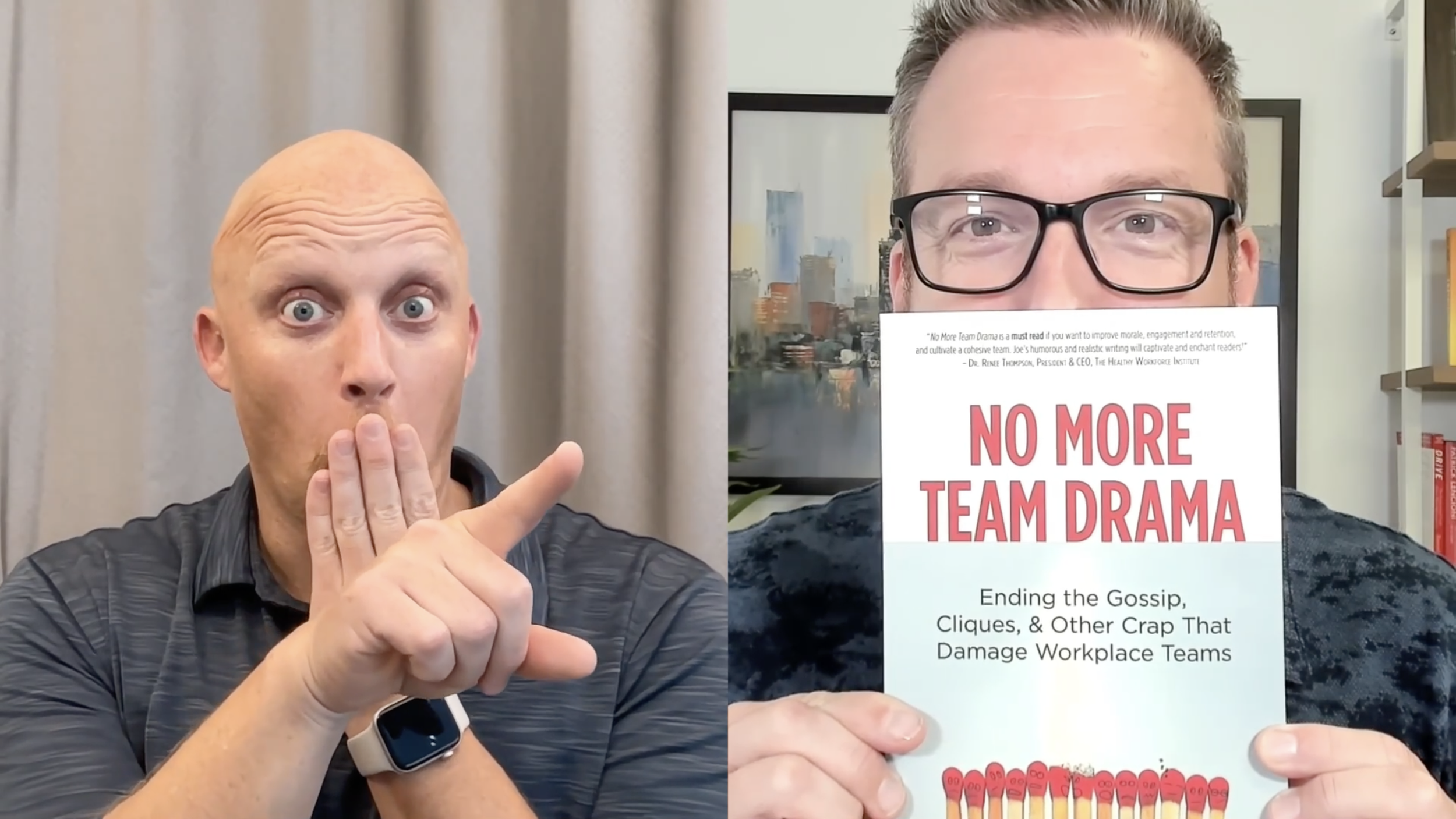
Joe Mull breaks down how to tackle the "meeting after the meeting" head-on so you can stop losing valuable hours to passive-aggressive team drama.
There is a silent productivity killer happening in almost every office, and it usually starts the exact second the official team meeting ends. If you’ve ever watched your private chat blow up with side-conversations while a presenter is still talking, or if you feel like you are spending more time managing personalities than managing actual work, this episode is going to hit home.
I sat down with employee commitment and workplace culture expert Joe Mull to talk about why our tendency to just tell people to "walk it off" is actually destroying our team's productivity. And spoiler alert: the answer isn't ignoring the friction to save time. It’s exactly the opposite. The secret to getting your time back is learning how to tackle team drama head-on.
Joe and I totally geek out on the subtle, everyday behaviors that secretly drain a workplace. He broke down this highly relatable concept of the "smack roll sigh"—that physical manifestation of irritation we all do the second a frustrating coworker leaves the room. We also dive into the "meeting after the meeting" and why the real team drama usually happens in the private side-chats the moment a team huddle ends.
We get super practical, too. We break down the difference between healthy conflict and toxic emotional waste, and why hoping people will just figure it out on their own is a failing leadership strategy. Joe shares his brilliant manager "gotcha" trick to get your team to agree to handle their own conflicts, and we talk about the power of three simple words ("tell me more") when someone comes to you completely fired up. Plus, we have a great discussion about exactly how to handle a complaining coworker by giving them a literal two-and-a-half-minute timer to vent before forcing a pivot to solutions.
If you want to stop losing five hours a week to emotional waste and figure out exactly how to build a high-performing, no-drama work group, this is the conversation you need.
The Video
The Audio/Podcast





References In This Episode
Joe Mull – JoeMull.com – Joe’s home for speaking, leadership development, and resources focused on employee commitment and workplace culture.
Joe Mull on LinkedIn – Connect with Joe professionally.
Key Resources:
JoeMull.com – The main hub for Joe’s consulting and his insights on navigating team conflict and creating conditions where employees thrive.
No More Team Drama – Joe’s book detailing how to end the gossip, cliques, and other crap that damage workplace teams and drain productivity.
Brian’s Resources:
Worth Your Time Calculator – Brian's tool to help you calculate the specific dollar-per-hour value of your personal and work time so you can make better decisions about when it makes sense to buy back your time.
Tools & Techniques:
The 2.5-Minute Venting Timer – Joe’s tactic for managers: asking an employee if they want help fixing the problem or if they just want to vent, and giving them a literal ticking clock to let it fly before pivoting to solutions.
The Manager "Gotcha" Game – Joe’s brilliant 15-second team agreement that forces employees to handle their own conflicts instead of running to the boss to complain.
The "Tell Me More" Technique – Brian’s three magic words to defuse a coworker who comes to your desk completely fired up, keeping you from jumping on their "drama bus."
The Marriage Rule (Wait Until Tomorrow) – Brian’s strategy of waiting a day before addressing a conflict to see if the frustration naturally burns off or if it actually requires a conversation.
Concepts & Frameworks:
The "Smack Roll Sigh" – The physical manifestation of irritation (rolling eyes, smacking lips, heavy sighing) that happens the exact second a frustrating coworker leaves the room.
The "Meeting After the Meeting" – The hidden team drama that occurs in private side-chats, text messages, and gossip corners immediately after the official team huddle ends.
The ChatGPT "Yes Man" Trap – The realization that using AI to process your office frustrations is flawed because tools like ChatGPT are hardwired to be sycophants that simply validate your complaints.
"Gorilla Leadership" – A toxic, ambush-style management tactic where a leader physically drags an employee into an impromptu confrontation.
The Scorekeeper – The absurd office hypocrite who constantly complains that others aren't pulling their weight, despite supposedly being too busy to track everyone else's work.
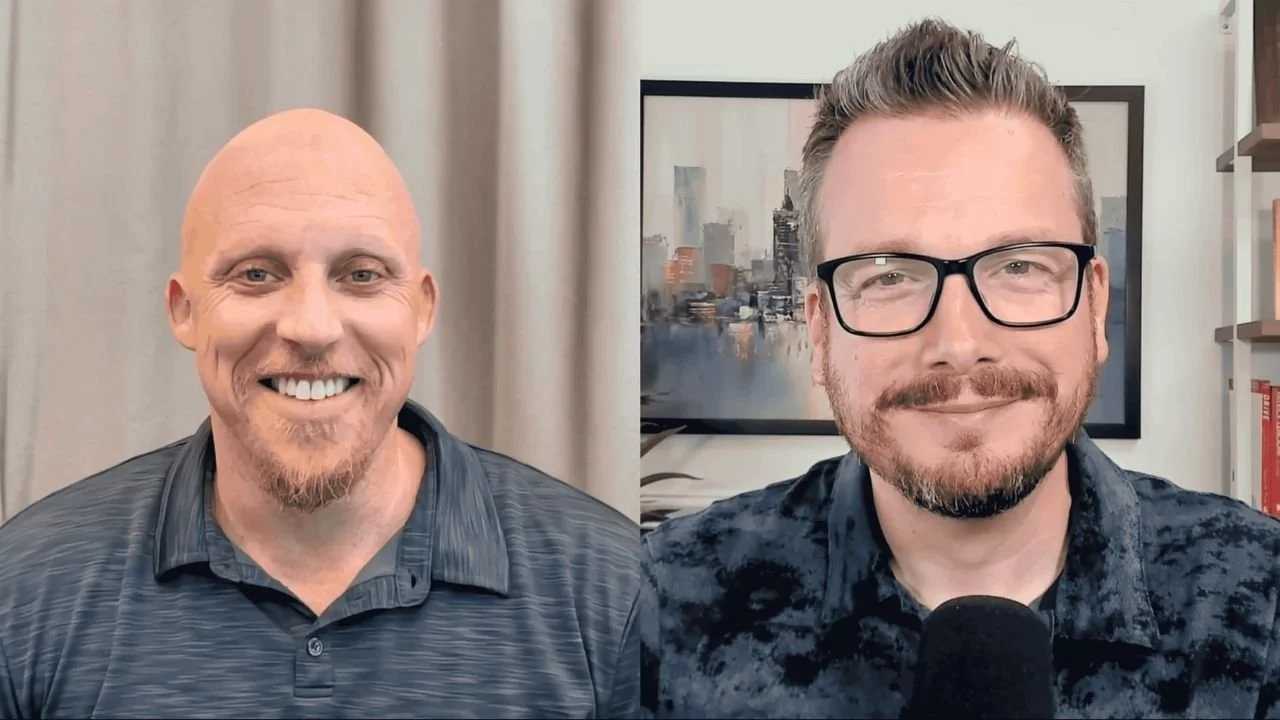
Brian Nelson-Palmer and Joe Mull
Chapters
00:00 Introduction to Team Drama
04:27 Understanding Team Drama
10:11 The Cost of Team Drama
13:48 Individual Mistakes in Handling Drama
24:25 Managerial Strategies to Prevent Drama
29:43 Navigating Team Dynamics: Venting vs. Solutions
31:59 The Stay Out of It Mentality: Leadership Challenges
34:10 Mediation in Conflict: When to Step In
36:57 Healthy vs. Unhealthy Conflict: Understanding the Difference
42:45 Escalation Paths: When to Involve HR
43:53 Time Investment: The Cost of Avoidance
47:05 Identifying Weeds: The Impact of Toxic Team Members
51:35 Success Stories: Transforming Team Dynamics
54:04 Taking Ownership: The Key to Team Culture
Today’s Guest
JOE MULL
Employee Commitment Expert, Hall of Fame Speaker, and Author

Joe Mull is an employee commitment expert and Hall of Fame speaker who specializes in helping leaders and business owners build cultures of genuine commitment in today's complex work environment. He is a fierce advocate for the "Employalty" framework—a practical roadmap for building thriving, people-centered workplaces where employees feel valued and motivated to stay. Joe is deeply passionate about helping professionals navigate team dynamics with clarity, teaching them how to eliminate toxic emotional waste and transform groups of coworkers into high-performing, no-drama workgroups.
Known for his dynamic programs that combine compelling research with magnetic storytelling, Joe’s expertise is forged from two decades of experience, including previously managing training for one of the largest healthcare systems in the United States. He is the founder of Boss Hero School and the author of three books, including No More Team Drama and Employalty, which was named a top business book of the year by Publishers Weekly. His popular podcast, Boss Better Now, ranks in the top one percent of management podcasts globally, and he has worked with organizations of all sizes, from Fortune 500 companies like State Farm and Choice Hotels to growing entrepreneurial firms.
What sets Joe apart is his absolute refusal to rely on theoretical fluff or cliché leadership platitudes. Instead, he provides a unique blend of practical, evidence-based insights that leaders can implement immediately to supercharge teamwork, communication, and retention. When he isn't transforming organizational cultures on international stages, Joe continues to be recognized as a premier voice in his field, having been inducted into the Professional Speakers Hall of Fame in 2025 and named a top 30 management speaker by Global Gurus in 2026. He truly believes that creating a committed workforce is not about finding better employees, but about equipping leaders to build better environments.
Connect with Courtney:
LinkedIn: Joe Mull
Website: Joe Mull
New Book: No More Team Drama

Why Subscribe To The Email List: Brian shares separate hacks, tips, and actionable learning exclusively for his email subscribers. Sign up so you don’t miss out!
About The Creator/Host: I’m Brian. At age 4, I was diagnosed with insulin dependent (type 1) diabetes and told that my life was going to be 10-20 years shorter than everyone else. As a kid I took time for granted, but now as an adult, time is the most precious thing that I have. After spending a career hands-on in the trenches as a leader at all levels, I now train Productivity Gladiators to level up their careers. Graduates wield superpowers in time management, practical leadership, communication, & productivity. If what you’ve seen here intrigues you, reach out, let’s chat!
“Time is the currency of your life, spend it wisely.”
Transcript
Brian Nelson-Palmer (00:06)
I'm Brian Nelson Palmer. On this show, I share personal practical productivity skills that will make you more productive and advance your career. And in this episode, we're talking about team drama and how to fix it so it stops killing yours and your team's productivity. And with me on the show today is Joe Mull, who's a Hall of Fame.
Leadership speaker and employee commitment expert, and happens to be the author of three books, including one called No More Team Drama, which kind of is a spoiler alert for why you're here, Joe. Thanks for being here.
Joe Mull (00:39)
Brian, I am delighted to be with you and I am looking forward to the conversation. Thanks for having me.
Brian Nelson-Palmer (00:43)
Absolutely. And now for those folks who aren't familiar with you and what you talk about, say a little more about how you're related to the team drama and how that kills your productivity that we're going to talk about today.
Joe Mull (00:55)
Yeah, I have spent nearly twenty years teaching leaders how to be better bosses and how to create the conditions at work for employees to thrive. So I nerd out on all the social science research around what leads employees to join an organization and stay long term and give it all they've got in the course of their work. And we know that that leaders, you know, managers, especially frontline and mid-level leaders are
probably the most influential factor in whether or not those conditions are being created. And so for years as I've traveled the country and and done that kind of training, that kind of leadership development work, whenever I would get into the room with leaders and we would start talking about the fires that they're putting out every day and the challenges that they face every day, I would constantly end up talking about team drama. And that's ultimately what led me to write my second book of that title.
Brian Nelson-Palmer (01:44)
Got it. Interesting. Okay. Well, I can't wait for this discussion with you. And you brought up that you talk about leadership. So the one thing I want to know too is there's a lot of people who are leadership speakers. So what would you say makes you different from all the other leadership speakers that like you listening might have already been familiar with? What makes Joe different?
Joe Mull (02:03)
Hmm. You know, I have spent a lot of years really zeroing in on what is probably the most important function for leaders in my estimation, which is, and and I think I alluded to this a moment ago, understanding what the conditions are that lead people to thrive. I think that's the leader's primary job. I mean, let's take for a second, truly a leader's number one responsibility is to keep people safe. But after that, my job as a leader is to figure out what are these people
need every day to be at their best and then fight like crazy to create that for them. And so my work really centers around teaching leaders both the conditions and the conversations that lead to that employee commitment. So from a leadership development perspective, I'm not the guy that you bring in to teach your leaders how to do strategic planning. I'm the guy that you bring in to help you understand how to excel at the people side of leadership.
Brian Nelson-Palmer (02:51)
Got it. Very cool. Thanks for that. And wait, now did I read online somewhere also that you you founded Boss Hero School? Talk about that real quick.
Joe Mull (03:00)
That's
right. That's like a perfect segue, Brian. You're a total pro. So yeah, so Boss Hero School is a leadership masterclass that does exactly what I just described. It focuses on the conditions and the conversations that lead to employee commitment. So for years, as I would keynote or publish books or do our podcasts or be brought into organizations to do ⁓ leadership training, we would consistently get asked, Hey Joe, is there a place where we can send our leaders where you teach them
Brian Nelson-Palmer (03:03)
Ha ha ha
Joe Mull (03:27)
How to be the kind of people-centered, values-driven, ⁓ commitment-focused leaders that you speak and write about. And so after years of getting these kinds of requests, two and a half years ago we launched Boss Hero School, which is really
zeroes in on in the first part a knowledge transfer. Let's give leaders a core operating system so that we understand what those conditions are that we have to create every day. So whether you're the manager at your local dairy queen or you're running a Fortune 500 company, if you understand what those conditions are, you can engineer them in your workplace. And then the second part of that experience is a skill development piece on the conversations that leaders need to
to learn how to have and need to deploy in their work in order to activate employee commitment. So we're we're teaching and training and practicing around things like giving feedback and coaching conversations and mentorship because those are the interactions that ultimately create those conditions for commitment. So that's that's what Boss Hero School is all about.
Brian Nelson-Palmer (04:27)
Very cool. So it's a place you can actually go. Well, let's dive into our our topic today. And first I want to zoom out before we get into like solutions and stuff, because I'm I'm obsessed with those. But I always like to take a second to zoom out. So zooming out first, when we talk about drama, I feel like Instagram and Facebook and social media and politics and all of that really paints a broad
experience of what drama is. So can we like what exactly are we talking about here when we're talking about drama in the workplace? Talk about that, Joe, and like what are some examples?
Joe Mull (04:58)
Yeah. So the definition I have for team drama is that it is all of the actions and the reactions that damage relationships, morale, and culture in the workplace. And whenever I talk about this in in in rooms full of leaders, I get the examples from them. And and you know, every single leader listening to this conversation immediately thought of something when they heard that turn of phrase team drama.
And so if if a leader was sitting with us right now and we were having coffee and I said, What do you think of when you think of team drama? I'm gonna hear things like gossip and clicks and infighting and backbiting. It's it's all the stuff that it's all the ways in which members of teams interact with each other in a way that seems to do harm. And when you go out and and do all the kinds of leadership development work that I've been doing over the past couple of years and you say, you know, what?
Are the things that derail your time, your energy, your attention. We hear a lot about these kinds of things of team drama. And so it's all those actions and those reactions, those moments that occur at work between people that inflict damage on our relationships, on the culture of the organization, and on the morale of the people that are there. And so then, like downstream, we know those have an impact on everything that you care about as a leader and as a business owner, right? They have an impact on.
retention, employee engagement, on revenue, on reputation, on customer experience. Cause you've probably had the experience, Brian, where you've walked into a place of business somewhere and you can tell there's some tension or some conflict or some team drama taking place between members of that team.
Brian Nelson-Palmer (06:36)
For sure. And you know, for for you listening, I know, like Joe said, something probably came to mind. But Joe, can you toss in a few more examples? We're going to look at it from two perspectives. I want to look at it from the individual contributor level because you ultimately have a job and you need to deliver what whatever level of leadership you are, you need to deliver yourself. And then you also have a team potentially that's underneath you or that you work on. So Joe.
If if if it doesn't immediately come to mind, if if somebody, if the person listening is going, Well, I don't know that I have a lot of team drama. I'm pretty like what does this actually look like? Do you have some examples for the individual and for the manager?
Joe Mull (07:15)
Well, beyond the you know the gossip and clicks and infighting, which tend to be the kind of first answers that people think of, there's some very granular things that can happen with people and and on teams in the workplace. So for example, when I I refer to what's called smack roll sigh which i i is something that we've all experienced, even if that's not what you know that it's called. But smack roll sigh is when somebody goes like this.
They roll their eyes and they smack their lips and they sigh, right? Smack roll sigh. It's it's the physical manifestation of our irritation or our unhappiness with something that that somebody else said or did. And it usually shows up right after somebody leaves the room. You know, we we've all probably done a smack roll sigh, and we've all probably been a target of a smack roll sigh after we have left a room. And it's a very kind of granular way that team drama can show itself. Another example is what I call scorekeeping.
Brian Nelson-Palmer (07:41)
Smack roll sigh. Okay. Got it. Yes.
Joe Mull (08:07)
If you've been leading a team and you've ever had a scorekeeper, right? It's that person who comes up to you all the time as the manager and says, Hey, so-and-so's not pulling their weight, or I'm doing so much more than everybody else. And if you think about it, the mentality of the scorekeeper, it's a little bit absurd because if they were so darn busy, how do they have time to keep track of what everybody else is doing? But we see that behavior and it shows up in the judgments that those folks make and then the expectations that they have.
For what they should or should not be getting from their teammates and how their boss should or should not be managing other people. And so that's a form of team drama. One of my other favorites is what I had a leader refer to me one time as church church. And she did this little hand gesture for for your listeners who are watching on video that looks like the chicken dance, right? These little kind of chirping hands next to our ears. I was facilitating a staff development program for a small business and
just for the leadership team. And I said, you know, what are the kinds of team drama that you experience that you find frustrating? And this leader said, I'm sick and tired of church church chur. And I said, What's that? And she said, Well, I'll have a meeting or a huddle and I'll share information with my team and I will try to get them to ask questions or get their input. And nobody says a word until I'm three steps down the hallway. And then seven of my eight members are in a corner in a quiet circle. Chur church church church chur.
gossiping with one another. And I said, you're talking about the meeting after the meeting. And those and so that's a ki a type of team drama that we see in the workplace as well.
Brian Nelson-Palmer (09:43)
Yep. you've ever been in a meeting and then you get the offline chat from somebody if you're like if if you zoom or or teams chat or any of that and you got side conversations happening in the chat, that is or text, exactly, because you don't want it to interrupt the yes, my gosh. All right, I I'm seeing it now. I I gotcha. And you know, talk about I mean you wrote this book on no more team drama and stuff, but I'm curious in the research, like what
Joe Mull (09:55)
Yep. Or text. Yep. Yep.
Brian Nelson-Palmer (10:11)
So this shows about productivity, not about drama necessarily, but there's a cost to all of this drama, which is why we're talking about this. So what do you have some numbers or some metric like what does this actually cost in terms of productivity?
Joe Mull (10:25)
We could spend the next hour talking about just this and about all the different numbers and all the different costs and all the different ways. And you can look at it through the lens of productivity and time and reputation and customer experience. I'm good friends with a drama researcher and speaker named Cy Wakeman, who is brilliant in this space. And she's found in her work that the average employee spends two hours and 20 minutes per day in drama and emotional waste. And we know that leaders tend to spend at least five hours a week on average.
Brian Nelson-Palmer (10:27)
⁓
Joe Mull (10:54)
Managing that drama. And it wasn't that long ago that SHERM came out and had a study a few quarters back as part of their civility index, where they indicated that organizations have lost nearly $3 billion per day in reduced productivity and absenteeism caused by drama and workplace incivility. And that number just keeps going up every quarter. It goes up a couple of hundred million dollars every quarter.
We also know, and this was data that I was seeing in my most recent book, Employalty, about why people leave organizations or why they stay. And there's a ton of data that tells us that about 20% of employees, one out of five, will leave a job due to what they describe as a toxic team culture. And so that becomes a turnover cost in the hundreds of billions of dollars. And so it's interesting, Brian, when we talk about this.
At that kind of global or national level, it it almost feels to me like those numbers are too big to get our heads around, right? So ask the average manager, how much time do you spend dealing with drama each week? And they will talk about it in terms of hours. And you can do some back of the napkin math here, right? Where you figure out, okay, if I've got a manager who's spending four or five hours a week in my organization dealing with drama and
Brian Nelson-Palmer (11:53)
Right.
Joe Mull (12:11)
They're doing that 52 weeks a year, and I've got forty managers in my organization. You know, even in the smallest organizations, you can be talking about a quarter of a million or a half a million dollar a year property.
Brian Nelson-Palmer (12:21)
Seriously. Yeah. A lot of it it's well, and that segues right into if and if you're not, if you haven't already done the back in the napkin math that Joe's talking about here, I I did a a TED talk on the value of your time and I have a calculator on my site. I'll include it in the episode notes here. If you haven't already done this, 'cause you're just tuning in for the first time for this episode. I have a calculator that tells you what your time is worth at work and at home. And it gives you a dollar per hour figure. And so you think about what Joe just said on
How many hours do you personally spend or your team spend on this? And times that by the number that you get from my calculator, which takes five seconds.
that's really interesting, Joe. About the I didn't realize it was five hours a week. Like five hours a week is not an insignificant like imagine if you had five more hours of time. Like I I know what I would do with that because I'm really busy right now. So like five hours would be a mate. That's an afternoon. I could have a whole afternoon. Wow.
Joe Mull (13:11)
Right.
And Yeah. And that number was really
only zeroed in on the managers. If that manager is standing in their office talking to the employee about the drama, we just doubled it. Now we're taking the employees time too.
Brian Nelson-Palmer (13:25)
Yeah, right. Seriously.
Now the employees time too, for sure. Okay. as much as I would love to spend hours talking about the numbers, let's I'm a solutions guy. So let's let's get practical and let's just kind of zoom in a little bit. So start with the individual first. What are the biggest mistakes you're seeing people make in the drama department? And or, you know, what's the what should they do instead? Kind of zoom in for us, Joe.
Joe Mull (13:48)
Yeah.
So I'm going to give you two very specific behaviors that we know are problematic and that just continue to perpetuate team drama. One of them is what I call judgy gossip. And judgy gossip is where you go to a peer or a confidant in the organization when you're upset about something or you're frustrated about something, or you just have some scuttle butt and some news to share about something that you heard or that somebody else maybe observed.
And we know it's sort of human nature that this gives us a dopamine hit because it's nice to be included in the scuttle butt. It's nice to be seen as being in the know. And when we take our judgment or observation to another person and they validate it for us, it makes us feel observant. It makes us feel wise. But everything about that interaction is a colossal waste of time. And over time, it actually does harm.
Because we create what are called drama triangles. And we'll get a little bit more into this in a few minutes, I think. But when you have those kinds of interactions where two people on the team are talking about a third person on the team, what happens when the third person on the team finds out about that conversation? Well, they go to their confidant, they go to their peer and they say, Hey, do you believe that so-and-so and what's her name or over here talking about me? And so we end up kind of connecting and creating these webs of drama in organizations.
That do harm to productivity, that do harm to reputation, that do harm to that sense of team morale and camaraderie in connection that when it's right, lead teams to all be rowing in the same direction together and do things well together. Now, as a caveat to this, Brian, I do want to mention that what I call processing gossip is actually healthy. So the difference here is if I go to a coworker and I say, Hey, do you believe that so and so said this?
That's judgy gossip because I'm just being judgmental and I'm wanting to to play with my colleague. But if I go to you, if you and I work together and I go to you and I say, hey Brian, I just had this interaction with Sharon and it's bothering me and I'm really honked off. Can we?
Can you process this with me? Can we talk about this? Can you do like a check with me to make sure I'm not overreacting? Those are actually pretty healthy behaviors because maybe what I'm trying to do is make sure that I'm not jumping to a conclusion or make sure that if I need to go have a conversation with Sharon, that I'm not missing something or thinking about this in the wrong way. So let's distinguish between that kind of judgy gossip and that processing gossip, which is healthy. The
Brian Nelson-Palmer (16:27)
I think you just
nailed it. I was gonna my follow-up was gonna so what should you do instead without Judgy Gossip? And I feel like you just gave the answer to the to the test question there, which is okay. But processing is good. And I think it's important that when the way that you just phrased it, what I heard was that you weren't taking sides. The first version, the judgy gossip, sounds like I'm trying to find out if you're gonna be my ally or if you're on Team Sharon.
And now we're we're we're cre we're picking sides and we're about to start a battle. Whereas if it's a processing thing, like there is a productivity factor here, which is if what Sharon said about me is true and it's detrimental to the team somehow, it's good that you asked. It's good that we process it. And if you need to apologize so we can move on, that seems way more productive in terms of handling that. So I I'm I'm following you there. That makes a lot of sense.
Joe Mull (17:22)
Well, and you just teed me up beautifully for the second kind of ⁓ specific practical productivity killing mistake that we see, which is avoiding uncomfortable conversations. Because in the scenario that we're talking about here, the right thing for me to do if Sharon said or did something that I don't understand or that's bothering me is to go and talk to Sharon about it, is to go to her and say, Hey, this happened. It's bothering me. I'm having a reaction. Can you and I sit down and talk about this? But we rarely give even a
Brian Nelson-Palmer (17:35)
Yeah.
Joe Mull (17:52)
Adults, the skills to be able to do this. And because we know that it is much easier to seek out the comfort of validation than it is to step into the discomfort of confrontation, we will always go looking for that other person to tell us that we're right, instead of going to the person to say, Can you help me understand this better? Because I'm having this reaction. And so that's the second productivity killing drama mistake is that we avoid these uncomfortable conversations. And that can be true.
For leaders, for managers, right? They often aren't always given the skills, given the chance to develop a a higher degree of comfort with going to someone and saying, like, hey, we gotta talk about this a little bit. And we don't necessarily take the time to teach members of the team how to have those conversations. But if we do, you can dramatically cut down on the amount of team drama that takes place.
Brian Nelson-Palmer (18:43)
Gosh, yes. And when it comes to the crucial conversations, I I think everyone, and definitely you listening and watching me personally, I know Joe for you, it is easier to avoid. It is so much easier to just not engage. So at what point and I'm I'm gonna transparently I in the in my marriage.
This is something that I've learned over the years, is that, you know, it I don't need to have every battle. Sometimes if I wait till tomorrow, it's actually not something that I even need to address. I was a little fuming at the moment. I was a little riled up at the moment. But by the time I get to tomorrow and I look back at it, I'm like, I just don't even care anymore. But if it's still bothering me, then I know that that's when I need to have the conversation with Sharon that we were talking about.
Is that do you would you agree with that? Am I off there? Do you have a different advice on like when do you just let it sit and not engage? And when should you engage?
Joe Mull (19:42)
No, I'm I'm with you on that. I think it when we when we take time to think about what we know and understand about how our brains work and how and where emotions come from, right? We know that we've got these two levels of processing in our brain. We've got that that fast system and that slow system. And you know, I think a lot of the folks that are listening have probably read, you know, Thinking Fast and Slow by Daniel Kahneman, which is just an incredible book about understanding.
This distinction that you're talking about here, that so when things happen, our first plush reaction is kind of this lizard brain, which is this emotional reaction. And then with a little bit of time, that emotional reaction gets processed at a deeper level of thinking, which sets us up to then later have a response instead of a reaction. And so I coach leaders all the time that you're not wrong to be mad at work if somebody says or does something that
that upsets you, you know, you're a human being. You're allowed to be mad. You know, you're allowed to get, dare I say, pissed, right? You're allowed to have strong reactions to things. What matters is what you do with it. And so the best thing for you to do, you know, if somebody drops the ball at work, we want you to address it when the ball is on the ground. Right. It's not helpful or or healthy to go to a member of your team and say, hey, three weeks ago this happened and it was a problem. Like we we need to have those conversations in a timely manner.
But we also need to have responses and not reactions. So go home, have a glass of wine, take a couple of deep breaths, let that emotional reaction burn itself off a little bit. And then when you come in the next day and you can sit down with that person, you're gonna have a much more thoughtful, careful response and be a little bit more intentional about how you address it than you would be if you just gave yourself permission to react.
Brian Nelson-Palmer (21:27)
makes perfect sense. if if it's bothering you, write it down. and I love what you said, Joe. You know, there's a book called One Minute Manager that talks about you should
Address it at the time, like immediate positive reinforcement, but also immediate, no, that's wrong. We need to fix that. That helps the feedback loop, that fast feedback loop is really good. And when it's an emotional reaction for you, write down the emotion. Write it. What is it bothering you? Whatever it is. And if it's still bothering you the next day, you can go back to what you wrote. You can compose that thought a little more organized. And hey,
Pro move chat GPT is really good at digesting stuff like this. So if you haven't ever tried digesting your emotions with AI, these days everybody's doing it. I so I mean, try it. But ultimately, in terms of getting your thoughts into a constructive conversation that you could have with someone, that digestion, if it's still bothering you the next day, that's when maybe it's worth addressing the emotion as opposed to the situation. So I don't know what your thoughts are.
Joe Mull (22:27)
I will
push back just slightly on one thing that you said, and it's sort of a mini caveat inside of it. And that is when we're using AI tools to process our feelings and emotions, we have to remember that they are built to be sycophantic. They are built to tell us that we're right. And so they're going to by default validate our emotions. And they may miss the challenges and that we need to to to
Brian Nelson-Palmer (22:31)
Okay.
true, yes.
Joe Mull (22:53)
To ourselves to break down assumptions we are making. So one of the things that we coach around in this book, No More Team Drama, is that if we find ourselves in a situation where we're frustrated with somebody else's behavior or actions or attitude, that we sometimes have to take a step back and say, what would make a good person act this way? Am I is my brain making up a story and making there are some shortcuts our brains take every day that
assume bad intent and assume character flaws in other people. And that actually leads to a lot of team drama. And Chat GPT is not always going to ask that question. Chat GPT is hardwired to say, you're right, this is a problem. And so if we have to go into those conversations with those tools knowing that.
Brian Nelson-Palmer (23:34)
Yes. And I will say if you haven't ever role played I use AI a lot to role play on how would you react to this? Because it will tell you all it will tell the negative of the other person. And to your point, like it likes that because then it gets to have a personality and it's not telling you you're bad, but it's telling you what it thinks about the other. So like if you haven't ever role played with AI before.
Joe Mull (23:48)
Mm-hmm.
Yeah.
Brian Nelson-Palmer (23:59)
That
would be a new skill. I encourage you to try it because it helps you look at a situation from multiple perspectives.
I like that. ⁓ so let's take it up a level now. That was some of the individual stuff that you were talking about. And then would you is there anything you would add from the manager perspective? Now, if you're the manager of the team, it's not just you personally. What the
You know, the mistakes that you see people make and what are what should they do instead?
Joe Mull (24:25)
I think one of the biggest mistakes that leaders can consistently make is feeling like that their job when team drama is taking place is to be entirely reactive and to think about how do I address it when it happens. And so this sort of mental orientation just leaves that leader in a position to always be putting out fires. The the leader's job, if they really want to cut down on team drama, is to think about how do I proactively prevent it from happening in the first place. And so that means that as a leader,
I am thinking about how do I create a culture where people treat each other with courtesy and respect? How do I create a culture where everybody understands and agrees to a set of basic rules about how we're going to treat each other, how we're going to talk to each other when we disagree? We as leaders have to take ownership for teaching members of our teams, not just what those expectations are, but how to do it.
You know, I think a lot of of ⁓ leaders have had the experience where somebody comes into their office and they says, Hey, I'm I'm really frustrated with so-and-so, and I'm done with so-and-so, and I'm I'm tired of them doing this, and you gotta fix it. And if we've done some work as a leader to create a culture where members of a team understand that if they're upset with someone, that you go to that person, then the manager is empowered in that moment to say, Hold on, time out. How did the conversation go, Brian, when you went to so-and-so?
well, I don't want to rock the boat. I don't want to get involved in all that. If you do some proactive work around a staff agreement where you talk to your team about, hey, how do we want to handle it when conflict rears its ugly head? How do we want to handle that? Here's an interesting ⁓ game to play with your team. Pull everybody together and say, hey, if somebody is upset with you over something that you said or did, what do you want their first step to be? Do you want it to be coming to me as the boss and talking to me about it?
To a person, everybody on the team's gonna say no. If you got, if you've if you've got a problem with me, if if you're upset with something I said or did, then then bring it to me. I want that to be the first step. So then you as a leader get to say, great, can we all agree on that? Yes. Congratulations. You all just agree that you have to go the other way, right? That if you're upset with something that somebody said or did, your first step is not gonna be go to your buddy. Your first step is not gonna be meant to make snide remarks. Your first step is not gonna be to come to me and complain. It's gonna be to go to that person.
Brian Nelson-Palmer (26:32)
Yeah.
Joe Mull (26:43)
And say, hey, this happened. It's bothering me. Let's talk about it. And so when everybody sets those expectations and is operating from that common framework, when that employee walks into your office and says, I'm done with so and so, and you say to them, Have you had the conversation? And they say, No, you get to do two things in that moment as a leader. The first is you get to say, Hey, hold on a minute. You agreed to this.
We agreed that if there's if these kinds of things were happening, that we were going to go to each other, you stood in front of your teammates and said that's how you would handle it. If you don't do that in this moment, how are those folks going to be able to trust you again? And that's powerful. The second thing you get to do as a leader is you can say, now, like, sit down, let's let's talk about how that conversation is gonna go. What are you gonna say? Let's role-play it. Let's get you ready to approach that conversation in the healthiest way possible so that you can leave here and go and have it.
and handle it in the the healthiest, most adult way possible.
Brian Nelson-Palmer (27:38)
Absolutely. I love that. and you know, one thing that you're kind of hitting on here, Joe, that's a sort of a an anecdote that I have for you listening or you watching is the I describe them as volcanoes. I these people, my family had my dad was kind of a volcano I'll call them out. I'm share this might be oversharing, don't judge me, but my dad was a bit of a volcano and he and
Joe Mull (28:01)
So was mine. I know exactly what
you're talking about. Mm-hmm.
Brian Nelson-Palmer (28:03)
And
what happens is everything's fine. Something would bother him, and it's fine. Everything's good. On the surface of the volcano, nothing's happening. It's all good. Everything's fine. Everything's fine. But the pressure is just building. And it's like so frustrated, but you're not venting any of it. You're not letting it out. So then you build it up and you build it up.
So venting it, having the conversation that Joe just said about like you gotta share the thing. You have to address the thing, especially if it's still bothering you the next day. Like we just talked about it. Write it down. If it's still bothering you, then you gotta let it go. Because then when you address it, you can let it go. And then you're not building up.
the thing so that you're going to explode like a volcano. Don't do that. So like, my gosh, this is such a healthier thing. And as a manager, facilitating those discussions so that your team is not constantly, everything's fine. Everything's fine. That's gonna be that's gonna be really helpful.
Joe Mull (28:45)
Mm-hmm.
Hundred percent.
Brian Nelson-Palmer (29:01)
What about any other thoughts on ⁓ like that was super productive? All right. So managers should be having, encouraging the conversations to happen, setting it up so that their team understands they should be happening. What else? Any other thoughts for the manager there?
Joe Mull (29:15)
You know, I think the manager in those moments too, one of my favorite sort of scripts or or questions to coach managers on when somebody comes into your office and wants to complain about something or somebody else, we we as leaders can often jump right to fixer mode and and that that we're gonna jump in and we're gonna fix it, or we need to have the answer. And that is not always what people want. And so sometimes just when somebody comes into the office with a a frustration or a complaint, it could be really powerful in that moment to say,
Are you asking me to help you fix it or are you just here to vent? Because when you ask people and you frame it that way and you give them two choices, you might be surprised at the number of times a member of the team says, I'm just here to vent. And then you, as the leader, can define what healthy venting looks like, which is like, okay, great. Let's, you know, I've got two and a half minutes before my next meeting. I'm not trying to be abrupt or cut you short, but go ahead, let it fly. Let's hear it.
And then they can let it out. And it's like, okay, does do you feel a little bit better? Yep. Okay. And maybe there's a coaching opportunity in that moment, right? To ask some open-ended questions, to help that person sort through what they know and what they think and what they feel. ⁓ and and they can leave that interaction feeling a little bit better about unloading that. And then at the leader, you don't have to as the leader, you don't have to take ownership for fixing it. You're not accountable for fixing it. And and you don't turn yourself into that sort of
a a a bundle of response and okay, here's another fire that I have to put out just by asking that question.
Brian Nelson-Palmer (30:38)
Yeah. That makes a lot of sense. Do it's it's almost like the and the and the magic words, by the way, the three magical words. If somebody comes in and they are charged up and they have something and they start with you and they're like, my God, I'm so fr they're like so up there. There are three magic words. Tell me more. You don't have to say anything else. You probably need more information. You don't have to jump right in and come up to their level.
I'll like you don't have to jump on the bus with them if they're on a bus going somewhere you don't want to go. But like, yeah, you probably need more information. And so that, man, that that just reminds me of the tell me more thing. That's ooh, that's good, Joe. What about the the stay out of it mentality? I feel like sometimes there's a big with drama and so I mean we talked about avoidance earlier for the individual, but now as a manager, sometimes it treat I don't know if you ever watched Friends. I my family was a big Friends.
⁓ sh watcher and monica's closet was a thing. If you've never seen it, it's where Monica has that closet where she just throws everything and it's not organized. and I feel like sometimes with drama it there's a Monica's closet mentality where it's like, no, just don't, just don't I'm a leader. I don't want to be involved. I can't be involved. La la la la So like, talk about that. What's the
How do you avoid when is it good to stay out of it? When is it not good to stay out of it? Like what are the things you can see?
Joe Mull (31:59)
Yeah.
You know, I think if we recognize as leaders that one of our fundamental obligations is to coach people through through moments and through challenges, then we don't get we're not allowed to get away with that, right? And and that kind of stay out of it mentality operates at a couple of different levels. And sometimes it's happening because the the leader's uncomfortable with conflict and they're uncomfortable with ⁓ maybe not knowing how to help others resolve it. And so that's a a ⁓
Professional development and a leadership development challenge that that person needs to take on for themselves to develop the skills and the knowledge to learn how to help people navigate conflict in the workplace. And we all know what happens if you keep lifting up the rug and sweeping the dirt underneath the rug. You end up getting a really big mess there. And eventually somebody's going to trip over it and all of a sudden you're going to have an even bigger mess on your hands. The other side of that, though, is let's say we have that manager who
Who does some of what we just talked about, Brian? Right? They put in a little bit of work to pull the team together and say, how are we gonna handle conflict when it when it arises? And what are we gonna do? And how are we gonna talk to each other? Okay, now go and do that. If the manager then goes like this and says, Well, I told him what to do, and they try to wash their hands of it, just because you did that proactive work.
Doesn't absolve you of the guidance and the coaching and the mentoring that people might need to step into the discomfort of some of those conversations. And so that's where staying out of it isn't necessarily healthy. It's healthy to set those expectations and teach people and give them the skills. And it's healthy to challenge them to step into those conversations without you early. But if those issues aren't getting resolved, then you might have to step in and assist.
Brian Nelson-Palmer (33:38)
And when you step in and assist, I feel like sometimes it's a it becomes a referee situation. And oftentimes if you're in a referee situation, sometimes that means HR might need to be involved if we're in a referee situation or something like that. So is there do you have any advice for sort of the addressing team drama?
without becoming the office referee or like making things worse, or are we or is that just kind of circling the same stuff we've already said?
Joe Mull (34:10)
Well, the proactive work is the same because if you set the the the core values and the expectations and you teach people how to give each other feedback and you teach people how to break down assumptions and you define those healthy behaviors for resolving conflict, then you can keep pointing to them and asking people to embrace them, especially if you've got two people who are just oil and water and they maybe are are frustrated with each other or don't get along. But every once in a while, you do get people in the workplace where the conflict runs deeper than that.
And so there are times when a leader might need to mediate. And there's, you know, there's plenty of resources in the world around what that healthy mediation looks like. But at the at the core of it is sitting down with two people and saying, hey, this can't continue as it is. We need to open up some lines of communication to figure out if and how we can coexist and to ensure that everybody involved is showing up in a way that is not doing harm.
Not doing harm to our team, to our culture, to our workflows, to our productivity, to our customer experience. And sometimes you get there and sometimes you don't. And if you don't, then it's that that changes the conversation, right? At least you have clarity. Okay, we're not going to resolve this. If both parties stay the same, if both parties stay, then we have some potential harm. So we need to figure out an exit plan for some or both. But most of the time, what ends up happening is.
The leader sits down and does some basic mediation rules of saying, I need you to talk to each other, I need you to use I statements, I need you to restate what you're hearing from the other person, and we're gonna start to work through this together. And you know, the doing this well requires some subtlety and some nuance. I was at a conference a couple of years ago where a leader on stage bragged about how when two people on the team aren't getting along, if one of them walks into her office.
And starts talking about the other, that leader goes, Hold on, walks out to the cubicle farm, gets the person that was the subject of the complaint, brings them into the office, sets them down in the chair, and says, Sharon came in here to complain about you and had some other things to say, and I thought maybe you should hear it. Which sounds sort of like gorilla leadership, but that's not the healthiest way to go about it, right? There's there's a difference between saying to Sharon,
Brian Nelson-Palmer (36:21)
No.
Joe Mull (36:27)
Hey, understand you're frustrated with so and so. You understand that we're going to have to have a conversation with so and so at some point in order to move past this. That that's a different and more a proactive level of healthy for for mediating those kinds of situations.
Brian Nelson-Palmer (36:42)
Yeah. it's this all centers around conflict, right? We've got conflict, and then there's unhealthy conflict and healthy conflict. So I think you talk about moving from unhealthy to healthy conflict. So can you can you dig into that a little bit?
Joe Mull (36:57)
Yeah. So unhealthy conflict is is that drama triangle that I talked about, which is where instead of going to the person, you go to another. And that person in in the models is often referred to as the rescuer, right? They believe that their participation in that conversation is altruistic, right? My coworker needs my support. They need my ear. They need my advice. And none of that's true. That's bunk. They're there because it's good to be included in the scuttle butt. And I'm kind of just a little bit glad that.
That it's not about me. I'm not the person being talked about. And then we get that dopamine hit that we that we talked about. So that's the unhealthy conflict model. The healthy conflict model, which we've talked about a little bit here, is when someone says or does something that you don't understand or that you don't agree with, you go to that person and you sit down with them. And you've taken the time, if you're having a big reaction to it, an emotional reaction to it, you've taken that time to to to gather yourself. Maybe you need to wait a day or two.
And then you sit down and you say, This is ha this happened, this is bothering me. I want to talk with you about it. And maybe even before that conversation, you've done some work to challenge your own assumptions. One of the things that we talk about to really disrupt team drama is to teach people, whenever possible, to assume good intent. Now that does not mean ignoring bad behavior, but that means to assume good intent. What would make a good person act this way? Okay, this person has been late four times this week.
Maybe they're lazy, maybe they don't care, maybe they're a poor planner, maybe they don't care about the impact that their schedule has on everybody else. That might be true. That could be the story. But what else could it be? What would make a good person act this way? And then sometimes we get to the place where we think maybe they got something going on at home that's keeping them from getting out the door this week.
Maybe they're dealing with an illness. Maybe they're the bus schedule has changed and there's something that's preventing them from getting here on time. And we become a more forgiving and more collaborative human being when we take that moment to ask ourselves those questions and to try to step closer to the circumstances that might be leading someone to show up in a way that others are are judging. And so we have to, especially as leaders, we have to teach people how to engage in that thinking and that deconstruction of assumptions that sometimes
pop into our heads and that our brain wants to treat as fact.
Brian Nelson-Palmer (39:14)
Got it. So would I be oversimplifying or do I miss it? What what I hear is kind of two perspectives. I hear a healthy conflict as direct conversation with someone in a civilized way, andor putting yourself in their shoes to try to figure out okay, what trying to understand where they're coming from. An unhealthy conflict would be jumping to conclusions andor pulling in other people.
that is not a pr in not a productive way, like just to gossip or pick sides or something like that. Is that did I miss it or is that a is that oversimplified or is that pretty accurate?
Joe Mull (39:44)
Absolutely. Absolutely.
It's not oversimplified. And and I I probably left out a really important ingredient of this though, Brian, which is that we also have to teach the person on the receiving end of that conversation how to hear it, how to receive it. Right. So if I come to you and I say, hey, Brian, this is happening and it's bothering me and I want to talk to you about it. And you say, Okay. And I I tell you the story of what I observed and what my reaction is. And I say, Hey, can you help me understand? And you say, brother, you are full of, you know what? And you let's say you dismiss me.
Brian Nelson-Palmer (39:59)
True story. Yes.
Joe Mull (40:19)
Or what actually happens is, so let's say, let's put this into a very specific context. Let's say you've sent an email to the team that I thought was crappy, that I thought was inappropriate or mean-spirited, or there's something about the tone or the the email that you sent to the team that I have a problem with. So I come to you and I say, Hey, Brian, this email, this bothered me. I'm having a reaction to it. I need you to understand how this landed. And you say to me,
Okay, well, I don't know what you want me to do. We have a lot going on. I had to put all of that in that one email because I wanted to make sure we were being efficient. This all needs to get done by the end of the week, or the client's going to be upset. That's just like sometimes people just need to get a thicker skin, man, and do what needs to be done. So, all you have done, in addition to dismissing my concern, is that you defended your intent. And this is what happens when we go to somebody and say that nobody likes to be told that they're not.
Perfect, right? Nobody likes to have somebody come to them and say, hey, you did something that I'm struggling with. And so our first instinct as a human being is to defend our intent, is to say, well, what I was trying to do was this. And even a good intent doesn't absolve us of a negative impact. And so we have to teach people on Teams to be able to acknowledge, okay, well, my intent was this, but I have to own that the impact was that, even if I don't necessarily agree that people should.
respond that way. That opens up to managing conflict in a healthier way.
Brian Nelson-Palmer (41:45)
Yep. That makes sense. At what point do you stop tolerating? if in that scenario we've talked about where it's like, well, that that didn't go anywhere. And then you do it again. If it happens a second time or then even a third time, then like at what point do you bring in the boss? At what point do you bring in HR? like what is the escalation path of that look like? Because the the worst would be having to just continue to
just continues to go nowhere, that would be frustrating and make me want to leave. So what does that look like?
Joe Mull (42:13)
Yeah. Yeah.
I think it's when you move from there being an incident to being a pattern, especially if you've addressed incidents plural and then no change has occurred, then that might be the time to ask for some help. Sure.
Brian Nelson-Palmer (42:27)
Got it. So like a three strikes you're out. If it happens once, that's an incident. If it happens two, okay, fool you know, fool me once, shame on you. Fool me twice, shame on me, whatever. But if we're at three times now, now that's a pattern and that's is that sort of an easy like way to think about it?
Joe Mull (42:45)
Probably, I would probably push back on that a little bit depending on the severity of the behavior, because there are some behaviors in the workplace that one time is too many, right? If we're talking about bullying or harassment or, you know, some inappropriate behaviors in the workplace, behaviors where there's there's policies in the handbook that say these things aren't okay, right? Then you gotta have conversations with third parties right from the jump.
Brian Nelson-Palmer (42:56)
You're very right. Yeah.
Yes, true. Good point. If it's a violation of a handbook thing and or you're reacting to it in that way. Okay. I s I kind of see, I see the line. That makes sense. And the other thing that came came up for me, Joe, as I was listening to you is all this stuff, all these I came, I grew up in the era of sports where they said, walk it off. And and so like
All this sounds like it would take so much time to be that understanding and have these conversations. And like, isn't it easier to just say walk it off? And like it seems like it would be faster just to like just let it go. Like what I don't know. What are your thoughts on the amount of time? Is that a a misconception in terms of how much time this takes?
Joe Mull (43:53)
I absolutely, I think it's a misconception because we are having these interactions anyway. We're having the interactions anyway. If so people are either coming up to us to complain, and in that moment, we're either telling them what to do in reference to work that hasn't happened, or we can point to the work that has happened. And so pulling your team together once a quarter to talk about how are we going to handle conflict, that's a 15 minute conversation. It doesn't have to be a two-day team retreat.
Having in those moments a couple of coaching questions at the ready as a leader to say, yeah, you're right. Sharon might be lazy and not care. That could be true. But, you know, maybe it's not. What would make a good person act that way? What if she had, what if Sharon had a completely legitimate reason for this? What could that legitimate reason be? Let's talk about that. I mean, that that conversation, that that fire that you're putting out with that moment in that person's drama, it's it's just gonna sound different. It's not new time.
Brian Nelson-Palmer (44:48)
Yeah. It's the ounce of prevention is worth a pound of cure. And like if you if you think that this is gonna take too much time, then just wait till HR gets involved and just wait until like I the the alternative is not better. So no, don't take the ostrich approach and put your head in the sand and la la la la. And like no, you it it's good to do this now because this is
Joe Mull (44:52)
Mm-hmm.
Brian Nelson-Palmer (45:13)
your team's productivity. And if your team's got drama going on and you got drama going on, it's gonna affect your ability to get the job done. And these days, right now, they're people are paying attention to that that stuff. So
Joe Mull (45:24)
Yep. But also
the other side of that is that not every disagreement is legitimate. You know, if I come to you and I say, hey, you had this reaction and it's bothering me and we need to resolve it and we should talk about it and you should apologize to me. And what you actually did was hold me accountable for something or made a decision that I don't agree with, that doesn't mean you were wrong. You know, sometimes we have reactions to things because we don't like the way they made us feel. That doesn't mean they were wrong.
And so sometimes in the moment as leaders, we need to coach people through that. We need to coach people through, okay, ⁓ was this really inappropriate or are you just unhappy? Because like you're allowed to feel unhappy, but that doesn't mean it was wrong. And that's a coaching conversation.
Brian Nelson-Palmer (46:08)
True. And the difference between your feelings and right and wrong are two different things. That's a good differentiator right there. The way that you feel about the drama versus whether the drama is right or wrong are are two different things. And it could be that everything, it's just a sucky situation and both parties are right and you're just gonna have to move past it. And so you're gonna have to deal with the feelings, they're gonna have to deal with the feelings, you're gonna have to understand each other's feelings, but nobody was
Wrong per se. So maybe it's not an apology because you were wrong. Sometimes yeah, I mean, and if you've been in a relationship, you've been through this where you said something and you weren't wrong. And yet you're gonna apologize for how they feel and how the the intent that came across was not right. And so that there's a I I draw those comparisons because there's ⁓ to me, those are thing those are things that I see in multiple parts of my life personally that are like, ooh.
Joe Mull (47:04)
Yeah.
Brian Nelson-Palmer (47:05)
That happened with my friend. That happened with my s spouse. That happened with my coworker. That happened with my client. That happened like that stuff happens. And so yeah, that's a good one. Can you share a story, like a success story of maybe a a team that eliminated drama and like the productivity difference there?
Joe Mull (47:11)
Yeah.
I've done workshops and training with teams of all sizes over the years. And the the story that shows up again and again and again is usually about what I call pulling a weed. And so when I'm talking about team drama, we ultimately will get to a conversation about how some people are just not capable of showing up in the ways that you and I have been sitting here and talking about for the past 50 minutes. There are some people who who get
Like to gin up drama. There are some people who like to burn the fire of gossip. There are some people who just are not capable of assuming good intent and going to the source and being self-aware and having those conversations. And you know, when I ask members of teams who call me and say, hey, we got a lot of team drama here, we're dealing with a lot of dysfunction. One of the first questions I will ask is, is there one person on your team right now, or maybe two, who if they left today and never came back, most of this drama would go away?
And believe it or not, Brian, the answer is almost always yes. And so then they start telling me story after story after story about this person who has just been a bad actor for a long time and all the ways they've tried to address it, but they're still there because, well, they're a really good front desk person, or they're a really good accountant, or they're a really good nurse. And I have to challenge them on that to say, hold on, are they a really good nurse or are they just clinically competent?
Brian Nelson-Palmer (48:25)
Interesting.
Joe Mull (48:46)
But they're lacking this whole other set of interpersonal skills about what it means to be a good, adaptable teammate and be a good fit for our team in our culture. Because if that's true, then what you've got is a weed in your garden. And there's no amount of oxygen or CO2 or fertilizer and water that's gonna turn that weed into a beautiful, thriving plant. And there's only one way to deal with a weed, and that is that you have to pull it.
And so the stories I get, the success stories that I hear all the time after I do my no more team drama keynote at a conference or after somebody reads the book, I get calls and emails all the time from people who say, Guess what? We pulled a weed. my goodness, what a difference it has made. Almost immediately, I was working with an organization that had ⁓ two locations and they had ⁓ a weed in their garden. And when they were telling me story after story after story of this person.
they told me that this person had been working there for 14 years and they had been a problem for 14 years. And I said, if you know that they're doing harm, why are they still here? And the owner of the business raised her hand and said, That's on me. That's my fault. Because this person has worked for me for so long that I cannot imagine them not being here. And and I just don't know that I have the courage. And she used that word, courage, to pull the weed. Well, a few months later, something interesting happened. That toxic employee went out on an FMLA leave.
And they were gone for four months. And that's when the owner of the business saw it. They had a completely different team dynamic, a completely different workplace. And everything went back to bad when that person returned. And so sure enough, nine months later, I got a call from the business owner. She said, I did it. I pulled the weed and it's a night and day difference.
Brian Nelson-Palmer (50:19)
Yeah.
Wow. That that makes perfect sense. And Joe, I feel like you just slipped me a bill of goods because what you just did is share the success story where you fired the problem. And everything that we've talked about up to now has been constructive conflict, talking with people. And so there I want another story. You have to tell me another because I on the one hand, I agree with their that.
Yes, you should get if it's a problem, it's always gonna be a problem. Most people in their gut know that it's a problem, but they try to avoid it. And I do agree that if the team dynamic is not getting better, then it there is a you might have to make a change. And change is hard. And managers who don't like conflict really don't like getting rid of people. So like I I wanna I wanna honor everything that you just said. And wait a minute, we can't just share the only success story we share.
Joe Mull (51:28)
No,
Brian Nelson-Palmer (51:28)
is that nope, you fire ⁓ and it's all better.
Joe Mull (51:28)
of course not. Right.
Brian Nelson-Palmer (51:31)
Like hold on, stop it. ⁓ try that again. What you got? Okay. Yeah.
Joe Mull (51:35)
Well, I mean, so it's a continuum. It's a continuum of the work
that we need to do as leaders to help teams become high-performing, close-knit, no drama work groups. And so all of the things that we've been talking about here, it's not, you know, I work with a lot of doctors and doctors really wanna treat everything like a disease. What's the diagnosis? What's the treatment? Now there's now it's a cure. And and team cohesion doesn't work that way.
Team cohesion is like going to the gym. You have to keep going to stay healthy. And so all the things that we've been talking about here, the, the, the teaching teams how to how to resolve conflict in a healthy way, teaching teams how to build camaraderie, these are all things that we have to do on a rolling, regular, ongoing basis. And over time, if you identify someone who is not capable of doing that, then yes, you have to pull the weed. But the success stories that you're looking for are granular.
It's the leader who learned to ask that question of, are you just here to, are you here to have me help you fix it or are you just here to vent? And say, Wow, I asked that a few times and I'm having different conversations. It's the leader who says, We did the staff agreement exercise and the conflict resolution exercise from your No More Team drama book. And my goodness, people are actually going to each other and those have they're having their converse, those conversations. And so
All of those are kind of the micro success stories that are happening every day in organizations who actually take the time to put in the work and do some of the things that we've talked about today.
Brian Nelson-Palmer (53:05)
Got it. And I feel way better. Thank you for that. That yes. Okay. Got it. Now that that makes sense. Good deal. And I'm glad you brought up pulling the weed because yes, ultimately, yes, do not continue to just let the weed fester just because that was a great story you shared about the manager who was afraid who was the reason that they were still there. So if the person if the person listening right now or watching only did one I mean, you and I have shared I feel like we've shared a lot of really good
Joe Mull (53:08)
Yeah.
Brian Nelson-Palmer (53:34)
Little nuggets. And I hope you listening took some a couple of notes. And if you didn't, by the way, writing things down is what helps you remember things. So if we said something in here and you didn't write it down and you just thought, that's a really good idea, please make a note in your phone or something, write it down somewhere so you can get it. But for the person who's listening, what Joe, if they could only do if they were gonna do one thing, make sure they just did this one thing after listening to you and I go on and on.
We have what would you say?
Joe Mull (54:04)
I hope this isn't too ethereal of an answer because we've talked about some very specific and tactical behaviors today. But my one thing would be to take ownership, to say that the quality of the interactions that are taking place on my team are determined by what we expect and permit. And that drama is not something that is happening to us. Br drama is something that happens as a byproduct of choices.
Right. The choice to not spend enough time on staff development, the choice to not spend enough time as an organization investing in leadership development and teaching our leaders how to nurture teamwork. It's a choice of choosing to retain that problematic person who is a weed in the garden. So, so that's the one. It's taking ownership and saying, I can put in the time and the attention and the work to create a culture and create a team where people treat each other with
dignity and respect all the time, or not, it's not something that's happening to me.
Brian Nelson-Palmer (55:02)
Yep. It's the stop playing the victim. If you're facing drama, you are not the victim. You are in the driver's seat. So drive. Don't just, gosh, woe is me. This is happening to me. Look at all this terrible things that's happening. Like, my gosh, it's your workplace. Own it. Do it. It's your team.
Joe Mull (55:25)
And the caveat there for the manager listening right now who is frustrated that says, Joe, Brian, I've been doing that. I've been trying to pull the weed for three years, but HR won't let me, or their boss's boss won't let me. So they they heard what you and I just said, and they're throwing up their hands and they're saying, I've tried to take ownership. I've tried to talk to my team. I've tried to do those exercises. I've tried to pull the weeds. And so my advice to that person is to just keep trying.
Keep documenting, keep being an updater, be the mirror that reflects up to the rest of the organization what the actual real cost of the bad behavior is. And keep asking, like, hey, am I just supposed to keep living with this? I'm gonna keep documenting it. At some point, the right people are gonna start to take notice and you'll get some help.
Brian Nelson-Palmer (56:13)
Absolutely. And or if that's the reaction you're having and it's really that bad, you also have permission to look for another job. Or something like that. Maybe you are the weed. That's a horrible thing to say. I can't believe I just said it. But like seriously, not that you're the the bad weed, but like sometimes if all you have is weeds, you gotta like start over or something. And so right. And it and if that's the case.
Joe Mull (56:22)
That's right. Mm-hmm.
Yeah. You gotta go transplant yourself someplace else. Yep.
Brian Nelson-Palmer (56:40)
then maybe all it is is weeds and you're the one flower and it's time for you to go find more flowers. Like I maybe, maybe that's a thing.
So
Joe Mull (56:47)
And and
I've I have coached leaders on the side of the stage about that conversation when hearing their story. And we know that right now the number one peop reason that people leave a job is because they believe that the change will improve their quality of life. And now for some people that's an you know an upgrade in money, and some people that's an upgrade in commute or an upgrade in fulfilling work or an upgrade in a less toxic workplace.
And if if I'm a leader and I have done everything I can to do all of the things that we've spent the last hour talking about, and I have no hope or proof whatsoever that anything is going to change, then making a move is an act of self-preservation and might be the absolute right choice.
Brian Nelson-Palmer (57:26)
True story. Well, Joe, here's what I love. I love that you wrote this book on no more teen drama. And I love that I I love the level of thought and very specific just the examples and the stuff that you've shared has been awesome because I feel like it's really practical. I don't, I like, you know, sometimes, oftentimes, well, oftentimes, when I talk to authors, sometimes they like to get really cerebral and it's all about the
the research and I know that you have that side and I know that Joe probably could be the cerebral guy with me. But at the same time, I really love I feel like we got really actionable on how what can you really do? Because I I don't it's not just if you're going through this right now, you don't need us to tell you that it's a problem. You need to deal with the problem. So I'm I feel like we did that today. And Joe, I love that that you were you brought what you brought today was awesome. So thanks for being here.
Joe Mull (58:20)
My absolute pleasure. Thanks for having me.
Brian Nelson-Palmer (58:23)
And for those folks who want to keep in touch with you, where should they go?
Joe Mull (58:26)
my name is my website, Joe Mull U L L dot com. ⁓ lots of resources and information there. Thanks for asking.
Brian Nelson-Palmer (58:33)
You got it. And I'll include the the links for his will be in your episode notes as well. So you can check those out there. And for you tuning in, please think about someone in your life who struggles with drama in the workplace. I immediately thought of two people that I know when I was when I was thinking about this and talking about this.
So maybe it's a colleague, or maybe it's a friend, or maybe it might be someone you haven't talked to in a while, but that was drama from when you left that workplace two times ago or whatever. Would you share this episode specifically with them? Because I know Joe and I would love to know that first that our conversation helped someone who needed to hear this, but also we'd love to be your excuse to reconnect with that person that you haven't talked with in a while. So send them that link. if you want more.
Of the productivity insights beyond just this podcast, my email subscribers get access to everything I create. So come join the email list if you haven't already. And I love sharing Productivity Gladiator with you because together these productivity skills are going to change your life. That's a wrap.