Should You Quit Social Media? Don't Fall For These Excuses. Here's The System To Do It Better.
Bottom Line Up Front: Don't quit social media. Quit scrolling social media.
Published: June 2025. — Updated: Nov 2025
I've spent months researching this question, debating with experts on both sides, and analyzing studies covering over 100,000 employees. Here's what the data actually shows: strategic, time-constrained social media use creates measurable career advantages through professional networks and visibility. But uncontrolled use causes devastating cognitive, sleep, and mental health costs.
The solution isn't deletion. It's a complete operational restructure of how you interact with platforms.
This started with a question I've been asking for over a decade.
Since 2014, I've kicked off my time management workshops the same way: "What's your biggest time waster or time suck?" Without fail, “Social Media” wins by a landslide. Every. Single. Time.

Penny Zenker with Brian Nelson-Palmer
Then I had two conversations that changed everything.
First, I debated with focus expert Penny Zenker about whether people should actually quit social media. We both agreed: get off. Then I felt like I needed to hear the other side, so I sat down with social media marketing expert Corey Perlman, who runs campaigns for 50+ companies and has seen both the business value and the personal costs.
What emerged from these debates wasn't a simple yes or no answer. It was something more nuanced: a research-backed system that preserves the documented professional benefits while eliminating the productivity costs.
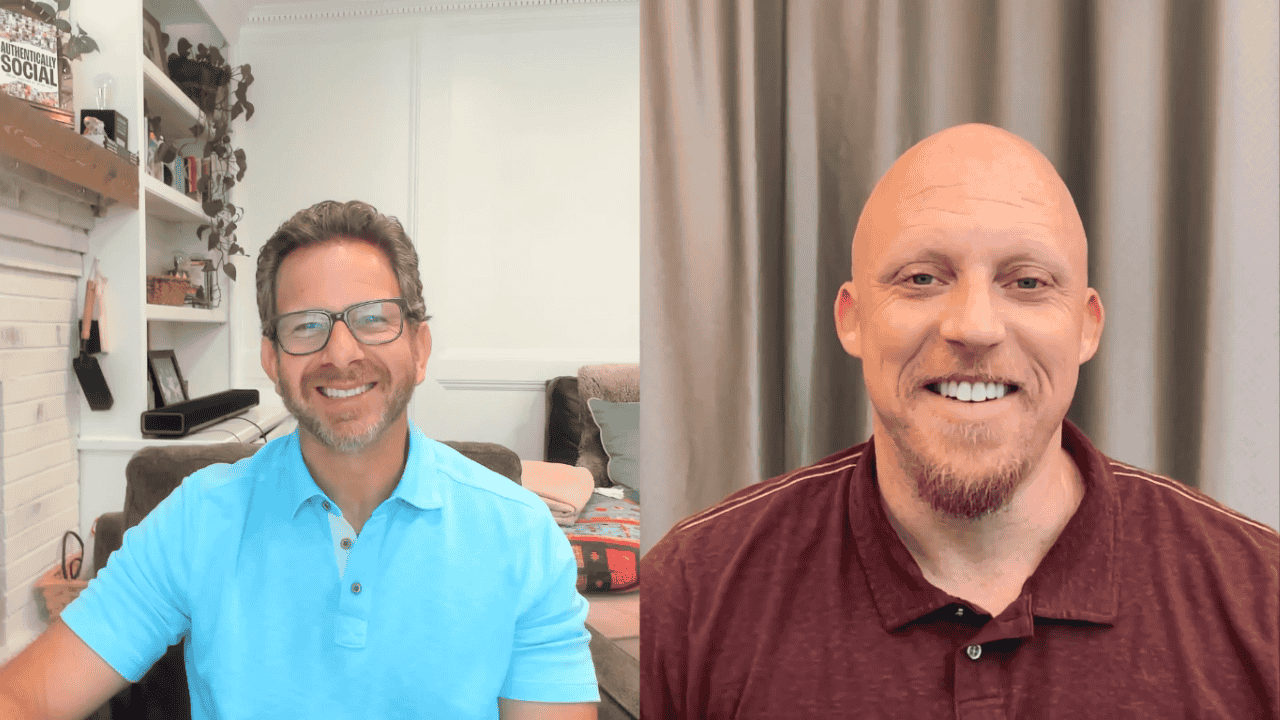
Corey Perlman with Brian Nelson-Palmer
Spoiler alert: The solution isn't about willpower or excuses. It's about completely restructuring how you interact with these platforms.
I researched and fact-checked them all. Here's how I'm going to present the results below:
Some background on why this matters (and why the algorithms are literally designed to beat you)
Every excuse I've heard, what the research actually says, and what works better
The research-backed system that changes everything
Some Background
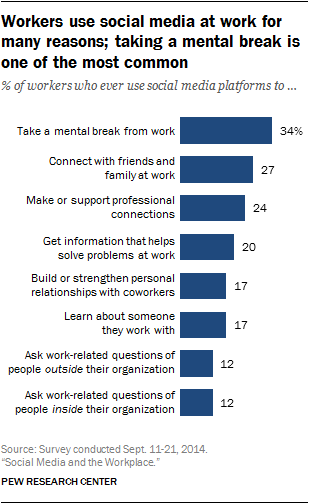
Photo from Pew Research Center
Why This Matters for Your Productivity
The algorithms are smarter than you. They're literally designed to keep you scrolling using slot machine psychology. You never know when that next dopamine hit is coming, so you keep scrolling.
The Documented Costs Are Severe:
Time Loss Is Accelerating - In the UK, adults averaged 4 hours and 20 minutes online per day in 2024, up approximately 1 hour year-over-year, with social platforms consuming a major share.
Attention Gets Systematically Destroyed - Every time you bounce from deep work to check your feed, it takes 23 minutes to refocus. You think you're multitasking - you're actually task-switching, which makes you slower and more error-prone at everything.
Task Switching Leaves "Attention Residue" - When you switch to a new task, part of your cognitive capacity remains stuck on the prior one, and performance drops. Social media check-ins are frequent micro-switches that accumulate cognitive residue throughout your workday.
Sleep Quality Takes A Measurable Hit - Research links in-bed phone and social media use with shorter sleep duration and higher insomnia risk. Content engagement (not just blue light) appears to be the bigger driver of sleep disturbance.
Mental Health Risk Clusters With Heavy Use - 43% of adults say checking social media stresses them out. Yet they keep doing it anyway.
My Perspective on This
Full transparency: I'm coming at this from both sides. I use these platforms personally and run a business that markets through them. I've lived the creator hustle, felt the algorithm anxiety, and experienced both the highs of viral content and the lows of posting into the void.
But here's what changed my perspective: I realized I was confusing two completely different types of social media use.
Influencer Marketing (likes, followers, engagement volume) vs. Business Marketing (DMs, website clicks, phone calls).
As Corey put it: 'If you're not an influencer, your goals are NOT about likes and shares and saves, they're about DMs, website clicks, and phone calls.'
Most professionals are judging their social media success by influencer metrics while trying to achieve business outcomes. That's like measuring your car's performance with a recipe - you're using the wrong measuring tool entirely.
The problem isn't the tool - it's that we're using entertainment platforms for professional goals without understanding the difference. Social media has real benefits: networking, weak-tie professional connections, and strategic visibility. But most of us aren't using it strategically. We're just scrolling.
Who This Is For
If you're using social media for "networking" or "staying informed" and finding it drains your time and energy, this system is for you.
If you're a business professional who knows you need social media presence but hate how much time it consumes, this is definitely for you. You'll learn how to maintain professional visibility without the productivity costs.
If your paycheck depends on social media and you're a creator, community manager, or social media marketer, this isn't telling you to quit your job. But the research about sustainable usage, burnout prevention, and mental health impacts will help you work more strategically and protect your wellbeing long-term.
The key insight: Whether you're using social media personally or professionally, the goal is the same - get the benefits while eliminating the documented costs to your attention, sleep, and mental health.
So let's bust some myths. I'll walk you through every excuse I've heard, what the research says, and what works better.
The Benefits of Social Media (Yes, They Exist)
Before I tear apart every excuse, let me be honest: social media does have genuine benefits. Dismissing them would be disingenuous, and I'd probably lose all my credibility with you.
Sometimes it actually saves lives. During Hurricane Helene (which I lived through), social media provided real-time updates that were genuinely life-saving. When the power's out and traditional news is down, those Facebook posts and neighborhood groups become your lifeline.
It connects people who can't connect anywhere else. People with rare diseases find their tribe. Artists discover audiences they'd never reach otherwise. My wife and I moved twice in one year - Facebook Marketplace saved us thousands on furniture.
Professional weak ties create measurable career advantage. Research analyzing billions of LinkedIn connections found that moderately weak ties increased job mobility significantly more than close contacts. For me, when I meet hundreds of people at conferences, LinkedIn beats collecting business cards every time.
The buyers are actually online during business hours. Most companies permit LinkedIn on work computers while restricting entertainment platforms. Your professional visibility during work hours - when decisions get made - happens disproportionately on LinkedIn.
But here's the big question: Are you actually using social media for these benefits? Or are you just... scrolling?
So let's talk about those excuses...
Why These 'Excuses' Are Actually Valid Goals - Done All Wrong
I realized most "excuses" for staying on social media are actually legitimate professional and personal goals. The problem isn't the goal - it's using the wrong tool to achieve it.
The breakthrough insight: Don't quit social media. Quit scrolling social media. Focus on creating and strategic engagement, eliminate mindless consumption.
Here's each "excuse," why it's actually valid, and the research-backed way to achieve that goal without the productivity costs:
"I Need It to Stay Connected" & Social Excuses
These excuses also sound like:
"It's how I stay in touch with friends and family."
"That's how my generation communicates."
"Everyone uses it. I'll be left out."
"I need to support friends going through tough times."
Here's what the research actually shows:
Passive social media makes relationships weaker, not stronger. Public reactions (you "liked" their post) provide almost zero emotional benefit to people in crisis. 25% of adults have quit social media without any social consequences. People who quit report stronger, more meaningful connections within weeks.
The connection you're seeking is real - you're just using the wrong tool to get it.
What works better:
Replace likes with actual phone calls and direct messages. Video calls would be even better. Or record a video of yourself talking to them and send it directly!
Use social media only as a logistics tool, like finding someone's contact info, then communicate directly.
Focus on your closest 5-15 relationships instead of maintaining hundreds of superficial connections.
Real talk:
When I moved to Tampa from DC, I messaged old contacts I hadn't spoken to in almost 20 years. Only a third responded, but we picked up exactly where we left off. Real relationships survive without constant social media maintenance.
"I Need It for Work" & Business Excuses
These excuses also sound like:
"Everyone in my field uses LinkedIn."
"I need it to promote my business."
"I have to stay current with industry trends."
"It's networking."
Here's what the research actually shows:
Email marketing delivers 4,200% ROI while social media generates as low as 0.9% conversion rates. Workplace productivity drops 13-15% with unrestricted social media access. Most "work" social media use is actually personal browsing in disguise. And get this...nearly 50% of your "engagement" comes from bots, not real humans.
But here's the key insight: You're measuring business social media success with influencer metrics. If you're not an influencer, your goals are not about likes and shares and saves, they're about DMs, website clicks, and phone calls.
What works better:
Schedule posts in weekly batches. Use LinkedIn like a digital business card. Update it quarterly, engage meaningfully, then get off.
Invest in email marketing ($42 return per $1 spent) and face-to-face networking.
Focus on conversion metrics, not vanity metrics. Track direct messages that convert to calls, website clicks, and qualified leads - ignore “like” counts completely.
Reality check:
A very successful speaker I know told me, "I've made millions in my career. 95% came from referrals. Only 5% came from social media." He wasn't against social media, just realistic about proportionally where to spend his time.
"I Need to Stay Informed" & Info Excuses
These excuses also sound like:
"I need to stay current with news."
"What if something important happens?"
"I follow educational accounts."
"It's for research and learning."
Here's what the research actually shows:
Social media gives you shallow, fragmented information that feels like learning but isn't. Algorithms prioritize engagement over accuracy. Educational content mixed with entertainment actually hurts learning retention.
The information you're seeking is real - social media is just a terrible way to get it.
What works better:
Pick 1-2 reputable news sources and check once daily. Use AI for research. It'll search Google Scholar and academic sources for you.
Try dedicated learning apps instead of educational social media accounts.
Replace your social media news feed with focused newsletters. Choose one local, one national, and one specialized newsletter that covers your specific interests without the algorithm manipulation.
Personal confession:
“But I need it to stay informed!” was my excuse for years. Now I get all my news from three 5-minute newsletters:
Local News in my city: Axios Local
National News: Morning Brew
Political News: Tangle
I feel more informed than when I was doom-scrolling for "news." The difference? These newsletters give me actual information without the engagement-driven outrage and distraction.
"It's Just Entertainment" & Boredom Excuses

AI-generated by ChatGPT
These excuses also sound like:
"It's just entertainment."
"I'm bored otherwise."
"I only look at funny content."
Here's what the research actually shows:
Social media "entertainment" is designed to be addictive, not genuinely enjoyable. Those algorithms mix funny videos with engagement-driving content to keep you scrolling. Users actually report lower satisfaction from social media compared to books, movies, or hobbies.
And here's the kicker about boredom:
It's actually a superpower. Boredom improves creativity and problem-solving. Ever notice how your best ideas come in the shower or while driving? That's your unstimulated brain doing its thing.
What works better:
Choose intentional entertainment - comedy specials instead of TikTok videos, books instead of Instagram stories.
Learn to let your mind wander for 5-minute periods. You'll be amazed what happens when you're not constantly stimulated.
Replace the scrolling habit with something that actually entertains you rather than just occupying your attention.
The entertainment you're seeking is real - but social media gives you the mental equivalent of junk food when you could have a real meal.
"It Helps Me Relax" & Sleep Excuses
These excuses also sound like:
"I use it to wind down."
"I use it at night when I can't fall asleep."
"My phone is my alarm clock, so I need it in bed."
Here's what the research actually shows:
Social media increases stress hormones and mental stimulation. Blue light disrupts sleep cycles.
Screen time before bed makes insomnia worse, not better.
Research shows that content engagement (not just blue light exposure) appears to be the bigger driver of sleep disturbance. Your brain stays activated by the social interactions and information processing.
What works better:
Read fiction, listen to sleep podcasts (try "Nothing Much Happens"), or practice meditation for actual relaxation. And yes, you can get a real alarm clock - they still make those.
Implement a 60-90 minute digital sundown. Remove all devices from bedroom completely.
Personal confession:
I used the “but my phone is my alarm clock, I must have it in bed,” excuse for 10 years. Recently, I implemented a strict rule: NO PHONE IN BED. Ever.
The results shocked me: I sleep 45 minutes more per night according to my tracker. I fall asleep faster and stay asleep better. When I'm in bed, my only job is sleeping. I also spend less time in bed overall.
My setup now: Apple Watch vibrates me awake gently (wife sleeps through it). Backup alarm clock across the room forces me to actually get up. Revolutionary concept, I know.
"What if my wife/kids/family calls?" This is the most common worry, especially for parents. Here's how it works for me: 1) My wife is in my "favorites," and those calls bypass “focus mode” and “sleep mode” so my phone still rings, anytime day or night. 2) When my phone rings/vibrates, my watch vibrates too, so I get the call and can answer it from my watch.
For you, if emergency calls are frequent, keep the phone across the room or just outside the bedroom door. Don't let this excuse keep it on your nightstand.
“It’s Not A Big Deal” Excuses
The excuses sound like this:
"I only check it a few times a day."
"Everyone else uses it more."
"At least I don't have real addictions."
"I can stop anytime."
Here's what the research actually shows:
Heavy users underestimate their usage by 200-300%. Most people check social media 50-100+ times daily while thinking it's "just a few times." Behavioral addictions use the same brain pathways as substance addictions. Saying "I can quit anytime" without actually trying is classic addiction behavior.
The average person now spends 4+ hours daily on social platforms. That's not a few minutes - that's a part-time job's worth of time.
Reality check:
Comparing your usage to others is like saying "I'm only jumping off a smaller cliff." You're still jumping off a cliff.
What works better:
Turn on screen time tracking to see your real numbers. Set actual limits. Want to prove you're not addicted? Take a 2-week break. If it's easy, you'll prove your point. If it's hard... well, you'll have some valuable information about yourself.
Access it from your phone browser instead of the app. Use tools like #blockit (for Safari) or News Feed Eradicator (Chrome) to eliminate newsfeeds while keeping the ability to check notifications and direct messages.
The goal isn't to shame yourself - it's to get honest about the actual time cost so you can make an informed decision.
What To Do Instead
The 15-Minute Daily Social Media System That Protects Your Focus
Full transparency: I still have all my social media accounts. I'm not telling you to delete everything and become a digital hermit. But after debating with experts and analyzing the research, I've completely restructured how I interact with these platforms.

Photo from Pexels
Here's the 8-step system that preserves professional benefits while eliminating productivity costs:
1. Eliminate Default Interruptions (Non-Negotiable)
Turn off all non-human notifications (likes, follows, algorithmic recommendations). Batch direct messages into 1-2 daily check windows. Expected result: Immediate reduction in cognitive load; measurable improvement in sustained attention within 48 hours.
2. Replace Infinite Feeds With Intentional Access
No more apps, access these sites only through browsers, and use feed-blocking browser extensions (Block It for Safari, News Feed Eradicator for Chrome). Access your interests only via direct navigation to specific profiles. The algorithmic feed is an attention trap, not a tool.
3. Time-Box Social Media To A Daily Quota
15 minutes daily: Engagement with other people's content
15 minutes weekly: Connection request management
20-30 minutes weekly: Content creation (away from platforms)
Total weekly maximum: 2-2.5 hours
4. Separate Content Creation From Consumption (Critical)
Draft all content in offline editors. Record videos without opening platforms. Use scheduling tools or delegate posting. Your job is to create content. Then either schedule it to post, or let someone else post it."
5. Protect Sleep With A 60-90 Minute Digital Sundown Remove all devices from bedroom. Establish firm 60-90 minute screen-free buffer before target sleep time. If evening reading is required, use e-ink devices or physical books only. Expected result: Measurable improvement in sleep onset and quality within 1 week.
6. Prioritize LinkedIn For Professional Hours; Archive Entertainment Platforms
LinkedIn: Primary professional platform; post during business hours; engage during scheduled windows.
Instagram/TikTok: Only if target demographic is consumer-focused; use paid targeting for reach; never organic scroll.
Facebook: Personal connections only; irrelevant for most B2B professional goals.
7. Measure Conversion Metrics, Never Vanity Metrics
Track only: Direct messages that convert to calls, website clicks from social referral traffic, email signups attributed to social presence.
Ignore completely: Like counts, share volume, follower growth rate, engagement percentages.
8. Use Paid Amplification Surgically
B2C/Consumer focus: Budget $200-500/month for targeted Instagram/Facebook promotion.
B2B/Professional focus: Invest in LinkedIn Sales Navigator ($79.99/month); keep ads minimal.
Always target narrow, qualified audiences rather than broad reach.
Base your success on conversion metrics like in #7, not vanity metrics.
The result? I don't feel deprived. I feel in control. Total weekly platform exposure: 60-100 minutes instead of 4+ hours daily.
The Plug-And-Play Weekly Schedule
This schedule aligns with interruption reduction evidence and network maintenance requirements:
Monday (15 minutes) Comment thoughtfully on 5 VIPs' LinkedIn posts.
Corey brought this one up in our discussion, and it really struck me, SO SMART. Focus on leaving genuine comments (not just Likes") that builds name recognition of you with that person. This signals to both the person and the algorithm that you're connected, increasing likelihood they see your future content. This helps them start to recognize your name.Wednesday (20-30 minutes) Draft next week's post and short video content.
Complete this entirely away from social platforms - in Google Docs, Notes, or wherever you can write without feed exposure. Schedule post for optimal timing or send to posting assistant.Friday (15 minutes) Process all direct messages to inbox zero.
Move qualified leads to calendar for calls or into email for follow-up. Archive or dismiss everything else.Daily (5-10 minutes, single scheduled window) Check notifications and respond to urgent direct messages only. No feed access. Set timer; exit when time expires.
Total weekly platform exposure: 60-100 minutes Total weekly time investment including content creation: 2-2.5 hours maximum
Compare this to the 4+ hours daily that average users spend on social platforms.
But Still…Influencers Make Money…
Understanding Why Most Professionals Shouldn't Follow The Influencer Model
I get it. After everything I've said, you're still thinking about it. The Instagram stars, the YouTube success stories, the TikTok millionaires. It looks so appealing from the outside.
You're looking at two completely different business models with different success metrics, and mixing them up WILL BURN YOU OUT.
Influencer marketing success requires:
Likes, followers, engagement volume as primary metrics
Full-time content creation (often 40+ hours per week)
Constant platform presence and trend-chasing
Revenue from sponsorships, brand deals, and affiliate marketing
Business/professional marketing success requires:
Direct messages, website clicks, phone calls as primary metrics
Strategic, limited content creation (2-3 hours per week max)
Focused presence during business hours
Revenue from your actual products, services, or expertise
Trust me, I fell for it too. When I started Productivity Gladiator, I tried to be everywhere: Twitter, LinkedIn, Facebook, Instagram, Threads, TikTok, YouTube. I spent hours every week trying to crack the algorithm code. After months of this exhausting routine, I'd made exactly $0 from social media toward my business.
Then I got smart and focused. I kept LinkedIn (where my actual customers look for me) and YouTube for longer content. Everything else? Just billboards now - there to direct people where to find me, posted every few weeks to show I'm still around.
Here's the research that backs up why focusing on business metrics instead of influencer metrics is the smarter choice:
90% of social media influencers experience burnout - nearly double the rate of traditional workers. The financial reality is even harsher: 71% of creators earn less than $30,000 annually, and only 12% make more than $50,000.
Most creator careers flame out in just 5-7 years, with creators living in constant anxiety about algorithm changes that can wipe out their income overnight.
Meanwhile, people who focus on real relationship-building report significantly higher satisfaction and financial security. The scariest part? There are virtually no long-term studies tracking what happens to influencers after they burn out.
Here's another telling sign: I've never heard of a retirement party for a social media influencer. At my first job, I noticed no one was retiring - everyone either quit or got fired. That was a clear sign it wasn't a good long-term place to be. I'm seeing the same pattern with influencer careers.
The results from my strategic approach? The last three years, my business has grown significantly year over year. Not from viral posts (I had some of those too, but they don't generate $) or follower counts, but from real people who know and trust me. The upward trend continues based on my own control and effort. It feels sustainable for the long haul.
Instead, I invested all that time and effort in real networking - phone calls, actual conversations, joining the National Speakers Association, building genuine relationships with measurable business outcomes.
Final Thought: Use Social Media, Don’t Get Used…
Social media isn't evil - but it is engineered to waste your time and make money for everyone except you.
Think about it: The creators make money. The platforms make MORE money. The advertisers do it because they end up making money. You spend the MOST time on it and make... nothing.
But the strategic approach changes everything. When you separate creation from consumption, measure conversion instead of engagement, and time-box your usage, you flip the equation. Now you're using these platforms as tools to achieve your professional and personal goals instead of being used by them for their revenue goals.
Here's what really drives this home: An Australian hospice nurse named Bronnie Ware spent years documenting the final regrets of dying patients.
The top regret? "I wish I'd had the courage to live a life true to myself, not the life others expected of me."
The second most common? "I wish I didn't work so hard."
Notice what's NOT on that list? "I wish I'd spent more time on social media." No one on their deathbed regrets missing viral videos or not getting enough likes.
Your attention is currency. And if you're not budgeting it strategically, someone else is spending it for you.
So don't quit social media. Quit scrolling social media. Use the 15-minute daily system. Focus on building real relationships and achieving measurable outcomes. Time is the currency of your life...spend it wisely.
This is part of a SERIES on SOCIAL MEDIA ADDICTION:
FINALE - Should You Quit Social Media? Don't Fall For These Excuses. Here's The System To Do It Better.
(*You’re Reading This One)
References
Mental health of social media influencers. Journal of Occupational Health.
Influencer Marketing Hub. Creator Earnings: Benchmark Report 2023
Stress in America: Coping with Change. American Psychological Association
Teens Spend Average of 4.8 Hours on Social Media Per Day. Gallup
Nomophobia: Dependency on virtual environments or social phobia? Computers in Human Behavior
The cost of interrupted work: More speed and stress. Proceedings of CHI
The association between adolescent well-being and digital technology use. Nature Human Behaviour
Teens, Social Media and Technology 2022. Pew Research Center
Teens and social media: Key findings from Pew Research Center surveys. Pew Research Center
Is Facebook creating "iDisorders"? Computers in Human Behavior
Executive control of cognitive processes in task switching. Journal of Experimental Psychology
Marketing ROI Statistics: 30+ Stats to Boost Your Strategy in 2024. Firework
Email Marketing ROI Statistics: The Ultimate List in 2025. Luisa Zhou
The Average Website Conversion Rate by Channel (2024). FigPii
Trust in Media 2025: Which news sources Americans use and trust. YouGov
Leveraging AI-Powered chatbots to enhance customer service efficiency. ResearchGate

I’m Brian. At age 4, I was diagnosed with insulin dependent (type 1) diabetes and told that my life was going to be 10-20 years shorter than everyone else. As a kid I took time for granted, but now as an adult, time is the most precious thing that I have. After spending a career hands-on in the trenches as a leader at all levels, I now train Productivity Gladiators to level up their careers. Graduates wield superpowers in time management, practical leadership, communication, & productivity. If what you’ve seen here intrigues you, reach out, let’s chat!
“Time is the currency of your life, spend it wisely.”