Knowledge, hacks, and ideas to level up your personal practical productivity skills.
Should I Quit Social Media? A Digital Marketing Expert’s Answer (You’ll Be Surprised) - Corey Perlman
What if the secret to winning at social media is barely being on it at all? Brian debates social media expert Corey Perlman, who runs a digital marketing agency but doesn't even have Instagram on his phone—and that contradiction is exactly the point. Turns out the productivity drain isn't social media itself; it's the doom scrolling that's stealing 40 minutes of your day while you pretend you're "networking." Corey drops the truth bomb that influencer metrics and business metrics are completely different games, yet most professionals are playing by Instagram rules and wondering why they feel like failures when seven people like their post.
This conversation gets practical fast: discover the "rented land vs. owned land" framework that'll save you from platform catastrophe, learn why your LinkedIn company page isn't dead (just neglected), and find out exactly how to be authentically present online without pressing a single button yourself. Brian and Corey tackle the hypocrite's dilemma head-on—can you tell people to quit social while still posting yourself?—and land on a game-changing distinction that lets you have your cake and eat it too. You'll get the app blocker that nukes newsfeeds while keeping connections alive, the 15-minute commenting strategy that builds real relationships without the scroll spiral, and the truth about which platforms actually matter for your business (hint: stop chasing TikTok if you're selling B2B).
If you're trapped between FOMO and burnout, convinced you need social media but hate what it's doing to your brain, this episode hands you the escape hatch. The show notes include all the tools to take back control starting today.
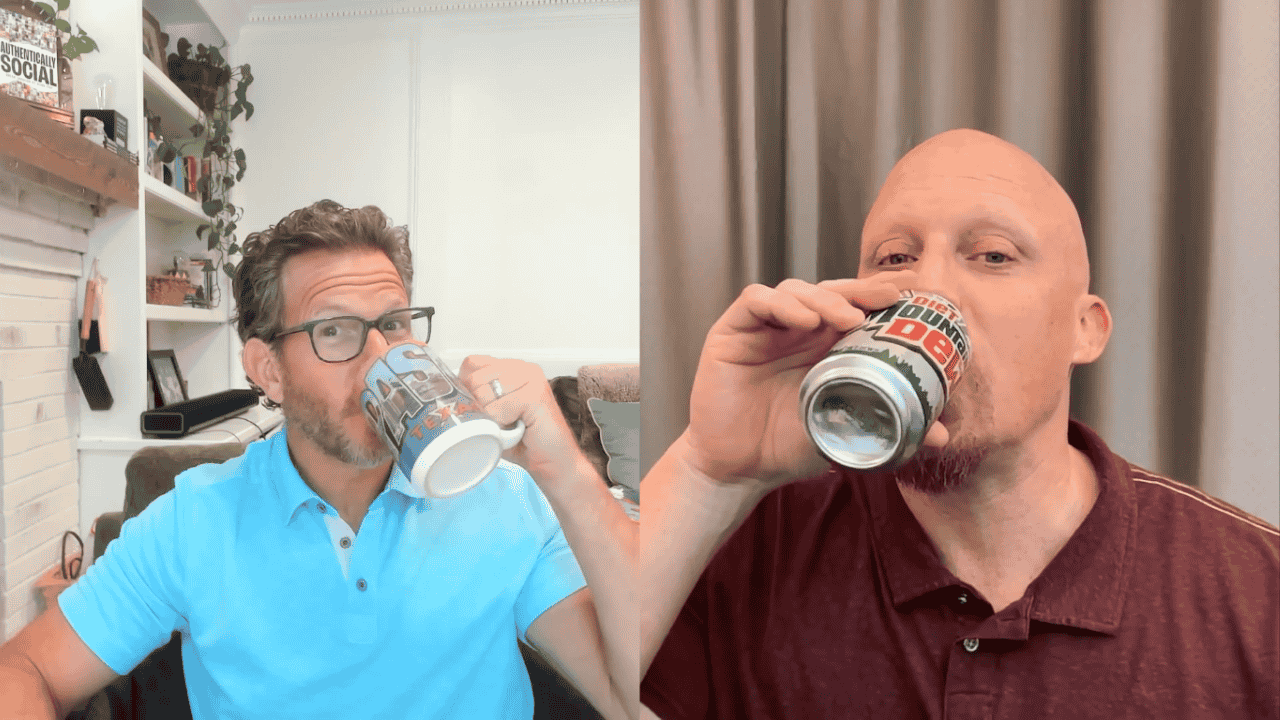
What if the secret to winning at social media is barely being on it at all? Brian debates social media expert Corey Perlman, who runs a digital marketing agency but doesn't even have Instagram on his phone—and that contradiction is exactly the point. Turns out the productivity drain isn't social media itself; it's the doom scrolling that's stealing 40 minutes of your day while you pretend you're "networking." Corey drops the truth bomb that influencer metrics and business metrics are completely different games, yet most professionals are playing by Instagram rules and wondering why they feel like failures when seven people like their post.
This conversation gets practical fast: discover the "rented land vs. owned land" framework that'll save you from platform catastrophe, learn why your LinkedIn company page isn't dead (just neglected), and find out exactly how to be authentically present online without pressing a single button yourself. Brian and Corey tackle the hypocrite's dilemma head-on—can you tell people to quit social while still posting yourself?—and land on a game-changing distinction that lets you have your cake and eat it too. You'll get the app blocker that nukes newsfeeds while keeping connections alive, the 15-minute commenting strategy that builds real relationships without the scroll spiral, and the truth about which platforms actually matter for your business (hint: stop chasing TikTok if you're selling B2B).
If you're trapped between FOMO and burnout, convinced you need social media but hate what it's doing to your brain, this episode hands you the escape hatch. The show notes include all the tools to take back control starting today.
The Video
The Audio/Podcast





References In This Episode
Corey Perlman – Impact Social Media – Corey's LinkedIn profile and Impact Social Media website
Key Resources:
Authentically Social – Corey's book on being authentic on social media for business
Corey's Instagram – @CoreyPerlmanSpeaks
CoreyPerlman.com – Corey's main website
Brian's Resources:
Social Media Addiction with Tech Hacks to Fix It – Brian's blog post with tools to combat social media time waste
Should I Quit Social Media? A Debate With A Focus Expert - Penny Zenker – The primer discussion before this debate
Brian's TEDx Talk on Time Management – His signature presentation on productivity
Conversations That Matter: The Hidden Productivity Killer You're Ignoring - With Jess Pettitt – Referenced conversation that connected Brian and Corey
Tools & Techniques:
Block It App – Safari browser extension that blocks social media newsfeeds while keeping notifications visible
15-Minute Social Media Blocks – Corey's time-blocking strategy: 15 minutes for OPP (Other People's Posts), 15 minutes for connection requests
Content Creation vs. Posting Separation – Strategy of texting content to someone else to post on your behalf
Concepts & Frameworks:
Rented Land vs. Owned Land – Understanding which digital properties you control (website, email list) versus platforms you don't (social media)
Influencer Marketing vs. Business Marketing – Critical distinction between vanity metrics and conversion metrics
Quality Audience Over Large Audience – Business success doesn't require thousands of followers
"You Can Be On Social Media Without Being On Social Media" – Chapter from Corey's book on maintaining presence without constant engagement
The New Rich Concept – From Tim Ferriss's The 4-Hour Work Week about $10K/month in perpetuity vs. chasing millions
Hiring & Outsourcing Options:

Chapters
00:00 Introduction to the Debate on Social Media
06:42 The Duality of Social Media: Good and Bad
08:24 Navigating Social Media Without Being Overwhelmed
12:02 The Importance of Early Social Media Engagement
16:49 Influencer Marketing vs. Business Marketing
22:20 Staying Unforgettable in a Digital World
31:55 Categorizing Social Media Platforms
32:52 Navigating Social Media for Business
37:53 The Role of LinkedIn in Professional Networking
43:49 Balancing Personal and Business Presence
46:39 Prioritizing Social Media in Marketing Strategies
48:43 Managing Time on Social Media
59:28 Taking Control of Social Media Usage
Today’s Guest
Corey Perlman
Founder & Digital Marketing Expert, Impact Social Media
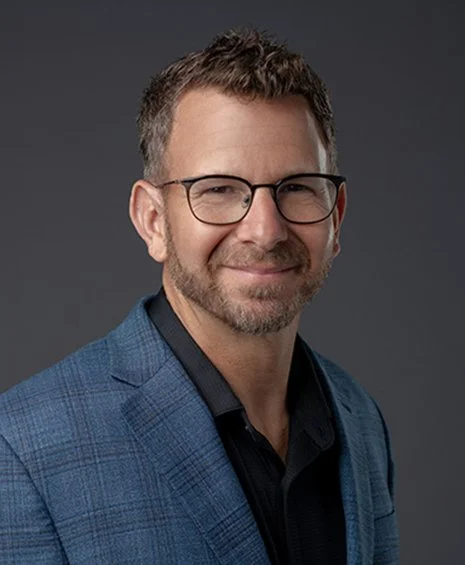
Corey Perlman is a social media and digital marketing expert with 15 years of experience helping businesses navigate online presence without losing their focus. As both a keynote speaker and agency owner, he bridges strategy and execution—his team runs social media for about 50 companies while he speaks to audiences about the bigger picture.
His book, Authentically Social, challenges one-size-fits-all tactics and pushes for genuine storytelling over billboard-style posting. Corey specializes in helping professionals separate influencer marketing (chasing likes and followers) from business marketing (quality audiences and conversions)—a shift that changes how people show up online.
What sets Corey apart is his perspective: he grew up with MySpace and early Facebook, but he’s old enough to remember life before social dominated everything. He sees both the strategic value of social and the real mental-health costs of constant engagement. He uses Instagram sparingly (about once a week) and delegates posting, and he’s removed Facebook from his phone to protect his attention.
Corey’s philosophy is simple: you can be fully present on social without living on the platforms. Create authentic content; let someone else press the buttons. And never forget the difference between rented land (social platforms that can change the rules) and owned land (your website and email list).
As a father of a teenage daughter and an 11-year-old son, Corey thinks deeply about social’s impact on the next generation, making his expertise both professional and personal. His north star: be strategic, intentional, and authentic online—while protecting your time, attention, and well-being.
Connect with Corey:
LinkedIn: Corey Perlman
Instagram: @CoreyPerlmanSpeaks
Website: CoreyPerlman.com
Agency: ImpactSocialMedia.com

Why Subscribe To The Email List: Brian shares separate hacks, tips, and actionable learning exclusively for his email subscribers. Sign up so you don’t miss out!
About The Creator/Host: I’m Brian. At age 4, I was diagnosed with insulin dependent (type 1) diabetes and told that my life was going to be 10-20 years shorter than everyone else. As a kid I took time for granted, but now as an adult, time is the most precious thing that I have. After spending a career hands-on in the trenches as a leader at all levels, I now train Productivity Gladiators to level up their careers. Graduates wield superpowers in time management, practical leadership, communication, & productivity. If what you’ve seen here intrigues you, reach out, let’s chat!
“Time is the currency of your life, spend it wisely.”
TRANSCRIPT
Brian Nelson-Palmer (00:06)
I'm Brian Nelson Palmer. On this show, I share personal, practical, productivity skills that will make you more productive and advance your career. And in this episode, I'm revisiting my question, which is, should I quit social media? This time, I get to debate with a social media and digital marketing expert, Corey Perlman. I love his name so much. Corey Perlman is with me on the show today, who is a speaker, author,
and consultant on social media for business. And he's the founder of Impact Social Media. So Corey, I've been dying to have this conversation with a social media expert. And now you came into my life and I am so happy that we get to do this.
Corey Perlman (00:48)
Well, thank you, Brian. I wish my name was John Smith, but it's not had to go with, know, a little bit more of a more difficult name to say, but it is great to be here.
Brian Nelson-Palmer (00:51)
No.
Absolutely. And now for those folks who aren't familiar with you, talk a little bit about how your background is relevant to the debate we're going to have about should I quit social media?
Corey Perlman (01:07)
Yeah, so I've been, you know, I'm one of these weird generations. You might be in that same with me where I don't consider myself like the social media generation, but I did grow up with it. I mean, it was around me in college and, you know, the MySpace days, the early Facebook days, but I would say the significant part of my life has been somewhat revolved around social media. So I am in between that, but I'm also old enough, you know, a little bit, I guess, less than 50.
to also know the other side of it where it can feel very intrusive. There's a lot of things that my kids are okay with that I'm not okay with. So I definitely can see both sides, I would say to the whole social media conundrum of whether or not it's a good or a bad thing. And then it's also our business. for the last 15 years, I've owned a digital marketing agency. So it started out as speaking on the topic of social media and internet marketing and the businesses and companies
that would be in the audiences enjoyed the speech but didn't know what to do with it. So they asked us to execute on whatever those things we were talking about. And once I got too busy, I started hiring people and the agency was born. And so for the last 15 years, I've been both the keynote speaker on the topic of digital marketing, social media for business, and our agency runs the social media campaigns for about 50 companies. And so we've kind of got both of those worlds where I talk about it from kind of big picture standpoint.
but we're also behind the scenes implementing it. So I'm not just talking about something I read in a book, but it's something that we're actually working on and experimenting with our clients.
Brian Nelson-Palmer (02:37)
man, I am so excited to talk with you about this because I want to quit social media, but I haven't yet. And I'm sure there's many other people who have asked themselves that question at some point. So this discussion is very relevant ⁓ today. And I do want to ask you now, there's a lot of people who do what you do in terms of they do digital marketing, they do social media marketing. So for the person listening, what would you say makes you a little different from
all those other people out there that do this too.
Corey Perlman (03:08)
Um, I would say part of it is my age. I would say first and foremost, so that kind of era where, know, I've been doing it a long time enough to see a lot of these different changes. For example, a lot of the younger, probably people in my world are very much shiny penny syndrome, as I like to call it, where like the new platforms, know, this and that, where I'm a little bit more about kind of where is the money coming from? Where is the audience? So I would say that, you know, that's been something that is different between
us, would say, in some of the newer agencies. And the other thing is, you know, my book is called Authentically Social. And so one thing that is a big deal to me is being authentic on social. not, you know, portraying, you know, somebody else or phoning it in, you know, things of that nature. We really challenge businesses to tell their story and to be open to being a little bit more provocative, a little bit more transparent.
⁓ and helping them understand the value of that because as you've probably seen, when businesses or people phone it in and they become a billboard or brochure on social, they'll come back and say it doesn't work and that's because they're doing it wrong. So that's a big kind of area where we challenge our audience.
Brian Nelson-Palmer (04:20)
Got it. I like that a lot. is there, is there ⁓ a reason behind the name impact social media?
Corey Perlman (04:26)
Yeah, I appreciate you asking that. It's a value of our company is that we want to make an impact in the world. And so one of the things that we've done in the past is we will provide social media advice to a nonprofit or a charitable organization. In fact, the way we got our name, an attorney owned Impact Social Media and was asking a lot of money for it. But he found out about this philanthropic sort of thing that we do.
and said, well, if you're willing to help out this nonprofit that I'm very, passionate about, I'll give you the name. And so we did. And he gave us the name. So it was a really win-win for everyone.
Brian Nelson-Palmer (05:04)
That's cool. Alright, well now so quick background for you listening in case you haven't already checked it out. I had this exact debate with a focus expert a few episodes ago and in that episode
Corey Perlman (05:06)
it.
Brian Nelson-Palmer (05:18)
her and I were kind of on the same page. I am of the lens that social media can be a time suck and a time waster and not an effective use, a productive use of the time. Cause I'm all about productivity, right? so basically I'm going to give you two links in your episode notes. If you want the primer before the conversation with Corey, cause today's going to go a little different, but I had the episode with her.
And that brings us to today because I felt guilty because I don't want to just be a guy who's very closed minded in what I say goes. I've never been that guy.
And so I knew that I was coming off of an episode where we both, the focus expert agreed that we should not be on social media. And then I did this research that showed that we shouldn't be on social media. And so what I really wanted to round out that conversation was a chance to talk with someone who is more pro social media than not pro social media. So that's where Corey and I were introduced and I was really excited.
that he was willing to do this episode to kind of have that discussion. that's our primer. And now to zoom out a second, before I go into questions and we get into the back and forth, Corey, I'd just love to know your thoughts on, without any primer from me, just answer the question, should I quit social media? What are your initial thoughts right off the bat?
Corey Perlman (06:42)
Well, you know, Brian, it's part of the reason I was excited about this discussion is it's not very black and white for me either, as I've gotten older and also have a teenage daughter and 11 year old son. I've seen the good, the bad and the ugly with social media. And so it's not an easy answer. And so what I do, I will tell you this and what I say in front of the stage, you can be successful in business without being on social media. There's nothing that should be
something that you feel like you have to do that is a detriment to your mental health that you think you have to do because of some sort of business metric that I put in front of you. So I always give the grace that for everybody it's different and that social media is certainly not the end all be all to business success. And I've seen plenty of people that you and I could sit here and go back and forth on who have done quite well in the world.
without the use of Facebook, Twitter, LinkedIn, X, whatever, so on and so forth. I don't personally think the answer, think what we're gonna get into is a middle ground answer that I think is at least for me where it can go. But ⁓ certainly for those listening, I'm not gonna try to prove you otherwise that you shouldn't be off social media.
Brian Nelson-Palmer (07:54)
And you know, Corey, I want to yes and there I want to yes that that makes sense. And I want you to talk me back into staying on social media because that that really I'm looking for people to make the case. And on that topic, you brought up your book. So I do want to highlight one of the chapters in your book is called You Can Be On Social Media Without Being On Social Media, which sounds like a contradiction and a conundrum in and of itself. So explain that a little bit.
Corey Perlman (08:24)
Yeah, so it really, you know, I guess it just goes to my origin story to this point is as I've gotten older, the secret that I typically tell people and I'll tell your audiences now is that I am fully on social media, my presence without me pressing the buttons every single day. I didn't want to feel to your point trapped or addicted or whatever you might want to call it to some of these platforms. But I did realize that without it, was
hurting my business and my credibility. So I had to figure out a way to be my authentic self while still being on social media. So my philosophy, Brian, and this is sort of if people left in the next 10 seconds, this is sort of the end of the story, which is you, your job and my job is to create content. Somebody else's job is to put it on social media.
So that's part of the way that I find myself being able to let go of a lot of the social media responsibilities that I've had in the past, but still have people say, man, where do you find the time? Where do you find the time? It's because I sit back here on my couch or in a studio or wherever, and I'm constantly creating content, and then I'm delivering it to somebody else to press the buttons and put on social. Does that make sense to you, Brian?
Brian Nelson-Palmer (09:41)
well, let's talk a lot more about that. But that, that also makes sense to me because I, I am, you know, it's, it's an interesting because you and I and the person listening, you also are in the same boat where you might create content for social media, whether that's for you personally, you're posting baby photos or that kind of thing, or you're on there consuming it as an individual. But then
Corey Perlman (09:43)
Okay.
Exactly.
Brian Nelson-Palmer (10:05)
you also might be connected to a business entity that is promoting themselves on social media. And for me personally, with Productivity Gladiator, I am a thought leader and an expert on this topic. And so I want to share those gifts with the world. And I do that in a lot of different ways. And social media is one of the ways that you can do that.
know, Corey, let me ask you this. you brought up the point that you could be, you could be, a very successful business and not be on social media. To me, that mark is for an individual, for somebody who wants to get into business of some kind. I think $250,000 a year in income from your business without social media.
is where you should continue to work on the business and focus on the business and make sure your product is so good that people refer it to other people and the referrals and the organic love of the product you're making or the service you're providing. If you have raving fans that are recommending you and you're making 250K year is a number that I put there because I just want to give people a perception of
how like at what point does social media really some people think, well, I'm going to start a business. So I better be on social media first. And I think that's really like backwards. You should have a product or a service, something where you're making good money and you're referring and you need to keep working on that product and keep making it better and keep working on it until you're at the point where you could pay someone like Corey just said, when you can sit back, create some content.
And you could afford to pay someone to do the posting if you wanted to or something. I think that's the healthy point to think about social media as a tool. That's my thoughts. Corey, I'm sure you have thoughts on this. What are your thoughts?
Corey Perlman (12:02)
Well, I
think that'll be maybe the first area where you get a chance to disagree, which is, you know, part part of the dialogue, right? I think from my experience, those that have spent their their time and energy building the perfect product or the quality service and waited to build the social media, those roots weren't planted early on and they regret it.
Brian Nelson-Palmer (12:07)
Okay.
Corey Perlman (12:23)
So what I would say is the sooner the better to start on social and there's certain things that you're doing, know, but I think that the earlier you can start, for example, connecting with your sphere of influence, that alone is, you know, it's hard to go backwards. But if I were starting a business today, you know, I create my LinkedIn account and every time I went to a networking event or
went for a cup of coffee or had podcasts like this, man, we are connecting and I am building that thing because when the product is ready, you wanna have this ripe audience to sell it to. And the problem is, is if you haven't been doing some of these social media initiatives early on, then you're having to start from scratch. And I feel like you might be behind the eight ball a bit, my opinion.
Brian Nelson-Palmer (13:08)
And that's where I'm so glad we get to debate because Corey, I think you got to have the product figured out first. let me use influencers as an example. People get on and they make their whole living just being on social media. And I think the only stories you hear are the.
the success stories, the ones who are, my gosh, they're making, especially kids these days, kids, I'm hearing them talk about, well, I follow this guy who makes a million dollars doing, you know, posting. And instead I also watch friends who have tried it and have struggled for years and never gotten there. And then there's depression and all of the other things that go with it. And so I feel like,
When you post on social media, there is this, you don't even mean to do it, but then you go on and you judge yourself on like, ⁓ only seven people liked it or only 20 people or a hundred people liked it. And, that didn't really get a good response. And that's also out of your control because that's algorithms. That's might not even be your fault or.
And so like you have control over your business and the quality of your product and what people say about your product or service that you've created. And the social media is part way out of your control in a way. I think that.
Corey Perlman (14:29)
But
what you did there, and let me just make sure to clarify, you used two very different things that happen on social. Let's just do it that. You have the influencer world, and then you have the product and services and the business side of the world. If you're an influencer and you're looking for money to come in from talking about products and coffee and
Brian Nelson-Palmer (14:35)
Yeah.
Corey Perlman (14:56)
keyboards and water and all that. It's all about likes, it's all about millions of followers and hope that those royalty checks start coming in. That's influencer marketing. Business marketing or business social media, services and products, again, my opinion, but 15 years of doing this, way less about popularity and thousands of likes and more about a quality audience that you want to take this journey with you.
So, but you're right in one thing to say that a lot of people intertwine those two and that's why they get it wrong. The people listening right now that are thinking about business and their services or products or whatever the case may be need to be thinking about more of a quality audience and more about those few people that they're making a difference with and not worry so much about whether or not, know, because you don't need a large audience to be successful in business.
Brian Nelson-Palmer (15:52)
True story. I'm flashing back to the first time I heard it. When I was growing up, the thought was always like, I want to be a millionaire, right? Like, oh gosh, you want to make all this money? That's the whole thing. And man, the first time that I read the four hour workweek and Tim Ferriss said about that, he called it the new rich. And he said that you don't need a million dollars. You need $10,000 a month in perpetuity.
Corey Perlman (16:01)
Right.
Brian Nelson-Palmer (16:20)
And that is a way different experience. And my mind was blown and that's, ⁓ And so that was that concept of, no, it's not the million dollars. It's the lifestyle that comes with the million dollars. And you can have that lifestyle if you find a way to make $10,000 a month. And so when you talk about being successful in business, to me, that's my perspective is can you support yourself in the lifestyle that you want with the business that you've got?
Corey Perlman (16:25)
Me too, by the way, on that book. Game changer for me.
Brian Nelson-Palmer (16:49)
And you don't need a million followers and 500, a thousand, 5,000 likes and comments on your posts. You need money coming in the door. And social media is a way to connect with people and a gateway to make those introductions. But ultimately you still have to deliver the product or the service. So I really appreciate you separating influencer marketing from business marketing, because you're right. Those are.
Two very different things and the number of likes doesn't well does it matter? This brings me to another point. Corey Corey, so like for example, I I go speak at two like audiences of hundreds of people and I have these great sessions and I connect with these folks and I've got an email list and that kind of stuff and sometimes I post on social media and there is like one like maybe not.
Corey Perlman (17:22)
Not as much. Not as much.
Brian Nelson-Palmer (17:42)
And then sometimes I post and there are like 35 likes or 50 likes or 100 likes. I mean, it varies all over the place. And in my head, I've just kind of settled back and gone, OK, well, if the post was authentically, if it was me, if it was either me saying something that I truly believe or it was something that I did, here's me with a selfie with several hundred people at this session in Nashville that I did or whatever. Like, if I'm sharing me?
then if somebody were to go looking for me, they would probably look on the platform that they like to look at and I would be there. And it's almost like you gotta have a billboard there without, but you don't necessarily have to have a presence with thousands of likes. People aren't judging you based on your likes and your followers. But then there's another voice that's like, well, actually they are. If they see you only have two likes, maybe people don't like this guy. Talk about that.
Corey Perlman (18:36)
Yeah, and I think, know, just to put a bow on that, you know, I think I appreciate you bringing up that sort of blending the influencer and business marketing, because part of why we're talking today is because we do get caught up in that world because we think we have to because we see the influencers. You mentioned that point earlier where you're seeing all this influencer marketing stuff. And so it's making business people feel like they have to do that, which creates a full member.
These influencers, it's like a full-time job. So if you are following that direction and you have the wrong goal, people can't see my hands if they're listening to us, but it's like completely opposite, then there's a reason why you're getting burnt out. Unfortunately, you might've not needed to, because you were following the wrong people. That makes sense. ⁓ To answer your question, yeah, sure. There's, if...
Brian Nelson-Palmer (19:22)
Yeah.
Corey Perlman (19:27)
In your own world, you've sort of come to this point where, look, I want people to be interacting with my stuff and I'm getting one or two likes. There's some content things that maybe we can do. There's some compelling questions that maybe you're not asking, or there's some things that maybe you're not doing to push the needle a little bit, or move the needle a little bit. At the same token, when you're not an influencer, your goals are not about engagement, your goals are about conversion. Let say that one more time.
If you're not an influencer, your goals are not about likes and shares and saves, they're about DMs, website clicks, and phone calls. So it's more important that you've got the phone ringing or you've got the contact form being submitted than it is about these other engagement metrics. And just to give you a quick example, we had mentioned stories. We have a client, I just talked to him today and he said,
Corey, for the longest time I didn't know how my social media was doing. Then I went to an event that I was speaking at and a seven figure client came up to me and he said, hey man, I love that stuff you're posting on social. And my client said, really? And he's like, yeah, and he's like, I've never heard you say anything about it. And he's like, I never will. I like it, but I'll never say anything about it. And I was like, why? And he's like, I don't want your people seeing my stuff. I'm a private guy, but I like it.
And I was just like, wow, wow. And he was like, wow. And he's like, I'm soul. That's all I needed to hear. So I hope that's helpful for you and your audience.
Brian Nelson-Palmer (20:59)
Yeah, it's that connection. what are you, what are you here for? Right. And it goes back to if you get one good lead from social, then that's one good lead that you might not have had before or one. Like sometimes you have to build a relationship with people and not all of them are subscribed to your email list. And so if they see you occasionally on LinkedIn, then they might, I don't know, do you have any sort of stat on how long?
Do you have a relationship with people online before they become customers?
Corey Perlman (21:31)
That's a, you know, I don't have an official stat, but I will tell you something that I say all the time, which I think everybody will fully agree with, which is the olden days. When I say the olden days, I mean, when I was growing up in the sales world, they would say it takes seven touches to make a sale. Now it takes 70. Now it takes 35. You know, now it takes a heck of a lot more. Let's leave it at that. So it's like.
you know, and I do want to go back to something, Brian, that you said early on, which is you said to convince you to some degree that you still need social. And so I don't feel like I've given, know, I've given you a little bit of a disservice where I haven't given you a couple of things that maybe you're not thinking about to at least be open to still wanting to be on social, because let's be honest, like the noise, you know, the imposter syndrome, the political environment, I know it all.
I know it all because I feel it all. I know all the reasons not to be there. And I think your audience does as well. But I want to share a couple of quick things with you of things that maybe would make you think twice or any of your listeners to why we do at least want to think about a way that I can be there without impacting my mental health. Number one is never forget that you're forgettable. And I have that in my book. And so no matter how great you and I are at our products or services,
We're easily forgettable. People will stop listening to this podcast at some point. And if they book speakers or they do agencies, I promise you within the next few weeks, I will disappear. Gone. Now it's my job. If there's any possibility that I'm able to connect with some of your listeners on LinkedIn or on Instagram or Facebook or wherever, and over time I can stay in touch with them with some of my valuable content.
That's a way for that poof of smoke for me to disappear to not happen. And you and I have both had plenty of clients that have come through many, many months or years later, but I promise you, if I don't do a good job on social, the chance of your listeners remembering me after they listen to this, weeks or months or years later, are pretty low. It's my job to stay unforgettable. And that's one of the main reasons why I think social media is so important.
How does that resonate with you?
Brian Nelson-Palmer (23:42)
Well, on the one hand, I see the argument that let's say you had a 0 % chance of them remembering you before, or you have a 0 % chance of them remembering you now. And if any of them engage with you, your odds went from 0 % to something better than 0%. And that came from a connection on social media or maybe, you know, like,
The likelihood of somebody following signing up for your email list is a little lower just because they heard you talk on the, I feel like the barrier to entry of connecting with someone on socials is a little different than signing up for your email address. Like, I don't know, I feel like there's a little more of a relationship there or they're more vested if they're on your email list than they are if they're on your socials. you know, I can also say, Corey, here's a funny one. I just spoke at a conference and I had,
100 people signed up for my email list. And then I went back and I tried, I try to connect with them on LinkedIn as well. Cause LinkedIn is the main, for somebody who's speaking to organizations about productivity, LinkedIn is gonna be my main platform realistically. And I tried to connect with those folks. And what was interesting to me is that,
Corey Perlman (24:38)
Okay.
Me too. Me too.
Brian Nelson-Palmer (24:54)
I would say probably maybe 60 % of them, maybe 60, only 60 out of the 100 had a LinkedIn profile. So there's 40 of them there that the only reason I have a connection with them is because they are on, like I have their email address so I can keep in touch that way. Some of the other ones might be LinkedIn. And then like you said, you show up and it's like a seeding thing. So that's on the one hand.
You went from 0%. I'm getting distracted here. What's my point? There's a 0 % chance they'll remember you unless you connect with them. And then it's like a little seeding thing where you might not be totally forgotten, poof, gone. And at the same time,
all of that effort that you'll put into social media, if they're not necessarily looking for something like that now, it's like a lot of effort for, almost equate, and in my head I'm thinking social media is almost like a cold call. You can make a cold call to people to, you hey, you should book me as a speaker. Or to me, it's almost equivalent to somebody seeing a post from me on LinkedIn or something, because they don't need
⁓ they don't need a speaker right now or something like that. I don't know, I equate posting on social media to cold calling. How does that, does that resonate with you completely? Are you like, does that, are you repulsed by that thought?
Corey Perlman (26:15)
Yeah, I
would say I wouldn't equate those two because hopefully they've connected with you because they know you. I think I would equate cold calling to a LinkedIn invite saying, know, hey, Corey, I love seeing your work, you know, hey, we do this, you know, and you just, I mean, we all know it's like we can sniff it out quicker than whatever.
Brian Nelson-Palmer (26:35)
yeah.
Corey Perlman (26:38)
to also answer your question about the email thing. And I like, you use this sentence a lot and I like it, which is it's not a or it's an and. And I agree with you that, you I would never discount email marketing. I still think there's a place there, although that's a whole separate conversation of getting into inboxes and all that fun stuff. But I do both, you know, I'm a speaker too. And so I will, I will LinkedIn with them unless they don't have LinkedIn, you know, there's that there are those exceptions.
⁓ And I will also try to get them to opt into my email list. And what I find is some people love the email and some people love the LinkedIn. I want to be a whatever is best for you is the message that I'm going to send to you. So I'm a both, not an or on that. And I think that I think that, you know, and I agree with you, LinkedIn is a great platform for this.
And I think it is a low barrier to entry to be able to accept that invite. And it's all about timing. When they've seen you on stage, for example, Brian, they're way more apt to approve your message than before. Before is a cold call. After the session is a warm lead. And I'm a big fan of warm leads over cold calls all day long.
Brian Nelson-Palmer (27:46)
for sure. And for you listening, when you go to conferences, create a LinkedIn for if no other reason than when you meet people, you can connect with them on LinkedIn and you don't have to keep business cards. Most people don't have their own CRMs for themselves personally. And man, I cannot keep it straight. What this guy that I randomly sat in next to at this thing, you know, like I sat next to this guy and he talked about this really cool
Corey Perlman (27:47)
Mm-mm.
Yeah.
Brian Nelson-Palmer (28:14)
a trip or this product or this something, and I don't remember who it is, but I think he worked at this organization or something. If you had business cards, it would be even worse than going on LinkedIn and just start searching for the things that you remember about that guy. Like I have been able to find people because I connected to them on LinkedIn. So for you, LinkedIn is a great resource instead of collecting business cards or email addresses, connect with them on LinkedIn, because then you can search LinkedIn for the people that you know.
And that comes in handy in perpetuity forever and ever and ever. So like, it's funny, I'm sitting here saying I want to quit social media, but I have a LinkedIn profile and I won't not, I won't remove my LinkedIn profile. I'm going to keep it. It's just being how I use it. I don't know.
Corey Perlman (29:01)
100%. And that's, and let's be honest, if we're really being honest with each other, LinkedIn's the easy one to both agree, okay, we'll keep LinkedIn, the Instagram and Facebook and TikTok and X are probably the ones that we should be talking more about because those ones are more challenging because there's more crap that we have to, but let me give you one other thing too, to think about on this journey of whether or not you should quit it or not, you know, and I'll, I was thinking about the best way to approach this, but I'll use you as an example, you know, let's just say,
Brian Nelson-Palmer (29:13)
Ha
Corey Perlman (29:30)
for ⁓ example sake that you and I had met maybe through a connection to Jess Pettit. So shout out to Jess and her podcast episode with you. I was listening, it was a great episode. And let's just say I wanted to be on your podcast and you hadn't agreed to have me on yet. And so maybe I connected with you on LinkedIn, but I'm still hoping to sell you on the value of me to being on your podcast, but it hasn't happened yet. So A, I wanna stay unforgettable, right? And just keep you, but that's just half the battle. It's like, you know,
Okay, Corey's on my radar, but he hasn't, you know, I'm still not there in the relationship to invite him on my podcast. One thing I might do in addition to that, Brian, is you mentioned on your LinkedIn, you don't like when you get like one like or no comments. So one thing I might do in addition to that to build a relationship with you is to start engaging with you. So now I'm following you on LinkedIn and I see you just talked about your episode with Jess. And so I comment and I say, hey, Brian,
First of all, love me some Jess Pettit. I listened to the episode. Well done, you guys. Great conversation. How would that make you feel, and what would that do to our relationship, would you say?
Brian Nelson-Palmer (30:36)
Good point. Well, it would be another data point in he's not a stranger anymore. It goes from a cold call to, ⁓ I recognize, Corey, I've seen his name. He's liked my stuff. Different thing.
Corey Perlman (30:48)
Kind of, yeah, you know, like we're a little bit more humanly connected. Now, to your point back, you know, this is something that can't necessarily be farmed out. That's a whole nother conversation. So this is my time devoting to social media. But what I do with that time is I'm very intentional about depositing good energy towards the people I care about on social. And that might be both from business and personal, by the way, but that is a way for me not only to stay top of mind,
but to build stronger relationships and to move the person that I'm looking to connect with more towards whatever goal I have. If that goal is just to be great friends, great, but sometimes it's to do business with them, sometimes to be on their podcast, sometimes it's something else.
Brian Nelson-Palmer (31:32)
Yeah. let's dive into, I want to shift gears. I've got a couple of thoughts, competing thoughts. One is about, you brought up TikTok and Facebook. So let's talk about some of those. And then I want to talk about where social media fits in the scheme of priorities. So first let's do, so for Facebook, we kind of agree. if you're in business of some kind, if you're a business to business person,
LinkedIn is a no-brainer. And LinkedIn is also your no-brainer platform for looking for a job, personal, professional connections, right? You go to conferences, this is how you keep in touch with people instead of their business card. So we've got that. And then you have social media, the social, I feel like they're the social social media, which is Facebook, Instagram, TikTok, X, now there's threads and stuff keeps be real. Like there's just constantly all the time.
Corey Perlman (31:57)
No brainer.
Brian Nelson-Palmer (32:23)
So why you said to categorize those differently, talk a little bit more about that because I've personally, for me, I've stepped back from posting productivity gladiator stuff. And even for me, posting personal stuff on those platforms and I haven't gone away from them. If you send me a message, I check them like email now, like if there's a notification, if there's a red number, I check it and I see what's there and like, what's the message? Who liked something? But I don't.
do news feeds anymore because that's outside of my control. So I want to go visit people's pages that I want to see, but I don't want to just leave it up to them. And I'm really conflicted on that. So talk about, talk about those.
Corey Perlman (33:05)
So yeah, we can almost knock them out pretty quickly on, know, with Facebook, the obvious thing that people think about, which is true, which is it's a bit of an older, first of all, you'll think demographic wise. And like, you know, if you are putting your business hat on, you're looking for the audience that's most likely to work with you. And so you have to figure out, is my audience super young? Are they a little bit more seasoned as we like to call ourselves? And that's part of figuring out whether or not that platform is right for you. But what I've found, and you can tell me if you differ on this,
Brian Nelson-Palmer (33:15)
Okay.
Corey Perlman (33:34)
over the last few years is, let's be honest, let's be real honest. Facebook is people we already know. It's a lot of friends and family. And so, from a business standpoint, I can't even tell you there's a lot of business, there are some exceptions to that, but most of the time, I can rule out Facebook from a business standpoint because it's really more about you keeping up with your family and friends, and that's up to you. You know, if that is something where you get imposter syndrome and you get frustrated by the politics,
then get off of it. I took it off my phone and I've not had to worry about it. It does not impact my business at all. The only thing that I've noticed over the years is just some of my clients that I have been Facebook friends with, I miss some of their birthdays and stuff like that. So to your point, I'll go in every once in a while and see if I can see some of that, but that's it. So that's Facebook, Instagram and TikTok, they're much more of awareness platforms.
They're much more of like, if I'm looking to grow my consumer-based audience more, those are two platforms that make a lot of sense for businesses to be on and for people who are looking to grow prospects. So it's something more to explore. And then the difference between the two are very clear. TikTok has a much younger demographic. Arguably it's creeping up a little bit, but still 13 to 30 is kind of the rough demographic there. So you gotta think if that's your audience.
30 to 45, a little bit more Instagram-y in that world. So that's a sweet spot for my audience, probably yours as well. And so it's a platform that I pay attention to. And the problem with both of those platforms, once we figure out if it's useful for us or not, is that the content that's coming in is much more toxic than LinkedIn and maybe even Facebook. There's a lot more things that you're not used to seeing. There's not your Aunt Sally and
Grandma Davis and whatever posting, it's the algorithm throwing you scantily clad stuff or pickleball stuff that's completely distracting you or whatever. So there's a lot going on in those two platforms that are probably negative to your wellbeing and such. So when it comes to those platforms, Brian,
If you've chosen to decide to say that those are platforms that are right for me for business, then our next decision has to be how can I produce content on there without feeling like I need to be doing the doom scrolling? And I get back to that point I made to you earlier that I am on Instagram maybe once a week for my own mental health. But if you go to my Instagram profile, you will see that I am on Instagram a lot more than once a
And that's how I've chosen to do that, to keep my own mental health.
Brian Nelson-Palmer (36:22)
And do you have someone else managing your personal as well? Yeah.
Corey Perlman (36:28)
I do,
I do. Now, your response to that, and it's fair, might be, well, that doesn't sound very authentic. And there's a, that's a period, there's a point to that, that it's not as authentic as me doing it every single day. However, the way I go to sleep at night is that the content is my own. There is no video that goes up, there is no article that is produced, there is no carousel post, no real.
No trial reel, no advertisement. Nothing on my social has not been run through me or come through either part of my brain or my chat GPT brain to some degree as well.
Brian Nelson-Palmer (37:04)
Yep, man.
Corey Perlman (37:04)
So that
it is not a misrepresentation of who I am or what my content is.
Brian Nelson-Palmer (37:11)
Yeah. let me just validate. I love what you said about where are the people and who are you trying to connect with? If your business to consumer, then go on the platforms where consumers are. If you're selling $20.
Amazon trinkets, then that's your TikTok and your Instagram and your Facebook, like something where they can just click and buy and you're done. There's not a long relationship there. Okay. Like, okay. Building awareness. And then you're also paying for ads and paying for things. But if you're in a relationship business, which is often what you and I are really, but if you're a business to business or business to consumer, where you're to have a relationship with somebody, then going where you're
going on the platform where they are. That's a really, that's a really good point. I'm glad. I'm glad you brought that up. And the, another thing I'm conflicted on, let me ask you this, Corey, what about LinkedIn? I have this impression that the people who would ultimately book me as a speaker or book me professionally are probably busy enough where they are not doom scrollers.
I have this impression that the people who make decisions don't have enough time to scroll to the bottom of their newsfeed and find all of Brian's good content. They got better things to do with their time, but that might not necessarily be true. Do you have any numbers or metrics to go with that impression at all? Or what are your thoughts?
Corey Perlman (38:31)
Mm-hmm.
⁓ So just to clarify your question is are we look are we on LinkedIn or are we on Instagram? Are you saying for that particular person?
Brian Nelson-Palmer (38:45)
I'm on LinkedIn for that one.
Corey Perlman (38:47)
Yeah, I think that I don't again, you know, not not coming armed with necessarily stats, but based upon, you know, our 15 years of doing this, I can tell you that the professional, if you will, the C level executive, the buyer that you're referring to is more apt to be scrolling perusing LinkedIn than they are the other platforms, especially during business hours. One thing I often remind people of is that
Most companies are comfortable having LinkedIn on their company computers where they are not Instagram, Facebook and TikTok. So it's something to be very much aware of in terms of that world. But I think that, you know, you are right to be thinking that there is certainly a chance that they are missing your content just because you're connected with them doesn't necessarily mean that they're seeing your content. That's where the opposite thing I talked about earlier, the commenting on their stuff.
Brian Nelson-Palmer (39:23)
you
Corey Perlman (39:45)
If there are some very important VIPs in Brian's world, I wouldn't hope that they see your content. I would make sure that I am commenting on their content because the chance of them seeing your content goes up when you comment on their content. So what a win-win, right? Not only are you getting in front of them, but you're also telling the algorithm that you know each other a little bit more, which will increase the odds of them seeing your stuff as well.
Brian Nelson-Palmer (40:03)
Yeah.
point.
Corey Perlman (40:14)
So yeah, I think that that's important. There's one other thing I wanted to share with you real quick. You had asked about, let's see, you said ⁓ Instagram. I know it was, you know, with regard to kind of bringing your unique self, a lot of people think too, it's like, especially with TikTok, you know, do I gotta do the dances? Do I gotta do this? Do I gotta do that? And there's plenty of examples now that you don't, there's a lot of really, really,
Brian Nelson-Palmer (40:14)
True.
Corey Perlman (40:39)
impressive attorneys and dentists and, you know, some of these other professions that are not taking themselves so seriously, but not going so far out of their comfort zone that they're, they're just diminishing their credibility. but they're loosening themselves up a little bit, which I think is not a bad thing for those platforms. But the other thing that's equally as missed is that when we go to LinkedIn, that we think we have to be all buttoned up and professional. I often tell people that
to be yourself on LinkedIn at work. So if you're like, and I can tell you are, know, like a bit more relaxed and fun and, you know, like to have a good time, don't lose that when you're shooting video or posting content on LinkedIn. People are still human there. So make sure that you are still providing that personality. It might just be a little bit more tightened up than Instagram and TikTok.
Brian Nelson-Palmer (41:29)
Yeah. What about personal channel versus business channel? I've struggled with this one on LinkedIn and on Facebook and the different platforms. You can have a business page and you can have a personal page and on at a simple level, it makes sense that the business would have a voice and the person has a voice and those are two different posts. However,
LinkedIn and Facebook and Instagram are all in this to make money and they want you to pay for I feel like the engagement for the business Posts are way less than the personal. It's almost I almost want to just ditch the the business page or leave leave the page out there completely unattended and It's still there, but it just connects to my personal page and let's call it a day or it's I mean, what are your thoughts on on that?
Corey Perlman (42:15)
I will validate what you said. Well, I'll validate the fact that you're thinking in the right priority, especially on LinkedIn. But I'd say on all of them that personal profiles are better than company pages from a engagement standpoint, from a conversion standpoint, all those things. I have a lot of colleagues or a lot of people asking me and colleagues validating that company pages on LinkedIn are dead.
I don't agree with that. I think that's a myth. think that company pages, is a reason to have them out there. I 100 % agree with you. They do not get as much love. They shouldn't get as much love as your personal page. I will disagree with you in saying do not let it die on the vine though. So a nice rhythm is if you're posting a couple times a week to your personal page, you post a couple times a month to your company page. Keep it alive and well. Here's the reason.
We didn't talk about employee engagement yet, but both from an employee wanting to be connected to their company and from an employee acquisition opportunity for companies looking to gain new employees, those company pages are great to show off culture and values. So when somebody is either looking for a job or kicking your tires to decide whether or not they wanna work for you, those company pages become very, very important. So I always tell companies, again,
Let your company personality show on those pages. If you guys have fun Fridays, if you celebrate anniversaries or milestones, things of that nature, don't be afraid to showcase those on those company pages.
Brian Nelson-Palmer (43:49)
That's
a good point. Can we talk about the order of the order of priority where social media falls and the priorities for business?
In our earlier discussion when I was talking about you should be ⁓ my mark is 250k. You should have a product that can generate 250k before the focus turns to doing more digital marketing. where would you prioritize social media versus the other traditional avenues that you can use to acquire clients like what are referrals and I mean, let's using examples referrals.
⁓ cold calling, email and newspaper. Like there's all these other ways you can try to get clients. What are your thoughts on where social media falls?
Corey Perlman (44:35)
It's a great question. It's a difficult question. I don't think that linear too. I think that's a little bit of my challenge. I think about doing some of these things along the same times, but I wanna obviously answer your question. One of the things that come to mind is, know, rented versus owned land. And I'm always a little nervous about social media because we are playing on their rules.
I've had plenty of friends who have built these great dynamic profiles on blue sky or you remember Google plus back in the day only to either blue sky just lost, you know, market share and it's not talked about anymore. Periscope was another one. Google plus died or they changed the rules. You know, they all of sudden you have to pay to play and before it was all organic. So
If I'm talking to somebody and they're prioritizing, I might think about planting my flag in places that I know will exist 10 years from now. A website's a good example of that. Your website's your own. As long as you pay the domain fee and the hosting fee, it's gonna be there for the duration of your life or your career. Your YouTube channel.
You know, that one is technically maybe rented land, but probably more of an owned piece of property on lease space than some of the other social media sites. I have so many friends that have been banned, you know, or gone into LinkedIn jail or Instagram, you know, or they've been hacked, you know. So I do think that being careful of...
solely putting all of your eggs into the social media basket can be very dangerous. I know that's not technically answering your question, but I think that I would be very careful with that. that being said, I would probably prioritize some of the owned pieces of real estate first. your website and your email list. Those two things are owned pieces of property. As long as your email list.
lives on an Excel or a computer dock and not just in constant contact or MailChimp or something like that. Because again, you can go to jail on that and all of sudden be locked out of that. So those are two things that I've always told people to prioritize as number one, number two before social media.
Brian Nelson-Palmer (46:40)
Got it. And what are your thoughts on paying on social media? Like when is it worth it to pay for exposure on social media? And when is it more about just organic content and settling in for the long haul? Like what's your advice to people on that?
Corey Perlman (46:56)
Yeah, another, I appreciate you asking that question. ⁓ I have a chapter in my book on pay to play, and I believe that Facebook and Instagram in particular are pay to play models. I think that if you're a business person or a business in general that are looking to use social media for business, you should have an ad budget. The way we tend to use that ad budget is to help build quality followers.
So, I'll use you as an example, Brian. If I was going to your Instagram and you were like, hey man, I need a bigger audience to market to. I'd say, well, there's some organic things that we can do. Let's create some topics that are relevant to your audience, but let's also put an ad budget behind it. We're gonna create a great piece of content that Brian created, but we're going to put some lighter fluid on the gasoline. The lighter fluid's money. So you already got a little flame, some good content.
the lighter fluids, the money. And the nice thing about Instagram and Facebook is we can choose the audience that that flame goes out to. So in your case, I'd do meeting planners, you know, 30 to 50 years old. You know, I can choose meeting planners, I can choose event organizers, I can really, you know, dive into that particular category. And
And I would build some followers for you that way. And I would also get more people seeing your content like your reels and such by using an advertising budget. On LinkedIn, we're usually almost strictly organic. We've never really seen too much success with the pay to play model on LinkedIn. The only difference on that would be if you are a sales person or somebody who is using LinkedIn for sales goals, then having Sales Navigator or a premium subscription to LinkedIn is probably not a bad idea.
Brian Nelson-Palmer (48:38)
Got it. Okay, that's helpful. Thanks for that.
Corey Perlman (48:42)
Mm-hmm.
Brian Nelson-Palmer (48:43)
I want to kind of rapid fire a few questions that have been on my mind too that I made a note for myself. So let me ask you these. Am I being hypocritical if I'm saying that, me, the productivity gladiator, I recommend people who are time management is a thing. I think you should get off social media because, and I'm basing that on in every one of my presentations.
on, I do a session, one of my signature sessions is on time management. It's what my TEDx talk was on that got picked by Ted. I mean, like, it's very much part of time management is part of me and I have an approach to it. And every time I've done one of those sessions, I always ask people to share their biggest time waster or time suck in the beginning of that presentation. And without fail, at least 25 % of the audience says social media at every, every single time.
It always comes in that way. So I tell people, you should get off social media. But am I being hypocritical because I still post on social media for the people who don't get off? Like I'm telling people that you should get off, but in instead of doing like it's telling somebody they should quit smoking as I'm smoking, like what the, am I being a hypocrite? What the heck, Corey? Dang it, man.
Corey Perlman (49:57)
I think
that ⁓ you just said some actually, you you you did you had a light bulb moment for me there that I never thought of before. But so thank you in that that I think we need to separate the two. think what you need to say to them instead of getting off social media is you need to stop doom scrolling or you need to stop scrolling through social media and instead just post to social media. How about that?
In itself, I think that will be a huge win for them. I think if you really dove into what's taking their time away, it's not posting to social, I would guess. It's, you know, you and I, like, I'm going to post on social and the next thing you know, and I've been there, man, like, holy cow, it's been 40 minutes. What was I doing here? What was I, I totally forgot what I was doing here. That's the problem.
Brian Nelson-Palmer (50:42)
Yeah.
Yes.
Corey Perlman (50:46)
So,
you know, I'm glad you asked that question. So that would be the first thing. And then I think the answer that everybody's hoping to get out of this, at least from my standpoint is in order for you to do what you and I are suggesting you do, then you need to stay off of the actual platforms as much as possible because they are geared to getting you to suck that time away and trap you. So the way I do that is I send, I text pictures and videos.
to someone else to go on my Instagram to post it. I text pictures and videos and content to someone else to post on my LinkedIn. And that is how, Brian, I avoid scrolling through social and mindlessly losing all of my time. ⁓
Brian Nelson-Palmer (51:32)
Do
how do you find those people? Corey, if you want to find somebody to do that for you and have somebody to text to post to your stuff, I mean, is it Fiverr is I've got all I do a whole thing on outsourcing. So I know some of them, but what are your your more in the domain than I am? I outsource generally you talk about social media specifically. Where do you go for that person?
Corey Perlman (51:51)
Yes, I think that there's some tiers to that. So I think if you're in the very beginning stages, know, Fiverr, Upwork, an intern are all good options and very inexpensive options. The next layer would be to hire, you know, a part-time person, something, you know, where they're dedicated a little bit more time to you. Maybe they are...
near you that you can have meetings and they get into your brain a little bit more. Because what's going to happen is the lower tier you go, ⁓ the less they're going to know your brain and know your brand. And the higher tier you go, the more expensive they're going to be. But the hope is the more they can connect to your message and your brand. And then, of course, there's agencies and such like mine. I have to be honest that that's obviously an option, but you have to be ready for that.
And so if you're able to have a team of people to be able to work with you and your brand, then great. So there's different options. There's pluses and minuses to both of them, but finding a human or multiple humans to support your social media initiatives is a good
Brian Nelson-Palmer (52:54)
And you know, for you listening, the other thing I'm going to include still to date, what's funny is I did a post on social media addiction years ago, and it is social media addiction with tech hacks to fix it. And one of the things that I still use, I have a program called Block It. I like Cori, I do not have any of the apps on my phone. I don't have LinkedIn, Instagram, Facebook. They're not on my phone. However, I can open them in the Safari browser on my iPhone and there is an app
called Block It that blocks the newsfeed so that I cannot see the newsfeed. So when I want to check my social media, which is once a day or once a day for LinkedIn, once a week for Facebook and Instagram, I go on, I open Safari, I open the page and it's got a number. I can see the numbers, I can see the notifications and I can click on them and see what they were, but there is no newsfeed in any of the sites.
And so I love what you said about you need to post on there or you can go to people's pages. Like if I open up LinkedIn because my buddy Joe said something or what's happening with Jim or whatever, I can go to their page, look at their posts, their own posts and see what's going on. But if you doom scroll your chances of seeing Joe or are next to nothing. So if you're deliberate about it, I can go see whoever I want to see and search for whoever I want to search, but there's no newsfeed. So that's just, I'm going to share that with you, but
Corey Perlman (54:16)
I love it.
Brian Nelson-Palmer (54:18)
To Corey's point, that's, ooh man, that's been gold for me.
Corey Perlman (54:22)
never heard
of that. think that that is awesome. That tool that you just talked about, put that in the show notes. What a, you are taking control of your social media because that's their whole goal. Their whole job is like, you see that metaphor where they're like sucking, you know, the brain space with you and you are, taking that back. You're like getting your freedom back. That's, that's powerful.
Brian Nelson-Palmer (54:39)
you
For someone who feels like they can't completely quit social media because of work, what's your advice? I feel like we kind of touched on this about not scrolling and block it and everything we just said, but any other thoughts on
Corey Perlman (54:59)
The only other thought I would say is to for those of you especially in your world, know that that time management is so important is block certain times out so what I will tell our audiences sometimes is 15 minutes a day for social media is dedicated to what I call OPP for a 90s reference for you, but in my case, it's other people's posts. So 15 minutes a day I go into your point. I don't look at any of my you know
posts, I'm just looking at my LinkedIn feed and commenting on other people's stuff. I think of that as a high value use of my time. 15 minutes a day, a week might be dedicated to ⁓ accepting or declining invitations. So I'm not leaving those out there. I do sometimes farm that out too, but sometimes I like to take that on myself. And then, you know, I block time to create content. Again, that's not on social for me.
If you are your own person and that's okay, then what I would do is be very, very specific. Spend 30 minutes to an hour, a day or a week where your sole goal is to get something out on your social media. You are producing content, you are not consuming content, and that is the key detail. And if you have to have that app on your phone that you mentioned to get that done, then I'll be it.
Brian Nelson-Palmer (56:14)
Awesome. And Corey, one thing I want to yes and what you just said, because that was an amazing light bulb moment. the example you shared of if you become connected with someone and then you start liking their stuff, it's not the like because people, you know, when you go, it just tells you the notification you get is you've had 20 new likes or 15 new likes or something like that. However, if you comment.
you get your own notification and then they see your name. And so what I love that you said that has never really occurred to me until right now is that for every person that I am hoping books me or I want to do business with, I should go to their profile and comment on their last couple of posts just so that they see my name. And that's because I'm around.
And you didn't, didn't try to sell him anything. I didn't go on LinkedIn and send him a message and say, Hey, you should book me as a speaker. But they heard of me. They know me. And now I show up as a cut man. That was like, Oh God, that was, I appreciate that one. Cause I would block time for that. Cause that I see the value in that for sure.
Corey Perlman (57:21)
Yeah, that's a, I forget exactly what you say, but there were people say, a high, you know, for you and I, good use of our time, right? A high worth item for us to do. And I think a lot of your listeners to specifically go out to VIPs, people, you know, and again, I don't want this to sound too much like a strategy. You can do this with people that you just, I do this with a lot of speakers who I'm not getting any business out of, but I just want to.
remind them that I love them and that I'm so happy that they're doing well or or or former colleagues or whatever, know, or even some of my team members to let them know I'm listening, I'm watching, and I'm rooting for you.
Brian Nelson-Palmer (57:59)
Yes, I love that you said that too, because that's one of the things on my, teach a session. I have one of my other signature sessions is on life balance. And we talk about doing things for others. And one of the other ways you can show up for people is just to be a positive person and root them on, like you said. you know, it's, yeah, what I see, you're right. What I just said came across as just a business strategy. And while that's true, you're talking to the person. And so yeah, there's people in your life that could love some, would probably love a good
plug as like, Hey, you're doing great or you're an amazing person or like getting a message like that. God, imagine you if you were on the receiving end of that. So I love putting positive message energy out into the world and posting on people's stuff comments or text texting them directly with a link to a post you saw. You don't even have to do it on the platform. You could, saw this and that was awesome. So anyway, I love that.
Corey Perlman (58:37)
Exactly.
And don't forget, by the way, I know we're talking about LinkedIn, but on Instagram, when people do their stories and you message or even heart or do something that is what we're talking about on stories on Instagram, does the same thing. So just so those of you who are listening, like, well, what about platforms like that too? There's that opportunity for that direct connection over there as well. DM or reply to their stories.
Brian Nelson-Palmer (59:16)
So Corey, kind of bringing us full circle then to the person based on our conversation and what's your perspective here. The person who's listening, where should they start? What should they do? Do you have any advice from your perspective on this?
Corey Perlman (59:28)
You know, I would just, you know, if you are, if you're at this point, you know, and you, felt the same struggle with, social media kind of taking over your lives, I figure out ways to quit. So I'd figure out some things to do to stop letting social media dictate your, your life. And so some things might be to get the apps off of your phone, which you just listened to as somebody who is considered a social media expert does not have.
some of these apps on his phone, so that is perfectly okay. So I would find ways to take back control of your social, and I would say, don't feel like you have to, it's not a one off, you do not have to quit social media. You need to quit scrolling social media. You need to focus on putting out great content and connecting with people who can support you and do business with you, and you need to quit.
mindlessly scrolling social media.
Brian Nelson-Palmer (1:00:26)
I love that as a bottom line. You don't need to quit social media. You need to quit scrolling social media. And I think that that really sums up where I've come to. Should I quit social media? Yes and no. But yes, should. Should I quit social media? No, but I should quit scrolling social media. And I have done that with those apps and stuff. And man, that makes a huge difference. Well, Corey.
Corey Perlman (1:00:45)
Mm. ⁓
I'm writing that
one down too, I like that one.
Brian Nelson-Palmer (1:00:53)
Corey,
here's what it here's what I love. I love that you had a real conversation with me today. I didn't feel like as much as I wanted you to try to convince me there was a piece of me that was like man. I hope Corey comes on here and he's just going to like convince me that I need to be on social media and I don't. I feel convinced but I didn't feel beat up or I feel like I got really good real talk.
with you on this and I really appreciate that you, while you talk about this and you do this, you make your money from people wanting to do more on social media and yet you didn't come in here and it was just a lot of real talk. so, well I'm gonna check out your book which is Authentically Social, right? I'm interested in that, he's holding it up if you're watching the video, that's cool. Cause I'm interested in.
Authentically social sounds interesting, but more than anything, I just appreciate the very real conversation. Thanks for that.
Corey Perlman (1:01:42)
I do too,
Brian. It was a great conversation. I appreciate you spending the time with me and getting me to talk about something that's not typically talked about, I would say, in my circles and something that needs to be talked about more. So I really enjoyed the conversation. And I think what you got out of me is that I do not believe it's an easy answer. It's something I personally struggle with.
especially again, having a teenage daughter and all that. So we kept it real and we're trying to figure out a way to do this professionally while being a good model, not only for ourselves, but also for our kids that you don't have to be addicted to the platforms. So I'm going to continue to work on it and I appreciate you.
Brian Nelson-Palmer (1:02:24)
And for those folks who want to keep in touch with you, what's the best way for them to do it? Where do they find you?
Corey Perlman (1:02:29)
Social media, course.
It is, know, obviously social LinkedIn is a place that I love to connect with you. So if you do listen to this, shoot me a note or connect with me on LinkedIn, let me know you did. Instagram is I'm at Corey Perlman Speaks. And then my websites are CoreyPerlman.com. So C-O-R-E-Y-P-E-R-L-M-A-N.com. And then our agency site is ImpactSocialMedia.com.
ImpactSocialMedia.com.
Brian Nelson-Palmer (1:02:55)
And I will drop those. I'll have those links in the, in the show notes for you too. So you should be able to scroll down and see those as well. So thanks for that. And for you tuning in, please think about someone in your life who struggles with scrolling, who struggles with social media. Maybe it's a colleague or a friend or even somebody you haven't talked to in a while, but would you share the link to this episode specifically with them? Because I know that Corey and I would love to know that our conversation.
reached someone who has been grappling with the same question, should I quit social media? Because we would love to know that it helped someone. And we would love to be an excuse for you to get back in touch with that person, because it might not be somebody that you talk to all the time. It might be an old colleague or a friend or somebody. So also, if you want more productivity insights beyond the podcast, my email subscribers get access to everything that I create. So come join the email list if you haven't already.
I love sharing Productivity Gladiator with you because together these productivity skills are going to change your life. That's a wrap.
Should I Quit Social Media? A Debate With A Focus Expert - Penny Zenker
What happens when a productivity expert and a focus coach talk honestly about the role social media plays in our lives?
In this episode, Brian sits down with Penny Zenker to have a real conversation about how platforms like Instagram, LinkedIn, and Facebook affect our attention, stress levels, and time. They don’t hold back. Penny admits she’s been thinking about walking away from it altogether. Brian shares his frustration with AI-generated content and the constant noise in his feed.
They explore how social media can be both helpful and harmful, and what it means to use it with intention. Penny shares her Reset Mindset framework and talks about how to refocus when life and technology pull you in every direction. They also get into the difference between attention and focus—and why that distinction really matters.
You’ll hear laughter, honest disagreement, and some ideas that might just change how you interact with your phone.
Want to go deeper? Check out the show notes and resources linked in the episode!

What happens when a productivity expert and a focus coach talk honestly about the role social media plays in our lives?
In this episode, Brian sits down with Penny Zenker to have a real conversation about how platforms like Instagram, LinkedIn, and Facebook affect our attention, stress levels, and time. They don’t hold back. Penny admits she’s been thinking about walking away from it altogether. Brian shares his frustration with AI-generated content and the constant noise in his feed.
They explore how social media can be both helpful and harmful, and what it means to use it with intention. Penny shares her Reset Mindset framework and talks about how to refocus when life and technology pull you in every direction. They also get into the difference between attention and focus—and why that distinction really matters.
You’ll hear laughter, honest disagreement, and some ideas that might just change how you interact with your phone.
Want to go deeper? Check out the show notes and resources linked in the episode!
The Video
The Audio/Podcast
Read About It
Want to read up on the topic? Check out the research and blog post I created on the topic.
References In This Episode
Penny Zenker – pennyskeynote.com
(Main website for Penny’s keynotes, workshops, Reset Mindset framework, and booking info)The Reset Mindset Book – Learn More
Penny’s award-winning book that shares practical strategies to help people reset, realign, and refocus in high-stress, high-distraction environments.Penny Zenker’s Linkedin Profile: https://www.linkedin.com/in/pennyzenker
Brian’s TEDx Talk – “The Value of Your Time” – Watch on YouTube
Brian talks about time as our most precious resource, and why being intentional matters more than being busy.Taja.ai – taja.ai
The AI tool that sparked this episode’s debate. It repurposes YouTube videos into social media content—helpful for productivity, but also raises questions about authenticity and noise.Duolingo – duolingo.com
Mentioned as a smarter way to spend a few minutes on your phone compared to endless scrolling. A reminder that learning something new can be a great way to reset your habits.Screen Time Tools –
Digital Wellbeing on Android
Check how much time you’re spending on social apps—and decide if that aligns with what matters to you.
Productivity Gladiator Blog Post - How Many Hours Do You Spend On Social Media?
Productivity Gladiator Blog Post - Addiction To Social Media: Fix It With Apps and Tech Hacks
Productivity Gladiator Blog Post - Addiction to Social Media & Free Hacks To Fix It

Chapters
00:00 Introduction to the Debate on Social Media
04:45 The Impact of Social Media on Productivity
07:31 AI's Influence on Social Media Perspectives
14:17 Personal Use of Social Media: Should You Quit?
25:17 Professional Use of Social Media: The Business Perspective
29:40 The Power of Focused Efforts
31:34 Building Meaningful Connections
36:29 Referrals and Customer Relationships
41:08 Assessing Social Media's Value
45:17 Recognizing Productivity Killers
47:22 Taking Action for Change
54:48 The Reset Mindset and Future Directions
Today’s Guest
Penny Zenker
Keynote Speaker, Focus Expert, Productivity Strategist

Penny Zenker is an international keynote speaker, bestselling author, and the creator of the Reset Mindset—a practical framework that helps people regain control of their time, energy, and attention. Known as The Focusologist, Penny teaches leaders and teams how to eliminate distractions, reduce stress, and stay aligned with what matters most.
With a background as a successful tech entrepreneur and strategic business coach, Penny blends big-picture thinking with tactical insight. Her talks and trainings challenge conventional ideas about productivity and help people shift from busy to intentional. Her TEDx talk, featured by Success Magazine, highlights the power of choice in driving performance.
Penny has been featured on major media outlets including NBC News, Forbes, and Inc. She works with global brands, fast-moving teams, and purpose-driven individuals who want to create more focus and less friction in their work and life.
Connect with Penny:
LinkedIn: linkedin.com/in/pennyzenker
Website: pennyskeynote.com
Why Subscribe To The Email List: Brian shares separate hacks, tips, and actionable learning exclusively for his email subscribers. Sign up so you don’t miss out!
About The Creator/Host: I’m Brian. At age 4, I was diagnosed with insulin dependent (type 1) diabetes and told that my life was going to be 10-20 years shorter than everyone else. As a kid I took time for granted, but now as an adult, time is the most precious thing that I have. After spending a career hands-on in the trenches as a leader at all levels, I now train Productivity Gladiators to level up their careers. Graduates wield superpowers in time management, practical leadership, communication, & productivity. If what you’ve seen here intrigues you, reach out, let’s chat!
“Time is the currency of your life, spend it wisely.”
Transcript
Brian Nelson-Palmer (00:06)
I'm Brian Nelson Palmer and on this show I share personal practical productivity skills that will make you more productive and advance your career. And in this episode, it's a debate. Should I quit social media? I want to talk about it both personally as an individual and professionally as a business thought leader And with me on the show today is Penny Zenker, who is the focusologist.
So I can't wait to debate her. Penny, thank you so much for joining me on the show today.
Penny Zenker: The Focusologist (00:35)
Hey Brian, I'm so excited for this debate. Let's bring it.
Brian Nelson-Palmer (00:39)
talk about being a focus ologist and how that's relevant to the discussion we're about to have.
Penny Zenker: The Focusologist (00:44)
Sure, well, it's exactly relevant because the focusologist helps us to stay focused on what matters most. I we are in a focus crisis and that's exactly why I created this term and not because, you know, I'm so much more focused than everyone else. I mean, I have the same influences as everyone, but I'm making it a daily practice, a commitment.
Right? To own the energy of and the direction and control where I'm focused and really looking to stay focused on what matters most. So that's the kind of the gist of the focusologist is putting together the practices and the principles and the awareness and the systems to keep us focused on what matters most.
Brian Nelson-Palmer (01:28)
there's a lot of people that talk about focus. So what would you say makes you different from others in the space that talk about this kind of focus in general?
Penny Zenker: The Focusologist (01:30)
Thank
Sure, well, a lot of people talk about attention, but focus is not attention. And I think that's one of the myths or the things that we get mistaken. For me, focus is about alignment. It's how we align what we do on a day-to-day basis with our goals, our values, what we want in our lives. And so that's one thing. And then also I talk about the how, the how we do that.
is through what I call the reset mindset. It's through these, a reset practice by continually engaging in three steps that help us to be more dynamic in how we approach our priorities. Because they're not static. We don't set them once and then that's where they are. We're changing all the time within the day. but we get frustrated instead of embracing that there's a process that we can follow. And it's three simple steps, step back,
get perspective and realign, that's a reset practice that we can do once a day, multiple times a day, a week, a year, you know, in whatever timeframe and whatever we're dealing with. So that's kind of the difference on that. And one last point is, and maybe we'll get to it somewhere, is that where we focus, it drives our behavior, right? That perspective that we take, it drives our attitudes, our expectations, and our priorities. And so,
It's really important to understand what we're focused on and sometimes we don't realize where we're actually focused and why we're getting the result that we're getting. So we have to peel back the onion on that sometimes.
Brian Nelson-Palmer (03:09)
Absolutely. And I want to go back in the very beginning. You said focus and attention are two different things. Say more on that. I'm a little intrigued by that too.
Penny Zenker: The Focusologist (03:17)
Well, most people say, I'm gonna focus on, it's very tactical attention. Where am I spending my attention right this minute? know, people say be present. Well, I have kind of a framework to explain that because being present isn't enough. We do need to be present and we need to have attention. But also it needs to be in alignment with our intention, right? Those goals, those values.
and principles that we want to live by and deliver to our customers. And just because we give something attention doesn't mean it's in alignment with those things, because we're not checking in. We're so stressed that it actually drives our attention. Everything's being pushed at us, and we are losing control. So our attention is in lots of different places. It's the attention economy, right? But to take it back is to
is to focus, is to say, this is what deserves my attention, not what demands it. And that there's context. That's also the other piece. So if you imagine a circle split in half, one side is attention, the other is intention, and then the circle in the center is the context that drives the direction.
Brian Nelson-Palmer (04:28)
That sounds very precise. I love looking at it in that way. And all right, let's talk about our topic today. And so before I even get started, I want I made a note for myself in the very beginning. All right, Penny, before I say anything else, tell me overall, what's your take on social media?
Like, is it a productivity killer that everyone claims it is? Or are we missing something?
Penny Zenker: The Focusologist (04:51)
Okay, well, what I think coming into this is that I'm evaluating this very thing right now. So it's so present for me because I'm not sure what I think. I'm actually leaning to the side where I want to get away from social media for my business and just personally a light level. And it's because of the level of stress and the anxiety, the FOMO or the...
having to be everywhere all at once and all these, I'm right now in that decision making process. leaning towards it's not worth it anymore, but I'm interested in the debate because in preparing for this, right? And thinking about both sides.
know it did make me think about things- also in a in another way whenever we can look at something objectively. And look at both sides it gives us some some new insights.
Brian Nelson-Palmer (05:44)
Absolutely. And for you listening, neither one of us is coming in. I would have titled this episode differently if I was coming into this already having a very clear direction for which this this really is about the debate. So one other question before we get started into the debate, though, Penny, I'm curious, does the advent of AI like chat GPT
Has that changed your thoughts at all on this topic or still the same?
Penny Zenker: The Focusologist (06:08)
Great question, and yes it has. On both sides. But, well, you know, on both sides, because the, if you look at social media now, We are overloaded with content, and some decent, some not, you know, it makes it harder to discern because,
Brian Nelson-Palmer (06:11)
Yeah, same old.
Penny Zenker: The Focusologist (06:28)
You want to follow certain people and you want to put out great content, you know, either side of using or consuming but it's overwhelming. AI has made it for me more overwhelming and more difficult as a content creator to stand out amongst the noise. So we were noisy already and now it's gotten even noisier. And that is one of the reasons why I feel like
maybe I want to step out is when there's too much and people are confused or they don't know where to look, we see what we're seeing, which is a lot of people are leaving LinkedIn. That's what the experts are saying is that people are leaving, the reach is not going as wide. that's, I believe, because people are overwhelmed and they're looking for solutions to be less overwhelmed.
Brian Nelson-Palmer (07:17)
that's helpful. Thank you for that little bit of context, because what you just heard was unprimed. Penny and I haven't talked ahead of what we're saying right now. So now this is the background for the.
Penny Zenker: The Focusologist (07:26)
So what about you
though? What about you? Has AI changed your feeling about it?
Brian Nelson-Palmer (07:31)
Yes, that's actually exactly where the idea for this episode came. So a couple of things. First, I have been thinking that you should not be on social media for a long time, personally, from a productivity perspective. It just isn't productive to mindlessly scroll social media. And I realize there's a lot of reasons people do it.
Penny Zenker: The Focusologist (07:40)
Okay.
Brian Nelson-Palmer (07:49)
but I just haven't found that it's a good use of your time. and I'm also the guy who, you haven't seen it already, I did a Ted talk on the value of your time.
that's the background when it came in. And then AI I learned just like you have that it's really easy to ask Chad GPT to give you the language for a social media post. And so.
Now I started looking around and it was starting to really bother me because I can even pick them out and I know you can you let you scroll through your feed and you can immediately see which ones somebody plugged in to chat GPT to give a know a prompt and I'm not saying all of them are but many of them you can start to see it and so then here's the here's the AI key that really brought us here Penny which is two weeks ago I was introduced to something called Taja AI.
Taja.ai and this is not a promotion for them. Taja is it's a wonderful productivity tool because you take your YouTube video, you upload it to YouTube and you give it your URL for the YouTube video. Taja will literally create every other form of content based on that video. So it will give you clips for social media. It will give you the the text to put in. It will give you
a blog post, a cover photo, it does all of that for you. And so while most people would see that and probably many content creators would see that and get kind of excited, for me, it's also one of those, my God. So all these people are spending as little time as possible on their side to take my time to tune into their content. And frankly, I was pissed.
Penny Zenker: The Focusologist (09:07)
Mm-hmm.
Brian Nelson-Palmer (09:29)
I, are you kidding me? Yeah.
Penny Zenker: The Focusologist (09:30)
Wow, that's such an interesting perspective. You know, if I might interrupt you, you know,
that pissed you off when I heard it. I don't know that particular tool, but these tools excite me because I'm already a content creator and it can help my content to be even tighter and better. So I use it as not where social media will, this tool will pump it out and I'll use it exactly as it is. I will give it a really great prompt or already do the post.
and then see what it comes back with to make it maybe clearer or sharper or that kind of thing. So it resonates more. But interesting that it pisses you off that, and it's not because people are putting a lot of content out there. You're saying it pisses you off because people aren't spending the time to deliver you the value.
Brian Nelson-Palmer (10:17)
my time is valuable to me. And so if I'm going to be, I already struggle with, you're, if you're on any, any platform that you're on, like people talk about how many followers they have on platforms. And one of the things about that is like, if somebody follows you on LinkedIn, they're not your contact. They are LinkedIn's contact. And then you're connected through there. And so yes, you're connected that way.
But if you disappear from LinkedIn or your profile gets hacked, they're gone.
Penny Zenker: The Focusologist (10:48)
a different point than what you're saying, right? So agreed that LinkedIn and other people own your thing, but you're saying that you're not as concerned with the quality of the content, but the fact that I didn't spend enough time to create it in your eyes to deliver something to you. So that's how I understood it.
Brian Nelson-Palmer (10:51)
Well, yes.
Yes, and what I'm saying is if you wanted to create a piece of something really valuable for me and you wanted to create it on YouTube and that was where I was consuming it was on YouTube, then that would be that that makes sense to me. You put the time you created this content you really wanted to share it. It's valuable to you. You put it out there. I consume it. It can be valuable to me. But if you put it on YouTube and then you also.
Penny Zenker: The Focusologist (11:19)
Mm-hmm.
Brian Nelson-Palmer (11:38)
costs clips of it on TikTok and clips of it on Instagram and clips of it on these other things. And that content, while it did save you a bunch of time to put it on these other platforms, And you're using AI to just repeat it everywhere else. And to me, the value there for me is not the same as if you created the content for me.
That was, not being as intentional with that. All the other ones are just peripheral with that. for me.
Penny Zenker: The Focusologist (12:03)
Right, I hear what
you're saying, but I totally disagree. Because as a productivity person, I want to multipurpose. want to take one thing and I want to use it across other platforms. It's still me. It's still my message. And yeah, does someone on TikTok maybe want 90 seconds and they only want to hear, you know, maybe there's different profiles across different platforms. So you're saying one might be long form or short form, or maybe I'd use different language because there might be a different audience there.
but that's probably already built in and can be built into your prompt so that you multipurpose it in the best way. So I disagree. I want to multipurpose. And I also disagree that if I'm on the other side watching your content, if I like you, especially if it's a video, right? And there's actually something personal about it versus just, you don't know whether it just got pumped out of ChatTPT, but I see you and then I see you on other platforms.
I love it, I'm gonna keep following you. As long as that content is consistent with what you're saying and your message, then I don't care how much time you spent on it. This is your expertise. You can spend five minutes or five hours and shame on you if you're spending five hours on it. That's all I'm saying.
Brian Nelson-Palmer (13:16)
Yeah, I mean, it's a good point and it makes sense. And the value of your content is not lost on me. When I first discovered this AI, I was with some other content creators that was the point that they were bringing up to is that look, if they're interested in you and what you have to say, then this just helps you to get that across other platforms. And I recognize that, too. And so the last thing for you listening,
How much of your time do you spend on it? So if you haven't done this already, this is an awesome moment while you're listening to me tell you this right now to open up your phone open up settings and it's something called, it's in screen time is what it's called. And it will show you how much time you spend on each of the apps on your phone each day.
Go look at that real quick, just so you have a context of like, I'm talking about my time I spend, Penny talks about her time. How much of your time are you spending on it? And take a look at that right now. And now let's talk about our debate. So Penny, I want to couch this in two different perspectives.
First is from just me as a consumer of content, It's not from an ID idea or a thought leader perspective. It's from a just a regular guy or a regular girl. If you're on social media, should you quit social media? Why yes or why no?
Penny Zenker: The Focusologist (14:35)
Well, I never would make a blanket statement since different people use it for different reasons. So when I lived abroad, I loved social media because it was a way for me to connect with a lot of people from home that I wouldn't otherwise be able to send individual letters to or be able to make individual phone calls. So putting up a picture of my kids as they're growing or something we did or a message to everybody was so great and being able to have that back and forth.
interaction so social media if you're the consumer you know is is to ask yourself. What you're consuming it for what value is it bringing you because for me in that context it brought me a lot of value. But that being said for me today. Is it's not bringing me as much value because.
the algorithms are not showing me, know, it's showing me more of the same stuff. And I don't want the same stuff. I want to open my perspective. I want to, I want to see different things. I don't want to keep seeing ads for a product that I already bought. So to me, it's adding less value to me right now in my context of where I am in my life. And so I think that's the first critical factor is
What and where is it adding value? Does it really add value to be on all the different platforms? if you're going to use it and you find value in it, that there's also value in setting a time limit and a time and place to do it so that you're not constantly looking at it throughout the day, give yourself that break.
but untapped and uncontrolled. We talked a little bit about it before. We're in the attention economy. Everybody is pushing stuff to you thinking that it's more sensational and we've lost control of our impulses. we have to be told not to have the phone in the car. And it has to be a law now that we can't even look at it at stoplights. And it has to be a law. I'm guilty of that too. I'll stop at the stoplight and I'll check my phone and I...
Recently, I was like, I cannot do this. This is awful. And it just became a law in Pennsylvania. So I was like, perfect. know, certain places in the house are gonna be zoned free because we've lost control of our impulses.
Brian Nelson-Palmer (16:47)
Totally. I think I loved your point. On the one hand, social media is a great way to keep in touch with people. Frankly, social media to me is my address book because guess what? People's phone numbers change over time. Their email over time. And you know what? When I'm want to reach, do occasionally. We just moved to another state. So like when I got to Florida, I was.
Penny Zenker: The Focusologist (16:59)
Hahaha!
Brian Nelson-Palmer (17:09)
reconnecting with folks that I haven't talked to and their phone numbers at all changed. I lost them. But you go on LinkedIn and there's they're still there. That's them or Facebook or Instagram or wherever you're connected with them. So for me, from the keep in touch perspective, it makes a lot of sense. However, I also really like what you said, which is the algorithms are determining what you're seeing. if I'm going on because I'm thinking, man, I haven't talked to Joe in forever. I wonder what Joe's doing.
and I go to Joe's profile and I look at whatever the posts are, where he is now, to me, that's valuable keeping in touch time on social media. But if you're on there and you're scrolling your newsfeed, I think the newsfeed is a waste of time because it's an algorithm. The social media company makes their money because of things in your newsfeed and advertisements. And it's only gotten worse over time. I just read an article the other day that just
Penny Zenker: The Focusologist (17:46)
Mm-hmm.
Brian Nelson-Palmer (18:05)
I got so frustrated because I read Facebook meta is leaning into AI content creation for ads. They want to make it as easy as possible for people to create ads. And so they're going to make billions of dollars giving you ads and your time. They're going to make money because you watch their ads that was made by a machine. And I just, that's just so frustrating. So I,
Penny Zenker: The Focusologist (18:16)
Mm-hmm.
Brian Nelson-Palmer (18:32)
Personally, I think. If you have people that you group text messages are one of my favorite things, you have groups of friends that know you, you know them, the meaningful connections I think that is way more meaningful looking at your photos and your actual history. I think that social media time personally for me on social media is not meaningful unless it's very intentional with I'm going on to find.
I log on there every couple of days to see what are the little red numbers. What notifications do I have. What messages do I have. What happened. Respond to those and then close social media. And that's the end of my time on social media. I don't know. Any thoughts.
Penny Zenker: The Focusologist (19:12)
Yeah, well, I like that you said it's so indicative of how we're all different, whether it's generational or what, but I hate group texts. I hate the binging and all that and having to follow who's, I hate that. Like that I would much rather have that the comments and everything are on a picture that I have on Facebook or LinkedIn or whatever. So it's interesting, right? We all have our preferences of what works for us.
and what doesn't. So that is overwhelming to me and I don't like that. But I think that's the thing is to understand who you are and recognize what works for you and what doesn't. One of the things I talk about when I talk about reset moments is this would be a great time for people to have a reset moment, which means let's rethink the way that we use social media. Let's get really aware of what works for me and what doesn't.
Recognizing my body when I'm feeling stress, what is creating this stress? And I've started to recognize some of those things and look to find other solutions because of the demands that are coming at me from different ways. And if I didn't have a rule of how I was going to work it without a rule, like a fixed way of saying, okay, I'm going to check social media for no more than 30 minutes and then set a timer. Then I know I'm going to do the important things while I'm there. And I'm going to be very intentional.
But like you said, if I'm scrolling and I end up down the rabbit hole, I didn't do what I came to do. Maybe I came to do research for one thing and I ended up watching cat videos or something, I don't know. So it wastes your time, but it also can create that stress if you're constantly checking it or feel like something's going on there. So it's really finding out what works for you and then really setting up some systems that support you to get.
the best of yourself for the day.
Brian Nelson-Palmer (21:00)
I think habit is a lot of to do with it as well. I think people are in the habit of when they're bored. Yeah. And I was this guy for so many years. So that's why I'm speaking from experience here. Get on the elevator, pull up and scroll social media real quick. You're in between. You're waiting for people to jump on a call at work. So you pull it out and you're scrolling. If you're bored that
Penny Zenker: The Focusologist (21:07)
No.
Brian Nelson-Palmer (21:25)
the default, the habit became checking social media. And the one that I just recently changed was laying in bed. I used to be on my phone checking social media, and I would end up down a scrolling rabbit hole, And while certainly maybe there's a debate as to whether that was good or not, I got to tell you that I have been phone free in bed for four months now, and it has been life changing in a good way.
Penny Zenker: The Focusologist (21:50)
Mm.
Brian Nelson-Palmer (21:50)
it's, it's been such a positive thing as far as learning how to quiet your mind, not be engaged all the time. It's been such a good thing.
Penny Zenker: The Focusologist (21:51)
Absolutely.
I was just gonna say like, that's a rule that you can set for yourself. Go ahead.
Brian Nelson-Palmer (22:05)
Yeah, and so for you listening, what I was going to say is if you have a habit of social media, what are the things that you could replace that habit with that you would be more rewarding? if you have a split second instead of opening up social media, could you text your sister because you haven't talked to her in a while? Or could you text your parents or The other one that I love is people talk all the time about wanting to learn another language and they never have time. Well, there's apps.
on your phone that Duolingo is a free app that you can download.
There's a story I tell a lot when I speak about, there's a woman who worked with patients of all ages in hospice. And for six years, she kept track of the thoughts and advice these people gave in their final days. And the five most common bits of advice that they would give to pay it forward are things like, do more for others, be a better parent, spouse or child, take more risks, don't work so much, life balance is important.
Not one person ever said I wish I would have spent more time on social media. And so in the very end, when you go all the way to the end, all that time on social media is not going to be something you remember ever again. So let's be intentional with some of that time.
I'm not going to delete the accounts, but I think I'm done checking social media except once every few days like an email account.
Penny Zenker: The Focusologist (23:24)
I love what you said about some of those, replace those habits with more meaningful habits of reaching out to people that we care about and really making more of that one-on-one connection. Because also social media, as much as it is great to stay
connected, they're superficial connections. It shouldn't replace those deeper connections where you can really ask a personal question And maybe one last point on the habit is I want to take it a point further and I don't think it's a habit. It's an addiction. That's why I talked about impulse control. We are addicted.
And these measures of not having the phone in your bedroom, not checking your phone first thing in the morning so you can focus on the most important things, setting time limits for social media, for yourself, for your kids. It's essential so that we can break the addiction that we have and take back control.
Brian Nelson-Palmer (24:17)
I'm with you. You know, I want to shift gears now, Penny. Let's take this a step further because you and I are both thought leaders and content creators. And our business has to do with being an expert at various things or being known, having a reputation in the area. And there is this the number one reason that I have taught, I have.
workshops and keynotes and things that I've done over the years. And I help people for you listening. I'm going to include, have three blog posts that go over ways to help break the addiction as far as here's apps you can use to eliminate the newsfeed, to help you get off, to count the time on how long you're there. So I have a lot of resources that I'm going to make sure I give you in the notes. And the number one reason that people say they can't get off is because I use it for work.
they're just straight up, Nope, I have to be on. And so I've really struggled with that. let's switch to professionally now. Should you quit social media? Why yes, why no.
Or if it's in the middle, like, what is the right way? Talk about that penny.
Penny Zenker: The Focusologist (25:20)
So I put together some thoughts on why to stay and why to go. So let's talk about why to stay. So why to stay is that there is still a greater reach that you can get to over social media than many other ways. And not just the reach because you can do a podcast like this, which has reach. I don't know if podcasts are considered.
social media of sorts or not these days. But, you know, different types of forms, right? if you can multipurpose it, why not be present and just multipurpose it across all platforms so that you reach as many people as possible across all platforms? So I think from that perspective, all those platforms can be advantaged because your listeners might be on Instagram.
or they might find you first on Instagram, they might find you first on LinkedIn or YouTube or wherever. And they can't buy if they don't know who you are, right? So that's a big challenge that people have is that they've got this great content and this great product or whatever it is, but nobody knows who they are. So that to me is a big issue.
I think also social media, talked about it before, people could comment. It's an accelerator of relationships because there is interaction. So the difference between this podcast is that people can interact afterwards, but we're not taking questions or calls and there's not any direct interaction with the audience that's out there. And a post, people can make comments and that can help you.
Understand what somebody's challenges see who it's resonating with and so it starts to create a relationship and build that What do they call it? You know in order for people to buy they have to know like and trust you right? So it starts to build that that kind of awareness and it creates social proof to write people are commenting there They're seeing your post it gets 300 likes or whatever it gets and and so that creates some of that as well
So I think when used intentionally for your business, that it can be, it can really be valuable. A story that I might like to share here is the most important thing with any business, let's say platform that you're using or strategy that you want to use is know the rules of the game. It's so important today when we, when we talked about algorithm earlier that most of the people who follow me do not see my posts.
because of the algorithm. So that's even more frustrating. They're following me, but they don't see my content. So it's not even about the people who aren't following me. So I say, step back and really understand the rules of the game. And I want to refer to Tim Ferriss. I'm not sure if you're familiar with this, but he won a Chinese kickboxing national championship and he won it by...
focusing a strategy around the rules. One of the rules was if you push somebody outside of the ring three times, then you automatically win the match. And so he wasn't gonna win off of the other elements of the hitting. so he was really focused on that aspect. That was his strategy. That's what he practiced. And that's how he won. And, you know, at first I thought, well, that's a cheat and that's ridiculous. he didn't really win it, right? But...
That's not true. In any game, whether you're playing football or basketball or tennis, you know the rules of the game, know your opponents, and then you can play the game accordingly. So I think it's important that when you're doing it, that you're understanding and setting your strategy around how you need to play the game.
Brian Nelson-Palmer (28:53)
I agree. those points are really. Good ones and really helpful because obviously this is not this is definitely somewhere in the middle. There is not a definite yes or a definite no to this topic like I I am leaning toward wanting to challenge myself to leave it behind completely. However, I'm.
I'm reluctant to do that because I don't want to run. Like you said, there is a level of thought leadership that's there. People, they're like, for example, I'll use for myself as an example, most of my work and the people that I work with and clients and people that know me from the productivity gladiator side know me on LinkedIn. So LinkedIn is my primary platform. And I used to
spend a lot of time on all the other platforms trying to be everywhere because I just thought, well, if one's good, some other ones would be better. And it was really, there was a, there's a book called essentialism that I read with the book club that is, that is just game changing. And it really made sense where like, look, you could make little tiny splashes in a bunch of places, but how much water are you going to displace if you make one big splash in one spot?
that's gonna make way more difference. So to your point, like you said about knowing the game or knowing how it's played or whatever, I decided that the only thing that I currently post on any of the other platforms, on Facebook, Instagram, I've got a TikTok for Productivity Gladiator if you wanna see it there. And the only post that goes up there now is the new episode alert post whenever I drop a new episode, that is the only thing that goes there. And now those places are billboards.
If you want to go looking for me, you will find me there. However, the profile says, join the email list and come, know, LinkedIn and email are the ways that I really operate right now. And so
If you're in business and your business has a budget, then you can be on all the platforms and pay to get into people's algorithms. And at that point, do your thing. You can afford it. But for those of us, if you're trying to use it organically and you're thinking, be on more of these platforms, no, man, find the one, the number one platform for the type of person you want to connect with and be on that one platform and own that platform.
And it's way more effective than trying to be on all the platforms. So ultimately my, my point here in this area is the other, the flip side to that is beyond one platform. just said that now I want to go off social media completely. I,
I think that meaningful connections, referrals are how my business really works. You're right. Social proof is a thing. They should be able to find you on those platforms. But if they, if your friend says that Brian's awesome, then that's going to be worth way more than anything I do on social media. And I'll get another speaking gig from that one or whatever that is.
There was another speaker that I was following who came. I'm a member of the National Speakers Association. And I came in and was talking and he said, you know, if you think about having a business, if your business is putting out content on social media and hoping that somebody finds you or hoping that that will somehow generate revenue and you're not, you, if you can't project or predict how much business you're going to have in the future.
Penny Zenker: The Focusologist (32:17)
Thank
Brian Nelson-Palmer (32:25)
based on what you're doing, you don't actually have a business. And when he said that it was like light bulb, mind blown moment where it's like, my gosh, that is so true. Your real customers, the real people that you work with, the actual business, knowing, are they going to be around being able to project? How much am I going to do? And it's not just
a raffle, like, I going to win the raffle and have a good month? You should be able to predict it. And at that point, you have a good business. And for me, I kind of want to do more with that angle of my business, where how do I reach out to people and find customers and find people that I can work with and find that stuff? Because I want to be able to predict how my business is going to be, not just put social media out there.
So I don't know. know I've been going for a minute. Let me pause there, Penny. I'm curious if you have any thoughts on those, but that's my that's my challenge to myself is I kind of want to get off of it and I don't know. I'm afraid I am afraid to get off of it because of what I might lose. And that's a stupid reason to stay on.
Penny Zenker: The Focusologist (33:19)
in.
yes and no. Right. So it depends on where your target market is. So you said, you know, choose one platform and blow that up. Well, you don't have to blow any of them up to your point, right? Is you could have a billboard everywhere and that could be enough because you were targeting in other ways. So the way that I look at it is you can still get referrals and get business from
from social media, people who liked your content, they pass it on to somebody who's having an event and things like that. And then, and then you get that event. But let's say you just chose a billboard and you posted. And if the, if you did the minimal, I would say the best bang for your buck there is a newsletter because the LinkedIn newsletter will send an email out to the people who are your followers. And that's the only way that those followers were, will see your, your posts.
in that case. like that's, you what's the one thing again, knowing the rules and how everything works, what's the one thing that you could do? And maybe you do that once a month, right? You don't have to do it twice a week. You could do it once a month. So just having that, that billboard I do believe is valuable because like you said, those people might be in those different places, but you can really minimize the energy by saying, where are the people who are buying now? This is my strategy. And this is why I'm considering
really going away from a lot of the social media that I've been doing is because I want to hit the people who are buying now in our industry, right? As public speakers, we can't really guarantee where our business is coming from unless we're doing repeat events or we have clients that we do multiple events for throughout the year or training or something of that nature. But we do want to get in front of the people who are having those events now and they're booking now for maybe six months, right? So
There's some lead time, but we could do things more with trade, with associations. We can look for different connections. We can work with speaker bureaus and anybody's business. can say, well, who?
How do we invest in understanding who they are and where they are? Who else interacts with them that it could be a great fit? Let's say it's a different business. Let's say I want to work with CEOs. I might make a relationship with accountants or lawyers who have access to those senior executive level people.
it's just an added benefit that they could do if they could also refer me, right? So that, for instance, financial advisors do that all the time as they have key referral partners. You talked about referrals. The fastest and easiest way to build any business, like you said, is referrals. And I guess that would be the thing is to look at, what else is the fastest way to meet those people who are having, need your product now and have
to the people that you want to get access to.
Brian Nelson-Palmer (36:30)
I think I want, I want to, I almost want to take what you're saying to another level because the referrals are good and your, if your product is so good that they want to refer you, that's how you know your product is good enough. And if it's not there yet, keep working on it. And my, my comparison for that is there's an easy way to find this out by the way, if you, don't know how to do this, there's an easy way to do it, which is to
ask one of your previous customers or several of your previous customers that you have a relationship with, reach out and ask them one question. And the one question is, it's called the net promoter score. This is a thing you can Google it. I'll include a link in the, in the episode notes, but on a scale from zero to 10 with zero being not at all likely and 10 being extremely likely, how likely would you be to recommend your product insert thing here, product event speaker, whatever.
to a friend or colleague. And if they rate it as a nine or a 10, that means you were good and ask them why you were good. And if they rate it an eight, then they're like meh and ask them what you could do better. And if it's seven, six or less, definitely those are the people you want to ask a lot more questions and find out why not. And then keep working, keep fixing it until it is so good that they absolutely you're the top of mind. You're not just
good. You're not just okay. You are great and make it great and then do the referrals. And that's where I feel like we're so caught up on social media because you could get more customers from social media. And I'm, I'm struggling with, you know, if I go back and just continue refining my keynote and continue making it doing more, making it even better than every time I speak, it's going to be another one. And so like for speaking, could be that if your business is
different. How do you make the experience that much better exceed their expectations? Make it a 10. You want to be a 10 for that and keep making it better. And I truly think that the really busy people, you know, the businesses you've worked with where they're running away, they're busy, they're not worried about how their social media posting is happening because they're so busy doing a good job and taking care of the people that they work with. And so I really, I just, that's the part that I'm really
thinking about is like, man, if I didn't use LinkedIn, if I didn't, I certainly email and newsletters. I want to be directly connected with people. I want to I'm going to continue putting out great content. And but that's the that's the pieces. How do you make it so good? That it keeps going. It I don't know. That's just the part that I've been waffling back and forth in my head about is like, want to do.
You know, maybe LinkedIn, maybe don't let go of LinkedIn, but then if it's good enough, I don't need it. And then you go round and round and round.
Penny Zenker: The Focusologist (39:24)
Right. you know, first, one of the principles that I would say here with social media is that to constantly check in to see how it's working for you and whether your content is adding value. Because one of the key principles I use when I talk about dynamic reassessment and the reset mindset is things work until they don't. And very often, even though that sounds completely obvious, and we know that,
we still get caught up in that trap where we're not paying attention to the signals that things are not working. And so we have to create what I call reset rhythms to really check in and see what's working, what's not working. And like you said, where do we add more value? Where is the opportunity? What's changing in the marketplace? How are people working differently, thinking differently, consuming differently, and what would add more value? And coming down to your point of
minimalism and you being the value guy, right? Focus on those key points of where your value is and really hone in on that. Like you said, just really refine it and refine it and everything will come from that. So maybe you have one or two really amazing newsletters or posts or something that delivers amazing content. And then that draws people to you.
Brian Nelson-Palmer (40:18)
Yeah.
Penny Zenker: The Focusologist (40:40)
and you can work on the experience that goes around that or that goes around the next level when they engage with you and then the next level and the next level so that they stay longer because that's a huge way. Not only is it the easiest way to get your business is through referrals, but the easiest way to grow your business is to get more business from the people you already have. I call that do more with what you have. So for people go through your client list and see,
Brian Nelson-Palmer (41:04)
Yes.
Penny Zenker: The Focusologist (41:08)
who left and why they left and try to reconnect and show them how you can deliver better value today or even more, maybe how it could be a fit again for them. Go through the people who said no and find out why they said no and look to create a product or offering that makes them say yes.
Brian Nelson-Palmer (41:25)
Absolutely. You all those people that follow you, do they even know what you do? Have you sent them a message? Like in in LinkedIn, for example, I've got a very healthy amount of LinkedIn contacts and I'm pretty confident that many of them don't really know what productivity gladiator is or how I can help what exactly it is that I do. And so when I think about I could put a social media post together where the algorithm might show it to
5 % of the people who follow me and maybe or maybe not, they'll ever see me again in their news feeds or I could send them a direct message and introduce myself and share a bit about and ask how I can be helpful. it's just it's stuff like that where it's like, man, I here. I've sort of here's where I've arrived. I don't know, Penny would tell me where I've arrived with this is I think I want to be more intentional with the social media in the use directly connecting with.
people and I want to social media is going to be great to let people know. Like you said, newsletter, Hey, let me be helpful. Here's the concept for this week or not even this week, but like here's a helpful concept that I want to share. And I put that stuff out regularly. This is so the podcast is that. And so if you want to tune in, join that, but then direct connect. Like you said, I do think you having a profile on each of the platforms so that when people search for you, they can find you.
and then the profile will send them to where you are if they're looking. That's kind of where I'm kind of landing here is a presence. Yeah.
Penny Zenker: The Focusologist (42:55)
It makes sense, but I'm going to challenge you, if I might, on
you're going to do outreach on LinkedIn. So the reason that a lot of people are leaving LinkedIn is because it's a pitch fest. And I get so many pitches, I'm sure you do and everyone out there, and I don't even read them. and unfortunately it's gotten to a point because there's all these AI and whatever that are making the tools that are just sending, you know, so many out a day that
Brian Nelson-Palmer (43:01)
Okay.
That's true.
Penny Zenker: The Focusologist (43:22)
they're meaningless. And so when somebody even has a good pitch, I'm not even interested because I don't know them. Somebody wants to offer me something that I could probably use, but I don't know them yet. And if I don't follow them and I don't know them, I'm not going to engage with them because I don't have the time. I'm not on that platform that often. So I would argue that that is not your best form of getting people's attention. You can do that. And people hire.
Brian Nelson-Palmer (43:30)
Yeah.
Yeah.
That's true.
Penny Zenker: The Focusologist (43:50)
third party
people to cut and paste and put that in or even a thoughtful message. But in reality, that's a long game. And so I would encourage other, what about taking that content you have and putting it in a trade magazine where if it's relevant to exactly those people who are reading that magazine, that they're gonna be attracted to that article, to that content. And then they come over and follow you. And maybe one of the reasons why I create a substack
Brian Nelson-Palmer (43:59)
You all
Penny Zenker: The Focusologist (44:17)
newsletter and I'm not sure that that is the answer. But A, to bring them off so I own the list. But B, for that interaction is that then people are choosing to follow you and so you can have more of that interaction. You can create communities and work groups. The answer isn't clear because we're in a transition. People are skeptical. They're hesitant. They're annoyed at all the interruptions.
Brian Nelson-Palmer (44:36)
Yeah.
Penny Zenker: The Focusologist (44:44)
And so it's a question of how to really truly connect with someone that you can add value to and for them to be able to see that.
Brian Nelson-Palmer (44:45)
Yeah.
true. And that brings me back to like even email list. Have you ever sent the people on your email list a personal note to connect with them? Or are they just part of the herd that you're trying to build? And have you done anything with it? And like that's, oof, it's just, we're not going to, obviously we're not going to solve that part on the, on this podcast, but man, that's a, that's a good one. So let me, let me add a couple more things, Penny, that I just want to touch on. The first one is,
I'd love for you to share what are the warning signs that social media has crossed from a productivity tool to a productivity killer? Like for the person listening, what would you say to them to help recognize the signs?
Penny Zenker: The Focusologist (45:33)
the signs as a user or as a business.
Brian Nelson-Palmer (45:35)
Both.
Penny Zenker: The Focusologist (45:36)
Well, I mean, one of them would be stress. How much stress is it causing you as you're fielding messages and trying to be across all these different platforms back to your point of choosing one? If you're feeling stressed about that, then choose one, right? That's a signal. That's a point to say, okay, I need to reset and look at this and approach it in a different way. how many hours or?
minutes are you spending on each platform and is that truly giving you joy? Is that adding value to your business or creating some sort of value or joy to you? If not, are you learning something? Great. Some people are online and they're getting education, right? And it's making a difference for them. And if you're just scrolling and it's not really making a difference, what's the opportunity cost? What could you be doing, like you said, that's more meaningful, whether it's...
connecting with people that you love, whether it's learning something that could be valuable, whether it's just doing something that's more joyful. Maybe you always wanted to paint or something that gets more of your creative side going. I think that is one of the things that's missing the most is that creative side. We'll listen to a podcast and we'll learn something there or, but how do we engage our creativity so that we're thinking differently, not just driving down
a particular road to get smarter in one area, but how do we go broader? Because that also is going to be a big and important thing for the future as we have tools that will help us to dig deep, but we need to be able to make unique connections between different areas.
Brian Nelson-Palmer (47:13)
Yep. And what would if the person listening could take just one action after our conversation today, Penny, what would you want them to take away?
Penny Zenker: The Focusologist (47:22)
I think it's just to set up a structure for themselves, get a piece of paper and set up a structure as to, yeah, look for those signals. What value is each platform giving you? Maybe come up with four five different questions. Some of them we shared here. What's the opportunity cost? What value are you getting from it? And those types of things, and just journal.
just journal on it, take a few minutes to answer those questions and really thoughtfully reflect and see what would enhance your life. I mean, don't have, this isn't my area of specialization. I do like creating frameworks and stuff like that. And I think it would be setting some kind of structure to journal around because I think that what doesn't work so well for people is just to
Brian Nelson-Palmer (47:53)
Absolutely.
Yeah.
Penny Zenker: The Focusologist (48:08)
have a blank piece of paper and just journal. So if you took a structure that helped you a few questions, a way to reflect on it, to see how it's serving you and where it's not, and then giving you what's your next step. And that's the most important thing is not just to reflect, but what insights do you gain from that reflection? And then what are you going to do differently? And specific actions, right? Cause we all know, we're like, well I'll,
Brian Nelson-Palmer (48:10)
Yeah.
Yeah.
Penny Zenker: The Focusologist (48:35)
be on social media less. Well, that doesn't matter because there's nothing specific, there's no action to take. So it would be coming back to some of the things you mentioned, it might be okay, well, I'm gonna not have my phone in my bedroom. I'm gonna stop being on my phone after 7 p.m. Whatever it might be that they're concrete. I have a thing called gatekeepers and using the rule of three. And I think this is something that they could use as a framework where they set some rules that help them to
Brian Nelson-Palmer (48:48)
Yeah.
Penny Zenker: The Focusologist (49:03)
regulate and not have to make that decision. It's already clear at seven o'clock. I'm off my phone. I put it in the basket. I'm done. So you don't have to think as much about it and reduces decision fatigue filters. What kind of filters can you put in place? That some people have things on their phone where it shuts down social media channels after a certain period of time or you go gray scale. So it's not as as addictive. know, what filters can you put in place? Maybe I block hours in my calendar.
Brian Nelson-Palmer (49:26)
Yeah.
Penny Zenker: The Focusologist (49:30)
or 30 minutes at the end of the day or 30 minutes at lunch and those are my block times. And then the last one is the environment. How do you control the environment you're in to support you?
Brian Nelson-Palmer (49:41)
I love that. So then as a last thing, Penny, let's both take a taste of our own medicine here. Penny, I want to challenge us. I want you to share where you are with social media right now. What are you actually going to do with it? What's your intention around social media right now?
And I'll share mine after this conversation. Here's my intention on what I'm going to do with social media right now. And this might change by the time you hear this episode. But this is this is it right here. What what where are you at now? Go ahead, Penny. And then I'll go to.
Penny Zenker: The Focusologist (50:04)
Yeah.
Okay, you know, I'm at pulling back from LinkedIn and I'll do my newsletters. I'm doing them, what is it, once or twice a week now. So I will cut right back to that. I'll do one every other week and reduce that number. So reduce the number of posts, but really look at the quality of posts and look at, for me, setting time limits.
because I have been on it way too much and looking to, hey, this person made a comment, LinkedIn says you have to do it within 30 minutes for it to, I'm saying screw the algorithm, I don't care. I'm not playing to that anymore because that creates stress for me. So even though I say no the rules, we have to also decide whether we wanna play by the rules and it creates too much stress. So I'm gonna have certain times that I go on and that's it. That's gonna be my main thing is just setting some rules around.
when and how I use it so that I don't have to think twice about
Brian Nelson-Palmer (51:04)
I love that. For me, I think on the personal front, I've I've been very structured with this from, you know, I early in the very beginning, I told you about checking how much time you spend on social media with your screen time settings in your phone. You can also set limits in there. And so I set limits on mine as 15 minutes a day. And I've really decided that I want.
once a week to be my new paradigm for checking the platforms. And what I mean by that is almost checking it like an email where you log on there and what are the notifications. And if somebody reached out to me specifically, if it's a message from someone, I love that. I want to engage. want them to know that I do check it occasionally. for me, on the personal front, I'm on Instagram and Facebook, and I want to check those once a week and respond to messages.
and look at notifications, but not do the news feed at all. And on LinkedIn, I want to set aside time once a day to check the notifications because I do want to be a little more timely on LinkedIn from a professional sense, since this is where referrals come from and that kind of thing. But I'm with you. It's not going to be based on how fast did you respond or whatever. It's no. When I'm able to check it, I'll check it once a day on LinkedIn.
and the other ones are off. I'm also going to delete all of these platforms from my phone. They're no longer going to be a phone activity. It's going to be a desktop activity. So I'm going to sit at my desk, and I am going to check the platforms the same way I would when I check my computer. And that's going to be where I do all of it, and it's no longer on my phone. And so the time limit's still there. If I ever have to pull it up, you can pull it up in the Safari browser or the Chrome browser.
Penny Zenker: The Focusologist (52:27)
you
Wow, that's a good one.
Brian Nelson-Palmer (52:48)
But the experience kind of sucks, but you can accomplish something. But I want to do less with it there on the personal front. And then for the business, I'm going to redo all of my social media pages so that it does say that if you want to find us, here's the website and sign up for the email list and the podcast. Let them know where I am, where the best place is to follow. And then that way they're, like you said, the billboards.
If you go looking for me there, you'll find productivity gladiator and it will tell you where to go to find more. And I I want to stay active on LinkedIn with that. When it comes to new episodes like this, maybe you're tuning into this episode for the first time because of a post you randomly saw on LinkedIn. And I think that's great. Like that, that absolutely happens. I love what you said. I, the email newsletter thing is good. So that's my intention there is once a day on LinkedIn, only on the desktop and
No more on phone and check it once a week. That's where I'm at now.
Penny Zenker: The Focusologist (53:45)
Awesome.
Well, I love that. And you know, I'm glad you asked that question because I'm going to sit with that for a little bit and I'm going to make a list and really look to do that. Because my husband and I, we were talking about that this morning and been talking about it in the last little while where we said, we're not going to bring a phone here. We're not going to. So I really want to write them down because I think that adds it. You you take it from up here as an idea to a concrete rule and way that you want to operate.
Brian Nelson-Palmer (54:11)
Yeah. And for you listening, if you haven't, we just showed you what we're going to do. If you haven't paused for a second and actually made the note written down the things you're going to do, please do that. Because like Penny said, until you actually decide what are the concrete steps you're going to do for it. It's one thing to think about it. It's another thing to make a plan and actually try to do some of it. So I hope that you'll do that too, because I'm very much where we're both going to do it. I'm going to be working on this. So.
Penny, this has been great. Now talk real quick about, you had mentioned you talked about the reset mindset. So talk about your book and talk about the keynote.
Penny Zenker: The Focusologist (54:48)
Yeah, definitely. Well, my book, The Reset Mindset came out in September and really proud it won a number of awards. I was on the USA Today National Best Seller list. got just a lot of really on the success magazine, best book list and business book list and number one best seller on Amazon. So lots of great accolades. People are really resonating with it. And it's exciting because as I have conversations like this,
the more conversations I have around it I hear how people are interpreting it, it leads to new and cool things. And one of the things it's leading to is a new keynote that I'm working on, which is around sort of the leadership in the age of AI and personalization. And maybe this is another talk that we can have if you want to do that. And it's really around, if we look at the...
personalization and how it's changed over the years. Now we're moving into an AI driven predictive. You can go on and look at YouTube and it's gonna give you more of the same types of videos, which can be good if that's what you're looking for. It's gonna serve you up on Amazon, other things to buy that relate to the things that you like, other books that you might like. And there's interesting, there is a gap.
in the organization in utilizing this type of personalization in a way that can enhance the employee experience as well as a customer experience, right? So we're seeing that on some of those platforms, but we're gonna see more and more of that and we're gonna see how people are gonna be co-collaborating to create their profile with their learning styles and the different ways, maybe the different generations, their different personality preferences, work preferences.
And that's all gonna come into how we can work better as organizations and be better leaders so we can give more specific feedback that can land in the best way, that we can onboard people in a much more effective way. And that is the new age of personalization when it comes to leadership. And I'm excited too with all the research that I'm doing and really to talk more about that in the coming months.
Brian Nelson-Palmer (56:59)
That's awesome. Well, thanks so much for sharing that. And I'll definitely have the links to what she's talking about, whether it's if you want to find out more about her keynotes or her the book, I'll have those links for you in the notes to this episode as well. So you can jump straight there and check those out. And if they want to keep in touch with you, what's the best way for them to keep in touch?
Penny Zenker: The Focusologist (57:16)
The best way to keep in touch, can follow me on LinkedIn. We were talking about that. I am present there and do have my newsletter and everything. Substack is where they can also get me because my newsletter is on both platforms. And my website is pennyskeynote.com. So P-E-N-N-Y-S keynote.com.
Brian Nelson-Palmer (57:35)
and I'll get those links down there in the notes for you too. So that'll be it.
Penny Zenker: The Focusologist (57:38)
Awesome. I know
we took a picture and I introduced the Rubik's Cube. I'd love to explain a little bit about why I use the Rubik's Cube as a metaphor for the complexities of our lives. Can I do that real quick?
Brian Nelson-Palmer (57:50)
This could be fun. Yeah, let's do it. What do you got?
Penny Zenker: The Focusologist (57:51)
All right,
so we learn best and retain things when we can use anchors and metaphors and things like that. So the Rubik's Cube has actually 43 quintillion different configurations. That's crazy, right? So it's a super complex puzzle, but there's only a few simple moves that are done over and over again that solve the cube and take us from here to here, right? It's an algorithm. And so with the concept of the reset mindset,
is that there's just three simple moves when we do it over and over again, can be the algorithm for our life and have the same impact to take us from chaos to clarity, right? Or distracted to focused, or even from impossible to possible. So that's the metaphor that I use and how people can remember just to do these three simple steps to take back control, to dynamically reassess and leverage that point of.
things work until they don't that we're constantly checking in and making sure that we're putting our time, attention and energy on the right things and the things that are gonna move the needle for us, right?
Brian Nelson-Palmer (58:56)
That's awesome. All right. I never thought about the Rubik's Cube that way. you're right. I do know how to solve a Rubik's Cube. So I did go back and learn the three moves that you're talking about so that I could do that. So that does, that resonates a lot. Thanks for that.
Penny Zenker: The Focusologist (59:02)
Cool.
Brian Nelson-Palmer (59:09)
I like that. And for you tuning in, do you have a friend or colleague who you've talked about social media and too much time on social media with? Does this remind you of someone? And would you share the link to this episode specifically with them? Because I know that Penny and I would love to know that our conversation touched people that are facing the social media conundrum.
Penny Zenker: The Focusologist (59:11)
That's my step.
Brian Nelson-Palmer (59:37)
today and a few texts or messages or however back and forth with you directly a direct message would be so thoughtful and I'm sure it would mean it would be such a treat for them to hear from you probably more than you know. So thanks for passing on our conversation and also I do more than podcast. You heard me talk about it in this episode all the knowledge and the help that I share goes to my email subscribers first. So if you're not already on the email list please come join the fun but
I love sharing Productivity Gladiator with you because together these productivity skills are going to change your life. That's a wrap.