Fight "Busy" With The "COAT" Method: Tell The Difference Between Productive and Busy - Sarah Ohanesian
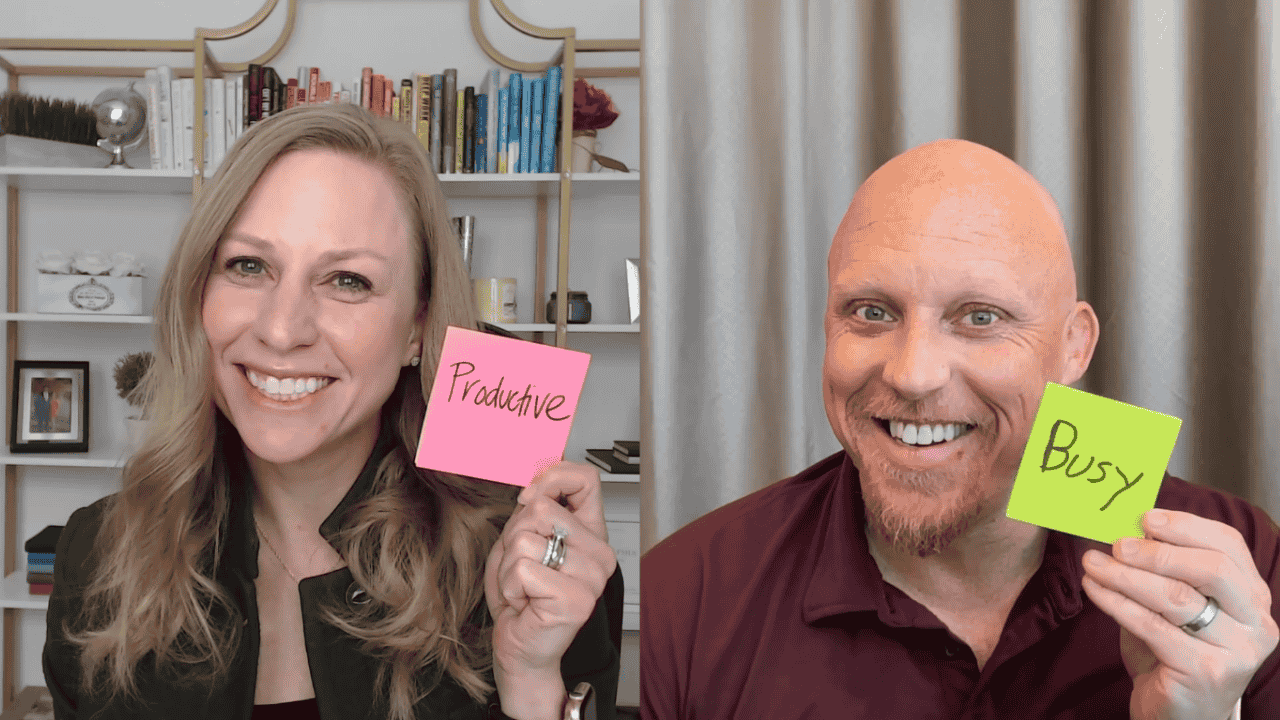
Sarah Ohanesian reveals the crucial difference between being truly productive and just getting caught in the "busy trap."
What if being "productive" is actually just you performing in a "Productivity Parade"? Brian sits down with Sarah Ohanesian, productivity expert and founder of SO Productive, who reveals why we're so easily lured into the "busy trap" and how performative work (hello, mouse jigglers) is ruining our actual output. Turns out, checking off 50 tiny, insignificant tasks might feel good in the moment, but it's leaving you exhausted and behind on what actually matters.
This conversation gets practical fast: discover why putting "write a book" on your daily to-do list is a guaranteed recipe for Friday afternoon depression, learn to identify the "Quicksand Conundrum" of doing the wrong tasks really well, and find out how to stop micromanaging while actually helping your team. Sarah breaks down her signature COAT method, explaining why your tasks are scattered across a dozen Post-it notes and how to finally separate lofty goals from bite-sized action items. Brian counters with his insights on meeting culture, and together they tackle the manager's dilemma: how to close the "clarity gap" so your team knows exactly what's expected of them.
If you're ending your workdays exhausted but feeling like you didn't actually accomplish anything, or if your team is drowning in reactive chaos, this episode is your way out. The show notes include the COAT framework, strategies to stop the endless pushing of due dates, and the exact steps to transition from "busy" to truly productive.
The Video
The Audio/Podcast





References In This Episode
Sarah Ohanesian – SO Productive – Sarah's main consulting website and company home.
Sarah Ohanesian on LinkedIn – Connect with Sarah professionally.
Key Resources:
SarahOhanesian.com – Sarah's main hub for her speaking, training, and resources.
GetSuperProductive.com – Sarah's consulting and tech implementation (like Asana) branch.
NewPathFwd.com – Sarah's tag-team speaking and training brand.
The COAT Method – Sarah’s signature framework for fighting the busy trap and getting truly organized.
C - Clarity: Close the clarity gap before you start (this is 90% of productivity!)
O - Organize: One location for tasks, separate ideas from actionable items
A - Act: Stop dreaming, start doing—calendarize your priorities
T - Take Time: Celebrate wins, rest, recharge (not optional!)
Brian's Resources:
"Calm In Chaos" – Brian's signature conference session on successfully prioritizing and focusing when you are drowning in tasks.
"This Meeting Could Have Been an Email" – Brian's signature session on effective meeting management and protecting your time.
The Forgetting Curve - Wikipedia link and research details (50% forget after 1 day, 75% after 3 days)
Tools & Techniques:
The Three Places to Write Things Down – Brian's framework: Calendar (where to be), To-Do List (what to do), and Notes/Checklists (what to remember).
Central Source of Truth – Sarah's rule for picking one tool you actually enjoy to organize all your tasks instead of scattered Post-it notes.
Concepts & Frameworks:
The Productivity Parade – The trap of doing things just to "look busy" or be seen (like accepting every meeting invite or using a mouse jiggler).
Goals vs. To-Dos – The critical difference between a massive, lofty aspiration ("Write a book") and a bite-sized, actionable task ("Write one sentence").
The "Push It" Protocol – The bad habit of constantly pushing a due date back because the task is too big to tackle.
The Quicksand Conundrum – The danger of doing the wrong tasks really well and sinking your true productivity.
Sarah Ohanesian and Brian Nelson-Palmer
Chapters
00:00 Introduction to Productivity vs. Busy
00:55 Understanding Productivity and Its Importance
03:56 The Busy Trap: Chaos vs. Productivity
06:35 Introducing the COAT Method
10:23 Organizing Tasks Effectively
14:59 Taking Action: The Importance of Acting
25:05 The Importance of Taking Time Off
29:46 Finding Clarity in Nature
32:54 The Importance of Me Time
34:14 Avoiding the Productivity Parade
38:55 Understanding Metrics that Matter
40:53 Urgent vs. Important Tasks
43:52 Navigating the Quicksand Conundrum
48:41 The Power of Writing Things Down
52:17 Encouraging Clarity in Management
Today’s Guest
Sarah Ohanesian
Founder & Productivity Expert, SO Productive

Sarah Ohanesian is a keynote speaker, trainer, and the founder of SO Productive, dedicated to helping professionals get meaningful work done without the burnout. Her journey into productivity didn't start in a textbook; it started in the trenches. As a busy Chief Marketing Officer running a multi-million dollar business, she looked successful on the outside but was completely exhausted on the inside. After missing family events, sacrificing her health, and constantly feeling like she had nothing left for her family at the end of the day, she realized that wearing "busy" as a badge of honor was not a sustainable way to live.
To save her own career and well-being, Sarah created a simple, structured system to take back control of her day—allowing her to accomplish more while actually leaving the office while the sun was still out. Now known as "Your Productivity BFF," she turns chaos into structure for other busy professionals and organizations. Through SO Productive and her consulting work, she rolls up her sleeves to uncover the root causes of workplace stress and inefficiency, delivering targeted, actionable solutions (like her signature COAT method) to help teams communicate clearer and feel less overwhelmed.
What sets Sarah apart is her Midwestern grit combined with East Coast hustle. She has a unique talent for taking complex, off-the-wall ideas and simplifying them into repeatable processes. She doesn't just want you to get more things checked off a list; she wants to move you from survival mode to becoming a smart, sustainable leader who actually has the mental capacity to enjoy life outside of work.
Connect with Sarah:
LinkedIn:Sarah Ohanesian
Website:SO-Productive.com
Speaking & Resources:SarahOhanesian.com

Why Subscribe To The Email List: Brian shares separate hacks, tips, and actionable learning exclusively for his email subscribers. Sign up so you don’t miss out!
About The Creator/Host: I’m Brian. At age 4, I was diagnosed with insulin dependent (type 1) diabetes and told that my life was going to be 10-20 years shorter than everyone else. As a kid I took time for granted, but now as an adult, time is the most precious thing that I have. After spending a career hands-on in the trenches as a leader at all levels, I now train Productivity Gladiators to level up their careers. Graduates wield superpowers in time management, practical leadership, communication, & productivity. If what you’ve seen here intrigues you, reach out, let’s chat!
“Time is the currency of your life, spend it wisely.”
TRANSCRIPT
Brian Nelson-Palmer (00:06)
Brian Nelson Palmer. On this show, I share personal practical productivity skills that will make you more productive and advance your career. And in this episode, we're talking about how to fight busy with the COAT method and tell the difference between productive and busy. And with me on the show today is Sarah Ohanesian who is the
keynote speaker and the founder of So Productive. Sarah, Thanks so much for being on the show with me.
Sarah Ohanesian (00:35)
You are so welcome. We'll stop with that right away so it doesn't get annoying, but I like it.
Brian Nelson-Palmer (00:41)
We're going to talk about so much today. Yes, we are very good. So thanks for being on the show today with me and for those folks who aren't familiar with you or your work. Talk about how you're related to our topic today about productive verse busy in the code method.
Sarah Ohanesian (00:55)
Mm hmm. Well, we're joking about so because my company is called so productive, which is also my initials S.O. And that's that's really what I'm what I'm on a mission to do. You know, Brian, throughout my career, I was noticing so many people are busy and overwhelmed and really struggling with this burnout. And this is currently the crisis that we are facing right now in our in most of our work lives. And so I realized what could I do to help people? And I thought productivity is something I just I just love.
And my mission behind it is certainly, yes, help you get more done during the day, help you be as productive as you can be. But my real reason for that is so that people can go home at night, be with the people they love, get really quality, high quality work done during the day, but then have time to rest, relax, recharge, be with the people that you love most, doing the things that you love.
Brian Nelson-Palmer (01:46)
Gosh, I I love that we you and I now know each other because holy smokes, the the description you just gave sounds like how I introduce myself when I'm on other podcasts. And here you are on productivity gladiator like we the Venn diagram of what you and I like to talk about. We're going to have to limit ourselves to a little bit of time because something tells me you and I could go for a while on this topic. So thanks for that. That that's a treat. now tell me one other fun thing I like to ask, which is
There's a lot of people out there like us that talk about productivity. So what would you say makes you different from all those other people?
Sarah Ohanesian (02:22)
Well, to me, and I know we're going to probably get into this quite a bit, Brian, is to think about what actually does productivity mean. So one of the things that I found is we have this definition of productivity in our heads or maybe we've been taught maybe stories we've told ourselves over the years. But I really like to challenge people on what does productivity mean to you. My definition of productivity is progress towards our
priorities. So it can be different for everyone. know, what's productive to you might be different for the next person, might be different for your boss, might be different for someone else on your team. But thinking about what does it mean to you when you get to the end of the day and you feel productive? What does that look like for you? What does that mean for you? And that's ultimately where it came down for me was thinking about
progress towards priorities, progress towards things that really, really matter. So essentially we feel really good at the end of the day. So I've honed in on what is that definition of productivity? And one of the primary differentiators I think I bring to the table here for people is helping them get clear on what that actually means for them.
Brian Nelson-Palmer (03:28)
Well, can't wait for you to help me get clear on what that means for me and vice versa and for you listening to this is going to be fun. I like this. So let's jump in now. So what I want to do is zoom out first. Let me let me kind of set the stage here. So when we talk about the busy trap in busy verse productivity, what exactly are we talking about there? So for the person listening, how would you describe it, Sarah? For what does it look like in the real workplace? What are we talking about?
Sarah Ohanesian (03:56)
Mm-hmm. Well, to me, how it shows up is busy feels chaotic. It feels when we say to someone, how are you? I'm busy. It feels almost like this badge of honor that we've earned. I'm busy. I'm running around like a chicken with my head cut off doing all these things and I'm busy and busy and busy. My schedule is packed and I've got to go to the next thing and I'm on to the next and everybody needs to get a hold of me. That's chaotic. That is busy.
It's very easy to be busy. It is very easy to fill the calendar. It is very easy to sit and answer emails all day and respond to every ping and ding and thing that's coming our way. Go back to that definition of productivity that I just shared. The productivity, the being productive part of this, it's not the same as being busy because anyone can be busy. To be productive, we have to have a sense of where are we going? Where are we headed? Are we making progress?
are we doing the most impactful work? That's actually being productive. And so it switches us from busy, think a really simple way to think about this is busy is reactive, doing whatever pops up next. Being productive, that's being proactive. That's thinking about how do I want to take one step towards a goal that I have? So I hope that's helpful for people to think about that is, you are you feeling busy, chaotic, overwhelmed, reactive?
or are you feeling productive? And I keep saying feeling because it really comes down to how do you feel about the work that you're actually accomplishing?
Brian Nelson-Palmer (05:25)
Yes, I very much can relate to in the in the feeling department. At the end of the day, when you're productive, you feel it's a feeling. You feel like you were productive. when I go from meeting to meeting to meeting and I check emails and I do meetings and all of the things that were hanging over my head are still hanging over my head.
So when you describe it as a I love that you said feeling because that is very much it for me to it is very much a feeling like I feel like I wasn't productive today. So I love it.
Sarah Ohanesian (05:55)
Mm-hmm.
And what I
hear from people, especially in in corporate settings, I was busy all day, but I didn't get anything done. I was busy all day, but I don't have anything to show for it. I was busy all day, but my goals are still sitting on the back burner. And that can be a goal for yourself, for your team, for your business. But it really is something that we end the day and we know if we were busy or we were productive.
Brian Nelson-Palmer (06:22)
True story. Gosh. All right. Well, then let's dive in. So getting we want to get past that. We want to be productive, not busy. So you talk about the coat method. So kick it off for us. What? Walk me through it. What's the coat method?
Sarah Ohanesian (06:35)
Well, coat and think of it like a coat you put on a C-O-A-T coat. And the reason that I like this metaphor and I came up with the acronym over years and years of working and tinkering through this, but I came up with it and I thought, actually, I love that it's a coat because it acts as this inherent protective metaphor. It's meant to protect us. It's meant to be this coat of armor, essentially, that we put on that protects us from that barrage of being busy.
And so, Brian, I'll start with the C and then we can unpack that a little bit. The C is for clarity, get clarity. Are you clear on what you want, why that matters to you? And I like to spend, when I'm speaking or working with groups, I like to spend a lot of time here because this to me is 90 % of the productivity equation. Brian, have you ever been tasked with doing something or maybe you were voluntold for something and you thought,
Few months later, maybe this isn't what I thought it was gonna be. This project or this thing I volunteered for, this isn't exactly what they told me. It feels like a little bit of a bait and switch. And so what I find for so many people is we're living in what I call the clarity gap. And we're living in this gap between what we thought the expectation was, what we thought we were gonna be doing, and what that real expectation is. And so often it's because we're not...
clear on what those expectations even are in the first place or what the project is or what the task is. So I would rather people spend front load, spend a lot of time getting clear on what it is, why it matters, and then doing the work, that becomes a lot easier, but we've got to be clear on what it is and why it matters in the first place.
Brian Nelson-Palmer (08:18)
Yeah. Okay. So that's clarity is first. And you know, the thing that immediately jumped to mind for me in, my sessions and when I'm talking to groups and organizations, ⁓ one of the things around clarity is the one thing, what is the one next thing that you need to do? Cause what they do is oftentimes what they'll say is, yeah, Brian, you're going to lead this effort to implement this new thing. Great. Well,
That actually is broken down into a whole bunch of little tiny things. And for, if you haven't been to project manager school, getting all those little steps and all the things that need to happen,
And your focus is on the one next thing that you need to do and focus entirely on that, because if you lose that, you will never get to the end. So that's like the clarity.
Sarah Ohanesian (09:07)
Yeah,
for sure. And Brian, I call this the push it protocol. You hear that song from salt and pepper from push it, push it real good. Push it protocol is exactly what you're saying. We push things off. And when I say push it, I mean, like we're changing the due date. We're making it later. We look at the task and say, you know what, I'm gonna just do that next week. The next week comes and you're like, maybe that's the next month thing. And we just.
Brian Nelson-Palmer (09:16)
Ha ha ha! Yup.
Sarah Ohanesian (09:35)
We keep pushing things off, but it's usually because of the reason you're saying it's too big. We've got these goals and these tasks and these projects that are absolutely humongous. And so we think, I'll just deal with that later. But instead, how could we break it down into bite size? And Brian, when I train on this, will tell you, I have to, people share, people share one of their goals and what's one small thing they're gonna do next to make that happen.
Pretty much every time I have to say smaller, smaller, smaller, micro, teeny, teeny, tiny, because we're so geared towards big audacious goals, which I love, I'm all about that. But what is the micro mini bite size test we ourselves can do to actually make that happen? So that's what gets us out of that push it protocol.
Brian Nelson-Palmer (10:19)
I love that. All right, so that's clarity. Then, oh, what? What's oh.
Sarah Ohanesian (10:23)
⁓
So O is for organize. A lot of us have tasks all over the place. We've got post-it notes in our cars maybe for ladies potentially in the bottom of our handbag. We've got stuff in our computer bag. We've got stuff at our desk. We've got stuff in this digital tool that we're using. So we have tasks all over the place. And my goal with the organize step is for helping people get it into one location.
and one location that you actually enjoy. And what I mean by that is people say to me, well, what's the best tool? What's the best app? What's the best place? You I've got a new journal. I'm gonna keep it in there. I've got a new planner. That's the place I'm gonna keep stuff. I'm certified in a bunch of them. I love them. We can do a whole separate podcast about tools. My goal with this is that you pick a tool that you...
that you're actually going to use. It becomes your central source of truth. This is where you put the tasks that really matter that you wanna actually cultivate and get those things done. So I like to help people organize them into one location. And then from there, Brian, we can separate them into ideas and actionable items. So that's kind of the part two of organizing things. Because what I find is,
I'm sure on this show and probably you listening today, you probably have a lot of really good ideas. A lot of them, like they're really solid. But can we take action on all of those ideas right now? Maybe not. I wish we could, but maybe we can't. And so this concept of separating ideas, thoughts, things we want to handle maybe later, maybe next week, maybe next month, we don't know exactly when.
Brian Nelson-Palmer (12:03)
Yeah. Yeah.
Sarah Ohanesian (12:09)
Those have to be on an ideal list, which is separate from the shorter bite size action list. It's a shorter list of things we can actually take action on. And that's really a critical step in organizing. So first, get it into one spot and then decide, is this something I'm doing like soonish or is this something I need to just save for later?
Brian Nelson-Palmer (12:31)
I love that you said that because if you've been listening to this show or you've heard me speak before, the way that I describe what you're talking about is there are three places that you write things down. The calendar is where you need to be. The to-do list is what you need to do. And your notes, lists and checklists is where you write down things you want to remember. So to where to be, what to do and what to remember. You have three places for those.
Sarah Ohanesian (12:46)
Mm-hmm.
Brian Nelson-Palmer (13:00)
And so what you just said, I was sitting here going, yep, absolutely. Yep. Difference between action and like things you need to remember would be your ideas and things that you're dreaming about. And yes, you've got lists and or journal or whatever it is. I use Google Docs. People use Evernote. There's all kinds of ways to do it. But your to do list is actually the action that you need to take. Or in my case, the one next thing that I was just talking about goes on the to do list. So like.
Man, Sarah, we've been talking about that Venn diagram on you and me like this is great. I love it. ⁓
Sarah Ohanesian (13:34)
But I
find, I love that you talk about that so much as well, because what I find is people are very overwhelmed by the size of their quote to-do list. And in reality, there's a lot of things sitting on our to-do list that shouldn't be there in the first place, to your point. Maybe that is a calendar appointment. Maybe that is an idea, a concept. You know, I hear a lot of people, I want to be a speaker. I want to write a book. I want to get a promotion. Well, that's not
It doesn't go on the to-do list. That's a goal. That is a big lofty goal that we have. And we put that on our to-do list, it sits there. And then back to feelings, when we see that goal, you know, let's just take, write a book, because it's big. It's easy for us to conceptualize. Write a book sits on people's to-do list, month after month and day after day, but it's so big, we don't make any progress. And then at the end of the week, we think, I didn't do that today. And now I'm sad. But instead I'd rather you say,
Write one sentence of the book. Write one sentence. Get that done and feel better and create some momentum there. Like get to your point. One next section, get it started. Just do the next thing. But we've got these big lofty things sitting there and they're just making us feel bad.
Brian Nelson-Palmer (14:48)
True story. Absolutely. I love that example. Okay, you and I could go on and on about all of these things, but I'm kind of excited. All right, that's C, clarity and O for organize. What's next?
Sarah Ohanesian (14:59)
Mm-hmm.
A is act. Take action. It's go time. Again, let's just stick with that book example. Many of us have these goals. We are smart people. We are capable, talented professionals, but we get to the end of the day and think, I didn't get anything done today. Because we didn't take any action on the items that we actually wanted to create.
create the items that we wanted to get done. So Brian, you mentioned calendar earlier. This is in my world where calendar comes into play because we have to look at the reality of the day we have coming up or the next few days coming up and think when reasonably, when can I take action on these items? So we've got things on this list, this actionable list. When are we going to put it on the calendar? When are we going to have an hour? When are we going to take three hours and actually get into some flow and deep dive and do some real work on this? But when are we going to take
and big dreamers, but no action. What is that called? It's like if you have a big dream, but you don't do anything about it, it's just a hobby, it's not a business. And I think a lot of people get stuck there. Like you're not an author if you haven't written a book. So what are we doing to actually take action, micro bite size actions to move the needle forward on those goals, those things that are gonna make us actually feel productive? And so one of the things that I...
find happens here, Brian is a by-product of this, is a concept I call compounding productivity, which is really momentum. So when we take that small action, feels good. Feels like we started to make some progress. It feels productive. It feels like now we're getting somewhere. And then all of a sudden, momentum starts to kick in. And so that's this concept of compounding our productivity. One right thing,
leads to the next. It actually becomes a bit of a one runaway train, which is great.
Brian Nelson-Palmer (16:49)
Yes, I love the train. The momentum thing resonates with me. And one of the things you said about act the recent episode I just did was about planning your week in advance. And that's a big part of like, Sarah, you just said the calendar. When are you going to do it? Most people don't ever mark.
Sarah Ohanesian (16:53)
Yeah.
Mm-hmm.
Brian Nelson-Palmer (17:11)
when they're going to do it. the the stat that he shared that still is so vivid, like he said it and it was one of those, oh my god, right, this is so true, is that 94 % of managers know that they should, that one of the ways to be productive is to plan your week in advance and only 0.8%, less than 1 % actually plan their week in advance every week.
Sarah Ohanesian (17:13)
Mm-hmm.
Mm-hmm.
Brian Nelson-Palmer (17:40)
And so for you, the difference between productive and busy is when are you going to do this stuff? When are you going to act? And that comes from planning your week in advance. And so I act as resonance.
Sarah Ohanesian (17:49)
You have to. I
really do not know how it happens otherwise. I just don't know. I feel like I don't use my calendar. I don't really plan ahead. I'm like, what? That's crazy to me. for me, and then it's the same people that say, gosh, in 2026, the whole year, I didn't get anything done. Well, yeah, you never had time on your calendar to actually do it. And so often, this concept of flow and getting into a state of flow,
So many managers and people working in businesses, right? We're going to meeting, meeting, meeting, meeting, meeting all day long. How much can you realistically get done in the 15 minutes between the meetings? Like, the meeting ended a little early. Like, great. How much can you really get done in that space? Not that much. And so this concept of getting things on your calendar and giving yourself an adequate amount of time to actually get something done, like a solid two hour block of work, some deep quality work time.
That's when we're going to move the needle. That's when we're going to really feel productive. And so I'm seeing these calendar audits that I do, scattered, scattered, scattered calendars. And I think, what if we had just the block of meetings in the morning and then we had a little more time in the afternoon to actually get some really good quality work done? What would that do for businesses? Like if you're a manager, what would that do for your team? Incredible.
Brian Nelson-Palmer (19:09)
Yep. And for, especially
if you're a, if you're a manager, by the way, there are some people who have a, that I've met who have a perception that they can't put time aside on their calendar for productivity because they have to be available for meetings. And I'm here to tell you right now that if you've got deadlines, if you've got things you need to do, then that time goes on your calendar because your company, your organization,
Sarah Ohanesian (19:27)
Mm-hmm.
Brian Nelson-Palmer (19:39)
hired you, they are paying you to get stuff done. Your job description is not go to meetings and respond to emails. Your job description says a lot of other things. And so at the end of the year, they're going to be judging you on the things that you did, not the meetings that you attended or the emails that you responded to. No, it's not that. And so if you have a bunch of things that are behind or hanging over your head,
you are only one person and you need time to do those things. So you need to mark your calendar. And if that means you're not available for half of the day, because you got to spend half of the day on this stuff, then yes, mark your calendar off for half of that day. And if people reach out and they want to move some stuff around and they're like, Hey, listen, you know, obviously there are people who you're going to need to take the meeting, even if you had marked it as productive time.
Sarah Ohanesian (20:31)
100%. And so what I see with organizations is this concept is we get it, but it's very hard to actually pull off because how do I decide that my manager, my boss, they get to override and have time with me, right? So this is going back to Brian. We're kind of floating back into the sea a little bit here because this is where I see the clarity gap really in play at businesses.
The leader says, Brian, I want to meet with you. How's four o'clock today? And you're like, that was my time. I was really going to work on something that matters most to me, but I'll just get rid of that time because you're the boss and I'll take the meeting with you instead. What does that do to you? What does that do to the time that you had set aside? What does that do for the priorities that you thought were important? So again, this clarity gap comes into play because so many of us are actually afraid to say to my boss, do you know what?
I really was gonna work on this today. So is the thing that you wanna meet about essentially more important of a priority than that or less? And let's have a real open, honest conversation about this. Now, Brian, the pushback I get on that is I could never have my boss at, I could never say that. Well, for the managers that this podcast is really for, like if you are a manager, please, if you take nothing else from today,
Please be a manager who lets and encourages the team to come with you to have these open, honest conversations around what are the priorities. Please be that. Please be the manager that encourages this because this, like closing the clarity gap on what's important and why it matters, that to me is a differentiator in 2026 for businesses. 100%, 100%. Yep, but if people are afraid to come to you and say,
Brian Nelson-Palmer (22:18)
100 % agreed. Yep. I love that.
Sarah Ohanesian (22:24)
I don't want to ask. I'll just do what I told. I'll just move the meetings around. We're very unclear on what the priorities actually are in so many businesses that I work with. And this is, I'm on a soapbox. This is industry agnostic. This is, doesn't matter, big companies, small companies. I am seeing this as a global, global problem right now. So, sorry, Brian, I went off.
Brian Nelson-Palmer (22:45)
True story. And you know, I think especially this is timely. Also that that discussion is important because with AI, everything is going faster. Everything is getting faster. There are people are able to get stuff done faster, which means you have more to do more to keep track of more. That means instead of six projects, you're able to lead 10, but that means you've got 10 different sets of actions and things that you've got to manage and organize. Like that's
Sarah Ohanesian (22:56)
Mm-hmm.
Brian Nelson-Palmer (23:15)
That's what we're talking about here is we're scaling up. AI really allows us to scale up. And as a result, this, this is where you, you gotta be able to get your stuff done because now you're juggling 10 balls instead of six, which means you gotta be paying attention. You gotta have time to juggle those balls. And so you can't just go have a meeting with your manager whenever they ask. However, that said, I also encourage with
Sarah Ohanesian (23:31)
Exactly.
Brian Nelson-Palmer (23:42)
In that discussion, one of the things that managers don't know is they don't know all the stuff that you're doing. So if instead of it's, it's not no, it's yes. And this is the question that comes up. How do I say no to my boss? You don't say no to your boss. You say, yes, you say yes. And that time was reserved for this thing, for this customer or this group that was really important. And I need to get it done by tomorrow. So is this something that is
Sarah Ohanesian (23:47)
Mm-hmm.
Exactly.
Brian Nelson-Palmer (24:07)
Should I bump that so that I can meet with you or can you wait till tomorrow so that I can get this done for them? like having that prioritized prioritization discussion is what managers really need to know if you're going to bump them.
But that it's that prioritization that's huge. So I love that you.
Sarah Ohanesian (24:23)
Exactly.
I call
that the clarity meeting and that's a meeting I'm encouraging and nobody, nobody wants more meetings. But if we're going to have a meeting, we're wasting time in status meetings where everybody gets to go around the room and say like, Hey, what did you do this week? How's it going? I would rather scrap that meeting and have a real clarity meeting. Looking ahead for the next 10 days, what are the top priorities? What's on your plate? What could move off? What could go to next week? What do we want to move to the top? I would
much rather see businesses have that meeting. I think that can change a business in the next year.
Brian Nelson-Palmer (24:57)
For sure. All right, so we've got clarity, then organize, then act. And now the T in coat is...
Sarah Ohanesian (25:05)
Take time.
Brian Nelson-Palmer (25:07)
Take time, okay.
Sarah Ohanesian (25:08)
And
what I mean by that is actually to take some time off, not work, rest. Have your mind clear. I know this is like a crazy concept for people. People are like, ⁓ pull off the road. This lady's lost her mind. But there is some research that shows like when we actually do this, when we actually take an evening off, we are more productive the next day.
We have to have this time to reset. It is not sustainable to be on 100 % all of the time. And again, this is the thing that when I teach this, people are like, oh, this is kind of cute. This kind of like the warm and fuzzy part of this. Like, oh, that's adorable. Take some time off. I am serious because this is the piece that I actually believe can be most critical because imagine if you've had a good night's sleep.
Brian Nelson-Palmer (25:42)
Yes.
Sarah Ohanesian (26:02)
Imagine if you didn't work till midnight. How would you feel when you got up in the morning and you got to work and your mind was clear and your head was fresh and you actually felt really energized about the work ahead? You will get more done. You will be more productive. And it's just a concept that people are really struggling with. So I see two parts of this. One is first to physically check it off your list. And I think about like, a, I love taking like a juicy Sharpie and marking something off my list.
I also use Asana, ⁓ task management, project manager software, and a unicorn flies across the screen when you accomplish something. But the reason that that matters is because it's saying to our brain, bye, I don't have to think about this anymore. I don't have to worry about this thing. I don't have to keep it held in my head. I can get rid of it. So physically getting it checked off your list is very important. And then the second part of it is celebrating a win.
saying to yourself, like, deserve a two minute break. I'm gonna go get myself a cup of coffee. I'm gonna take a quick walk around the office. I'm gonna take a quick walk around my neighborhood. I'm gonna just take a moment to pause and actually celebrate the win that I've had here. And then the other part of it is imagine if you said, as a manager, imagine if you said to somebody on your team, great job.
Great job. Your work on that project really mattered. Thank you so much. How far would that go in businesses? But many of us, we just check something off the list and we're onto the next. So the take time is about celebrating wins, honoring what we've accomplished, checking those things off the list and actually saying to somebody else on the team, thank you. This really matters.
Brian Nelson-Palmer (27:44)
You're saying that and it's funny when I started Productivity Gladiator years and years and years ago, it actually, part of it came from, I was reading a book and I cannot remember the book, but it introduced the concept and I had never heard of this concept before called a hedonic treadmill. And the hedonic treadmill is where you are the type, you're on a treadmill and you're always onto the next thing. I climbed this mountain and you're immediately starting the next mountain and the next mountain.
Sarah Ohanesian (28:02)
Mmm.
Mm-hmm.
Brian Nelson-Palmer (28:13)
and the next mountain and you never actually, it's like being on a never ending treadmill and it just never stops. And so I love that. That's the hedonic treadmill is part of why I started productivity gladiator because it has to stop. You have to celebrate the wins. You have to act. What are you going to do to pause for a second and acknowledge that Holy smokes, you finished that big project and it had an impact and they gave you some award.
So I love, I love that you said take time because the hedonic treadmill is the reason why I do this. And it's similar to,
what you're talking about.
Sarah Ohanesian (28:48)
Yeah. So Brian, right now we're recording this in February and it's like national sales meeting time for so many of the big organizations that I, that I work with. And so what I see is some of these meetings is great job sales team. Now your goal is higher for next year. And like they celebrate by saying the bar just got raised, which again, I'm all for pushing ahead and moving goals and kind of optimizing our potential, but I want to make sure we're also celebrating those wins at the same.
at same time. Now some organizations I work with, do a really good job of this. They were just in Vegas. Like I've just been to Vegas and Orlando and all these places. They're celebrating their wins, but they're also then elevating the bar as well. So that's my encouragement is to take time to raise the bar and elevate and keep growing and moving forward, but not without that celebration first.
Brian Nelson-Palmer (29:34)
Yes, absolutely. And I want to come back and ask you, OK, you said take time and you alluded to time, time off. So I'm curious when you take time, what does it look like for you, Sarah? What's that? How do you do it? Because I have a system for me too, and I love that we probably both have systems. So how do you approach this? What do do?
Sarah Ohanesian (29:43)
Yes.
Mm-hmm.
I'm not.
My system is quite simple. I need time with nature. I need time to, I'm a big walker. So I love to be really, sometimes I like to go with my husband, but sometimes just alone, like alone in nature, possibly not listening to anything, no earbuds in at all. And it is time for me to think. And what ends up happening, Brian, is sometimes my best ideas have come from that space.
There's no pressure, there's no pressure to perform, there's no pressure to do anything. But sometimes on those lonely, lonely walks, I've come up with some of my best ideas. So I think about the white space, literally, and that's what I need. I need some white space. And I don't have any pressure for what that actually means.
Brian Nelson-Palmer (30:39)
You know, I, for me, I am very conscious of having time without AirPods in or with no stimulation at all. So first, and I wrote an article about this, there's a blog post about this. have no phone in bed is a new rule that I have for myself that I started probably about a year ago. It's been transformational because you just sit there with your thoughts. And not only do I sleep better now, but I also
have time for my brain to just wander when it's settling down and making your brain does all these things, connections, synapses. It's like processing this and then your dreams and then you're like, there's so many things that happen. You gotta have time where you're not doing something else at the same time. So if you're a person who has headphones in all the time and you're always listening to something, when's the time when you're not listening to anything like Sarah said, talking about the...
when your time with nature or something for and and Sarah the answer to your question how I do it is or the answer to my question that I asked you how I do it is I know when I plan my week in advance because I am religious about doing this and when I do it the mark over the years I've noticed that I need one weekday night and one portion of a weekend day where I don't have anything on the calendar.
Sarah Ohanesian (31:54)
No.
Brian Nelson-Palmer (32:01)
There is nothing there. Sometimes I just want to sit and watch a show and like not, with my phone, not multitasking, like actually watch a show or I listen to a book or sit outside or go for a walk with nature or something. That time is not planned. It is me time. I call it my me time and I need two segments of me time every week. And if I don't get that time,
Sarah Ohanesian (32:17)
We're.
Brian Nelson-Palmer (32:26)
it can just be two hours. For me, it's a week. It's a after work one day. And then it's also a, it's either a morning, afternoon or evening of a weekend day. And so if that works, that's cool. And I plan that in advance. And then I also plan my week in advance with my wife. So then it's like, what, when are we having dinner together? What are the plans we have for the family? What's the, there's a lot more in life, right? So I know when I say that the immediate reaction I get from a lot of people is,
Sarah Ohanesian (32:35)
Love it.
Brian Nelson-Palmer (32:54)
How on earth do you have time for that? And actually the reality is if you put it down, if you plan it in advance, everything else can kind of shift around it. And so I haven't had a hard time even as life has gotten busier and busier and now AI and now productivity gladiators going places and like there's all these great things happening and life is busier than ever.
Sarah Ohanesian (32:56)
Right.
Brian Nelson-Palmer (33:18)
I still don't miss my two times a week, my weekday night and my one week portion of a weekend day. So that's take time for me. It looks like that and the guy it's huge.
Sarah Ohanesian (33:27)
I love it.
And what you're describing are what I call the HPTs. So high priority tasks, high priority time. What are the things that really matter to you? Work, not work, those things that are high priority for you, they go on the calendar first. Get your HPTs in first. That's it. And that's it. And then it will happen. It will happen.
Brian Nelson-Palmer (33:34)
Yes. ⁓
It will happen. Absolutely. Well, now you know what I'd like to do is go back and forth with you a little bit on water. Let's say so we talked about productive and busy and we you've got the coat framework, which I love now in terms of making it relatable. Can we just go back and forth with the mistakes that people we've seen people make and the practice that they should be doing instead? Because I know I've got some and I'm sure you do. So what comes to mind when I ask you that?
Sarah Ohanesian (34:07)
Yeah
Mm-hmm.
One of the big, I don't know if it's a mistake, but it's something that I would love to make people aware of just to see if this is potentially something that you notice. One of them is what I call the productivity parade. And it's when you're doing things that feel productive, but you're actually just doing them for show. And here's what I mean. It's showing up to meetings that you think,
I need to go to that meeting so people can see me. I need to be on Zoom with my camera on so everyone can see me, can see that I'm there. It might be replying to an email late at night. Maybe it's so people are like, ⁓ yes, Brian, great job, like hitting reply all so we all know that you're working Tuesday at 10 o'clock at night, like good for you. But it's basically this performative productivity.
And it's things that we do if we're really being honest about it that's like, I'm doing it for show. I'm doing it so people can see me. It's not necessarily something that really moves the needle forward. It's not really productive. It is in the busy category. But the only reason I'm doing it is because I have an ego and I want people to see me. So my encouragement for people would be to think about how does that look for you? I'll give you a quick story, Brian, if I may. There was someone I was working with and she said,
I was describing the mouse jiggler. Have you heard, have you seen this? It really came to me during the pandemic. it's this little, if you're listening and you don't know, it's a device that your mouse sits on, your computer mouse sits on it and it jiggles your mouse just enough so the green light status is on. So of course it looks like you're working no matter what you're doing. And you know, if you're a business that runs on Microsoft or two, it keeps the green light status on, right? So people were using this during the pandemic.
Brian Nelson-Palmer (35:42)
Yeah.
Sarah Ohanesian (36:06)
So I'm talking about this and this lady says to me, my gosh, we had to let somebody go because they were using the mouse jiggler. And I'm like, my God, that's terrible. But really what I'm thinking, and this is really for you as a manager, is to think about why do people on your team think they need to be using the mouse jiggler in the first place? Like what benchmark are we measuring that people think?
Well, if I just keep my green light status on, that's productive. That's getting the work done. It's not. And so my encouragement for anyone managing anyone else is, are you measuring things that are performative, productivity parade, or are you really measuring metrics that truly, truly matter for your team? So that's a question I would certainly want to leave people with today.
Brian Nelson-Palmer (36:56)
Gosh, yes, it's the butts in seats.
That's the problem that I have with the get back to work thing and the back to the office thing is if you're rating somebody based on whether their butt was in the seat or like you said, the mouse jiggler was their status green. I mean, the reality is if their status is green, whether they're sitting at their desk or not, most people can get their teams on their phone anyway. And if you're able to communicate with them and they get back to you in a timely manner, then why does it?
Sarah Ohanesian (37:11)
Mm-hmm.
Brian Nelson-Palmer (37:24)
matter? Why does the green versus the yellow matter to your point? my gosh. Yes, absolutely. What a great parade. like that.
Sarah Ohanesian (37:27)
And I would just really encourage people.
Yeah, Productivity Parade. I was a princess of the parade for a long time, I will say. Because, you know, being president...
Brian Nelson-Palmer (37:40)
I'm sorry you said
I was the princess in the parade and it's like my God. First of all, the alliteration happening here. It just makes me happy. But then the princess in the productivity parade. Please make that gift or that meme that would be a meme in your presentation at some point. Sarah, please do that. my God, that's funny.
Sarah Ohanesian (38:00)
because we're someone who is like, show up. And when people ask me to do something, I say yes. if you invite this back to our conversation earlier, if you invite me to the meeting, I'm gonna be there. And I think that's something that many of us, we inherited over time. And we are like, I'm the one that shows up. I'm the one that does all the things. I'm so amazing and I can do all this stuff at once. But guess what? We can't. And so it's leading us into this. It's one of the...
really productivity pitfall traps that I see is that we are stuck in this parade doing things because it essentially looks good, but it's not getting us anywhere. So again, I think as managers, we've got real, real opportunities here to think about what metrics are we measuring? Does it matter? Does it matter? And this debate about coming back into the office or not, listen, every business is different. There are businesses that, and teams that I see that are a
Brian Nelson-Palmer (38:37)
Gotcha.
Sarah Ohanesian (38:55)
100 % more effective in person. Like I've seen it. There are teams that I think they could totally work remotely. They might never need to see each other for months on end and they'd probably be fine. So I don't see this as this black and white. You people ask, and I'm sure you get this all the time too, should we be back in the office? Should we not be back in the office? I'm like, it really depends. Like there's a lot of factors that come into play on this, but I go back to either way, are you measuring metrics that actually matter?
And that might lead you to the answer of whether your team should be with you or not.
Brian Nelson-Palmer (39:27)
for sure. Absolutely. You know, I question for you listening, which is if you, when people ask, you get on the meeting and people say, how you doing? Do you say busy or do you say overwhelmed or do you say there's a lot going on? Stop. Don't do that because it's a self-fulfilling prophecy and the reality is everybody
is there, we're all there. If we weren't there before, AI is putting us there. So everybody's busy at this point. And so saying that your status is busy and overwhelmed as a manager who's trying to get somewhere, there is a little piece of me that might hesitate a little bit to want to work with you if busy and overwhelmed or how you feel.
Don't say busy, say, man, we're firing on all cylinders or man, there's excited about everything we have going on. Like show up in that way versus the overwhelmed way. So one food for thought.
Sarah Ohanesian (40:28)
sure. Yeah, it's really
like the vibe that we're putting out. And yes, we want to give someone to that chaotic, reactive, overwhelmed, busy person. Or do we want to give something to that person on our team who's really productive, like they've they've got it together. They're measured, they are certainly having a full schedule, but they are producing in a way that actually moves the bottom line. So I would always go with the productive person on that.
Brian Nelson-Palmer (40:52)
for sure.
And we're going back and forth on the mistakes that I see people make. And so here's one, here's a mistake that I see people make, which is going after the thing that's urgent versus important. The example I have here is if you've ever gotten, I get them on LinkedIn most frequently, people are crazy about following up with you if you do not reply to them. So they send you a message.
Sarah Ohanesian (41:06)
100%.
Brian Nelson-Palmer (41:19)
and they want to give you some sort of sales pitch or they want to send or, and I get them in emails too. I get them all the time. They come from everywhere and people are like, this is really important. I want, you know, can we, I need 15 minutes and I don't reply because I don't need that 15 minutes. It's not important to me. And then they follow up again and they're like, I didn't hear back from you. Can we, you know, discuss or whatever. And then they do it again.
And so what happens is eventually they wear you down because then you start to think you're like, well, if I'm not responding, then they're going to think that I'm not on top of it or I'm not whatever. And the reality is it's not important. None of what they want to share with me is something I need right now.
if it's not important to you, if it's not one of the actions on your to do list that Sarah and I have been talking about, if it's not there, then you don't have to reply.
However, focus on what's important. Do not confuse urgent or the fact that you haven't followed up with something being important. So I hope that resonates.
Sarah Ohanesian (42:23)
Yes.
It really does for me, I will say, I think this is a yes and moment. I know that's a big thing, Brian. Yes and I love this. I will say though, one of the things to possibly take it a little bit further is to think about also, is it time to just shut it down and give an actual no or not right now? Because sometimes, and I was on, I was a chief marketing officer in my past life.
Brian Nelson-Palmer (42:31)
Love it.
Sarah Ohanesian (42:50)
And I would have these people like calling me, calling me sales, sales. And at some point I thought I have to actually just tell them no. So it's one thing to ignore them, but sometimes they get to a point where you can't. And there are times where there's people on our team or someone's waiting for an answer for us on something. We might have to say, I will respond to you next month or.
It's a no. So I think going back to that, see that clarity piece again, I harp on this Brian, because it all comes back to that is to think about, can I be more clear though to actually help them get off my back? It's helping them help you as well. So I think you've got two options here. Like one, possibly ignore it, but two, you might need to also say, like, when do I actually need to say, I got to put a boundary up here? A no is a no.
Brian Nelson-Palmer (43:39)
Yeah, I agree with that. Definitely. That's a good point. Do you have a net?
Sarah Ohanesian (43:41)
Yeah, yeah. ⁓ you were
talking about mistakes. I've got one more if you want it.
Brian Nelson-Palmer (43:47)
I was going to say you do one more and I do one more and then I got a couple more questions. So yeah.
Sarah Ohanesian (43:52)
So the other common, and again, is it a mistake? I call them a productivity pitfall. But one of them, the other name I have for this is called the quicksand conundrum. So the quicksand, if you think about Saturday morning cartoons, like back in the day, we won't have to share our ages here, but I was a baby of the eighties. And so we were watching cartoons and like every Saturday morning, the cartoons were falling, the characters were falling into quicksand.
Brian Nelson-Palmer (44:09)
Yeah.
Sarah Ohanesian (44:21)
Like this is a big storyline for cartoon characters back in the day. But I see this a lot in offices because we're in quicksand, right? So we're sinking deeper and deeper. We're busy, busy, busy, sinking deeper into this busyness quicksand. And the problem with quicksand is that the harder we try, the deeper we sink into the quicksand. So here's some concepts of things that keep us in quicksand.
It's working on tasks that look productive. Like we think we're doing the right thing, but it's the wrong tasks disguised as the right task. So it's like, well, I am updating the PowerPoint presentation and the margins are great. And I spent three hours on the fonts and the colors are all just right. So I worked on the presentation for three hours.
That might be quicksand. Because what we should have been doing is finalizing like the call to action. We should have been asking for the sale. We should have been making sure this, talking points were right for that particular audience. But instead we were in quicksand working on the margins and the fonts. Does that concept make sense? It's like the wrong things that look like the right test. We're like, I'm busy. I'm working on all these things. It's like, yeah, but you weren't working on the right things.
Brian Nelson-Palmer (45:41)
Yes.
True story. And you know, I love that, I'm glad that you mentioned that too, because sometimes those things, I don't know if it's happened to you, many times when managers are looking for things to put in your performance report, your performance review, oftentimes they sound like pay attention to detail more or.
Sarah Ohanesian (46:04)
Mm-hmm.
Brian Nelson-Palmer (46:06)
So you might've even been giving feed, given feedback that you should be more detail oriented or that kind of thing. two things there. One, if the details you missed caused consequences for your team or your boss or yourself financial or your accountability or your reputation or something like that, true, true story. that these are valid things to give. However, if you're a manager listening or you're a person who's been given this and
Sarah Ohanesian (46:12)
Mm-hmm.
Brian Nelson-Palmer (46:34)
the details were that the fonts could have been a little better, then I take that personally as a huge compliment because if that's what they found, if they were, they're really reaching, if that's what they found as the thing that you need. I, so I love that if they're pointing out things that are not necessarily productive, not big things, not drive to the bottom line, not customer service, not, if that's what it is, then
It's like, I agree that it's okay. Don't spend the time on the fonts necessarily.
she called it quicksand and I love that because like don't, don't fall for the quicksand. I like that a lot.
Sarah Ohanesian (47:13)
Yes,
yes. And if you're feeling trapped, stuck, tired, exhausted, like you're burning out, my question for you is, are you in quicksand? Working on potentially the wrong thing. So it's a little bit of analysis to do, but you'll really evaluate like, am I busy all day working on the right things? Or am I busy all day working on the wrong things?
Brian Nelson-Palmer (47:22)
Yeah, absolutely.
Yes, for sure.
Sarah Ohanesian (47:38)
And as
a manager, if your team is burning out, if they're coming to you and saying, I'm feeling burned out, I'm feeling overwhelmed, that's an analysis I would do with them. Do that alongside of them. Cause they might think, Brian, to your point, you said attention to detail. So here's how I interpret, back to clarity, here's how I interpreted this. And as your boss, I'm thinking, no, no, no, I wasn't talking about the fonts. So really being
clear on what does this mean? So when we say yes, back to that C again, when we say yes to a project, when we say yes to a task, that's the kind of clarity I'm looking for. What is good enough on this project? What does this look like? What does success look like? When you give this to me, what is your expectation of me? What does success look like on this? Then I can deliver. When I'm clear on that, I can deliver, but I don't want to be stuck in the quicksand.
because we weren't on the same page. We can avoid that. Like there's a lot of wasted effort going on. That's what I'm saying. So my roundup on my mistakes that I'm bringing to the table here is like a lot of it just comes down to wasted effort.
Brian Nelson-Palmer (48:37)
I love that.
Yep, I love that. Avoid the quicksand. And I've got the mistake that I'll share for you, Sarah, and I'm sure you've seen this before too, is not writing things down. I can't tell you I'm in meetings and we go over the point of a meeting. I hope at the end of the meeting, you've made decisions, you've assigned actions, people know what they're supposed to do.
Sarah Ohanesian (48:51)
⁓
Brian Nelson-Palmer (49:03)
when we go over the action items, I'm looking around the room to see who wrote those things down. Or if I'm online, I'm asking, did you make a note of this somewhere? And I straight up ask.
the question and people don't get insulted when I ask it. It's really more of a, you capture that somewhere? Because if you didn't write it down, I know there are certain people and certain customers that if I don't tell them to write it down, you know what's going to happen? I'm going to have to follow up with them because they didn't write it down and they're going to forget and they're not going to do it. So you should have a system for where you keep the things you need to do.
and you should hold people responsible for writing things down. There's a fun stat This is, it's called the forgetting curve. They did some research. If you Google this or you go on Wikipedia, you'll find this thing. It's the forgetting curve. And it shows how much people remember over a certain period of time and how much do they forget. And after one day, 50%.
you forget half. After two days, it's two thirds, almost three quarters. After three days, it's less than 15%. So think about that for yourself. If you're the customer or you're counting on somebody to do something and they don't write it down, there's a 60, 75 % chance that they're going to forget it by the day after tomorrow. And the day after tomorrow is normally when I'm writing an email going,
Sarah Ohanesian (50:27)
Mm-hmm.
Brian Nelson-Palmer (50:31)
I see you didn't respond or you didn't provide that thing that you said, whatever. like that, but the forgetting curve is a thing. So go look at the curve. So you'll see exactly what I'm talking about. And I'll try to, put the link in the notes here if I could find it. But that I just share that because if you don't have a system for writing things down and capturing where you're to do things, you need to follow up for people, your accountability these days with AI, AI is very accountable. And so you, as a human being,
demonstrating your value, they shouldn't have to follow up with you either. And that means you've got a good system to write it down.
Sarah Ohanesian (51:08)
Mm-hmm. That's the, ⁓ I mean, that's really the organized step is part of that is your system and having that spot that you know. Like the other thing is I also run a workshop on meetings, Brian, we need to collab on this. running effective meetings, one of the things I see is like we wrote it down, but no one knows where the notes are, where we put the thing. So then they're going, wait, I'm looking.
Brian Nelson-Palmer (51:27)
yep.
Sarah Ohanesian (51:30)
I was looking for that because I know someone wrote it down, but there's not a good system in place. So just to piggyback on that, that's really the O, like the full orchestration of the O in an office setting is that we've got a system and the people on the team know the system so they can actually find those notes and what you're looking for. I think it's fantastic.
Brian Nelson-Palmer (51:50)
Yeah, so I want to switch gears for the managers or for somebody if you supervise people then I I wanna Sarah I wanted to ask you for the manager listening. What can managers do to help their people break out of the busy trap without being a micromanager? Because that's the trick right? You could micromanage everything you could just constantly be checking on them, but that's not going to feel good for them either. So what? What's a better solution there?
Sarah Ohanesian (52:17)
Well, I'll give you one guess, it's to be clear. And being clear is a two-way street. So as the manager, you think you're being clear, give the person that you are managing a chance to respond to that and have them actually repeat back to you. And I know that sounds a little elementary, but to your point, Brian, let's stick with this meeting. We're in a meeting, the meeting's closing out. Brian, what are your next steps coming out of this meeting?
person say it back to you and ensure that you are on the same page? Because we've probably all been in meetings where I thought we were in the same meeting. I thought we were in the same room. I thought we were in the same conversation. But when you left and I left, we actually had different interpretations of that. Our perception of that was different. So can we just get on the same page and likely write it down, put it somewhere, put it in your system so that we can remain accountable to that. But my encouragement is don't
assume that you've been clear and then make sure the people on your team have a chance to come to you and ask for that clarity. And then if they do come back a day later, a week later, you know, I started working on that thing and now I have a few more follow-up questions. Please be open to having that conversation with them because one of the things that gets in our way is fear. We're afraid to go back to our boss and ask. We're afraid to go back to our manager and say, actually, don't know if I understand this. If you have them be fearful,
It ends right there, you shut it down. But if you can say, I'm open to that conversation always, if you ever want to have a clarity conversation with me, again, I think that that can be a really game changer in a short amount of time. That can be a game changer this afternoon for people.
Brian Nelson-Palmer (53:58)
True.
The magic question that I love to ask and please steal this, write it down and steal this is what are you taking away from this and see what they say? Because that's that is, you know, I talked about at the end, ride the train from the meeting or whatever. And you're one of the things is the action items. And I don't like you as the host of the meeting, you could go through and confirm the action items, but it's more effective if you just ask what are the action items that we're taking away from this and let people
Sarah Ohanesian (54:06)
Mmm. Yeah.
Brian Nelson-Palmer (54:26)
volunteer the ones that they wrote down or the ones that they're taking away, way more effective on that approach too. So I love that you, that you shared that because yes, ask them for that clarity. Do ask them what they're taking away or what are they getting from this? And I love that. Now, last thing that I want to ask, because gosh knows my man, the time flies when we're having fun, Sarah, what's the, what's the first thing if that people are listening, that the person listening,
Sarah Ohanesian (54:30)
Mm-hmm.
Mm-hmm. Yeah.
Brian Nelson-Palmer (54:51)
should do from what we've just talked about. If there was, if they could just take one thing away from today, what is the first step that you hope they'll take?
Sarah Ohanesian (55:00)
I think a really easy one to implement is to have that concept is to take your list, your to-do list and separate it from ideas and actions. And I believe right away you're going to have a shorter to-do list. And I think that'll feel really good for people immediately.
Brian Nelson-Palmer (55:16)
Absolutely. And I'm going to yes and if you're going to take two things because that's Sarah's thing and Brian's thing is. Plan your week in advance. Please, please, please. For me, it's 2 o'clock on Thursday. My calendar is marked for an hour at 2 o'clock on Thursday. I like that because then I'm already planned. Friday can be an easy day. We're coasting into the weekend. I'm already set up for next week. I like Thursday at 2 PM, but for you it could be whatever time.
But you have to plan it in advance. Monday morning is too late. It already started. You're already in the thick of it. Please plan your week in advance. That's a huge, huge thing. So, so then kind of to bring us to close, first of all, here's what I love, Sarah. I love that you have so productive is very clever. And now you started an organization named after your initials and now you're doing this thing on productivity, but you're talking about things that are so practical.
especially now with AI, this stuff is more important than ever because people are more busy than ever in order to keep their jobs, in order to compete with AI, in order to do this stuff. You're going to be doing new and you're going to be doing different. Humans can do change. AI can't do change. So you are leading change. You're doing the hard stuff. And that means you've got to keep track of all this stuff. And so I love that you're
giving these tools and this code method. You came up with this clever little. mean, you're like in a perpetual winter because it's the code method and. right, exactly. I we don't we don't need. What do you do during summer, Sarah? I don't know, but during the winter time. Yes, but I love that you created this method and that you shared it with us today. So so thanks so much for for doing what you do and I love that you're doing this thing.
Sarah Ohanesian (56:43)
lasers because of it.
Next!
Thanks for having me.
Brian Nelson-Palmer (57:02)
What's now somebody who wants to keep track of you or get back in touch later? What are the best? Where should they find you to keep in touch?
Sarah Ohanesian (57:09)
So-productive.com and then very active on LinkedIn. So there's two Sarah Ohannesson's, I'm the blonde one, and I've got a check mark in front of my name, a done check mark. So Sarah Ohannesson on LinkedIn.
Brian Nelson-Palmer (57:24)
Sarah O. Hanneson on LinkedIn. And you'll see the name and I'll give you those links in the episode notes for you here too. And for you tuning in, think about someone in your life who struggles with busy versus productive. Think about the person who you were in the meeting, you asked how are doing, how are they doing? And they said, busy. Like I just said, who are those people? Maybe it's a friend, a colleague at work, even someone you haven't talked to in a while. Would you share?
the link to this episode specifically with them. Because I know that Sarah and I would love to know that our conversation today helped someone who needed to hear this. And we'd love to be the excuse for you to reconnect with that person and getting that link from you. Even I certainly, you know, I'm sure you have to, you'll have to preface this so it doesn't seem like, ⁓ you're busy and overloaded. You need help. You're not sending it for that. Be nice. But
share this with them because you know, you've been really busy and you've talked with them about being busy and things are overwhelming. You wanted to share this thing. So we would love to be that excuse for you to connect with them for something other than just work and that kind of thing. And also if you want more productivity insights beyond the podcast, my email subscribers get access to everything that I create. So come join the email list if you haven't already. And I love sharing productivity gladiator with you because together
these productivity skills are gonna change your life. That's a wrap.