Stop Asking If AI Will Take Your Job. Start Asking What Makes You Indispensable.
You're Focused on the Wrong Threat
Most people are asking the wrong question about AI. "Will AI take my job?" keeps you in a defensive crouch, waiting for bad news. The better question is: "What parts of my work are easiest to replace, and what can I do right now to become more valuable?"
That shift matters more than you think. AI isn't just eliminating work. It's reshaping it. The World Economic Forum expects major job disruption by 2030, but also a large number of new roles created in the process. The real issue isn't whether work continues. It's whether your value keeps rising as the work changes.
There’s a lot of fear and anxiety around this question right now with the organizations I engage with. AI presents a huge opportunity for organizations to become faster and more efficient, but what if by getting faster and more efficient we discover my job is no longer needed?
This research came from my conversation with Rosie Ward, which inspired me to want to “get to the bottom of it” and share these answers that are backed by research.
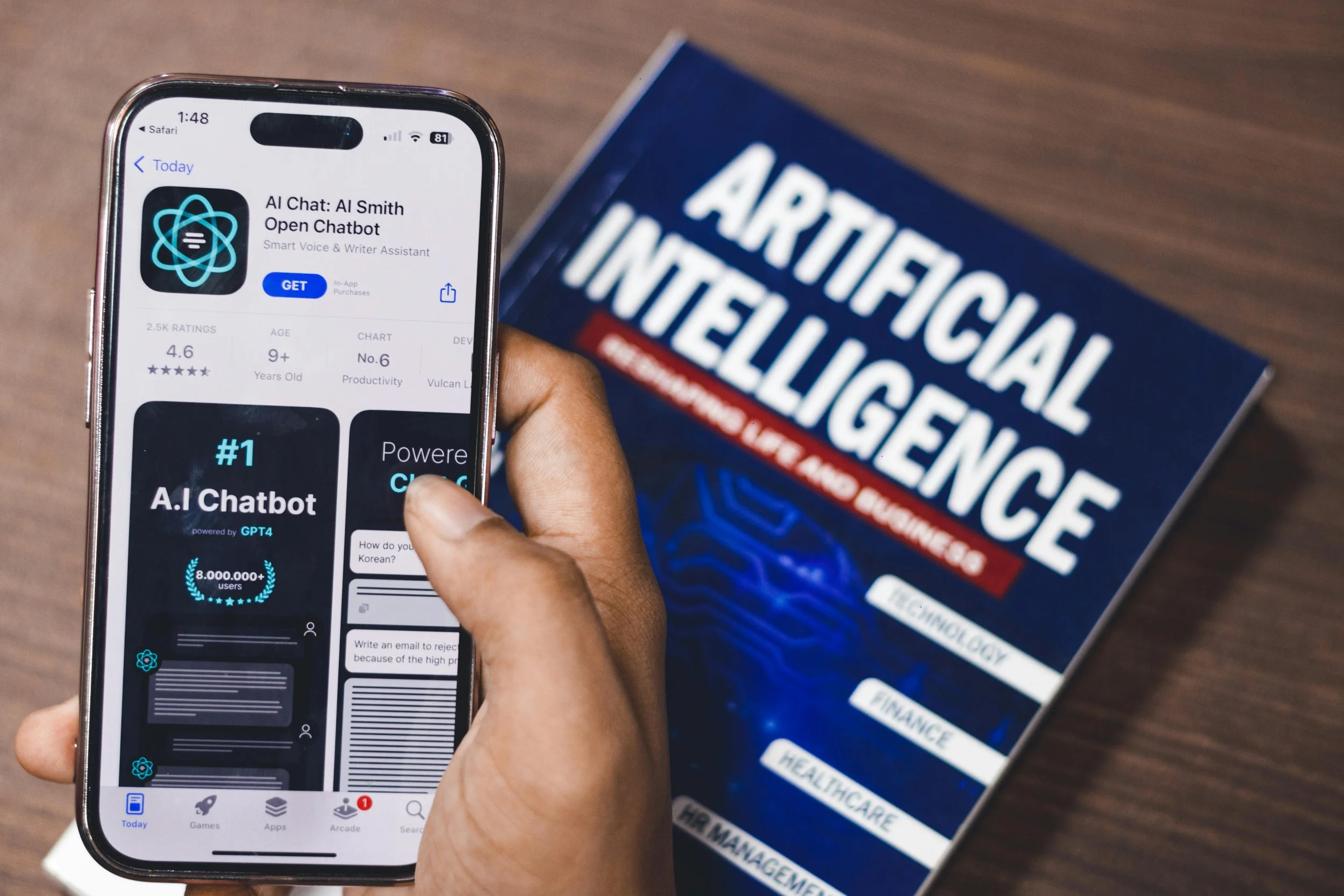
Photo from Pexels
The Riskiest Place to Sit Right Now
The most exposed work is predictable repetitive computer work. If a big chunk of your day is repetitive admin, first-draft writing, routine reporting, scheduling, or organizing information the same way over and over on a computer, AI is already moving into that territory.
This doesn't automatically mean you get replaced. It means your role starts getting redefined. Microsoft and LinkedIn found that most knowledge workers are already using AI at work, often before their company has fully figured out how to manage it. The safer move isn't clinging to every old task. It's shifting toward the work that still needs a person.
What Gets More Valuable Now

Photo from Pexels
As machines take the routine layer, the human layer matters more. The skills rising fastest aren't only technical ones. They also include:
Creativity and curiosity for the problems AI can't see
Resilience and flexibility to lead when things get messy
Leadership, public speaking, and social influence to move people, not just tasks
Verbal & live communication for anything more complex than finding information or routing to the right human to talk to
Lifelong learning to keep adapting as the tools keep changing
This is where a lot of people miss the point. AI is good at speed, structure, and pattern-matching. It's far less reliable at trust, judgment, context, conflict, persuasion, and leading people through uncertainty. That's why relationship-building, empathy, ethical decision-making, and conflict resolution keep showing up as the highest-value skills in the AI era.
Five Moves That Make You Harder to Replace With AI

Ai generated image
You don't need a total reinvention. You need a smarter strategy. Move your value upward. Instead of competing with AI on routine output, become the person who can use it, improve it, check it, and step in where it falls short.
Own one AI workflow. Become an AI manager. Pick one recurring task and learn how to do it faster and better with AI. Then lead the effort on that one to keep making it better. In the future, we’ll all be supervisors of AI bots, so start that now.
Move toward judgment-heavy work. Volunteer for the project with unclear edges and unclear potential. Handle the exception case. Take on the client issue that needs nuance. Help with training and change management.
Get better at the people side. Clear communication, coaching, conflict resolution, and trust-building aren't "nice extras." They're part of your job security now. The most human skills are becoming some of the most valuable ones.
Get closer to outcomes. The closer your work is to revenue, retention, customer trust, quality, process improvement, or risk reduction, the harder it is to replace you with a machine.
Track what changed because of you. Keep notes on time saved, processes improved, issues solved, confusion cleared up, or people you helped develop. Effort is nice. Visible usefulness is better.

Photo from Pexels
If You Lead People, This Matters Even More
Managers don't just need to use AI. They need to lead through it. Engagement in the U.S. has slipped to one of its lowest points in over a decade, which means many teams were already struggling before AI sped everything up. Faster tools don't automatically create better teams.
This is your opportunity. If AI clears some of the admin off your plate, use that time to do more of the work only a person can do well:
Coach someone through a challenge
Explain the why behind the work
Set clearer expectations
Give better, more specific feedback
Help your people adapt to what's changing around them
Leadership value rises not from doing more admin faster, but from using the extra capacity to lead better. That's the edge no tool can replicate.
A Quick Self-Check

Ai generated image
Sort your work into three honest buckets. This takes five minutes and will tell you exactly where you stand.
Automatable: repetitive, structured, predictable work
Human-led: trust, judgment, coaching, ambiguity, relationships
Growth work: solving new problems, improving systems, leading change, training others
Then ask yourself one honest question: Am I spending enough time in the second and third buckets?
If the answer is no, that's your next move.
The Bottom Line
You don't stay valuable by trying to beat AI at being a machine. You stay valuable by getting better at the work AI cannot touch, and the work AI makes more important.
That means learning the tools without handing over your judgment. It means doing less routine processing and more thinking, leading, deciding, guiding, and connecting.
The people who thrive won't be the ones who ignore AI, and not the ones who let it think for them. They'll be the ones who know how to use it well and still do the human work that matters most.
Stop asking if AI will take your job. Start asking how to make yourself the person AI can't replace.
References & Sources
World Economic Forum. The Future of Jobs Report 2025. WEF
Microsoft and LinkedIn. 2024 Work Trend Index: AI at Work Is Here. Now Comes the Hard Part. Microsoft WorkLab
Workday. AI Will Ignite a Human Skills Revolution (2025). Workday
Gallup. U.S. Employee Engagement Sinks to a 10-Year Low (2024). Gallup
Expert Interview:
Ward, R. & Nelson-Palmer, B. (2026). Future-Proof Your Job From AI: The Skills That Make You Indispensable. The Productivity Gladiator Podcast.

I’m Brian. At age 4, I was diagnosed with insulin dependent (type 1) diabetes and told that my life was going to be 10-20 years shorter than everyone else. As a kid I took time for granted, but now as an adult, time is the most precious thing that I have. After spending a career hands-on in the trenches as a leader at all levels, I now train Productivity Gladiators to level up their careers. Graduates wield superpowers in time management, practical leadership, communication, & productivity. If what you’ve seen here intrigues you, reach out, let’s chat!
“Time is the currency of your life, spend it wisely.”