Knowledge, hacks, and ideas to level up your personal practical productivity skills.
Your Communication Protocol Can Make or Break Your Team’s Productivity - With Theresa M. Ward
In this engaging episode, Brian Nelson-Palmer interviews Theresa Ward, founder of Fiery Feather, who reveals how communication protocols can transform team productivity and effectiveness.
As a team effectiveness coach with experience across multiple industries, Theresa shares how structured systems combined with emotional intelligence create thriving workplaces.
The conversation explores practical steps for crafting and implementing a communication protocol, making this episode a must-listen for anyone looking to streamline communication and boost team efficiency.
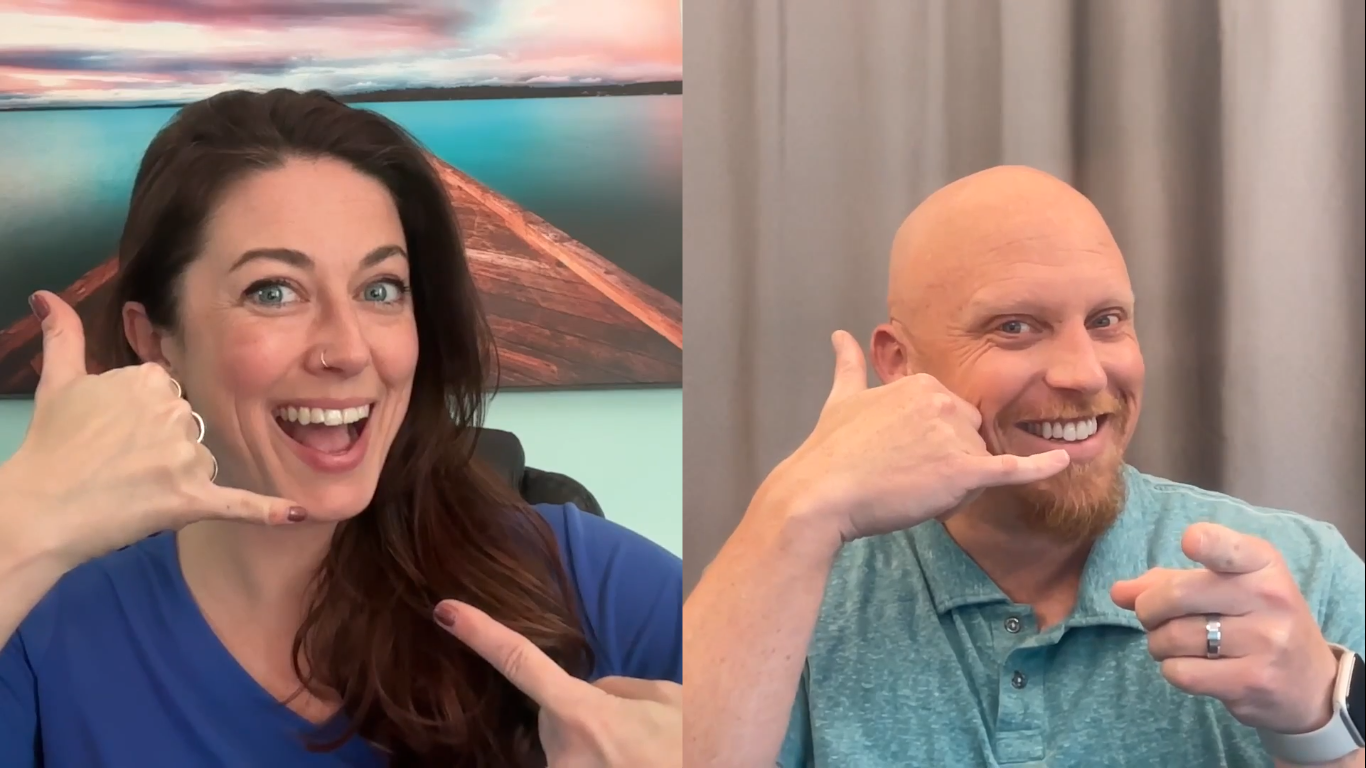
In this engaging episode, Brian Nelson-Palmer interviews Theresa Ward, founder of Fiery Feather, who reveals how communication protocols can transform team productivity and effectiveness.
As a team effectiveness coach with experience across multiple industries, Theresa shares how structured systems combined with emotional intelligence create thriving workplaces.
The conversation explores practical steps for crafting and implementing a communication protocol, making this episode a must-listen for anyone looking to streamline communication and boost team efficiency.
For more information, or a template to copy, visit the blog post on this topic!
The Video
The Audio/Podcast





References In This Episode
Fiery Feather Website – fieryfeather.com (Theresa Ward’s consultancy on team effectiveness)
Theresa Ward’s LinkedIn Profile – LinkedIn Profile
Calendly (For scheduling without back-and-forth emails)
Books and Concepts Referenced:
The One-Minute Manager by Ken Blanchard and Spencer Johnson (on leadership and productivity)
The Waterline Concept, from the book 15 Commitments of Conscious Leadership by Jim Dethmer (on decision-making in organizations)
Patrick Lencioni’s Work (on leadership and team communication)
Dr. Elisabeth Kübler-Ross And The Five Stages of Grief®
David Allen's work (Getting Things Done methodology)
Related Podcast Episode:
Episode Digest
How Communication Protocols Can Transform Your Team’s Productivity
In today’s fast-paced, technology-driven workplace, clear and effective communication is essential for productivity. Yet, many teams struggle with delays, misunderstandings, and unnecessary interruptions that hinder efficiency. A communication protocol—or situational communication guide—can help by establishing agreed-upon rules for when and how different types of communication should occur.
This structured approach doesn’t just streamline workflows; it also fosters better collaboration, reduces frustration, and minimizes wasted time. Whether your team operates remotely, in an office, or across multiple locations, having a shared set of communication agreements can eliminate guesswork and ensure everyone is aligned.
Why Communication Protocols Matter
Without clear communication guidelines, team members often experience confusion and inefficiency. Common workplace complaints such as, “I never got a response,” “I didn’t know this was urgent,” or “This meeting could have been an email” arise when there’s no structured way to handle different types of communication.
A communication protocol sets expectations for how team members should initiate, respond to, and escalate communication. It outlines which tools to use for different types of messages and clarifies how to handle urgent matters versus routine updates.
“A communication protocol is a shared set of agreements that guides how you initiate, respond to, and escalate communication—both through conversation and technology.”
With the rise of remote work and digital tools, workplace communication has become more fragmented. Some employees rely on Slack, while others prefer email or video calls. Without a clear agreement, messages can get lost, misinterpreted, or ignored.
A well-crafted communication protocol solves these issues by providing clear guidelines for when to use specific channels, how quickly to respond, and what qualifies as an emergency.
The Power of Communication Protocols in the Workplace
1. Establish a Clear Communication Protocol for Your Team
To ensure smooth collaboration, create a simple document that outlines how communication should flow within your team.
How to create a communication protocol:
List all communication channels available to your team. Examples: Slack, Microsoft Teams, email, phone calls, in-person meetings, video meetings.
Define the purpose of each channel. When should Slack be used instead of email? When is a phone call appropriate?
Set response time expectations. For instance, Slack messages should be responded to within two hours, while emails can be answered within 24 hours.
Determine escalation pathways. If someone doesn’t respond in the expected timeframe, what’s the next step?
This doesn’t need to be a complex policy—a simple shared Google Doc or internal wiki page is sufficient. The goal is to provide clarity and consistency in how messages are sent and received.
“If you don’t have a communication protocol for your team, you can create one—regardless of your position. Clear guidelines reduce frustration and improve efficiency.”
2. Balance Synchronous and Asynchronous Communication
One of the biggest challenges in team communication is knowing when real-time interaction is necessary versus when an asynchronous approach (where people respond on their own time) is more efficient.
Key Differences

Synchronous communication (real-time): Phone calls, video meetings, in-person conversations. Best for urgent matters, brainstorming, and sensitive discussions that require emotional context.
Asynchronous communication (delayed response): Email, Slack messages, recorded video updates. Best for updates that don’t require immediate action, documentation, or when working across different time zones.
A communication protocol should clarify which method to use in different situations. For example:
Use Slack or Teams for quick check-ins and non-urgent questions.
Use email for formal documentation or when a longer response is required.
Use a meeting only when collaboration or discussion is necessary—otherwise, an email or Slack message may be more efficient.
Use phone calls or video meetings when clarity, tone, or urgency is important.
“Asynchronous communication can boost efficiency, but there are times when a quick phone call can save hours of back-and-forth emails.”
3. Define What Constitutes an Urgent Matter
Many workplace frustrations stem from misunderstandings about urgency. What’s critical to one person might not be urgent to another.
To avoid miscommunication, your team’s protocol should define:
What qualifies as an emergency. Example: “An urgent issue is anything that directly impacts client deliverables, system outages, or high-priority deadlines.”
How to escalate an issue. Example: “If a Slack message goes unanswered in two hours, escalate to a phone call.”
What NOT to interrupt people for. Example: “General questions that aren’t time-sensitive should be posted in a Slack thread, not sent as a direct message.”
By clearly defining these rules, teams prevent unnecessary stress and interruptions while ensuring urgent issues get addressed promptly.
“Instead of labeling something as ‘emergency vs. non-emergency,’ think of it as levels of escalation. Your team should know when and how to escalate communication without overusing urgent channels.”
4. Normalize Communication Protocols Beyond Your Team
A communication protocol isn’t just for internal teams—it can also apply to clients, external partners, and other departments.
For example, if you work with clients, you can create a mini communication guide that includes:
Best ways to contact your team (e.g., “Email for non-urgent matters, phone for immediate issues”).
Expected response times (e.g., “Replies within 24 hours on weekdays”).
Escalation process for high-priority issues.
This ensures everyone involved knows what to expect, reducing frustration and improving overall efficiency.
5. Encourage Adoption and Accountability
A communication protocol is only effective if people actually follow it. To encourage adoption:
Lead by example. Managers and team leaders should model the correct behavior.
Make it easily accessible. Store the protocol in a shared drive or internal system where everyone can find it.
Regularly review and refine. As teams grow and technology changes, revisit and update the protocol periodically.
Offer feedback and course corrections. If someone repeatedly ignores the protocol, have a private conversation to reinforce expectations.
“A good leader is a ‘chief reminding officer’—repeating communication expectations until they become second nature for the team.”
Communication protocols are a simple yet powerful way to improve team efficiency, reduce miscommunication, and create a smoother workflow. By establishing clear guidelines, balancing synchronous and asynchronous communication, defining urgency, and ensuring accountability, teams can significantly enhance their productivity.
If your workplace struggles with slow response times, unnecessary meetings, or miscommunications, consider implementing a communication protocol—it may be the missing piece to a more effective and productive team.
Chapters
03:45 Understanding Communication Protocols
07:45 The Importance of Communication Protocols
11:45 Asynchronous vs Synchronous Communication
15:51 Establishing Personal Communication Protocols
19:27 Emergency Communication Protocols
25:38 Empowering Communication in Crisis
26:25 Understanding the Waterline Concept
28:41 Communication Protocols with External Partners
29:28 Organizing Communication Protocols
30:14 Managing Non-Compliance with Protocols
32:57 The Importance of Praise and Criticism
36:32 Personal Communication Pet Peeves
40:51 The Purpose Behind Communication Protocols
Today’s Guest
Theresa m. WarD
Team Effectiveness Coach & Founder of Fiery Feather

Theresa M. Ward is a team effectiveness coach and the founder of Fiery Feather, a consultancy dedicated to helping teams build strong systems and improve interpersonal intelligence. With over a decade of experience in the financial technology industry, she has worked in roles spanning sales, product innovation, and strategic training—gaining a deep understanding of what makes teams thrive.
Since launching Fiery Feather in 2017, Theresa has been known as her clients' Chief Momentum Officer, facilitating workshops and driving initiatives that create lasting organizational change. Her expertise extends across industries, including utilities, non-profit, media, hospitality, and healthcare, allowing her to bring a broad, human-centered perspective to team development.
Beyond her work, Theresa is a certified yoga instructor, avid book lover, and dedicated fur-mom. She finds balance outside of work through fly fishing in the North Georgia Mountains with her fiancé.
Connect with her at:
LinkedIn: https://www.linkedin.com/in/theresa-m-ward/
Website: fieryfeather.com

Why Subscribe To The Email List: Brian shares separate hacks, tips, and actionable learning exclusively for his email subscribers. Sign up so you don’t miss out!
About The Creator/Host: I’m Brian. At age 4, I was diagnosed with insulin dependent (type 1) diabetes and told that my life was going to be 10-20 years shorter than everyone else. As a kid I took time for granted, but now as an adult, time is the most precious thing that I have. After spending a career hands-on in the trenches as a leader at all levels, I now train Productivity Gladiators to level up their careers. Graduates wield superpowers in time management, practical leadership, communication, & productivity. If what you’ve seen here intrigues you, reach out, let’s chat!
“Time is the currency of your life, spend it wisely.”
Transcript
Brian Nelson-Palmer (00:06)
I'm Brian Nelson Palmer on this show. I share personal practical productivity skills. And in this episode, we're talking about tips for your communication protocol, which can make or break you and your team's productivity. And with me on the show today is Theresa Ward, who's a team effectiveness coach and the founder
of fiery feathers. So, I'm going let you introduce yourself. Thanks so much for joining me on the show and talk about your connection with communication protocols.
Theresa M. Ward (00:35)
Love it. Thanks, Brian, for having me. I love right off the top all of your alliteration there, all of the great P words that have to do with productivity. And obviously you can tell I'm a fan of like memorable alliterative things as well. Like the sound, you're a fiery feather. Yeah.
Brian Nelson-Palmer (00:46)
Fiery feather.
Exactly. Love it.
Theresa M. Ward (00:50)
Feather is a team
effectiveness consultancy. And what I think about the two pillars of team effectiveness, it's structured systems, you standard operating procedures, all of those really functional systems that help us be efficient and clear. But it's also that secondary pillar of the soft skills, interpersonal, emotional intelligence, how we interact with one another. So oftentimes I'll get called in by clients to help build a new
onboarding process or to help document some new project management checklist. And really what's happening is people aren't seeing each other. They're not asking questions. They're not developing empathy. And so the communication protocol,
or I kind of like to refer to it as a situational communication guide so it can soften it a little bit because it really should be more of a guide than like a policy. That is something that can help with both of those pillars. So I'm excited to talk more about it today.
Brian Nelson-Palmer (01:48)
fair and right.
Yes.
Makes perfect sense. So what what would you say makes you different from all those other people in the space?
Theresa M. Ward (02:01)
gosh, I love this space. I'm glad that the space is so big. I started my career in FinTech and within that singular industry, I did sales and I did product and I did innovation and I played a lot of different roles, but I always ended up doing the training in each of them. So really I am a passionate student about
experiential education, human psychology, adult learning theory. So I took those training and facilitation skills that I learned in one industry and picked them up and kind of said, can I apply these in a bunch of other spaces? And that's where I think I've been able to add value
And humans are humans everywhere. So I love being able to kind of translate these case studies and skills that I've learned in these different industries to, you know, just kind of the human population, because we all want the same things that work. We all get slowed down or bogged down by the same things that work. Whether you use Slack or you use Microsoft Teams, we all just want to be able to get in touch with each other, get a response and get on with our day, right?
Brian Nelson-Palmer (02:48)
Yeah.
Yes. And you know, oftentimes some industries use the tools different and or better than other industries. So if you stay in your silo, you might not get some of that good stuff that you kind of bring from all the different industries, which is cool.
Theresa M. Ward (03:18)
Yeah.
Yeah, I think that's true. I do think that there are industry norms that don't really get spoken out loud. And if you go from one health care to another health care to another health care, it's just kind of assumed that, yes, this is how everybody does it. But you throw in, you know, a media startup from Silicon Valley into a big hospital system in the Northeast and you're going to get some really fun disruption.
Brian Nelson-Palmer (03:46)
Absolutely. Well, let's talk about communication protocols then. And I like that you soften the language, but for the purposes of the episode today, let's say communication protocol, because ultimately these are the guide rails. It is the protocol that you're having people follow. And it's certainly a guide and somebody's not going to be fired if they don't follow the protocol. But at the same time, you do need that structure.
And so right off the bat, Theresa, just for those people who might not have heard this term, what is a communication protocol and why is it important for your productivity?
Theresa M. Ward (04:21)
The thing to know about a communication protocol, an effective, realistic communication protocol, is that it is a shared document.
A communication protocol is a set of agreements that is somewhat democratically determined, that guides how you initiate communication, how you respond to communication, and how you escalate communication using both your human voice or fingers and how you also use the technology platforms or the tech stack.
that's available to you and your organization.
Brian Nelson-Palmer (04:55)
So communication protocol, you have this agreement. What does that look like in practicality?
Theresa M. Ward (05:01)
It's really simple. honestly think it's a Word doc, Google doc, you know, maybe a basic spreadsheet, but don't get too many, too many columns going. Really, it's just kind of a table that in the first column, you have the technology platform. So for example, that might be Slack, that might be Microsoft Teams, that might be as specific as meetings in person, meetings on the phone.
meetings on video. So you've outlined all of the different communication channels that you have available to you. Email, of course, you all of those different things. And then in the second column, you've got the specifics of when and how to best use that specific communication platform. So I think if you end up with a Word doc that's got kind of a two column table, you've got maybe a few things at the top.
that outline, hey, here's how this was developed, here's who it's for, here's how to reference it or best use it. For example, it might be in situations like when a new employee gets onboarded, obviously, but it may also be impactful when you're starting a new project and you're gathering together a bunch of different folks from different departments who have not regularly communicated before. And then at the bottom of the table after you've kind of outlined everything,
There's always going to be disclaimers, exceptions to the rule. So yes, I agree. Let's call it a protocol, but know that there's always going to be these outliers. So good to acknowledge those instead of pretending they don't exist, I
Brian Nelson-Palmer (06:36)
Yeah. And why is this important? What difference does this make?
Theresa M. Ward (06:41)
Well, I will say that the times when I have seen this be most impactful is the times when you hear a team starting to make a lot of excuses and the excuses seem to be based on responsiveness or there's like a sense of blame about, well, I couldn't deliver that on time because I couldn't get a hold of Tommy or
I just went ahead and reached out to the client because so-and-so never responded to my Slack message those types of things. So if you start to see a pattern where, I called you but you didn't get back to me or I emailed you but you never got back to me.
Brian Nelson-Palmer (07:25)
Yeah.
Theresa M. Ward (07:25)
Those
are the triggers or the indicators that we really need a communication protocol. My hope is that your listener will develop one of these before those excuses start to happen, but it's okay whether you're in proactive or reactive mode. It can be helpful in either situation.
Brian Nelson-Palmer (07:40)
And you know, I've got a couple things for you listening right now on this. Go ahead and start.
anybody can initiate this discussion and it will help with my other point is one of my most popular. I have four signature keynotes that I give and I speak at conferences around the country and the one that is the most popular right now is this meeting could have been an email and we talk all about meeting effectiveness, right? And what I want to point out is one of the things about a communication protocol that's really helpful is one of the lessons I teach in that talk is about
Theresa M. Ward (08:01)
I it.
Brian Nelson-Palmer (08:13)
asymmetrical versus symmetrical communication, right? So asymmetrical means I send you an email and then you can read it and respond to it at a time that is good for you later. That's asymmetrical where symmetrical is like Theresa and I right now are having symmetrical communication live. And so that live communication would be a meeting. So when I say this meeting, which is symmetrical, could have been an email, which is asymmetrical.
I share that because asymmetrical is more efficient for the team's productivity. So the other thing that you get with the communication protocol also kind of have the protocol will help you with what needs to be a meeting. What are things that I need to interrupt people for versus what are things that I don't need to interrupt people for?
Theresa M. Ward (08:45)
OOF
Brian Nelson-Palmer (08:59)
So that's just food for thought. Theresa, any thoughts, any yes ands on that? What are your thoughts?
Theresa M. Ward (09:04)
I have a yes and and a yes, but yeah. Okay. So my yes and I love the distinction between symmetrical and asymmetrical. I have also called that synchronous or asynchronous my thought, my challenge is the
Brian Nelson-Palmer (09:06)
Okay, hit me. I like this. All right.
Theresa M. Ward (09:23)
blanket assumption that asymmetrical communication is always going to be more efficient than symmetrical communication Because we have all gotten caught up in the 14 back-and-forth emails that some where someone is trying to communicate something with context emotion sensitivity and it literally could have been a phone call that takes 37 seconds
Brian Nelson-Palmer (09:38)
Totally.
Yeah.
Theresa M. Ward (09:53)
instead
of the kicking back and forth and the misinterpretation of tone and things like that. And the reason that I want to call that out is just because what I see happening in generational communication trends, which Brian, I'm very curious to see if you see these same kinds of things, but for digital natives, so for millennials and younger, the go-to form of communication is asymmetrical or asynchronous.
text or slack message or an email first. And that comes along with this sense of, I'm respecting your privacy. I'm respecting your time, your flexibility, your work from home schedule. But it also means there's this weird
avoidance if someone does initiate symmetrical communication, an unannounced team's call, an unannounced phone call. And I don't want your listener or any of their direct reports to be afraid of symmetrical communication because in so many cases it can save time and save assumptions and emotions. Does that resonate with you?
Brian Nelson-Palmer (10:51)
Yeah.
On my side, I'm going preach sister. Yes, absolutely. That's a good point. And we talk about all the reasons why a meeting is the best form of communication. There are plenty of scenarios. It's not just let's get rid of meetings altogether. That's actually not productive. And what you gave is one of the many examples we talk about where yes,
Theresa M. Ward (11:07)
Okay.
Brian Nelson-Palmer (11:17)
this should be a meeting, make it a meeting.
Theresa M. Ward (11:20)
it depends right on your company culture, the size of your team and how much, know, are you making this communication protocol just for your team? Are you trying to make it for the entire department? Are you trying to make it for the entire company? But you can get pretty nuanced even beyond just meeting or non meeting because there are so many different types of meetings. It doesn't have to be sit down, put it on the calendar.
have all this anticipation for it, it literally can be, you know, I FaceTime you while you're walking the dog or I give you a call while you're driving to the dentist. Those things can be just as efficient. so I don't know if you would call that a meeting or if that's just.
Brian Nelson-Palmer (12:01)
Sure,
well, yes, or that could be a phone call or yeah, all of these different forms of communication. you know, while you're while you mentioned call you while I'm on the way to the dentist or something. And what I want to point out is that while many people might not and in many of the workplaces I've been in, I've been in a lot of workplaces and in many of them that I've been in and the many different teams, none of those teams had actually a written communication protocol.
And when I introduced it to the teams that I've been on, it's made a huge difference. So I'm assuming that you listening might or might not have had these things before. But what I want to point out now is you probably have a communication protocol just in the way that you operate in the world for yourself individually. Right. Like you might generally, if you're a millennial or you're on the younger side, you might just text people
have whole conversations just in text. And so that's your personal protocol. You have a way that you like to communicate. And so people have their own protocols. And so this concept isn't new. for, for Theresa, for this, if you're taking like your individual protocol, do you, do you have any thoughts offhand on any or tips on somebody's individual?
communication protocol, like any recommendations on what's good or not good for just the way that you do it personally.
Theresa M. Ward (13:21)
Yes, okay, so self-awareness is step one in everything that I do for a team. And so whether that's an individual contributor or that's a leader on the team, it is very good to write down or to take a mental inventory of, yeah, I do tend to text first. I tend to decline calls.
So to take a mental inventory of what your own preferences are then allows you to have a baseline of communication. Is that similar to most folks on my team? Am I more of the exception or am I more of the standard? So to your point, I don't think it's labeling it good or not good, but it is being able to bring it to the table, especially if you're the one initiating this, being able to say, you know what?
I have a strong preference for typed asynchronous communication. I'm realizing that that has places where it's most effective and places where it's not. then gathering like a small committee of maybe some peers, some direct reports, know, multi-level folks in your organization, getting a small committee together and saying, what is actually the best?
Brian Nelson-Palmer (14:13)
Sir.
Theresa M. Ward (14:29)
It's uncomfortable because what's the best is not always your own personal preference. For example, I am a huge fan of asynchronous video communication where you simply record three minutes of a message and instead of sending it, in a typed, paragraphical email or a Slack message, you just send the video. That way you get the benefit of the
vocal tone and the body language, but you didn't have to schedule a meeting for it. There are plenty of clients that I work with who you say video and their shoulders tense up and their voice gets all weird and all of a sudden they're not actually being themselves. So if that's counterproductive, you have to be aware of that, being willing to share that and saying, okay, I'll try and use video in this part of our communication protocol.
but everybody needs to know it's gonna be weird for a little while. So there's also that learning curve of getting used to the new protocol once it's established.
Brian Nelson-Palmer (15:29)
You know, on this same topic, I was in a really large organization and I ran a really large project that had, I don't know, there were like 4,000 people affected by the project and there were 26,000 people in the organization, right? And I was running this program where it was impossible for me to actually get a meeting with everyone at the same time. And so what we did is we did an internal video podcast where
Theresa M. Ward (15:45)
Right.
Brian Nelson-Palmer (15:51)
It was actually discussing, right? Just like you said, you said three minutes and in my mind, thought, yep, video broadcast. And what's great about that is some people like to watch, some people like to listen, and some people like to read. And what's amazing about the technology we have now is you can record a video and then you can send that and they can listen to it or they can watch it.
And then you can also drop the transcript into AI and it will give you a summary of the action items and the whatever else it is. So if they want to read, they can read the transcript. They can read the action items. Like it's possible for you to communicate more efficiently to everybody's different preferences.
That's a great tool that not many people use. So I love that you mentioned video because it's like, yes, absolutely.
Theresa M. Ward (16:36)
Yeah.
And I, okay, so this is a little bit outside of communication protocol, but what you just mentioned brings something up for me that I'm really curious how you're seeing it. So with the advent of AI and the incorporation of, this meeting is being recorded. It is being transcribed. It is being summarized by, you know, this artificial assistant. I have started to see this trend where then if I'm invited to a meeting,
an individual will be invited to a meeting. They will attend the meeting, but they will use the meeting time to do other things because they say, I'm just going to listen to the transcription or read the AI summary afterwards. And it's like at the top, I'm like, that sounds efficient, but it's very, in my opinion, counterproductive.
Brian Nelson-Palmer (17:20)
Yes.
Theresa M. Ward (17:28)
Have you seen that that happening? I mean, that it kind of breaks my heart.
Brian Nelson-Palmer (17:32)
it is. And at the same time, this drives back to this meeting could have been an email, a broadcast, a video message would have been more efficient for everybody since or everybody who's not. You didn't have to be there live.
Theresa M. Ward (17:36)
Don't be happy.
Brian Nelson-Palmer (17:44)
part of why a communication protocol is good, because unless you pose situations where you should consider this kind of communication, most people, especially in the older generations, there's only two ways that they communicate, email or meeting. And that's it. But there's so many more.
that people might not use. just that's what I'm seeing. I'm seeing the same thing as you're seeing. And I really just it's such a good indicator of, there's you should leverage some of these tools, these other tools you have.
Theresa M. Ward (18:13)
Now I will say for you listening, if you are going to leverage some of these more recently developed communication techniques, such as, I'm not going to attend the meeting, but I'm going to let my team just read the AI summary. One of the best things that I've seen is I saw a leader every morning, he blocks off an hour on his calendar and he calls it like communication catch up.
And it's the time when he's cleaning out his inbox, he's reviewing Slack messages, he's reading or listening to the transcriptions from meetings from the day before. And I love that that's normalized, that your day doesn't need to be filled with simply tasks and meetings. You have to create this white space for navigating all of these different communication messages that are now.
being available to you.
Brian Nelson-Palmer (19:08)
Totally. It's super important. please you be the spark to start recording your meetings because a lot of organizations and individuals have it like they're just opposed to being recorded necessarily. But if you record it, anybody who misses it, instead of you having to catch them up, there's a recording and by the way,
productivity hack shameless. one of those guys who listens and watches on two times or three times speed because I mean you might be listening to this episode on two times speed or three times speed and if you are right now I am applauding you right now. Well done because your brain can process that information faster than we can speak it necessarily. So yes, take advantage of that too if you're catching up on recording. if if if there is
Unless there is some sort of legal reason why you can't record, just record. Because then there's so many good reasons.
Theresa M. Ward (20:00)
the recording also helps us remember, especially if you're not on video, if you're not in person, the more technological or the more asymmetrical our communication gets, the more rude we let ourselves get. That is unfortunately why cyberbullying is a thing and people will just troll through.
YouTube, you know, comments and things like that. And I think if we are acting as if we are being recorded, I think it reminds us to be our best selves and to pay attention to one another and to really tune in and sort of, you know, sit up a little straighter and be like, I'm being recorded. And I don't mean that in a
Big Brother kind of fear-based way. I think it's just a way for us to remember that, you know, we need to show up and be our best selves with each other whenever possible.
Brian Nelson-Palmer (21:00)
true. And anything you put is going to be a reflection of your performance professionally. So yes, absolutely. Theresa, I want to jump into you. So you did a great job earlier describing what a communication protocol might look like, right? And so one of the things that is
I think super helpful. And I give, if you go back and listen to Maura, I did an episode with Maura Thomas who came on the show and she talked about the one thing that was one of the first times that I had heard reference. I've heard it called a communication protocol. I've heard it called a lot of things over the years. She called it a communication protocol and she said that emergency, who to contact an emergency is one of the, and how to contact them.
Theresa M. Ward (21:24)
Yeah!
Brian Nelson-Palmer (21:43)
is what qualifies as an emergency? So I want to note that because when you're talking about this, it's not just should you email or should you have a meeting, but at what point should you call the person, like what qualifies as an emergency? And so I thought that was a really good tip that she had. And so I want to yes, and with you then, Theresa, besides what qualifies as an emergency and how should you communicate in an emergency?
Theresa M. Ward (21:45)
Right.
Brian Nelson-Palmer (22:08)
What else goes into a communication protocol? What are your thoughts?
Theresa M. Ward (22:12)
Mm-hmm.
I don't think it's binary in most industries, okay? Like even in, you know, you've got your doctor and then you've got urgent care and then you've got the emergency room. And I think in a lot of cases, emergency is subjective. And hopefully you, the listener, you're hiring professionals who have a decent amount of discernment.
if, if you, I think if you frame it as how to escalate instead of, this is emergency versus non-emergency, it empowers the discernment of your direct reports. And then if they don't get it quite right, then it's a teaching opportunity. So for, I think it's nice to do it in like levels or stages. So maybe it's Slack first.
And if you don't get a response in X amount of hours, then escalate to a phone call or a text message. It also depends if you work with people overseas in different time zones and all of those components. But I think the most important part is just either deciding together
what a phone call means. Is an unprompted phone call an emergency escalation or is it just, hey, I wanna shoot the shit? So that is what I think sends a lot of folks into a panic is, no, my boss is calling me unprompted. And the person who's receiving the phone call thinks it's an emergency escalation, thinks there must be something wrong.
Whereas the person who's initiating the phone call is like, no, this is just what I do when I'm driving to the dentist, right? So I'm not sure if the emphasis needs to be on what is an emergency. It's just how to work your way towards something. And one of the things that drives me crazy, whether it's a text or a Slack or an email, is when somebody says, hey, do you have a minute?
because that gives me no context on how to respond. So I think when you're, when you are working up towards an emergency, give context and say, I am calling you because there is an urgent client issue and I really need your help. Or I am emailing you even though you are three levels above me because I have already tried to contact my boss and their boss.
Brian Nelson-Palmer (24:28)
Yes.
Yes. Yeah.
Theresa M. Ward (24:38)
about this specific outage and I am
not getting a response within the last two hours. So that kind of thing can really also trigger the person who's receiving the communication to say, this isn't our usual protocol. And I understand why they are going through a non-typical communication channel. Yeah.
Brian Nelson-Palmer (24:57)
Absolutely. I'm
laughing because whenever people ask me if I if they if I have a minute, I generally respond and say I have about 90 seconds. And then the so go ahead. What do you got? Because then they have to get to the point or whatever it is. But then the other thought that I had is
Also, it's about permission. know, your communication protocol shouldn't just be between you and your boss and your teammate. The communication protocol should also be something that the people above are aware of because it's also permission, right? Like it's permission on, listen, if you're, if it's going to cost the organization more than X number of dollars or
Theresa M. Ward (25:36)
Yeah.
Brian Nelson-Palmer (25:38)
There is blood involved or someone from a hospital or like these are all things that are absolutely you have permission to go all the way up and it empowers people to like, yes, please do that as opposed to well, I was just waiting to get ahold of the boss and I couldn't like there are going to be. So it's also the permission piece that you have permission to do these things or it also is efficiency too, because there's going to be there might be certain things if you need IT.
Theresa M. Ward (25:46)
Hmm.
Brian Nelson-Palmer (26:06)
then you don't call your boss. Or there are certain kinds of support that you need where you should just go straight to that person. And so you've talked about those scenarios and that's where I think the communication protocol is super helpful.
Theresa M. Ward (26:20)
Yeah, I'm also now thinking about, you know, Jim Duthmer's concept of the water line.
Brian Nelson-Palmer (26:26)
Hmm. Well, if pretend I'm not familiar, what's that?
Theresa M. Ward (26:28)
Okay,
so it is, if you think about the way a boat sits in the water, part of the hull is below the waterline and part of it is above the waterline. And so rather than thinking about, is this an emergency quote unquote, like is there blood involved? Kind of like each team, each organization needs to understand, is this a pirate ship, like a cannon got shot?
Brian Nelson-Palmer (26:44)
Right.
Theresa M. Ward (26:55)
and is the hole in the boat above or below the waterline? Because if it's above the waterline, it's not gonna sink the ship. know, you can usually just, people can take care of it themselves. It doesn't require like emergency call to the CEO. So where is the waterline? If it's like, I'm about to piss off our most important client, like that's, if it's in danger of sinking the ship.
Brian Nelson-Palmer (27:11)
Sure.
Theresa M. Ward (27:21)
then that can sometimes be a helpful metaphor. Because I think emergency is just, too much of a loaded word sometimes.
Brian Nelson-Palmer (27:28)
True, urgent and I love, ultimately I hope you're taking away from this all of the different sort of scenarios or ideas for how you describe this when you're talking to the team and you're setting up this tool for your team is there are these different scenarios. So talk about that with the group because your team's dynamic, your team's situation is gonna be different. If you're sales, it's gonna be a difference like.
your chart is going to look different than if you're in customer service or if you're in delivery or if you're in operations or all of those things look different and you all speak the same language. So we're just giving you ideas for the different ways, whether it's dollars or pissing off a client or all of these things are ideas. But I love the waterline as a good sort of metaphor for what, where, where that lies. So good, good.
Theresa M. Ward (27:56)
Thank you.
You know, you could
even do like a mini communication protocol with a client, with an external partner. If you know, for example, I work with a branding agency and they, you know, are building a new website for a client and we got to get it launched in six months. And there's all of these deadlines and things like that. If it's one of those things where, Hey, we need your approval on the homepage wireframes by tonight, or we're going to mess up your launch date. Then.
Brian Nelson-Palmer (28:33)
Yeah.
Theresa M. Ward (28:42)
There can be a, yeah. So this doesn't only have to be for your insular team or for your department or your organization. It can be external as well.
Brian Nelson-Palmer (28:42)
Yes.
True.
Yeah, it could be for the customers too. I like that a lot. Theresa, where is this stored? Is it on a website? Is it in a shared folder? Is it any best practices there?
Theresa M. Ward (29:02)
Mm-hmm. I mean, that that's kind of part of the communication protocol, right? Is also being intentional about where things are stored and where things are shared. So if your company uses Google Drive, if you have access to Google Drive, you got to nominate a champion to make sure that it's organized and that everybody's using the same folder structure and, you know, the shared drives versus the home drives and all of that kind of stuff. usually.
Brian Nelson-Palmer (29:07)
Yeah.
Theresa M. Ward (29:29)
the development of a communications protocol will, it will reveal some of those other gaps. Like, ooh, we got SharePoint set up two and a half years ago, but everyone's just been using file attachments and email and downloading it on their desktop, you know, much to IT's dismay. So I think wherever you have decided that it's going to live,
Brian Nelson-Palmer (29:47)
Sure.
Theresa M. Ward (29:52)
It's good to nominate an accountability champion.
Brian Nelson-Palmer (29:55)
And I want to yes. And what you're saying, Theresa, my yes. And is please, wherever you put it, make sure that it's searchable. And if I go to whatever we're in a Google society these days, if we don't know the answer, we Google it. And inevitably, whether it's SharePoint or whether it's Google Drive or whether it's whatever, they can go in and they can search.
or depending on the size of organization.
Theresa M. Ward (30:14)
Right. Naming conventions. That could be a whole other podcast,
That's true. Yeah. Love it. Good. Yes.
Brian Nelson-Palmer (30:21)
So
what about, what do you do when people don't follow the protocol? Theresa, what happens?
Theresa M. Ward (30:27)
man, yeah, we can solve for the outliers, right? I mean, I think set your expectations at the start, okay? Not 100 % of people are going to adopt it. They're not going to adopt it overnight. My typical thing lately is like, if you can get 80 % of folks doing it, then at least it can become a cultural norm.
Brian Nelson-Palmer (30:32)
Right?
Theresa M. Ward (30:54)
And sometimes that takes a few weeks, sometimes that takes a few months. Patrick Lencioni, right, one of my favorite authors, he talks about how a good leader is a good chief reminding officer. And I just, I say that all the time everywhere. And I'm sure, you you can think of your best leaders are the ones who almost annoyingly repeated themselves until not only did you remember it, but you were empowered to then go spread the,
Brian Nelson-Palmer (31:08)
Yes.
Theresa M. Ward (31:21)
Rallying cry or the this is our new process. You were empowered to go spread it to everybody else So I think it's set your expectations up front and and be empathetic to how people react to change I was just giving a keynote about this last week where like the change cycle what our brains go through when we're told to do something differently is the same as the grief cycle
Brian Nelson-Palmer (31:22)
Yeah, spread the gospel.
Yes.
Theresa M. Ward (31:44)
Like we go through shock and denial and bargaining and anger and blaming. when you lose the status quo, people are losing a sense of comfort and some people navigate that change curve faster than others. So know that as a leader of a team.
Brian Nelson-Palmer (31:47)
It's so
Theresa M. Ward (32:02)
You're gonna have a couple outliers. They're gonna need a little hand holding and you have to sort of tap into like, what's their cookie, right? What's their reward? What is their sense of motivation? Do they want public praise? Like, do they want gifts? Like, what is the thing that's gonna get people on board? Is it a little bit annoying? Do you wish, you know, maybe you didn't have to babysit people through these changes? Sure.
But as long as it's 20 % of your team that just needs like the little sprinkle of something extra, then yeah, you've probably got a good team if 80 % of your folks can just get on board. Eventually, you're just gonna become the weirdo who doesn't track your time or doesn't use Slack correctly, or, you know, still sends emails and that has its own.
I don't think negative reinforcement or shame is a great technique, but people do want to feel like they belong in the culture. eventually, we usually see some late adoption. That's my experience.
Brian Nelson-Palmer (32:57)
as you're talking, two things immediately came to mind. One, remember that praise should be public and anything that's a performance thing should be taken offline or in private. So if someone doesn't follow the protocol and you're going to remind them or point it out, it's best not to do that in front of everybody. So that's one thing to keep in mind. And the other one is
It's the, there's a book and I'll drop the link in the notes for you, but it's called the one minute manager. And the one minute manager is all about when you see something good, say something and be supportive. When you see something that's not right, address it right. Take one minute and address it right then. And so I think that is super important for a protocol situation. If somebody misses it one time or it seems like it's logic. I mean, everybody, we're going to have an understanding, right? It's guide, just like you said, it's a guide.
Theresa M. Ward (33:27)
Hmm.
Okay.
Brian Nelson-Palmer (33:49)
And if people keep, if they keep stepping outside the guide, then you need to point it out. And it's best to do that right at the time when it happens. So do that in private.
Theresa M. Ward (33:58)
Hmm.
things coming up for me. love what you're sharing. think the first is make sure that your final version of your communication protocol has a solid why behind it. Besides, this is just the way I want things. So if I put out a communication protocol, Brian, and you're not following it and I bought, I say, Hey, you're not
you know, we all agreed that it was going to be Slack and you're emailing. I have to be able to answer the question, well, why, why are we not doing email anymore? And it can't be arbitrary. It can't be the two year old, you know, because mommy said so. so that's probably the hardest part of this whole thing is, is making sure that there is a legit why. So don't rush this and don't make it overly.
Don't overemphasize on your personal pet peeves. The other thing that I'll push back on just a little bit is when you were talking about like praise in public, generally, I would say that's a best practice. But the, you ever taken the appreciation languages assessment?
Brian Nelson-Palmer (34:53)
Yes.
Touche, yep, some people don't
like the public appreciation, so that's fair, yep.
Theresa M. Ward (35:12)
I think public praise is the jam, but I've really heard from a couple of my clients as a trend that it seems in some cases performative or cringy. And they prefer like, if my boss's boss writes me a handwritten card and puts it in the mail, that means more to me than being called out in front of a hundred people. Now, who knows why I'm not saying, but.
As a manager, you should tune into those kinds of nuances with your team. So that's, I mean, that's really the hardest part about these protocols is finding that sweet spot between, yes, we all need to get aligned and do generally the same things. And there are always going to be exceptions and empathetic managers will be into those exceptions instead of being realistic or fundamental.
Brian Nelson-Palmer (35:43)
Yes.
I love that you pointed that out because the point of bringing that up was really more about if you're going to criticize, you want to do that, not in public. so I like it. Like, and I mentioned that the praise can be public, but you're right. Everybody's different. And that's also true. And that's part of being a leader is knowing
Theresa M. Ward (36:10)
don't throw up. 100 % agree.
Brian Nelson-Palmer (36:23)
These are the ones that like the public praise. These are the ones that are very shy and would absolutely be just embarrassed as heck if you brought them up, even if it was something good So yes, I love that you mentioned that good point there. Now, what about the?
Theresa M. Ward (36:28)
I would die.
Thank you.
Brian Nelson-Palmer (36:39)
Can I want to take a side note here just as a fun thing as far as communication protocols go? What is a communication habit or behavior for you personally? Theresa that drives you crazy? Because I've I've got one, but I'm just curious what what are like? Is there one that when it happens and you're just like, gosh, come on people, why did I know so I have I have one, but I want to ask you first.
Theresa M. Ward (37:03)
I think mine is probably the Gotham in it. Yeah, what's yours?
Brian Nelson-Palmer (37:06)
Ooh, yeah, yeah, OK.
Mine is, do not email me and ask, can we, when can we meet? That email is such a waste for everybody involved because you're gonna email that. And then I might send you some times back and then you might not be able to do that time. So then you've got to find other ones or even worse is when I, and don't get me wrong, there are professional situations where I don't have any
Theresa M. Ward (37:19)
Yeah.
Brian Nelson-Palmer (37:34)
I get that email and I don't have any alternative but to send sometimes. Like, and I cringe when I do it, but I do it. And then the worst is when they write back and they just say, I can't do any of those times. Can you send them more? that is my, that is my like pet peeve drives me bonkers. my gosh. Like,
There is an app for this people. You can see my calendar. You can see when I'm available. So please just like let's not do back and forth and back and forth and back and forth. Just trying to find a time to meet. So that's just my that's my little one that's just like God when it happens it drives me crazy.
Theresa M. Ward (38:06)
Yeah.
I think I'm the last person in the world to not use like a Calendly or like a public shared calendar because I'm one of those like crazy old David Allen, you know, people that like every hour on my calendar has something booked. And so it doesn't look to the algorithm like I have any free time because I don't I don't use white
Brian Nelson-Palmer (38:27)
Sure.
Theresa M. Ward (38:36)
space on my calendar. Like my days have like chunks already assigned. So I like I can't I don't do the you can see my calendar and I can see your calendar and it's nice when at least one of us you know has that. But if both people don't I totally agree with you at least be like here are the times I can meet if none of those work for you please send times that do. And you got to think about it like
Brian Nelson-Palmer (38:38)
Sure.
Yes.
Theresa M. Ward (39:02)
We are all working towards, you know, the touchdown and like, please do things that move the ball down the field instead of just like this space or like the backwards motion. Yeah, I feel that.
Brian Nelson-Palmer (39:09)
the ball down the field. Yes, please. Yeah. gosh. And
Theresa, I'm totally going to call you out here because I fully support being a David Allen person and having your time blocked and all those time blocks. But here's the hack that you can use to still use Calendly if you do that, which is and if you listening, if you if this is you too, if you're like Theresa, please do this, which is set up a calendar.
Theresa M. Ward (39:27)
Tell me.
Brian Nelson-Palmer (39:35)
for another calendar for your tasks. And when you go into Calendly, you can set up Calendly so it will look at which calendars. And so if you have meetings or I fundamentally believe your calendar should be where you need to be, not what you need to do. So that's my own personal thing. But if you have your to-do items all in one count, so let's say purple is your to-do list calendar or whatever, and this is Theresa's to-do list calendar.
Only put the tasks and those things in that calendar and you can set up Calendly to not look at that calendar. So it will show the times when you are available that you're not already in a meeting and you maybe could move some stuff around, but you can still put stuff on every hour of the day and use both. So just food for thought if you haven't thought about that one. Highly recommend.
Theresa M. Ward (40:24)
No, that's
good. And it's so great to hear that because I'm such a proponent of everybody should be willing to evolve and change, know, change your communication status and change the way, you manage your productivity.
Brian Nelson-Palmer (40:40)
Right,
totally. if you ever reached out to Theresa, I hope she sends you a Calendly link with all of the times that she's available.
Theresa M. Ward (40:47)
Challenge accepted challenge accepted and
So here's the yeah
Brian Nelson-Palmer (40:51)
Let's do it. I love this. Well, last question for you.
Last question for you, Theresa, which is, so what does this mean for you personally?
Theresa M. Ward (41:00)
Gosh, okay, so I don't have kids. I've always been really focused on my career and I feel like I've personally experienced the full gamut of misery to thriving when it comes to our professional space. So when I think about like my
purpose in the world, I want to be able to contribute way more to people's thriving than their misery. you know, a lot of folks out there, even if you do have kids or, you know, you have other personal priorities, we spend so much of our lives at work, most of us, right? You know, 40 hours a week is...
if you're living in a typical, you know, American corporate situation. Sure. And I know there's exceptions to that rule, but it's just, I do believe that work can be a place where our souls can thrive and that we can be our best human selves. And if we can get some of this crap out of the way,
Brian Nelson-Palmer (41:49)
Stereotype. Yeah.
Theresa M. Ward (42:07)
with pet peeve emails like you're saying, inefficient exchanges, just missing each other, not seeing, hey, this is what I meant, this is what I want to offer. I think this communications protocol is just a really practical way to remove some of those barriers from us enjoying one another and enjoying our
Brian Nelson-Palmer (42:27)
love it. You know, well, so here's what I love. I love that you're bringing this desire to be better for everyone to thrive comes with you in this. And I love that you're coming at it from a perspective of let's take the best practices from many different silos and use those, the many different industries that you've touched.
to help level this one up and level this one up in that perspective and everything. And so I love that you created this, the fiery feather is your thing. You can check her out. I'll have the link for you in your episode notes here. I love that you're doing this thing and you found it. And I think what you're talking about and what we're talking about today is things that will make everyone's work lives better, which will make their lives better, which is just a win for everybody. So I love that you're doing this. Thanks for being here and doing this.
Theresa M. Ward (43:17)
I'm so happy that Maura, your previous podcast guest, got a chance to introduce us. And it's been really fun to see how aligned we are on so many things. This is a fun conversation.
Brian Nelson-Palmer (43:28)
Absolutely. And for those people who want to keep in touch with you after this, where should they go?
Theresa M. Ward (43:33)
LinkedIn is the best
place to find me. So Theresa as in Marie Ward. The fieryfeather.com website is another good place. Those are pretty much the spaces where I hang out.
Brian Nelson-Palmer (43:43)
You got it. And I'll have those, those links are in your episode notes right now. So you can go check those places out. And for you tuning in, do you have a friend or colleague who you've had some of these nightmare communication conversations that Theresa and I have been talking about right now? And if you do, would you share the link to this episode specifically with them? Cause I know Theresa and I would love to know that our conversation and our back and forth and the tips and the things that we've shared today would
would help others and a few and please do text them because and I say text because I know it's funny like we just talked about communication protocols, but I'm actually saying text messages because this is about that personal connection and a couple of texts back and forth with you because you heard this episode and it reminded you of that nightmare boss that you had with that person from five years ago that you haven't talked to in a little bit. If that connection and that that back and forth
We'll go a long way toward filling up both of your cups in a way that like posting on social media or just basic stuff wouldn't do. please do send that text message. I know Theresa and I would both appreciate that. And whether this is your first episode that you've ever heard of Productivity Gladiator or if you're one of my regular subscribers, regardless, I love sharing Productivity Gladiator with you because together these productivity skills are going to change your life. That's a wrap.
5 Productivity Hacks We Disagree On - With Eric Girard
This episode features a debate between Brian and Eric Girard. There’s 5 Productivity Hacks that these two disagree on. The discussion includes: tasks written on calendar vs to-do list, planning out every minute of the day on your calendar, wake-up times (early vs. late), meditation, and the use of Amazon Subscribe & Save. Throughout the episode, both participants present their opposing viewpoints. Which side do you agree with? What did they miss or not consider?
This episode features a debate between Brian and Eric Girard. There are 5 productivity hacks that these two disagree on. The discussion includes: tasks written on calendar vs to-do list, planning out every minute of the day on your calendar, wake-up times (early vs. late), meditation, and the use of Amazon Subscribe & Save. Throughout the episode, both participants present their opposing viewpoints. Which side do you agree with? What did they miss or not consider?
The Audio/Podcast
References In This Episode
The 10 day meditation course and challenge Brian referred to from Headspace.
Amazon’s Subscribe & Save program information.
Chewy’s Autoship program.
Eric’s Girard Training Solutions organization, and podcast: Management Development Unlocked
Episode Digest

5 Hacks That Divide These Two Experts
In a recent episode of the Productivity Gladiator podcast, host Brian squares off against guest Eric Girard on five contentious productivity hacks. Their lively debate highlights how even seasoned professionals can disagree on best practices. Let's break down their arguments:
1. Tasks: On The Calendar vs. On A To-Do List
Brian advocates for keeping tasks on a separate to-do list, arguing that calendars should be reserved for time-specific commitments.
Eric prefers putting tasks directly on his calendar, a habit he's maintained since school.
Key Debate Points: Scalability, handling timeless tasks, and the risk of losing track of items when they're not completed on schedule.
2. Daily Planning: Structured vs. Flexible
Eric plans out every hour of his day for maximum efficiency.
Brian leaves open space in his schedule, valuing flexibility to handle unexpected tasks or opportunities.
The Crux: Does rigid planning boost productivity, or does it create more work through constant rescheduling?
3. Wake-Up Times: Early Bird vs. Night Owl
Eric champions the 5 AM wake-up, embracing the "early bird gets the worm" philosophy.
Brian prefers a later start, arguing for the benefits of evening productivity and social life in the evenings.
Discussion Point: How do these choices impact work-life balance and overall productivity?
4. Meditation: Essential or “Meh”
Eric swears by morning meditation to sharpen his mind for the day ahead.
Brian finds meditation puts him to sleep, reserving it for those 4 AM can't-sleep moments.
The Question: Is meditation a productivity booster or just another task on the to-do list?
5. Amazon Subscribe & Save: Convenience or Hassle
Brian is all-in on Subscribe & Save, praising its convenience and cost savings.
Eric prefers on-demand purchasing, wary of accumulating unnecessary items.
Core Issue: Does automating purchases save time and money, or lead to waste and clutter?
The Takeaway
This debate showcases how personal productivity can be. What works for one expert might be counterproductive for another. As you listen to the episode, consider:
• Which side do you lean towards on each topic?
• What factors in your life influence these preferences?
• Are there additional perspectives or nuances the hosts might have overlooked?
Remember, you have to TRY both sides in order to truly have an informed opinion. The hosts are coming at these perspectives having tried both sides and developed their opinion. The best productivity system is the one that works for you.
Don't be afraid to experiment and adapt these strategies to fit your unique needs and lifestyle.
Chapters
— Introduction
— The Calendar vs. To-Do List Debate
— Planning Every Hour vs. Leaving Open Space
— Early Riser vs. Late Riser: Workout Preferences
— Meditation: A Tool for Focus or Sleep?
— Amazon Subscribe and Save: Convenience or Clutter?
Today’s Guest
ERIC GIRARD
CEO, GIRARD TRAINING SOLUTIONS

Eric Girard has over 30 years of experience helping improve the performance of managers and employees. He specializes in the development of new managers, focusing on their successful transition to their new role and on their team management skills. He has a high-energy and engaging facilitation style.
Eric is a passionate, lifelong learner. As a PADI Open Water Scuba Instructor, he is pursuing the rating of Master Scuba Diver Trainer. When not designing or delivering training, he enjoys spending time outdoors with his wife and twin 14-year-old daughters.

Linkedin: linkedin.com/in/ericpgirard
Instagram: instagram.com/eric.p.girard
Website: girardtrainingsolutions.com
Podcast: girardtrainingsolutions.com/podcast
Why Subscribe To The Email List: Brian shares separate hacks, tips, and actionable learning exclusively for his email subscribers. Sign up so you don’t miss out!
About The Creator/Host: I’m Brian. At age 4, I was diagnosed with insulin dependent (type 1) diabetes and told that my life was going to be 10-20 years shorter than everyone else. As a kid I took time for granted, but now as an adult, time is the most precious thing that I have. After spending a career hands-on in the trenches as a leader at all levels, I now help others to level-up through my Productivity Gladiator training. Graduates wield time management & life balance superpowers, activate a laser-guided ability to focus & prioritize, and implement a sniper-precise approach to task & email management. If what you’ve seen here intrigues you, reach out, let’s chat!
Time is the currency of your life, spend it wisely.
Transcript
I'm Brian Nelson Palmer. And on this show, I share personal practical productivity skills. And in this episode, it's a debate. I want to pull you into a disagreement I've been having with Eric Gerard. We disagree about five productivity hacks. And we decided to record that disagreement and each of us making the case for our side and bring it to you because we wanted to see what you thought. See, I first met Eric
A while back, we did an episode called 10 time management hacks for new managers and I disagreed with them then. And I'm glad life has come back around so that I can share that disagreement with you now. So who's side are you on? Am I right? Is he right? Let me know what you think.
Hello, my name is Eric Girard and I'm the CEO of Girard Training Solutions. My focus is all about helping new managers transform from being great individual contributors to outstanding people managers. And with me today is Brian Nelson -Palmer. Brian, who are you?
Thank you so much, Eric. And I'm Brian Nelson Palmer. I am the founder of Predictivity Gladiator. And similar to you, I teach personal practical productivity skills and my target audience is recently promoted office people managers. So if you're managing a team, how do we get you more productive to get all of the things done and not be overwhelmed? And so I've been doing this for years and years. I've got a whole training school and session and curriculum that we follow. And I'm so passionate about this thing. And today,
The whole reason for that is because today, Eric, what are we doing, man? Let's debate. We are going to have a slap down. So the whole idea, we are going to have, we are going to have a productivity slap down. you listen, if you listen to me for any length of time at all, you know that I am passionate about productivity. addition to making new managers successful, I also think that new managers and everybody ought to be productive and effective and efficient. So I have strong opinions about certain things like calendaring and so on.
Brian also has strong opinions. And so we are going to surface those strong opinions in a duel. And we will have this conversation and we will see what you think in the comments and in the forums that we post these sessions in. Absolutely. Want to hear your thoughts because Eric and I straight up disagree. Like we were talking the other day and it's like, you know what?
I totally disagree with you, dude. No, it shouldn't be that way. It should be this way. And we found five topics that are exactly things that we are on opposite ends of the spectrum. So now we want to get you in on this. What do you think? And I'm to share my side. He's going to share his side. So let's debate these things. So Eric, what do we got, man? What's first? I'll tell you what, why don't you run down the list of topics and then we will, we will cruise through this from top to bottom. Top top. That's very organized. All right. Five things we're going to talk about first.
Do you put your tasks on your calendar or do you put it somewhere else like on a to do list? We've got different thoughts. Second, do you plan out every hour of the day or do you leave open space in your calendar? Are you more is it all about planning more of the day? Third, are you an early riser and an early gym person or a late riser? A later gym person. Fourth one, meditation. Do you meditate? Do you not meditate? Is it good? Is it not good?
Eric and I disagree. And the last one, the fifth one, let's talk about Amazon, subscribe and save because subscriptions and getting your stuff delivered automatically. I think one thing he thinks another. So game on, let's talk about those. All right. Game on. What's our first prompt again, please, sir. You put your tasks on a calendar or do you, do you put everything on the calendar? So Eric, I know you're a calendar guy and I totally disagree. I do not think you put tasks on a calendar.
I am absolutely a calendar guy. My motto is if it's on the calendar, it gets done. And so if you were to look at my calendar today, actually today is Friday, so it's a pretty light day. But for example, looking at any other day this week, you will see a reminder to get into social media, to meditate, to go to a class and teach a class, to call a friend for his birthday, to study for an event that's coming up. it's
all in my calendar. My calendar is my task list. That doesn't mean that it's incredibly rigid, though. So, you know, in case you think that my life is, is, you know, like a like a military marching band. It's not like that. There's definitely room for things to move. I think the military marching band guys out there, but yes, well, I'm just saying I was just I was I was reaching I was grasping. Yeah.
But I'm just trying to think of something that was really, really strictly organized in military and marching bands are very strictly organized. So anyway, if something's going to move, something can move. But otherwise, at the end of the day, I'm done with that task list. I've accomplished everything there. And that means that at the end of the day, at five o 'clock, I can switch gears, go upstairs to my family and hang out and not worry about work. Brian, what do you think? Nice. I totally disagree, Eric. I think.
You do not put your tasks on your calendar. Here's what I think. I think you're wrong. I know. I think you're wrong. I already think you're wrong. You haven't started speaking and I'm telling you you're wrong. I think your tasks go on a to -do list and your calendar is for where you need to be. So I teach the calendar is where you put the thing, the places you need to be like physically, virtually your presence is required at this location could be virtual. It could be this team meeting or whatever it is, where you need to be is your calendar. And what you need to do is your to -do list.
And here's why I think that because like I started out as a calendar guy like you. And I know where it came from. If you think back, I don't know for you, Eric, for me, elementary school, I had a day planner. And so they give you that little agenda day planner thing when you're in elementary school and you write down your tasks and your to do's and your assignments and it's a little calendar thing. But then there's never really a course that talks about what happens when things get more bigger. They don't there's not really a process for that. So when I started my work career, I was still in that mode.
And there's three issues with that. First one, what happens if there's not a date for the item that you have to do? So Eric, I'm going to ask you these three questions because this is my, have three issues with putting tasks on a calendar. So the first one is first issue. What happens if there's not a date for the item for me in the to -do list? I have a someday maybe or a waiting follow -up list.
where if I have to come back to it, goes to waiting follow up. If it's a something that I don't want to lose track of, but it does, there's not a date associated with when it comes back someday. Maybe I'll get back to it. Then it goes on that list. So I have my three to do lists and I'm either doing it or waiting to do it or someday maybe. And so that's what works. But for you, if you're putting it on calendar, what happens if there's not a date or a time for that thing? There is always a date. There's always a day and a time for a thing to get done. Okay.
Everything has its place. And so, for example, there's a note here where I need to update my referral partners in my CRM. That's not an urgent task, but it's on the calendar to take care of and it's going to get done. Whereas if I had it on a a to do list to do someday, someday would never come for me. It would just never come. I'm ADD enough that it just it just wouldn't happen. And so having it on the calendar is like, I need to do this thing. I get it done. It's checked off the list and I move on.
But Eric, how big is that? There's got to be a huge thing. I don't know about you. For me, I've got a whole bunch of things that are someday maybe kind of things that are just I don't need to get to them right now. But at some point, it's going to be important or I'm going to come back to it. So my I mean, my actual to do to do list that I could do right now is.
reasonable size. My sum, my waiting follow up list on things I have to come back to that I can't do right now is a pretty significant list, but I can't touch it right now. So it's fine. And my someday maybe list is also pretty reasonable size. So like I, I don't know that, that it seems to me like you would have just a whole bunch of stuff on your calendar. That's not, that's a, that's a big maybe. You know, I think what's happening here is we're coming at this from two completely different paradigms. All right.
So, so, you know, my paradigm is a place for everything and everything in its place, including tasks. So I've become a master guessing how long something will take. So, for example, this, this whole idea where I'm going to update the referral partners on my CRM, that's going to take me half an hour. It's only half an hour. So I walk through life going, how long will this thing really take me? Is it really going to take me a whole lot of time? Or for example, distilling water for my CPAP, how long is that actually going to take?
It's going to take me three minutes to set up the distiller. It's no big deal. I can take care of it in any time and it gets done because often I build these things up in my head of, geez, I have to do this and then I have to do that and blah, blah, blah, blah, blah. When I actually map it onto a calendar, it's like, this is only going take me 15 minutes. I can knock that out any time. And if it's a someday maybe thing, it just goes later in the month. It gets handled later on after the more urgent things get handled closer in. Got it. So but then.
Eric, you're going to be moving these things around all the time. Like if updating your CRM is something you need to do, but then another task comes in that is more important or more urgent than that, then you're going to have to move. You're like constantly moving things around. Do you have tasks that just go from day to day? You've punted them and then punted them again and punted them again because other stuff comes up. No, actually it, it, doesn't happen.
And the system has flexibility in it. So if something's gotta move, it moves. It's not like it's locked in stone. But if it's on the calendar, it gets done, and other things get moved in around it. And then if there is a time -sensitive thing or an important meeting, then I move the someday maybe thing. I just move it out of the way and make room. And so people will often come to me, and I use Calendly to set up meetings, because I'm an external, right?
So I give people my Calendly link and I usually send out my 25 minute link, something I learned from you. So I do the 25 minute link, I send it out. Folks say, hey, you're not available until May. Could we do something about that? And I'm like, yeah, sure. Let me move something out of the way and I'll make room for you. So there's flexibility as well. If I don't like the person, then no, I'm sorry. You gotta wait till May.
It's your it's like your own door guy. It's like, no, there's no time on my calendar. Sorry. Yeah. OK. So then what about hold on. So that's issue number one was that what happens if there's not a date for that item? And I have things in my world that don't necessarily have a date or a time that they have to be done. And so I'm able to constantly be reprioritizing. But it just happens all on the list and I don't have to move things around. So that's that's issue number one for me. But issue number two is it doesn't scale. And here's what I mean by that.
I used to put tasks on my to -do list and I've seen some people, you listening might be this person who puts a list of tasks at the top of your day. So you've got one day item that has all of the things you're trying to do that day or something. And I tried that for a little while too. And the problem was that doesn't scale. Meaning if I get more and more to -do lists, more things on my to -do list or that list gets pretty long, then it starts to cover up.
the rest of your calendar. And so there's actually this, it happened to me where I missed a morning meeting. I had like an eight 30 meeting with my boss's boss way back in the beginning of my career. And I missed that meeting because my to -do list was so long that it had covered up the eight 30 time slot on my calendar. And I totally missed that meeting and I got in trouble for it. And I realized, you know, I can't like this, this whole putting tasks on the calendar isn't going to work because the calendar needs to be where I need to be like meeting.
my boss. So I had to get those things off off of there. So I don't know. What do you think about that? Cause that the scaling thing is it doesn't scale. I, there's only us like what happens when the list gets too long. You know, I, I haven't had issues with it. You know, at this point in my career, I'm a CEO. I run my own business. actually run three businesses and the color coding system I've got for the different calendars and the ability to guess how long something's going to take.
you know, in rather than saying that a thing is going to take me two hours. It's like, no, that'll take me 15 minutes. It seems to work out. Okay. You know, I haven't had an issue, again, I think it might be a paradigm thing. It might be, you know, where, you know, what, what qualifies as a to -do item on your list may not qualify for mine. Right. That seems like a whole nother. Well, I'm to leave that alone because we can debate that too. But so here, and here was my third one that I wanted to ask you about Eric. This is lose track of things. So what happens is
There was one day, and this is this, I lost track of a few tasks and got in trouble at work for them. And what happened is I had them on my calendar for a certain date and then I was unexpectedly sick and I did not get on. It was like a Thursday and I ended up being unexpectedly sick on the Friday. And when I came in on Monday, the day started off immediately and I did not have the chance to go back and move.
the things from Friday that were left over onto Monday. So now my day's over. My day was overloaded. I missed those items and I ended up losing track of a couple of things that my supervisor was counting on me for. So I ended up missing those items because I didn't move them. And so for me, that was the third. That was sort of the nail in the coffin for me at OK, I'm going to become a to do list guy because if it's on the to do list, I never have to move it. It's there. It's always there. The only thing I have to do is know what order I need to do all these things.
and start at the top and work your way down. But what about losing track of things? I don't lose track of things because I'm constantly in my calendar. So, you know, constantly checking up to make sure that I haven't missed anything, that something hasn't gotten past me. And then at the end of the day, in the end of the week, I go through and look ahead in my calendar. And if I was out or something happened during the previous day, I'll look back and say, OK, that thing that I was supposed to do Thursday, I didn't get to it. So I'll move it over to Monday morning and I'll take care of it then. So it's just drag drop.
put it where it belongs and we're all back. So I very rarely drop things because my calendar is my Bible. And so I'm in it all the time. And sometimes during downtime with the family, we're sitting on the couch hanging out. I'm in my calendar, just double checking, making sure that I know what's happening for the week coming up. And that sets me at ease. So five or 10 minutes on the couch with the family, they're reading, I've been scrolling the New York Times or something. I take a few minutes.
check the calendar, make sure everything's up to date, and then I can put the phone down and hang out with my family and relax. Yeah. So I think I know that you and I could probably continue to debate this. So we shouldn't debate this for too long. We want to hear what you listening and watching or thinking about this. But what I can say is that I love we are on totally separate sides of the fence here because I think you it seems like everything goes in the calendar. And I do agree that if there is time on the calendar, if you set aside time, it will get done.
So I totally agree with you there. However, for me, calendar is where you need to be. Task is where you need to do, what you need to do. It's a totally separate thing. So this is just a fascinating discussion, because ultimately it's all about getting stuff done. But man, two very separate systems. Absolutely. And I will say, pounding on the table, I will say, you're wrong, you're wrong. I totally disagree, Eric. No, man, it doesn't scale. I have problems. I have problems with it, but.
Well, you're allowed. It's OK. You know, is this isn't here's the beauty. The beauty of the world in our country today is that you don't have to agree. Yeah, this is this is not an autocracy. This this this space is a democracy and you're allowed to dissent. It's OK. Right. So I would never vote for his system. He wouldn't vote for my system. And we still both get stuff done. So it's an amazing thing. Yes. Moving on. Item number two. Item number two.
Do you plan out every hour of the day or do you leave open space in the last discussion, Eric, you talked about it sounds like you have a lot of your day plan. You said it's flexible and there's still a little time, but like you said, the first time available is May and you're Cal and Lee Lake. like, okay, what's the, so I don't plan out every hour of every day and we're on different sides of the fence. So you go first. What's this about? So plan and being so planned, talked about that. Yeah. So.
I literally block out time for lunch and dinner so that people can't book meetings when I need to eat. I've got a stomach clock that goes off at noon and six. And if you haven't fed me by then, there's going to be a problem. So there is lunchtime, there is dinner time. And then otherwise I book time for everything. So meetings where I need to be, people I need to meet, and things I need to get done all wind up in the calendar.
And there is white space and there is time to get up and walk around and do things. But at the end of the day, here's when my method pays off. At the end of the day, my time is mine. So I block off dinner at 6 p so nobody blocks me when I want to be with my family. And then after 6 p like for example, there's a calendar item here to call my friend Dan. So that's personal stuff. So sometimes if I want to make sure I remember to call somebody or do something personally, it also winds up in the calendar, but that's my time.
So it gets done and there's plenty of time to just chill out with the fam and read or watch TV or go for a walk or whatever. So, Eric, you're looking at the let's let's put some perspective on this. You're looking at the screen right now. How much if you were to add up the amount of white space on your calendar right now for the day, what are we what for your awake hours? Basically, what are we talking about? How much is there for today? Yeah, today is today's Friday. Today, Fridays are no meeting days for me. OK.
so this is pretty light. Let's go to a let's go to like a Monday through Thursday, like a normal sort of work kind of day. What are we talking about? OK, look at something that's fairly typical. OK, so looking at looking at Monday, the 23rd, there's there's now and a half. There's a half hour. There's 15 minutes and then at three o 'clock, I'm going to work out. That's me time. Then I come back and there's room for work and then there's dinner and then there's nothing. So there's still plenty of time to do stuff.
and to be relaxed and unstructured. Got it. So most of the rest of the day is that you kind of know what you're doing next and next and next going for for most of the day. And there's a little bit of white space in there to flex. Yeah, it sounds like a couple hours, two to three hours of wiggle. Yeah. Now, here's the thing. If I was working in corporate.
this may not work so well. I used to do this in corporate as well and I used to get flack from my manager because I would block off time to work on projects. Like my boss would assign me a project and I would say, okay, that project is due in two weeks. I better block off two hours a day to get it done. I would block off the two hours a day. I would have my time set aside so I could get it done. And then my boss would say, I need you in a meeting at that time. So then my boss would sabotage my system. So that didn't work all the time.
in corporate, but remember I'm my own boss. My, my bosses now are my clients and I can accommodate and make room for client meetings. It's no problem. Yeah. See for me, I am on, I'm on the other end of the spectrum here, Eric, which is if I don't have, it's where I need to be. Right. So there are, there is lots of time during my day where there's nowhere I need to be. And
for and you're right, some days are busier than others. And I do have like Tuesday, Wednesday, Thursday are generally meeting days and there's a lot going on and it's back to back. And so there are days where from the morning through the evening, there's probably not a lot of white space because there's a lot of places I need to be. But for the most part, in my calendar, there is a lot of white space and the white space is still productive time. That's where our difference. I have mine on the to do list.
So if it's not a meeting time, then I am working on these things and here's where here's what I'm working on next. But if I am able to physically, if my presence needs to be there, then I can do those things. And so that's for me, that's where I, I believe that you, the calendar should only be where you need to be so that you can, you know, where your brain needs to be, where your presence needs to be.
And I think that there should be plenty of time where there's not anything on the calendar for that reason. So for me personally, I totally disagree, Eric. I think there should be lots of white space because that's when you get to function and you get to flow and you get to to be you and do your thing. So I don't know. That's I struggle with that one. I think we're on a different page here. Yeah, this is very much related to the to the first thing we talked about. So I don't think we're going to solve this.
But I would be interested to hear what our listeners think about this whole idea of to calendar or not to calendar. Yes. So please weigh in on the weigh in in the comments. Let us know what you think. Yes. Is Brian crazy or am I crazy? I really want to know because I feel like I think Eric's crazy. Eric thinks I'm crazy. So what do you think? That's fine. Let's see. Let's see what we got. Well, at least we've got the same haircut. There is that.
Your taste in barbers is on point, Eric. I like it. And if you're listening, we're both bald. So, you know, there's that we got that in common, right? We do have a lot of things in common, but on these topics that we disagree on, let's go to the third one, Eric, because the third one is early riser, early to the gym, early workout or late riser, later gym. Talk about that. Cause I think you're an early and I'm a late person. So what do you got? Okay. I'm a hybrid. So
I'm an early riser. So on a typical morning, I'm up at 530. I take my time in the morning. I make myself breakfast. I meditate, which we'll get to. And then I come in and I go and do outreach and networking and all the building, the business stuff. So that's the first thing that's blocked out of my calendar is two hours. Wait, wait, wait. What time did you say you start at 530? I'm up at 530 at my desk at seven. Okay, yeah. And before that means you did the
Work out in the meditation and stuff before too? No. So I get up and meditate according to the calendar, Brian, I meditate at 6 45. Yes. Breakdown. Yes. Yes. At 6 45 I meditate and then I come and get the outreach and the networking done. And then the rest of the day is tasks and what have you. And then because, because I'm up so early and because my, my energy naturally drops off in the afternoon at three o 'clock, I carve out
two hours to go to the gym and workout. And then recharged, I either come back and do something personal or I may duck back into the office for another hour and do a little bit more work. Yeah. All right. Come on, let's go. I was going to say for me, I am not an early person, meaning I like to get up later. So, so point of reference, I'm a group fitness instructor.
I teach an 8 a class. 8 a is the earliest that I want to be working out. And I wake up just in enough time to get to the gym to teach the 8 a class. That's my sort of my my way of doing it. And if it were up to me, my work schedule doesn't allow it right now. But I my sweet spot, I love the middle of the day.
I love a noon workout because then you got your morning, then you go to the gym, you work out, you got that exercise, you get totally breathless. You get like that, that wonderful feeling of I'm physically exhausted. It resets everything. You take a shower, you sit back down and then you work the afternoon and it's like restarting your day. So I love noon workouts. I tolerate 8 a workouts and I will not work out.
Before 8 a at 730 would be like the earliest that I would ever dream about doing a class or something like that. And I don't work out after work because then that interferes with my family time and my social time. And there's like that. That doesn't work. So I can't do after work. So I am a late late riser. But also one other point on that, Eric, is that I am some of my creativity and my life functions a little bit later. So in order to get up that early, you'd have to go to bed early because sleep is important. So whichever camp you're in.
You got to get your sleep, your seven hours, your eight hours. So you can't just be both. You have to pick one or the other in order to really get your sleep, too. And so for me, there's some social stuff and some evening stuff and some of my creativity happens later, just naturally. So I would rather stay up till 10, 11 and then get up at seven, six, 37 rather than the opposite. But I don't know what you think. No, no, no, no.
No, no, no, no, no, no. So I'm up at 530, six o 'clock. I do the whole breakfast thing. I'm at my desk at seven. The workout happens at three because I am brain brain dead by the afternoon. And so I go I go do something that doesn't require a lot of thought. That energizes me enough to do something else in the afternoon. And then I am also an early to bed person. So to me, a late night is nine thirty.
So I'm usually in bed at night. And so so again, you know, using the CPAP analogy, my CPAP usually tells me that I'm sleeping eight hours, nine hours a night. Right. So, yeah, I mean, I'm I'm 54. I'm middle aged. This is what happens to you folks. I'm sorry. This is it. I well, I'm in my 40s, so I'm not quite there yet. But at the same time, don't know, Eric, I feel like you got and you got kids.
Your kids do not go to are they are they doing that thing where they're like sitting on the couch and they're like, dad's going to bed and then they're still up doing their thing. They they stay up a little bit after us, but I hear them thumping around and goofing off and they're usually in bed by nine thirty. So it's not that they're going to bed really late. I have no idea if they're awake in their room, you know, reading or something. Yeah. But but they are out of the living room usually by nine thirty or so. Got it. And is it that way on the weekends, too?
for you guys. Yeah, pretty much. Because, you know, we're up and about doing stuff, but we usually sleep in on weekends unless I'm teaching scuba, in which case I'm up at five thirty again. Right. Yeah. Yeah. God see. Now, five thirty is ridiculous, Eric. No way. There is nothing about five thirty that I want any part of, seven, six thirty at the absolute earliest. Only if I have to get to an eight o 'clock class and there's like, man, no way. Well, then then you'll love this. You'll absolutely love this. My
best client, my biggest and best client likes to have me teach classes at 6 a because they're based in Iowa. So that's 8 a for the... 8 a their time. That's 8 a their time. And then they have a lot of folks who are East Coast or Europe. So 8 a is a good time. 8 a Central time is a good time for them to start. So I'm up at 4 30 to work. Ooh.
Well, that's painful that you're going at seven 30 on those nights. That's painful. That that means a coffee IV for me. Yeah. Do what you got to do for the clients, man. I like it, man. I respect it, Eric, but hell no. I will not go that early in the morning. like, no, not if I can help it. I will say if I had a client and it was a work thing that needed me up that early, you bet your keister that I would figure it out. But naturally, no way.
in my regular life. No way. I, you know, I do it because I really, I really, really like and respect this client. I'm happy to do it for them. If there wasn't so much what the, what the Chinese call Guangxi, if there wasn't so much good feelings between us, I might push back a little bit, but I'm happy to do it. Got it. There you go. Well then next, let's talk about the next one, which is we talked about meditating. So I'm not a big meditator. Let me take first on this one.
Meditation is not my thing. I tried it. Let me just say first off before I before I say that I'm not. I did try it. I took a 10 day meditation thing. What's that? Man, there was an app that came out that gives you like a 10 day intro or something. So I meditated for 10 day headspace. Exactly. I tried headspace. I did the 10 day meditation. I got every morning and I sat there and I meditated and by the sixth or seventh day,
What happened is I fell asleep meditating. And what meditating taught me is that, is that meditation is excellent for me going back to sleep. So I will tell you right now that at 4 a when I wake up and I can't go back to sleep because you use the bathroom or something and you go back to bed and you're trying to go to sleep and you can't go to sleep. I meditate and it works like a charm. I am out. It is like a superpower. If I meditate, I go to sleep and
That's not to say I understand the benefits of having nothing going on in your like quieting your mind. I think that's super important. But I, to me, my creativity and my flow is letting my brain just go with all of the thoughts that I'm having. And so I don't, I don't meditate during my conscious day when I'm during the regular times. don't.
I don't dig it. It's not for me. It's not my thing. And I know it's not for everybody. Maybe you listening aren't a meditator either, but I tried it. It's not my bag. Like it's, it's great for going to sleep. What do you got? I think you're missing out. I use headspace. I've been kind of in and out on and off with the whole meditation thing. And it took some experimenting. I actually was going to a live person where we were doing the single resume and she was walking me through this thing and she had tapes and CDs and things like that, that
You know, like the practice was like half an hour long. That was too much. But I've been, I've been experimenting with headspace and I found this one where it's just simply this very nice lady guiding you through taking 10 deep breaths, clearing your mind and taking 10 deep breaths in through your nose, out through your mouth. The whole thing takes five minutes. I've got my, the way my office is set up is I can dim all the lights and do all this cool stuff in here. And I've got a really nice rocking chair behind me.
So I come down to the office after breakfast, I'm ready to go. I dim the lights. I do the 10 breaths. Five minutes, I'm done. I'm centered. I'm ready to go to work. So for me, the trick is it can't be too long. So like a half hour practice is just too much. But I would be interested someday in like going to a meditation retreat and learning how the yogis do it. That's not on the list. It's not on my calendar. It's not on the list.
If it ain't on his calendar, it ain't getting done. heard it. It's not going to get done, but someday, someday, maybe, you know, and if it's important enough, it'll get on the calendar. But in the meantime, I find headspace to be useful. It's not very expensive. And there's so many options, so many options in terms of guides, know, male, female, young and old, very short meditations like just do five breaths, you know, it takes two and a half minutes all the way through to a week long thing you can do. So I like it. I dig it. It helps me sort of get
organized. And my big thing is you've probably heard my big thing these days is empathy, empathy and management. And one of the things that I teach in the empathy module is mindfulness and meditation. So I better practice what I preach. This is true, Eric. No way, man. It's not. Here's the here's the the thing that I now headspace. The one thing that I did, I think I discovered with headspace and you're a regular user. So you can correct me if I'm wrong here.
but I think I remember there were meditations you could do while you were washing the dishes or while you were doing chores around the house or something like that. Is that true? Am I misremembering that? don't know. There probably is. There's a lot to it I haven't seen. Okay. So the thing that I'll say is clearing your mind or letting your mind just roam and wonder. One of the things that was really helpful when I learned meditation,
was the concept of a thought coming in and then you letting it go and not and going back to center and where you were. And one of the things that happens for me is that some of my most creative thoughts you ever been in the shower and you have all these great ideas in the shower. yeah. Mine is just wandering. It's just doing its thing. That's almost like it's it's similar to meditation, but it's not in that meditating in meditation. You're trying to know thoughts, trying to quiet your mind.
Whereas for me, I like to let it roam, let it play, let it whatever. So the time, the only time I want it to quiet is 4 a when I'm trying to get back to sleep. that's now man, meditation is just a helpful sleep tool for me. I am not a meditator. I respect your decision, but I feel, I feel bad for you. I think you're missing out. I I will take your pity and I will give it right back to you for, these things. Fine.
Moving on, where are we at? All right. Last one. Amazon subscribe and save. my God. This is my love. Talk to me. What are your thoughts? Freaking hate it. my God. So what are you talking about? OK, you got me on this whole subscribe and save, right? Like you, I talked to you or I listen to one of your episodes and I'm like, subscribe and save. It'll save you a bunch of time. Cool. So I put the spa chemicals on subscribe and save the vitamins, some other household stuff I put on subscribe and save.
And pretty soon I wound up with this stuff stacked around the house. The timing was all off. I've got I've got cleaning products that are six months old that I haven't gotten to yet because the subscriber and saved timing was wrong. So I find that I'm intelligent enough to order my own stuff when I need it. And Amazon is fast enough to get it to me when it needs to be there. So when when the spa shock needs to needs to be refilled, I just order it when I need it.
It's very limited. It's not that I don't use it, but I don't use it for everything because my perception is that you are like a devotee of this stuff and like do it for everything. So let's hear your side. Eric, I want you to subscribe and save everything that you can. Everything that is practical. So let me qualify that statement by saying, Hey Brian? Yeah. No.
I'm telling you, if you're listening, I want you to try it. If you haven't tried it already, because I did not understand the magic of subscribing. So, by the way, let's explain for the if you're listening, you don't know what this is. Subscribe and Save is a program in Amazon where you can go on Amazon and you can subscribe to a product. And what that means is the product will you can put it on whatever interval you want and the product will show up at that interval. So perfect example of this would be vitamins. I take my vitamin one a day.
Every day, there are 120 pills in that bottle, which is exactly four months. So I know that about two or three weeks before the four month mark, I'm going to be ready for another one of those pillbox, another one of those containers of vitamins. So I have it on a subscription where it shows up every four months so that it's ready to go. And I never have to think about it. I don't have to reorder it. So the two reasons that I don't want you to listen to Eric and I want you to try subscribing, say is because
You don't have to think about it. And the amount of stuff that you have to think about all the time is astronomical. So if you can subscribe to things that are very regular, I don't subscribe to everything like I don't subscribe to toothpaste because I haven't been able to figure out that interval. I don't subscribe to deodorant because I don't know the interval. I don't subscribe to some of the food things. But let me tell you the things that I do subscribe to that have been a game changer. Every single one of the pet things. We have a cat and
every one of the pet products is on a subscription because it's used the same interval like clockwork. They eat the same amount of food, the same amount of waste, the same amount of litter, change the litter same. So it's to the point like that's one or another one would be batteries for your smoke detectors in your house. You know, well, I hope you know that you should change those every six months or a year or whatever the interval is for your for your smoke detectors.
So what I love about this is if you subscribe to it, then when the batteries show up, you don't even have to think about it. You don't have to remember that a year ago I changed it and it needs to be August. You don't put it on your calendar like Eric probably does. Absolutely. Are you kidding? That's absolutely on the calendar. No, I don't even want it to be a calendar thing. I want it to show up at my door and I'm like,
That's right. It's been a year already. Okay. Let me change these batteries and they're right there ready for you to change the batteries. So no, Eric, I think you should subscribe to the things that you can that are regular so that you don't have to think about it either. It just shows up when you need it. It is magic. And you get five to 15 % off. If you subscribe to as much as I do, you get 15 % off all this stuff. So you save money and you don't have to think about it. What's not to love? I'll tell you what's not to love clutter. I hate clutter.
I hate having too much stuff around the house. Every month, like clockwork, I take a trunkload of stuff to Goodwill, because we go through the house and clean up all the clutter and we give it away to somebody who needs it, okay? So, subscribe and save, all right? I did Mrs. Murphy's cleaning products, right? It was a three pack. I said, great, send that to me every three months. Guess how many Mrs. Murphy's bottles I have now? Like 12 hanging around the house, they're cluttering up my...
So what, you don't clean the house? What? Why aren't you using it? up. Hold on, hold on. Before now, let me just share for you. If you haven't done subscribe and save, the other thing you should know is that Amazon sends you an email a week and half ahead with an interval that says these are the subscriptions coming up. And if you want to change them, you can't. So I don't want you to think that if you subscribe that you are forced to take the product because you said you would a year ago or whatever it was.
No, it's in the app. You can easily adjust. I don't need it yet. So if something does start stacking up, like Eric says, you can easily punt it, skip it, change the interval and it notifies you ahead of time. So you're not like, I don't want you to think that you're forced, which is why I still think you should try it. have vitamins in my, in my downstairs bathroom on the shelf. have vitamins lined up. That's going to last us probably three months because subscribe and save.
keeps sending it. They won't stop. So I just I hate clutter. If it was me, we wouldn't go to Costco. mean, Costco is really important, you know, for things like toilet paper and paper towel and and dishwasher detergent and things like that. But it means that there's a shelf in my garage dedicated to the big box and all that stuff. And all this stuff is just hanging around because you have to buy it in bulk. You to buy it in quantity. I just wish there was a way to get.
just the roll of paper towel you need when you need it without having to buy 11 of its friends. Totally tracking with you on that. And I'll just say that if you want to subscribe to a smaller set of paper towels, you certainly could. And then you just would have to figure out the interval over time. So the other thing I'll say is, wait a minute, you don't have to think about it. You did. You said you don't have to think about it. And now you're telling me everything. If you notice that you're starting to build up a backstock of these things like you're talking about,
then you can look at, when was the last time I ordered? And you can actually figure out, okay, what my interval was wrong. So one example of thing that I did subscribe and save wrong was the cat food. And so the cat food came in and I got, was like a, I don't know, it was like a five pound bag or something. And I said, all right, let's order it. And then I ended up, I think it was like a month or something and the cat didn't eat five pounds. is example.
numbers, and then they discontinued that quantity. And so I had to change it to a 10 pound bag and I didn't change the the interval. So I ended up with three 10 pound bags of cat food. And by the way, I have a very, very small cat. So this that amount of food is like a long, long interval of food. So I got that one wrong. However, when when you get it, you adjust it. So there is a tweak that can happen.
If you need to over time, if you start ending up with 10 things of Mrs. Murphy's like Eric does, you either need to clean your house more. I'm just saying. Or you should change the interval, bump it out a little bit, because now you know you only need it every four months or five months or whatever that is. So. Basically, Brian, I think you've just made my point. Thank you. Fair enough. Well, listen, I I think.
that it is a game changer and you should totally try subscription stuff. If you're a cat person or a pet person, it's not just Amazon. Chewy has this now. Walmart has the ability to subscribe to things. So that beauty of subscription is you don't even have to think about it. It will just show up for you. And for me, that little amount of time that you save not having to think about it, pull out your phone and order your spa chemicals like Eric does. I think that's a win. So I think you should do it. But
At the same time, I do agree that it's not for everything because most of our food, none of our food is subscribe and save. It is for supplies, not food, because I haven't. The food thing is not a there's not a good interval for that. Yeah, I would eat way too much if food was unsubscribed and say if they put if they put &Ms unsubscribe and save. I was just going to say, right, if it was whatever your guilty pleasure is. And so it starts showing up every week. And I look at my wife.
Well, there's another one coming, so I better eat this one. And then I just keep eating all these bad things for you because it's Amazon's fault, right? Like, yeah, I'm good. I'm guiltless. I'm guiltless. that's all right. Well, I appreciate it for you listening, please. I want to know what you think because I am totally on a different page from Eric about this stuff. And so I'm curious where you land on this spectrum of things, because, man, I just strongly, strongly disagree.
with his approach. So and for the record, I just want to say that I feel like in our country today, if you strongly disagree, you have to be like enemies or something. And I just want to clarify that I strongly disagree with Eric and I still love this guy. Like, man, he's he's a he's a great dude. He gets all the stuff done. So like we're allowed to disagree. And that's cool, too. So you're allowed to disagree with us. So come disagree with us and tell us what you think. Yes. And in order to disagree.
on a subscribe and save basis, please subscribe to both of our shows. So you can do that in an Apple podcast. You can subscribe to the shows and that way you get the goodness from both of us. Brian, thank you so much. This has been hilarious and I hope that our listeners find it equally interesting and fun and thought provoking. Right back at you, Eric. Thanks for a spirited discussion and thanks for having different thoughts. Because I will say that having a different approach or different opinions only
helps me evolve in my thoughts or it's helpful when you have a thought and somebody pokes holes in it and you're able to go back and say, no, I think this even more now or it might change your mind and God, who would have thought? So I love that we don't have the same perspective on this and it only sets me in my ways even more on these things. So I appreciate you for that. Thanks, Eric. Yep. Thank you. And we'll see you all on the next one. Bye bye.
Andrew Lawless - Your Workload Tripled, What Do You Do?
Your workload just tripled, what do you do? How do you handle it? We delivered more than 41 tips which you can apply right away!
I spoke with Andrew Lawless, a high performance coach, and the founder of The Consultant Profit System. Andrew coaches people to go from $100K to $1Mil a year. That’s a 10x increase in work. Clearly in those circumstances you need to change your processes during that much growth, and he had some great insights!

Your workload just tripled, what do you do? How do you handle it? We tackled more than 41 tips you can apply right away!
Perhaps someone on your team leaves for another job, or someone gets pulled for another project, or maybe a new initiative starts. All the sudden you find yourself with two to three times the work you had before. How does your life balance not take a hit?
Even a 10% increase in workload will warrant looking at some of these tactics. Often people pick up “a little more work” and do things like skip lunch or stay an hour late. It’s the approach of absorbing the extra and continuing to do the same thing you’ve always done, just more of it. Don’t! I urge you to use these tactics for all situations where workload increases over 10% to help maintain your sanity.

Today’s Guest
Andrew Lawless
High Performance Coach
Founder - The Consultant Profit System
Website: teamlawless.com
IG: @andrewlawlessdc
LinkedIn: linkedin.com/in/leadership-and-business-coach
On the show, I speak with Andrew Lawless, a high performance coach, and the founder of The Consultant Profit System. As I was thinking about this show topic, Andrew came to mind because Andrew coaches people to go from $100K to $1Mil a year. That’s a 10x increase in work. Clearly in those circumstances, “What got you here won’t get you there” and you need to change your processes during that much growth, so I thought he would have some great insights as well. I was right!
41 Tips & Tactics To Handle The Overwhelm
We started out looking at this through the lens of an employee. What can you do for yourself to handle a 3x increase in your workload? Here are some recommendations we shared.

For Employees
Most people do not have clarity in terms of what they absolutely have to do right now in order to move a project forward.
Andrew’s Personal Example: My wife and I built a house in Ireland, we’re reviewing the plans and had a two hour discussion about the kitchen. The problem was we didn't even have a building permit at the time, so if we had spent ten minutes on the building permit we would have made more progress than spending two hours discussing the kitchen.
Focus on “the one next thing”. Gary Keller wrote a book called “The One Thing” which is really helpful on this topic. For each project or effort you’ve now added to your plate, “what’s the one thing that I need to do next to move this effort forward”
Have the discipline to be focused on the work at hand, don’t let yourself get distracted by shiny objects.
Andrew’s Personal Example: I started doing research on the topic on YouTube but I ended up watching Bruce Springsteen videos for half an hour.
You can use tools to help with focus
Distraction Free Youtube - No recommended videos appear, just the ONE you’re watching.
Freedom - Blocks all distractions across all devices, currently one of the market leaders in this area.
Mark your calendar for “Focus Blocks” - 25 to 50 minute periods. They’ve sometimes called these “tomato” or “pomodoro” timers. These are windows of time for total focus with the brain breaks in between.
I use focus music during these times. I’m actually listening to it right now as I write this.
Search for and use ESM (electronic study music) playlists.
Avoid getting stuck in email. Batch process it at certain points during your day, but don’t get stuck in your inbox. Most job descriptions do not include statements like “respond to all emails within 1 hour”. Handling your email is a part of your job, but prioritize it accordingly.
A suggestion is to just have 2-4 time slots during the day for email, keep it closed at all other times.
'Email Inbox To 0' Hacks: Cut Email Down To Minutes-A-Day Through Batching And Notification Changes
'Email Inbox To 0' Hacks: 4d Approach To Processing Your Inbox
Email Management Hacks: Deep Dive On Snoozing Emails To Come Back Later
Email Management Hacks: 2 Email Rules To Cut Your Inbox Down By More Than Half
If you are not imperative to a meeting, ask for it to be recorded. Listen to the recording at 2x or even 3x speed. 60 minutes turns into just 20-30, and you can skip through the roll call and other less pertinent parts.
Collaborate with your boss on prioritization. You’ll want their agreement on which/what you should do first and what drops.
Remember, everything is not an emergency. If there’s no blood, and someone isn’t dying, it’s not a genuine emergency, so make sure you and everyone take a breath and keep perspective.
Start asking about deadlines. Are those dates “nice to have it by” dates or “need to have it by dates”. Don’t add stress working under the “nice to haves”.
Volunteer to write Guides and Standard Operating Procedures (SOPs) on some of the work that you’re doing.
If your boss can get help, maybe a temp, maybe a part-time employee, they’re going to need to do the work, so having that SOP or instruction will mean they can get started right away with little training.
Self-Check Tactic from Andrew: “The first question I ask my clients is to open your calendar for me so I can look at it. If I cannot extract what exactly their priorities are by looking at their calendar, then there's a problem.”

For Front-Line Supervisors & Managers
Now for front-line supervisors and managers, besides all the above recommendations, we added on these specifically for those who are managing others.
Remove yourself from the production of the team underneath you. Your job is to work on improving the boat, not rowing it. You want to support and pitch in, but if you maintain some of the work AND have to be the manager, then you will not have time to help develop and improve the team. In the long run, this will keep you and your team stagnant instead of continuing to get better.
Andrew: “The number one reason that I'm seeing is that individual team members are assigned tasks that require them to work ‘against their grain’. For example, I am a “short cutter” so if you want me to find a shortcut to get things done, I'm your guy. If you want me to follow a procedure and be meticulous about it, I am not your guy. I will be your biggest nightmare or it will take me longer.”
Play to your team member’s strengths more than trying to develop their weaknesses.
Kolbe-a and Kolbe-B tests are a great resource (the best one in Andrew’s opinion) to find the overlap of skills and strengths between employees and managers and help with team dynamics.
Remember to manage the energy of your team. Most managers spend all their time policing and chasing after the low performers and the low energy portion of the team. Instead, support the high-performers and bring the same energy to them that they’re producing.
If it’s an internal promotion that brought you to your current management position, don’t bring your old job with you. Make sure you prioritize your transition of your roles. Sticking around doing your old job AND your new job at the same time isn’t going to do anyone any favors. Both jobs and both teams will ultimately suffer. That’s a lose-lose and isn’t sustainable. Make that as short as possible. Be clear on that with supervisors and management.
Immediately notice all the places where you’re the bottleneck in a project or process. What are all the places your team is “waiting on you”? Prioritize those as the first places to improve processes. Make sure you “get out of the way” of the work that needs to be done.
Don’t get stuck thinking you either need a new full-time employee or nothing. There are many in-between solutions that can work. Whatever the most low-level and redundant work is that your team is performing, have them write SOPs for that first, and ask for contract or temp support. You can even hire virtual support inexpensively for all work that’s not in person. For virtual temporary help, no hiring process is required. Virtual help can start right away, as long as the work you need them to do is clearly defined.
What about personally, not just work?
We also discussed what you need to remember for yourself personally, outside of work. When the volume of work picks up, what do you need to do?
You need to remember to defend your personal life. That means when you sign off, even if you stayed two hours later, you're off. Don’t go back and do more later. Engage with your kids, your family, your friends, and you’re still taking care of your health. You need to “turn off” and just “be you”.
Andrew shared an exercise that he says has saved marriages is to take a moment to mark your transitions throughout the day. In between each meeting, or before you walk in the door at the end of the day, take several slow deep breaths and then ask yourself “ how do i need to show up as the best [partner, parent, boss, etc] in the history of the universe.” Reflect for a moment, then proceed.
If things are so crazy that you’re buying lunch for everyone to work through, spend the money to buy a GOOD HEALTHY lunch. Don’t take “the easy way” and buy everyone pizza. Pizza or other heavy carbs will kill the productivity of your team. Order good nutritious stuff, with vegetables and proteins and good food
Fitness is going to be super important, all that stress gets released through fitness. Make it your JOB to get your 3 workouts in a week. Even if the only mental bandwidth you have is to just show up to fitness classes, or take an aggressive 30 minute walk, mark your calendar for those and make sure you go.
Sleep! Mark your bedtime on the calendar if you need to. You need your rest if you’re going to operate under these busy times at work.
Drink a lot of water. Dehydration shows itself as tiredness. Especially if you are over fifty.
The Eisenhower Matrix - If there’s too many tasks, for you or your team, visually organizing them on this matrix is really helpful to know where to target your effort. Here’s a Youtube video which helps explain the Eisenhower matrix and how to use it.
Andrew’s Offer
Andrew also offered all followers of the show free access to his “Influence Booster” and a free session to chat with him. I’d encourage you to check it out!
Download: Influence Booster Training and worksheet (Be instantly more influential with your client teams and project stakeholders): https://accelerate.teamlawless.com/the-influencebooster
Video
The Audio/Podcast
About The Creator/Host: I’m Brian. At age 4, I was diagnosed with insulin dependent (type 1) diabetes and told that my life was going to be 10-20 years shorter than everyone else. As a kid I took time for granted, but now as an adult, time is the most precious thing that I have. I created Productivity Gladiator because I saw what a difference it made for employees to improve their productivity, improve their life balance, and live their best life right now, today, not wait until retirement. Thanks for checking out Productivity Gladiator! Time is the currency of your life, spend it wisely.
Episode Transcript
00:00
Productivity Gladiator
00:06
Hey, I'm Brian Nelson Palmer. This productivity gladiator is about work-life balance and personal productivity. Today, I want to talk about what do you do when your workload triples? You may have experienced this maybe as an employee or a manager. Someone leaves for a job, another job or a job assignment, or maybe some new initiative starts, and all of a sudden you find yourself with two to three times the work you had before. So I want to talk about what you can do to help manage that overwhelm.
00:35
in the scheme of work-life balance. That's our topic for today. And with me on the show today is Andrew Lawless. He's a high-performance coach and the founder of the Consultant Profit System. The thing that connected, that I really thought about Andrew as I was thinking about the show topic, because one of Andrew's topics that I've learned over the years is he's really, he's about taking people from $100,000 a year to a million dollars a year. And it's that 10x the performance. And so,
01:05
I wanted to, I thought, man, Andrew would be the perfect guy to talk about this topic, because this is what it's about, is if you're going to go from 100,000 to a million, well, that's going to require double, triple, 10 times the workload too. So I thought, man, Andrew would be great for this. So with me is Andrew's on the show here with me today. Thanks for being here, Andrew. Hey, super. You know, thank you very much and thank you for that generous introduction. And it's my honor to be here. Absolutely. So let's talk about it. I want to kind of start with.
01:33
the lens of an employee, right? You've got an employee and you're going to work, you're doing your job and all of a sudden your workload doubles or even triples really. What do you do? Andrew, what comes to mind for you when that happens? What would you say? When that number one, I mean the reason why you feel that overwhelmed in general is because most people do not have clarity. Clarity in terms of what do we absolutely have to do right now?
02:03
in order to move a project forward versus what do we want to do or what is cool to be doing or where's our pet project, right? So, give an example with my wife and me when we bought a, we built a house in Ireland, right? So, once you get from the architect, you get the architecture blueprints and we looked at it and then eventually found the kitchen. And she and I had a...
02:28
really good conversation about like two hours or two hours, like what do you want the kitchen to look like? Yes. And which is meaningful, like where was the oven and the stove and this sink and the fridge and so on. The problem was we didn't even have a building permission at the time. Right. So if we only had spent 10 minutes on the building permission, we would have made more progress in that two hour conversation. So now look at your meetings, look at all the activities that you're doing.
02:56
And please hear what is it that I must do no matter what to move a project? Andrew, it's so funny you say that because one of the notes that I had to myself that I that I had for myself that I wanted to share is focusing on. I call it the one thing. And it seems kind of similar to what you're saying. There's actually a book. I think it's by Gary Keller called The One Thing. I read that book and the book is all about it's kind of like clarity, but is what is the one thing that I need to do next? So if you've got double or triple the amount of things you need to do, if you're clear on what is the one thing.
03:26
that you've got to do next on each of these projects or initiatives or whatever the workload that allows that focus right all right what is happening it's the one thing for this and the one thing in this one and the one thing in that one and say like i love it we're almost speaking the same language i call it the one thing you call it clarity perfect i love i like it cool yeah what else uh anything else comes to mind for for this well the first is the absolute clarity on what
03:56
to be focused and blend out every distraction, including shiny objects. Yes. And it's hard right now, especially when you work from home and you have kids around and now they're off school or you have ailing parents or you have other things going on. But most people get distracted by shiny objects. Okay. Right.
04:20
Yeah, so like, hey, I would like to do this or no, I did research. I started researching the topic on on YouTube. Yes. And then I found myself watching Springsteen videos for like half an hour. So, so that's to blend out all the distractions, including shiny objects. Uh, it's super important. Absolutely. There's some people talk about, they call it the, uh, like focus mode or something, or you can.
04:45
There's even, I know there's actually, I'll try to, I'll put a, I'll drop a link in the, in the episode for this, but I did a write-up on some of the, there's tools to like block out social media or I love it. YouTube, especially they have a browser extension that will eliminate all those recommended videos on the side so that you will search for something and you only watch that. And then there's no recommended videos to get lost in. Just exactly what you were saying. That's so funny. But the app is called Freedom that I'm using.
05:15
and you have no opportunity whatsoever to to to disable it. But it's but it's active or go online and go to YouTube or Facebook or Twitter or wherever you go. Absolutely. Cool clarity that. Yep, exactly. That focus time is good. And actually, you know, speaking to the focus time, one of the other things I wanted to share with folks was was about the it's called. Well, focus time, really, it has to do with they call it's focused.
05:44
for 25 minutes or 50 minutes at a time. Sometimes they call it a tomato timer. They have different names for this that I've heard, but the essential idea is that you focus in for a certain amount of time. So you lock in your calendar for 25 minutes or 50 minutes. And my favorite one is I have specific focus playlists that I put on too. So I close all the other windows, the phones closed. And then I also have, especially like at work, if there's big projects or something, your job is an email.
06:11
your job when they hired you, your job description wasn't to respond to email. It was to do something else or so having that focus time. I have specific playlists that are actually folk that are designed to help you focus. So there's no words. It's very much like a certain music or something that and the music changes after a certain amount of time, which goes with I'll share a link to this in the in the show notes for this, too, but it's awesome.
06:37
Yeah, I have that on Spotify. If you go on Spotify and look for ESM, electronic study music. ESM. Oh, I like that. ESM, electronic study music. Yeah, that's awesome. And you said the right thing. Email. If there's one, there are two productivity suckers, right? One is email. If you want to kill your productivity, just go to an email inbox. Right. Yes. Yep.
07:06
A, you find most of the emails in there, you are on somebody's CC list or BCC list, you don't even know why you're on it. You are on somebody's mailing list that is not relevant to what you have to do right now. All of that takes time and it drags you down. My suggestion for everyone is just have two slots, one in the morning, one in the late afternoon where you check emails.
07:36
Right. And if it's really important, they find you anyway. Right. Absolutely. That that's exactly how it works. Call you the drive by your house, right? They come to your office, whatever. They find you anyway. So stop email. Number two, meetings. So if every meeting that look at have you ever wondered why meetings take exactly an hour? Because that's how much time you give them. Right. There's no reason. Yeah. That's the whole reason for it.
08:04
And most meetings that we are in are either not relevant to us. Have you ever, like when you're in the corporate world, have you ever sat in a meeting and you realized, I have no need to contribute. Nothing to say, nothing to learn. What am I doing here? So leave. All you got to do is get up, take your stuff and say, we've got to be somewhere.
08:26
And you've got to be somewhere even if it's a bathroom. Exactly. You just leave. Oh, or tagging on. I love that we're like, yes. And in each other right now, like this is, oh yes. And one of my other favorite ones to do is, you know, there it's, it's funny. They say that you, they invite you to this meeting and you need to be in this meeting, but there are people who are out on vacation. And so oftentimes they will record the meeting. And if there is a recording and you're like,
08:53
you have two meetings that you need to be to, or maybe you don't, but you've got so much going on and they'll record that meeting. One of my favorite things to do is take that recording and then watch it. You can watch it or listen to it on two times or even three times speed because you know, they, they just sometimes in the meetings, they wish they could go faster or something like that. And so in this case, if you have two meetings the afternoon, you get the recording and then you play it on two times speed.
09:19
and you get all the information from an hour meeting in 30 minutes. Like that's one of my, oh my gosh, I love it when they record meetings because then, oh my gosh, if the meeting's being recorded, I can do something else. I can listen to it on two times speed or I can get one of those other projects that I need to do done and then tune into this in half the time, which, oh my God, that's my own little hack here that I love that one. We could just ask for minutes, right? Or if you actually have either for one portion of it, ask the meeting organizer.
09:48
if they can move that up so that you can be the first speaker when you're done. Exactly, yeah. If you kill meetings and if you kill emails, you already have one half a week back. That's gonna help you for sure. Yeah, one of the other, I was making notes for myself on, oh, what would I wanna share on this from a productivity gladiator perspective? A couple of things, one, if you got two times or three times the workload, you're gonna need to work with your boss.
10:18
on priorities because the answer, one of the, one of the things that I, I, I, that came to mind is, you know, if you get a 10% increase in work, like let's say you have 10 projects and now you've got 11, one of the things, especially with COVID or with virtual or whatever it is, like things that came up, people's habit is to tend to do the same thing they were doing and just do an extra hour.
10:43
because it's 10% more. So you don't change anything, you just add that little bit more to the top of all the stuff you were doing. And one of the lines that I hope people recognize is if the workload changes by more than 10%, oftentimes it's time to reshuffle, or it's time to change, or it's time to delegate something, or it's time, you might need to work some things around, because oftentimes businesses will look at it and they'll go, all right, well, they're just gonna keep loading until something breaks.
11:13
And so that's where I want to make sure that people recognize that like, hey, you need to prioritize the prioritization or pardon me, the prioritization on on this stuff is super important. So and that works with your boss. You're going to want your boss to delegate, because one of the other things that I can share is if if that happens, sometimes it's possible to write an SOP or something that you're doing. Some of the work that you're doing could be done by other people.
11:43
And so if you take the time to write an SOP document, maybe there's bandwidth to hire a temp or hire a person to come in. And when that person comes in, they're gonna need that SOP so that they can pick up. You're not gonna need to train them for days and days on something that's going on. And so that, but all of that will be collaboration with the boss and that piece. So make sure that you're prioritizing, right? That's a big one. 100% of that collaboration. I think what was very important that you said is that
12:12
We are all good and eager to pick up new work. We are not so good at letting go. Yes. So we pile on, we pile on, we will pile on. And then we wonder that we have too much to do. So when that happens, what you can always do is like go to your superior and say, boss or manager and say, you know what? Look, I have these tasks that I'm already doing. You're adding like these five to it.
12:41
I only have so many hours in a day, help me prioritize one here, right? So which ones are the, which one is the more, which are precious and which projects are expendable and let them make the decision, you know? That collaboration is such an important piece to it, right? And the other thing that I was thinking about is, oh my gosh, everything is not an emergency. If somebody's not bleeding,
13:09
where nobody's going to die, there's no life threatening situations. If there's 10 projects, then you have to make the decision on it's that prioritization and figuring out what happens if there's too much. And so that collaboration with your boss. Deadlines, deadlines are all arbitrary. There's very often no rhyme or reason, you know, why there is a deadline. Somebody made that up and most deadlines can be negotiated and, you know,
13:38
I would always ask, what is the reason for the deadline? And sometimes, let's say marketing campaign that you're managing, they don't need all of the material on the deadline, right? So they need some of them on the deadline, and then the majority of the other work can be staggered afterwards. But we just take a deadline for granted, even if there's consultants, yes, when clients come to us and say, hey, now we have a deadline.
14:08
Why is that? Tell me about that, right? There's there's some like I know in the government, there is one deadline that doesn't change and that's the end of the fiscal year that September 30th. That's it. Yes. The money runs out. Appropriations are done. Like I know that that one is true. However, on most other projects, there is an opportunity to change some of those deadlines or what? What is the reason behind the deadline? Is it just because the boss's boss said, Hey, I need this by this date or is there a, you know, that
14:35
The critical path for project managers is something, all right, is this a critical path? And then what is that critical path? Or if this is just, you know, Tari, you're exactly right. Deadlines are asked about those. So. I would say all of that can happen. And there are always legitimate reasons for stress. And sometimes we just got to grow all of our sleeves and go into military mode. So, you know, it's like there's no solution. We cannot delegate, we cannot dump it. You know, we have no other resources. We got to do it. And we may have even.
15:04
pull an all-nighter, which I'm not recommending, but then you do what you said earlier. What's the next step? Exactly. Yes, when you're military mode for me is like, let's go that one step, and then we'll see what's next and you get through it. But in most of the cases, I mean, just extreme cases, in most of the cases, for example, my clients, the first question I ask them when I start working with them, they say,
15:31
Open your calendar as either Google Calendar or online or written in a hard paper format. Guide me through your calendar. And if I cannot extract what exactly they're working on, what their priorities are, there's a problem. Yes. And that's true for most of us when we're starting out. Look at your calendar. If a third person cannot extract what's important to you right now, then you have a lot of stuff in there that can be...
16:00
that can be thrown out. And the other thing that I wanted to build up on that you said is the constant re-energizing, right? So what we're doing is we are waking up in the morning, go to the office, switch off the computer, right? And then we look at emails and energy fucked up, right? Then we sit in front of our monitors all day.
16:25
Every 50 minutes, get up, do some exercise, do some vinyasa, breathe, and get energy back into your body so that you're refreshed. Sleep eight hours a day. We know that if you haven't slept enough, your productivity the next day, you're basically going through the day half drunk and your productivity will decrease by 30%. You do yourself a disservice by saying, I've got to plow through here.
16:55
without taking a break. We're not at war, right? So we can take a break. So take every 10 minutes, take a break, walk around the block and drink a lot of water. Right here. Yeah, water. It's important. Yes. So true. And you and I, we both have type 1 diabetes. And as you know, when you have type 1 diabetes, you think about your blood sugar levels like every minute.
17:24
Right. So when other people say, Hey, let's go to this and go that we go like, Okay, I need to first I need to get my insulin and I get my blood sugar, I need to have sugar pills with me. And you know, I need to make sure that it's not that my insulin doesn't heat up and plan all of that. Yes. And still get things done this at the same pace and everybody else. So people like you and I, I'm not surprised that you are a productivity gladiator, because people like you and I, without that ability, we would not
17:54
be where we are right now because we are a little bit disadvantaged. It's thinking about those extra pieces, right? Those extra steps. You're exactly right. And the world doesn't stop just because you have something going on and vice versa. You know, I'd even flip that on its head and say that the work is not going to stop because you have something going on. So one of the things that's important, you know, one of I want to flip the script now. Andrew, let's talk about we were talking about employees, and I think we had a lot of really good.
18:23
nuggets that we shared there that employees can do offer to write that SOP, all those ideas that you had, those were good. I let's flip it now. Managers, if the workload now you're in charge of a team or a group or something and the workload for your group doubles or triples, what thoughts come to mind for you? Like, what do you share coaching and stuff with your clients? Now you've gone from 100 to 300 or 400 K. And what what thoughts?
18:53
come to mind? So there's a lot of reasons, there are a lot of reasons for burnout, right? So the number one reason that I'm seeing is that team, individual team members have been assigned tasks that requires them to work against their grade, right? So for example, I am a shortcutter, right? So if you want me, if you need to find a shortcut to get things done, I'm your guy, yes?
19:21
If you want me to follow procedure and be meticulous about it, I'm not the guy you want to work with. I would be your biggest nightmare. Or it will take me longer. I would struggle. I'm more mistake prone and it drains me out. So a lot of productivity issues derive from...
19:48
not understanding your team members' unique ability. That's what we call it. We all have a unique ability in how we work. So either the task that's been assigned is not working or the strength match between the manager and the employee is out of sync. I would highly recommend and I've made no money with that. There's an assessment called Call BA.
20:15
and the first thing I would do, I would go to colby.com, k-o-l-b-e.com, and have my team take, it costs like $55 per team members, have my team take a Colby A assessment, and then you can have, after that you can call Colby, and they will provide a Colby profile for you that will tell you exactly where the burnout in the team happens and which team members are.
20:44
at stake, there's an entire process there. And there's no better process than do that. If you want to invest in your team, that's the one exercise. I have rolled it out in Fortune 10 companies actually, entire vice presidencies that made like a huge difference in people. It's not that expensive. Yeah, Kolbe, K-O-L-B-E you said, right? Okay. I'll drop a link in the notes. And what it does is that...
21:11
There are three reasons why your team members are burning out and are not operating at the highest level that they could, because you drain them out with tasks. A, you give them tasks for which they do not have sufficient knowledge. Yeah, it's easy to fix. Yes. That's like one training and so on. But the second is that I hate the task. And third is, it's on a cognitive level. They, their natural talents, or the task requires them against to work against their grain.
21:41
And that's when they're not, when they're not, that's the, the best advice that I can give you. And most teams, when I work with them, they will tell me that the day they took the call BA index was the most liberating day in their life. Interesting. Okay. All right. Let's go put one out. Yeah. Number two, as a manager, there's, there's two things that you, that you're responsible for. A, you've got to co-create the work with your team.
22:10
Most managers, they try to figure it out themselves, and then they're dumping it over the team. But when the team co-creates, they own it with you. But yeah, and second is, and it's so often forgotten, your job outside of that, it's not measuring KPI, it's not measuring how many hours have somebody worked. That is not measuring output. It is managing the quality of the energy in your team.
22:39
that you need in order to perform. And if the energy is low, right? If the energy is low, you can do whatever you want, then the team is just not gonna perform. And most managers do not manage deliberately the energy of the teams. They let underperformers underperform, right? They spend most of their time with underperformers rather than with the overperformers. And the overperformers go there, huh?
23:09
I'm busting my butt here, but my boss is spending all of his time with these guys. Right? So managing your energy is so important. Learn how to manage your team. Infuse energy in your team that the team needs to perform. And everybody who does not contribute to the energy and is an energy sucker either needs to be called out or go if you have the ability. That makes a lot of sense.
23:38
Let them go. The energy. I love what you said there about energy, because that's you're right. There it oftentimes you find yourself dealing with the under performers or the your energy goes to trying to push along the slowest piece and making sure that you're giving the energy where the energy is coming from is different. That's a different paradigm. I like that a lot. I also.
24:05
I very much think, as I was thinking about this, I was like, okay, well, a couple of things that I would say, one for managers, you can't do it all. One of the things that I've seen managers tend to do, and this goes to that, even if the workload ups 10%, if a manager gets a new position, you get promoted inside the company, now you're taking on another role, you've stepped up and out of this one, but people will then still help out the other.
24:32
team or they were helping with this and you can't that's not. That's not healthy for you because now you're doing two jobs and it's just like we were talking about where all just do two jobs like people solution. If there's one extra project or you're taking on that as just, oh, well I'll work, you know, I'll work over my lunch break and I'll work, you know, a little bit, an extra at the end of the day. And at the end of the week, that's 10, 15 hours.
25:01
that you're doing, but the work's never going to end. So you looking at the idea is, all right, if the work was going to, if the work, instead of just one project, what if it was 10 projects? How would I treat this differently? And thinking about that will help keep your head on straight for like all the things we talked about before, but for managers, especially now you're managing to your team. Well, you've got to keep your team performing too. So delegation.
25:31
is key, empowering the people that you know that can do it. If you have a lot of single, uh, single bodies on the team. And when I say single bodies, what I'm driving at is if you have people where they're the only person who does that one thing, then you create situations where they have to be there. If they go on vacation, everything stops and that doesn't work. So you want to create delegation. It's that we talked about, I talked about outlining or SOPs earlier.
25:59
working with your team to have that outlined so that if someone wants to go on vacation, you gotta support your team and their vacations and their life, right? They wanna go do something that's important. So make sure that you're doing a good job of documenting the work and the processes and what needs to happen, where are we, so that you're not reliant on one person. It's not those single, the bottleneck.
26:27
avoid those bottlenecks if you can, and standardize the work so that, you know, get another person involved if you can. And I know sometimes that's not possible, but also as a manager, you've got to be going up, looking up above you going, we need resources. Like you can't, you, you as the manager are the one that's going to find the resources. And maybe if it's private sector or wherever you are, if you're in a for-profit or a nonprofit or something, you don't necessarily have to hire, you don't need a new full-time person.
26:57
Often times you go and you ask for that and they're just like, well, no, we can't afford to hire anybody right now. Well, if you have an SOP or some kind of standard operating procedure or some kind of document that here is the project that I need done and let me go hire a temp and I've done a good job, I need help with this part of all the work that we've got going on right now. And it's written down, so give me a temporary person. You gave me two to three times more work.
27:25
So when you give me resources, here's what I need them for. I need this for this person. I need this person to do this. And even if they're not permanent full-time employees, you can hire part-times, you can hire temps, you can hire virtual teams from other parts of the world. There are resources out there to help you if you can standardize that work and you know exactly what they need to do. Make sure you're delegating some of that stuff down and writing that down. There's power there. So look for those solutions, even if it's not another full-time employee. And...
27:54
And I would say, as any manager, especially when you get promoted or you have a new job, the first question that you ask yourself is, how can I make myself redundant? So true. Right? So that means you need to be focused on building a self-running team. And that means to empower them, that means that you infuse the energy into the team and you remove yourself as much as you can.
28:24
SPS and all of that is all good. But everybody who has children knows that children, let me say it, your team members are like your five-year-old children. And I mean that with respect, yes? Because if you have your children, never ever listen to you. They don't remember what you said, yes? But they always observe you.
28:52
Right. You can say, you can say, never ever touch, never ever put that part in here. And they see you do that all the time. You know, so they're like, OK, you know, so he does. Or they you tell your kids, if you don't, if you do that, here's the consequence. They never get the consequence. They learn nothing happens. They always they kids are so great. They observe your energy.
29:18
and they learn because they're also in a hypnotic learning states, right? So they observe and they learn by observing. Your team is the same. If you tell them don't work overtime and you work 14 hours every day, you know, there's a discrepancy and they see that. When you say, you know, when you as a boss want to manage by data and your team member comes to a meeting,
29:46
without the updated report and you still have a meeting, what are you telling the team? You're telling them, you know what, it's okay, you know, not to have your work prepared before you get up with me, you know? So I had one example with a PM of mine and she came from Ohio to DC, yes, to for, we had like a team meeting, we got all the team together with a party at night and so on, and I said, like, when you fly in from other areas, just...
30:13
you know, use their time for like a one-on-one meeting, right? And so she comes in and I said, okay, so they have to, we have, what do we call like a project prompter where they need to prepare everything in advance and so that we can quickly go quickly to the meeting. And I said, so where's your, where's your prompter? And she says, you know what, I was flying and so I didn't do it. So I'm like, okay, great. Then meeting over. She's like, what do you mean? Well, you know, the rules, you know,
30:41
We're not going to meet without the prompter. We said, but I flew all the way here. That's great that we can party tonight and everything, but we're not going to need now to waste all my time. And what do you think? She was upset. But what do you think the chances were that she came ever again to meeting without that cheat of the PR first? That's true. Yeah. Roll modeling is important when you man. And I would say that. And I just flashed back on I was in a meeting today earlier where somebody came in late.
31:10
and the person who started had started the meeting because they were five minutes late. And then they went back and repeated for that person, the five minutes again. Oh my God, please don't do that. It's their job to catch up. You're late. Oh, you need to get the most important information in the first five minutes of the meeting. Oh, goodness. So Andrew, talk about it for you personally now. Like, all right, outside of work, what...
31:34
It's because we're all human beings too. So we can certainly come up with all these tactics for while you're at work and the workload comes in. But what about for you as a person, when at work it doubles or triples and now you've got more going on, what about personally? What recommendations do you have? Like for example, one of the things that I have a note for myself on, if stuff kicks in, even if it doubles or triples, it is even more important for you to defend your personal time.
32:04
or you're, you are still a human being. You're still a dad. You're still a mom. You're still a family member. You're still, all of those things didn't go away. So you need to defend those. And when I say defend, that means when you sign off, even if you stayed two hours late, when you sign off, you're off, you're not going back and doing more. You're engaging with your kids and your family and your friends. You're still going out and doing that healthy stuff. So defending your.
32:30
life, your personal time outside of work, you've got to find a place to turn it off. Even if you worked a little more, make sure you turn it off and you turn it off completely so that you can just be a human and recharge so you can come back tomorrow and do some more. That's one of my thoughts. Any ideas? Yeah. Okay. So there are multiple aspects in there. One is like how to not bring the stress and the negative energy from a stressful work back home. Right?
33:00
And number one exercise that has actually saved marriages from amongst my clients is, so when you look at your day as a series of transitions, so when you leave the house, you get into the car, you drive to the work, you arrive at work, that's a transition. You go to your computer, you switch it on, that's a transition. You read your emails and then you go to the next meeting, that is a transition.
33:27
You're done with the next meeting, you go to the next meeting, that's a transition, and so on. So at one point, you leave work and you arrive at home, and you meet your family. That's a transition. And before every transition, so instead of scheduling an hour of everything, schedule 50 minutes, and then you have five minutes to recharge, and then...
33:55
you can make a mental reset. And the way that works is this. You just close your eyes and you relax and you think, release, release, release. And you feel like the tension in the brain, the forehead, that all melts away and the neck, release, release, release. That's all you gotta do, right, for a minute or two. And then...
34:25
at the end you just ask yourself one question which is how do I need to show up as the best husband and father or mother whatever you are a significant other in the history of the universe yeah right and um yeah well and I give you that not for my by my own life uh what's that two and a half years ago about two hundred years ago
34:52
We lived in Ireland, my wife and I, we have property there, and in Galway, which is the West Coast. It rains, it was the worst day, blustery, rainy day, and nobody goes out when it rains that much on a Monday night. But we had the opportunity to find a babysitter, one of our nieces was available for babysitting, and we said, let's go on a date. Yes. So we rushed on the date, we parked the car, we couldn't park it right in front of the restaurant, so we just
35:21
rushed around the building. And as we go and get into the restaurant, we were soaking wet from the rain. It was cold. It was soaked with cold rain. Soaking wet. We go into the restaurant. We were just one out of two couples. And the restaurant was cold. The server was slow. The wine was... It sucked. But before we left the house, I went through that exercise and I said, okay, so release, release, release, release. And then I said, how do I need to show up?
35:51
as the best husband in the history of the universe at that date, for that date. And when you go on a date, then it's always about the other person. Yes, it's never about you. And so all of it, all of the circumstances were less than perfect. It was just me and her. And I was like, totally tuned in. You know, what about you? And in old days, I would have.
36:17
called the waiter and said, the food is cold, the wine is less, bring it back to the chef. But I would have dragged my wife to another restaurant and so on. But none of that mattered. And we had the best date that we had in such a long time. And we were so glad that we did, because little did we know that would have been the last date we will have in the next two and a half years, because like a month later, we went into lockdown. Oh, yeah. Okay.
36:45
Every moment matters. You never know when you meet somebody for the last time. You never know when you have a chance to do this again. Yes. And every matter matters. So, set an attention. How do I show up as the best husband, best father, best friend, best son, best daughter, whatever, in the history of the universe when I go there? That's powerful.
37:14
That's also true for like sometimes you have problems at home. Yes. So when you enter the door, do you already know what the problems are? Most of the time. Yep. So set an attention. How will I as a father or mother, my father or husband, handle that situation as the best version of myself? And that setting that intention is that makes such a big difference. I like that a lot. How can I how do I need to show up?
37:42
Say release four times, big four deep breaths. How do I need to show up? That would only take 20 seconds, but man that would be powerful. Between meetings, but ooh that's a good one. Just take a break, release, release, release, okay. Here's my next encounter. I'm going, so yeah. So when I go out with friends, you go show up, you know, ask the question. Ah, Andrew I love it. I got.
38:08
The one of the other things that came to mind for me was defending your, your, your fitness, your sleep and what you eat. Right. One of the things that happens if the workload doubles or triples or something, some businesses will buy lunch for employees, but if the lunch is to get everybody pizza, you just killed it. So as the manager, you know, remember that you're getting something that good nutritious food, make sure you're ordering.
38:38
good stuff, you're going for vegetables and proteins and good, you know, what a good food, not just get them some pizza and make sure for you personally, managers and employees and everybody, your fitness is going to be super important. All that stress gets released. Fitness is a big thing. So even if you don't have time, some people are gym fanatics. They plan their own workouts. If you get into a bind where you're just busy fitness classes are even an option because all you have to do is show up.
39:07
the instructor plans the whole, I'm a fitness instructor. When I show up in a class and I teach one of my classes, I know what's happening, all you have to do is get there. And so when time is crunched, make sure you're working out, like do it like it's your job. Like you got three times a week, you gotta make it, do something, even if it's running around the block or whatever it is, set aside that time, put it on your calendar, plan it. Even if you have to do it with the kids because you don't have time because of the work, make sure that there's fitness, you're eating well.
39:36
and you're sleeping too. You gotta give yourself a bedtime because otherwise you just keep running and keep running. But if you eat, sleep and fitness, make sure don't lose track of those. So. I whole lot agree with that. I would add to it, drink a lot of water because dehydration shows itself as tiredness first. Fun fact. Yep, exactly. Yeah, dehydration shows up as.
40:04
as exhaustion. Absolutely. Especially over 50, by the way, when you're over 50, your body loses the ability to detect dehydration. Really? Okay. And so that's why in Europe, when it's so hot and people die, most of them die of dehydration. That's a fair point.
40:28
You know, it's so funny you're there and I just subconsciously without thinking, I took my hand over and I was going to grab, you're talking like this, and I was going to grab my water bottle and take a drink. Oh, dehydration. Oh, let me get some of that. I didn't even think about it. Like, oh, I caught myself. Oh, don't put that on camera. Anyway. And you know, like a movement is so important. And even if you're out of shape, I'm out of shape a little. I always used to be on top.
40:56
but with all everything that was going on. So I let that go a little and I feel that you get sluggish and so on. And we know that the moment people start moving their bodies, yeah, stands while you're working. Yes. But even just half our block walk around the block makes like such a significant difference in level of energy. It doesn't have to be an exercise. Just a brisk walk half an hour on the block.
41:22
or the neighborhood. So one last one for you, Andrew. What's the any resources that you would recommend if people want to go further into this rabbit hole or they're in the middle of a double or triple workload situation for themselves? Anything that you would recommend? Slow down. I would always slow down and review your priorities. Look at what is what you actually must do versus what is what is wanted. Yes.
41:50
Make sure that you're from the very beginning, put a built in to your point, the re-energizing, rejuvenating exercises and time, which means don't by the way, check your emails first thing in the morning, never ever. The more you're in the email inbox, the better. Exactly. Plan your day. That's what I would do. Yoga is great. Meditation is wonderful.
42:20
And I've always underestimated the... Yeah, there's the... Well, a couple of things that came to mind for me. If you haven't, I've got the book that I mentioned earlier called The One Thing by Gary Keller. I'll put the link to that in the app. If you wanna, that's a good read if you're in the middle of overwhelm or you got a lot going on, it helps with that focus. And then the other thing, of course, the Eisenhower matrix is something that a lot of people have talked about over time. You've got the important and urgent scale.
42:47
If you have that many tasks and you're feeling the overwhelm or it's tripled, doubled or tripled, then you've got to start making decisions. That's, it's sometimes helpful to get it on that matrix. And you can go on YouTube and look up Eisenhower Matrix. And there's people who will help you with that if you've never heard of that. But many people have heard of the Eisenhower Matrix. And I'll make sure that I also share in here, you know, we talked, you talked about the Colby assessments. I'll drop that link in the notes for this episode. Yeah.
43:14
That was my other thing. I have a Colby A, Colby B. And then you compare Colby B is how you perceive the work and Colby A is how you measure what your strengths are. And then you can have a boss as well. And it's not so expensive. It's a very good, very, very good investment. The other thing that I want you to know is you can always reframe issues, right? So when you're on the receiving end and your boss says, you know what, we, I,
43:44
and the boss wants you to take on a task and you don't want, you can always say, I agree with you, that is a very important task. Therefore, I suggest that we give it to somebody who can give the undivided attention. So there are ways to reframe things more elegantly. Or when you're the boss, because I can agree that you overworked, but the issue is not that you have
44:12
too much work, the real issue is prioritization. So why don't we set an hour aside and we prioritize your work? Right. So for that, like, if you want to know how to do those reframes, from a behavior science point of view, I'm offering everybody here influence, prompter influence
44:40
And there's a training, 10 minutes training, and you can reframe any issue that you have so that you can give back work, refuse work, or change the nature of work in any way, shape, or form. Oh, that's awesome. Yeah, the influence booster. I'll include that in the link for the episode here too, so you guys can check that out. It'll be on the page as well with Andrew. So here's what I love. Andrew, thank you so much for being on the show. Here's what I love that you, I love that.
45:06
You are taking what it's interesting how your work with individuals and high performance coaching really applies to this topic area too. But I love that you really, it's a, it's a personal thing for you too. You're talking about some of the stories you shared were, you know, your the situation with your wife or your kids or so what we're talking about is not just about being the best of the best at work, but this stuff applies.
45:32
outside too. And so I love that you bring that dynamic because it's about the person. It's not just about the job. So thank you very much for joining me on the show today. And if they want to read more about you or they want to connect with you later, where would they, where's the best place to go? First of all, thank you very much for having me. I have allergies here right now because we have cedar wood everywhere here in the hexes right now.
45:57
But it was an absolute honor to be here. If you want to get in touch with me, very easy, go to meetandrewlawless.com. Meetandrewlawless.com. You will get access to my calendar right away. If you went there today, you would see that you probably will not have to go to next month in order to find an appointment. So don't wait for too long. But yeah, so go there and...
46:26
I'd be absolutely. And that's a pretty conversation. So I have thoroughly enjoyed talking to Andrew over the years, and we've kept in touch about these different things and productivity and diabetes and all the different things. But so I love chatting with him. So if that's something that you're interested in, please do look him up. And for everybody else, thank you so much for tuning in today. And we'll see you next time on Productivity Gladiator.