Team Communication Protocols - How One Simple Doc Can Boost Team Productivity by 25%
Tired of missed messages, too many meetings, or not knowing if your Slack ping is urgent? A communication protocol might be the fix your team needs. In this post, inspired by my interview with team effectiveness coach Theresa M. Ward, I break down what a communication protocol is, why it matters, and exactly how to create one that cuts confusion, boosts productivity, and keeps your team in sync—without adding more red tape.
I didn’t always think my team needed a “communication protocol.”
Last week I found myself reflecting on a past project that went off the rails due to miscommunication. Back then, our team was scattered across time zones, drowning in email chains and chat pings. It was chaotic—and frankly, frustrating.

I remembered scrambling between Slack messages and emails, wondering which one my boss checked first. I recalled late-night text messages that really weren’t urgent and could have waited.
This concept is pretty simple yet powerful, and it’s come up twice again for me recently, in conversations with Theresa M. Ward & Maura Thomas.
I decided to take a deep dive and create a resource for it, so I hope this is helpful! There’s a better way to communicate, and it starts with some clear guidelines.
Also, if you want to dive deeper, after reading this blog post and checking out the Template, I recommend listening to Theresa M. Ward and I discuss it.

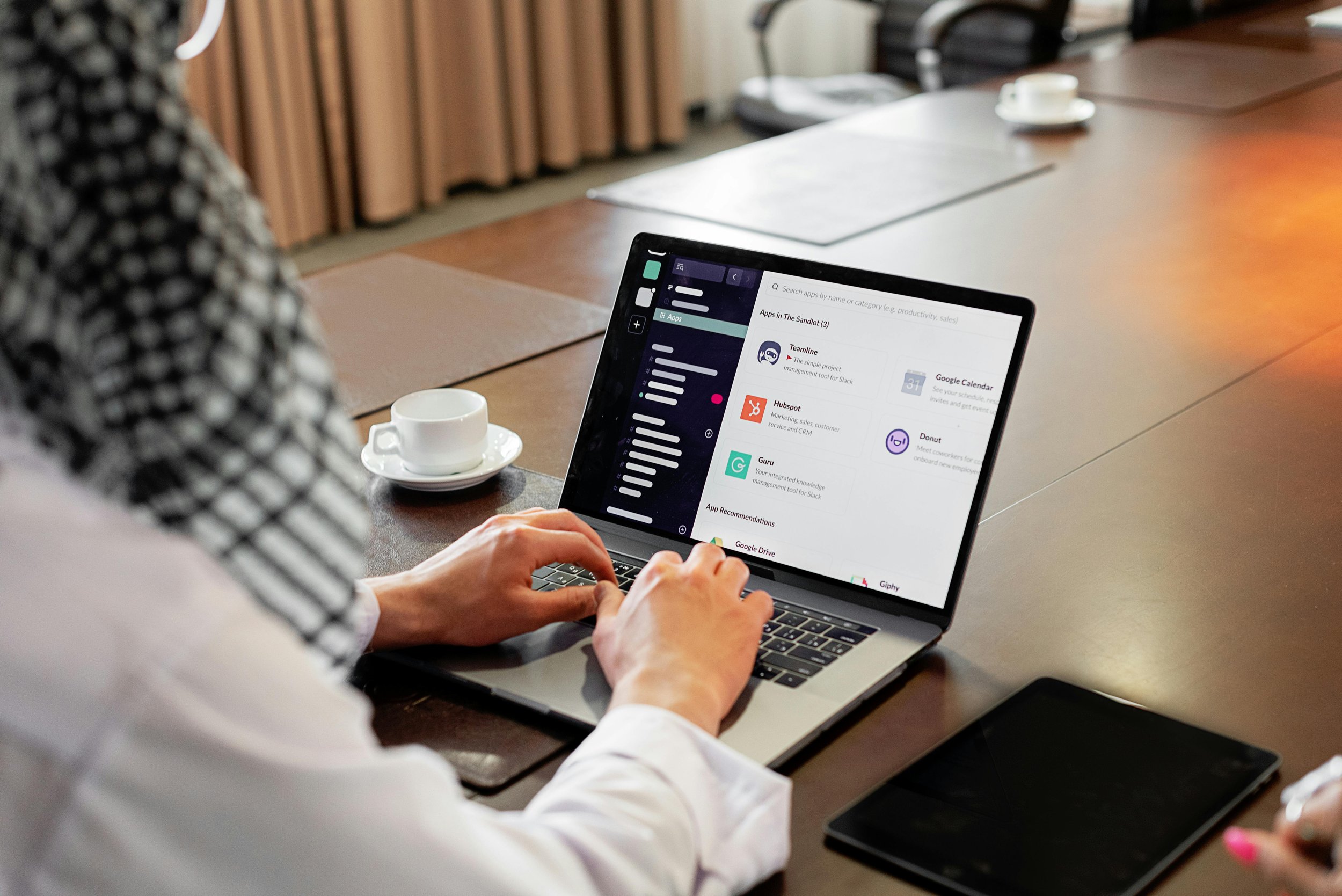
Photo from Pexels
What’s a communication protocol?
It’s basically a shared guide for how your team communicates. Think of it as a set of team agreements on when to email, Slack, call, or meet. Remember this is an internal document for internal use.
Formally, a communication protocol is a set of rules or guidelines that govern how team members interact— which channels to use, how quickly to respond, and how to escalate urgent issues. In my interview, Theresa described it as “a shared document” with “a set of agreements… somewhat democratically determined, that guides how you initiate communication, how you respond… and how you escalate communication.” In other words, it’s a playbook defining the who/what/when of team communication so everyone’s on the same page.
It’s a guide, not a gag order.
The word “protocol” might sound strict, but the point isn’t to police everyone’s every word. You can think of it, and treat it, as a “situational communication guide” to keep the tone soft and collaborative. The goal is not to create a rigid policy with punishments for breaking it – it’s to give your team clarity. No one’s getting fired for texting when they should have emailed, but having agreed-upon norms removes guesswork. Think of it as guardrails that keep communication flowing smoothly without stifling anyone’s personality.
Why Having a Protocol Matters?

Photo from Unsplash
Clarity beats chaos.
Without clear communication guidelines, teams often swim in confusion. We’ve all heard (or made) complaints like “I never got a response to my email” or “I didn’t know you needed that ASAP.” A protocol pre-empts that by spelling out expectations. When everyone knows, for example, that project questions go in the team chat (not long email threads) and that emails can sit for 24 hours before reply, work gets less stressful. It’s not just touchy-feely: 41% of employees say poor communication directly decreases their productivity. Conversely, teams that communicate effectively can boost productivity by up to 25%. Clarity means people spend less time wondering “Should I text or email?” and more time actually working.
Less frustration, more flow.
A good protocol reduces the little annoyances that can sour a workday. Ever felt your blood pressure rise because a coworker ghosted your message? Or gotten pinged in five places about the same thing? Clear norms help here, too. When everyone agrees on the right channel for each situation and the expected response times, you’ll see fewer crossed wires. There’s evidence that unclear communication isn’t just a minor issue – 30% of workers report being frustrated by unclear direction from their managers. Over time, those frustrations erode morale. Setting some communication ground rules can nip many misunderstandings in the bud and keep team relationships smoother.
Efficiency and focus.
By deciding which communications warrant a meeting versus a message, a protocol also protects everyone’s time. It helps differentiate between synchronous communication (real-time calls or meetings) and asynchronous communication (emails, chat messages people can reply to later). That means fewer unnecessary meetings and interruptions. As one Forbes report noted, effective communication practices can improve efficiency significantly, even yielding hard results like 25% higher productivity. The bottom line: when your team isn’t constantly distracted by mixed signals or waiting on replies, they can focus and get more done.
How to Create a Communication Protocol (Step-by-Step)

Photo from Unsplash
Ready to get started? The good news is you don’t need to be a manager to draft a protocol – anyone on the team can take initiative. Here’s a straightforward process to build one:
Gather your team’s input and list your channels.
Start by taking stock of how your team currently communicates. Make a list of all the communication channels and tools you use (email, Slack/Teams, phone, text, Zoom, etc.). Talk to your teammates about their communication preferences and pain points. Theresa emphasized the importance of self-awareness here: “I have a strong preference for typed asynchronous communication. I’m realizing that that has places where it’s most effective and places where it’s not.” In other words, get everyone to share what works for them and where miscommunications happen.Define the purpose of each channel (and expected response times).
For each tool on your list, agree on when and how to use it. For example: “Use the team chat for quick questions or updates that need a same-day response. Use email for longer discussions or anything that can wait 24 hours.” Be as specific as possible. Along with usage, nail down expected response times: e.g. Slack messages should be answered within a few hours during work hours, emails within one business day. This clarity sets expectations: if I Slack you at 10am, I know whether I should expect an answer by lunch or if tomorrow is perfectly fine.Establish urgency levels and escalation paths.
One of the biggest sources of stress is not knowing what’s truly “urgent.” This came up twice on the show, once in the discussion with Maura Thomas, and again with Theresa, so I think of this as doubly important. As you create your protocol, define what counts as urgent and how to escalate. Decide as a team what an “emergency” looks like in your context (e.g. a system outage, a client crisis, a same-day deadline issue). Then outline the steps to escalate communication if something urgent arises or if someone doesn’t respond in the normal timeframe. Rather than slapping an “emergency” label on everything, think in terms of escalation levels. “Maybe it’s Slack first, and if you don’t get a response in X hours, then escalate to a phone call.”Document it in a simple, shareable format.
Now take all these decisions and write them down in a clean, easy-to-use document. A simple start would be a basic two-column table: the first column lists the communication channel (e.g. “Email” or “Team Chat – #general channel” or “Phone call”), and the second column describes how we use it. Include a note about response expectations for each channel if relevant. At the top of the doc, you might add a short intro explaining this guide is for your team’s communications and was created with everyone’s input. At the bottom, it’s wise to acknowledge that exceptions exist – no protocol covers every scenario.Get agreement and finalize it together.
Once you have a draft, share it with the whole team for feedback. This step is crucial for buy-in. Adjust the guidelines if needed so they’re actually workable for all. In the end, everyone should nod and say, “Yes, we agree to do our best to follow this.” Finally, put the document in an easy-to-find place (like your shared drive or wiki) and communicate it out. Congratulations, you’ve now got a team communication protocol!

Template You Can Use To Get Your Started.
Making the Most of Your Communication Protocol

Photo from Unsplash
Lead by example and keep it visible.
If you’re a team lead (or even just an enthusiastic team member), model the behaviors in the protocol. Refer to it when deciding how to contact someone: “I chose to email this request because our protocol suggests Slack is just for quick questions.” Make the document easily accessible for yourself. Consider a brief refresher in team meetings. Add it to new-hire onboarding materials. Be a “chief reminding officer” — gently repeating expectations until they become second nature. In the beginning you’ll be changing the culture. Patience is key.
Encourage team adoption (and handle outliers privately).
Change can be hard, especially if people have been set in their ways. Encourage everyone to give the new protocol a try for a few weeks. Discuss how it’s going, and invite feedback. Positive reinforcement helps. If someone consistently goes rogue, handle it with empathy. A friendly nudge is often all that’s needed.
Be flexible for remote and hybrid teams.
In remote or distributed teams, a communication protocol is even more critical. Remote teams should pay special attention to time zones and asynchronous communication. Encourage use of statuses so colleagues know when not to expect an immediate reply. Little additions, like “Assume positive intent in messages,” can go a long way for remote team harmony.
Extend it beyond your team when needed.
A communication protocol isn’t just an internal tool; you can adapt its principles for working with other groups, clients, or vendors. When starting a cross-department project, consider having a mini communication protocol for the project team. If you work with clients or outside partners, you can set expectations upfront. I’ve found that many clients appreciate being told, “For anything urgent, call my cell; otherwise email me and I’ll reply within one business day.” Clear communication about communication can set the right expectations from the start.
The takeaway:
Don’t leave team communication to chance. A little upfront effort creating a communication protocol can pay off in a big way. It’s about reducing friction and misunderstandings so that work (and life) gets easier. When your team has clear norms, you spend less time putting out fires or feeling frustrated and more time in the productive “flow” state. Even better, you make space for the human side of work – trust, respect, and empathy grow when people aren’t constantly annoyed at each other’s communication habits. Whether you’re leading a distributed team or just trying to make your day less hectic, consider giving a communication protocol a try.
It might just be the simple win that propels your team’s productivity – and sanity – to the next level.
References:
LaunchNotes – “Team Communication Protocol” (definition of team communication protocol)
Sociabble – “15 Workplace Communication Statistics You Need to Know”, 2023. (Effective communication boosts productivity by 25%)
Pumble – “Workplace Communication Statistics (2025)”, 2025. (Poor communication reduces productivity for 41% of employees)
Harvard Business Review – Tsipursky, G. “Poor Communication May Be Slowing Down Your Team”, Oct 2023. (30% of workers frustrated by unclear communication from bosses)
Productivity Gladiator® – “Your Communication Protocol Can Make or Break Your Team’s Productivity” . (Guidance on creating and adopting team communication protocols)

I’m Brian. At age 4, I was diagnosed with insulin dependent (type 1) diabetes and told that my life was going to be 10-20 years shorter than everyone else. As a kid I took time for granted, but now as an adult, time is the most precious thing that I have. After spending a career hands-on in the trenches as a leader at all levels, I now train Productivity Gladiators to level up their careers. Graduates wield superpowers in time management, practical leadership, communication, & productivity. If what you’ve seen here intrigues you, reach out, let’s chat!
“Time is the currency of your life, spend it wisely.”

Keeping Lists! Which Ones and Why Bother?
Lists can be your savior! Let’s talk about how. Ever been in these situations?
Your partner looks at you and says “Where shall we go out to eat tonight?” You look back at them, drawing a blank, just shrug your shoulders, “I don’t know, where do you want to go?”
You find out school is cancelled for the day, the kids run to you saying “Yay, no school today! What are we gonna do?!”
These lists are not actions-to-take as much as they’re ideas-to-remember.
Here’s a bunch of lists people have found helpful.
Lists can be your savior! Let’s talk about how. Ever been in these situations?
Your partner looks at you and says “Where shall we go out to eat tonight?” You look back at them, drawing a blank, just shrug your shoulders, “I don’t know, where do you want to go?”
You find out school is cancelled for the day, the kids run to you saying “Yay, no school today! What are we gonna do?!” You suddenly can’t come up with any ideas…?
It’s your parent’s birthday party next week. You need to get them something. You can’t come up with anything? Darn it dad, why is it so difficult to think of gifts for you!?
Your boss emails, “we need to submit our upcoming training and travel budgets, can you fill in what you need by Monday?” You spend hours coming up with something.
“The biggest lie I tell myself is ‘I don’t need to write that down, I’ll remember it.’”
-cover of a notebook on Amazon-

If you keep a list, thoughts become easy to remember and no longer cloud your mind. Keeping lists will help you live your life in a more organized manner. It enables you to divide and even reorganize your thoughts into smaller chunks for better prioritization and execution. In addition, if the lists are actions or activities, it can provide motivation and give you a sense of fulfillment as you check them off.
As humans, we all have the tendency to forget things. According to Elizabeth Loftus, a well-known contemporary psychologist and memory researcher, in her study about why people forget, people tend to lose information because of ‘encoding failures’, preventing bits of thoughts from entering long-term memory. If you write down important stuff the moment it crosses your mind, you won’t have to juggle it in your head with everything else.
“We spend our time forgetting what we ought to be doing, and what we’ve already done. Lists provide support, backing up these things we’ve been unable to memorize”, says psychoanalyst François Leguil.

We should clarify the lists we’re going to talk about here. These lists are different from a “to-do list” which contains actions you need to take. These are not actions-to-take as much as they’re ideas-to-remember. They are collections of thoughts, many of which people may be “put on the spot” to recall.
Here’s a bunch of ideas of lists that people have found helpful. People update these lists regularly, whenever something comes to mind, they’re “living, breathing” lists:
Packing List - There may be several of these in one place.
General overnight trip packing list,
bike trip packing list,
backpacking adventure packing list,
work trip list,
band/performance packing list,
and more….
I’ve found it helpful to keep a section at the top of these lists for the few extra things I need to remember for the upcoming trips, just write them down as they come to mind in the weeks before the trip, “That’s right, I need to remember to bring ____.” With these lists, now I never forget to pack anything and I avoid having that moment where I’m standing there before I leave, racking my brain, “What am I forgetting?” If you do forget anything, add it to the list, and you’ll never forget it again.
Books To Read - You get recommendations from friends, podcasts, courses, etc. I often draw a blank on what they were when I’m actually shopping for books. Not anymore!
Movies To See - Same reasons as Books To Read above! Also, because significant others and/or your family will love it that you wrote it down and remembered that movie you were talking about watching from before when you were discussing it.

Shopping List - What do you need from the store? For you it may make sense to separate this one into categories or even specific stores. Personally, I separate groceries, clothing, and household supplies on mine. I recently started keeping this list on Amazon’s Alexa or Google Home, so now I can just tell the device to “add _____ to my shopping list.” I can also pull it up on my phone or computer from anywhere, any time. It’s so convenient!
Take The Kids - A running list of what to do with the kids if they have a day off. May be a good idea to separate ideas into indoor and outdoor activities so this list is useful in all weather situations.
Gift List - What do you want for your birthday? For the holidays? What do your family members want? Keep this running list and update it whenever something comes to mind!
Bucket List - The life experiences you’ve always wanted. Places to travel to, vacation spots, things to do, post pandemic ideas, etc. I keep 2 sections of this list, one for local items, and one for items which would require travel.
Restaurants - I recommend 2 sections to this one. One for the restaurants people tell me about that I want to try, and the other is for the “go-to” restaurants that I love. The go-to restaurants section has been great for special occasions, or if a friend comes to town and asks for recommendations, I’m always ready with all my favorite ideas!
Date Ideas - They say no matter what stage of your relationship you’re in, you should never stop dating. Write down all the ideas you hear about, then when you’re looking for ideas, you’re ready.
Party/Event Prep - Gonna have people over? Or do you help host parties often? The supplies are often similar each time, so write this down, it’s like a checklist, so you know you’ll have everything, every time.
Change Mailing Address List - This has come up most often with college kids and young professionals that have moved frequently. There’s 2 sections to this list. The top section is the list of all the addresses you’ve had and the dates. The bottom section is a checklist of all the places that have your mailing address. This way when you move, you have a list of all the places/people to contact or the websites you need to go to and change your address in your profile on their website. You may not use this list often, but when you need it, it’s a lifesaver to have!
Go-To/Easy Meals To Cook - That moment when you realize you’re hungry. And you walk into the kitchen, maybe open the fridge and look inside, and wonder what to eat. These should be the go-to easy meals to cook which you enjoy and you feel good about!
Recipes to Try - This list may go along with or be a part of the above, but when friends share recipes, keep these thoughts together in one place so you can easily get back to them and try them. Also, if there’s any recipes that are real winners, have a place for those too! I’ve found Pinterest to be my favorite place for these, I have separate boards for types of dish and for the winning recipes I’ve tried and would make again!

Relationship Stuff - This list will evolve throughout your life.
When you’re single - It can be so helpful to have written down what you’re looking for in a significant other, why you weren’t compatible with past partners, and what did you learn from them for future relationships.
When you’re in a relationship - Keep a list of all the reasons the things you love about that person. Also, this is a good place to write down an idea if there’s something bothering you about your partner so you can get it out of your head, refer back to it if needed, and write out what you need to say to your partner if it keeps bothering you. This way you won’t blow up at them. It’s also good to review all the reasons you love them above while you’re writing out what’s bothering you. People lose sight of these reasons when they’re angry sometimes, so it’s good to refer back to them and remind yourself.
Home Improvement Projects - This is for all those home improvements you want to do. Write them down, so you have them when you’re ready.
Goals - What are the certain things you’re working toward? The best goals which are most likely to be hit are the ones you’ve written down.
Daily Reminders - Anything you need to remember daily?
Fitness - This may include the goals you’re working toward, or exercises and workouts you like, or more. Get them out of your head.
Trainings to take - At work, what are the courses you’d like to take?
Business Ideas - If you’re one of those entrepreneur types, sometimes you have ideas. Write them down as they come to you. This website was one of mine.
Hey Boss (for the next time you see them) - Inevitably, there are things you need to talk to your boss about, but it’s not always right to send an email about it, it would be better to discuss next time you see them or meet with them. Don’t forget!
Big Life Goals - Some people have a vision board which works for this, but if you’re not one of those people, definitely have a "Big Life Goals” list. It helps to review it every couple of months to see if you’re on the right track. Having it all written down helps to keep on track.
Icebreakers/Conversation-Starter - Works great for work functions, dating, parties and events, zoom calls, and more.
You might have others come to mind! If you want to share them I’d love to hear them, leave a comment or send me a note! These are only some of the examples. The lists themselves may be different for you, but the concept of writing all of them down is important to implement. Try it. You may find yourself a little more relaxed, now that you’re not spending energy or stressing trying to remember everything!
Where should you keep all these lists? It’s up to you. Wherever it is, you just need to know right where it is, so you can go straight to it. I often suggest solutions which are “in the cloud” so you can pull them up on any of your devices and any computer anywhere. That said, notebooks and marker boards may work for you too. For me, I mentioned above how my shopping list now lives on Alexa, and my recipes have moved to Pinterest. For most of the others, since I’m a gmail user, I use Google Drive/Docs. I also recommend Trello, Evernote, and the Notes app on Apple. All of these are free to use. Find the one(s) that work best for you and start writing it all down!
“There is something so powerful about getting your thoughts on to paper. Write it all down, and feel the stress fade away.”
Subscribe if you don’t already! Get these nuggets of knowledge in your email automatically so you don’t have to go looking for them!

I’m Brian. At age 4, I was diagnosed with insulin dependent (type 1) diabetes and told that I was going to have a harder life that was likely 10-20 years shorter than normal. I’ve lived my best life every day since then, because you only get one chance to live it. I created Productivity Gladiator because I saw what a difference it made to share small and specific actions you can take right now, right away, to achieve better work life balance, be more productive, better manager your time, and live your best life right now not wait until retirement. I want you to start doing the things you WANT to do, not get stuck chasing what you NEED to do. If any of this resonates with you, send me a note. It brings me joy to share this passion with you.
A Few To-Do List Tips & Tactics
To-do lists can be daunting. Do you feel like you’re getting anywhere with them? Do you feel overwhelmed when you look at yours?
Here’s some tactics and best practices which may help!
-Categorize Your Lists…
To-do lists can be daunting. Do you feel like you’re getting anywhere with them? Do you feel overwhelmed when you look at yours? Here’s some tactics and best practices which may help!

The concept of a To-Do list isn’t new, and with the advent of smartphones, many of us have moved them from paper to electronic and the “cloud”. If you have one, and use it regularly, it’s worth congratulating you on that. By writing it down, you get it out of your head, and the chances of remembering to accomplish everything increase significantly. I was reading an interesting article which shared the statistic that people forget 50% of the content of a presentation within 1 hour. Your brain can’t remember it all. By writing it down, you’re ahead of the game more than half the time! Here’s a few more to-do list tips and tactics.

Categorize Your Lists - Important business tasks, and remembering to do the laundry, should not be on the same list. Just one big list ends up being overwhelming. You need a few different categories (but not too many either). Often the below are a great place to start:
—Personal Now - Stuff in your personal life that you can act on right now if you have a few minutes.
—Work Now - The action items you need to do for work that you could act on right now if you have a few minutes.
—Waiting/Follow-Up - Actions you can’t take right now, perhaps because you’re waiting on something or someone or it’s something you need to follow-up on, but it’s important not to lose track of these, they’ll likely be moved back into the ‘Work Now’ or ‘Personal Now’ lists at some point in immediate future.
—Someday/Maybe - Actions that you’re not sure if or when you’re going to act on, so you write them down to get them out of your head. This way they’re here for you to refer back to in the future.
Personal Lesson Learned: I spend most of my time focused day-to-day in the ‘Now’ lists, so I’ve found it’s good to have a calendar or email reminder to myself, once per week, which reminds me to review all the other lists and make sure nothing from the ‘Waiting/Follow-up’ and ‘Someday/Maybe’ lists need to be moved into ‘Now’.‘Now’ lists are actionable right now - Each item on your ‘now’ lists should be small actionable items you can execute on right now. If you have a broad item, like “Write a book” or “plan a vacation”, it’s too big to really accomplish it ‘right now’. The easy way to break them down into small actionable items is to think about the ONE thing you could do right now to move forward toward that task, even if it’s small. For “write a book” that might be “write the introductory paragraph” or “write the outline”. For “plan a vacation” it may be “pick the dates on the calendar,” “pick the destination,” “book the flights,” or “contact the travel agent”. This may mean that when you cross that item off, you may need to add the next ONE thing you need to do. That’s a good thing! You’re moving forward!

Knowing how to prioritize - There’s so many items on your to-do list, what do you do first? When you are faced with this challenge, a simple way to make decisions is the Eisenhower Decision Matrix model. It is a tool that aids in your decision-making and helps decide what to do first. In most cases, in the accompanying figure, you’d start with the green DO tasks which are both important and urgent. Once those are complete, try to focus on the blue DECIDE tasks which are important and not urgent. These often will become urgent in the future if you don’t work on them, so be proactive and plan to work on them now. Not Important red and gray categories often just fit in wherever they can.
Different approaches work for different people. These are some of the tips that seem to be most helpful during discussions on to-do lists that I wanted to share in case they’re helpful to you!
**The category names ‘Waiting/Follow-up’ and ‘Someday/Maybe’ I first heard about when reading the book, Getting Things Done, if you’re looking to really dig into your todo list and productivity some more, and haven’t recently read it, I recommend it! Great ideas in that book!
Subscribe if you don’t already! Get these nuggets of knowledge in your email automatically so you don’t have to go looking for them!
I’m Brian Nelson-Palmer. I created Productivity Gladiator because I saw what a difference it made to share very small and very specific actions you can take right now, right away, to be more productive. They make a difference in your life, little by little, and the impact grows and grows. I want you to start doing the things you WANT to do, not get stuck chasing what you NEED to do. If any of this resonates with you, send me a note. It brings me joy to share my Productivity Gladiator passion.

Turbocharge Your Focus & Productivity Through Music
Ever been behind, and wish you could get “in the zone” to really crank up your productivity? With the right kind of music, you may see a huge difference!
With a work day requiring so much from us, it’s frustrating how often we get distracted. Even with the knowledge that we have a lot to accomplish, or the pressure of a deadline, the distractions continuously pull you away, keeping you from accomplishing what you want to during the day…

Ever been behind, and wish you could get “in the zone” to really crank up your productivity? With the right kind of music, you may see a huge difference!
With a work day requiring so much from us, it’s frustrating how often we get distracted. Even with the knowledge that we have a lot to accomplish, or the pressure of a deadline, the distractions continuously pull you away, keeping you from accomplishing what you want to during the day.

Some people, myself included, have discovered listening to music perks them up, keeps their brain working, and helps them focus on the task at hand, thus, helping them to be more productive.
What does the research say?
A research study by Nature Neuroscience, says “Music, an abstract stimulus, can arouse feelings of euphoria and craving, similar to tangible rewards that involve dopaminergic system.” In short, listening to music leads to dopamine release in our system, a reward of sorts.
A study about the effects of music in our concentration was done and published by Tram Nguyen, a scientist on the Cambridge Brain Sciences team. It’s called “Mind your music: The effects of music-induced mood and arousal across different memory tasks”. The study was done by letting participants work on memory tasks while listening to music of different types. It found that a person’s memory performance is at its best while listening to low arousal, negative music - one with a slow tempo.
In addition to that, there are other studies that also show proof that music’s effect to our focus may vary according to our taste in music. Our personal preference contributes a lot to music’s ability to perk us up and enhance our efficiency. For some, it may be the calming sounds of nature or classical music, or it could be music of any genre as long as it’s handpicked by them. While for others, it could be music scientifically arranged to decrease distraction and spark creativity.

Photo taken from Focus@Will’s twitter post.
What Kind Of Music?
For me, I’ve noticed that music is generally effective at putting me in a good mood. To take it one step further, it’s music without words or lyrics that really enhances my ability to concentrate. For a while, I’ve had a “smooth jazz” playlist, that upbeat “Kenny G” saxophone jazz which worked fairly well. Recently, I’ve been experimenting with a playlist/app/service called ‘Focus@Will’ which provides thousands of hours of exactly this kind of music, and the improvements in my focus and productivity have been so profound that I needed to share it with you. I’m listening to it right now as I write this, and I feel like I’m in the zone, cranking through this post! Focus@Will is a music service producing playlists based on human neuroscience. The company claims that with Focus@Will, people will be in their most focused state longer than usual, and helps them stay there. This audio technology works by balancing ‘distraction’ and ‘habituation’ in your mind, keeping you focused.

Here’s what they say, and what I’ve experienced:
Music has been used across cultures for millennia to put people’s minds in specific states: only recently have neuroscientists discovered that this effect is due to the broad impact of sound on neural circuitry across the brain – not just in the auditory cortex, but in all areas of the brain, including areas that are important for memory, analysis, and creativity. Focus@will uses the brain-shaping features of sound to keep your mind from avoiding two undesirable states: distraction and habituation.
You already know about distraction – it’s what happens when you have a video on in the background, or your kid is crying, or you turn on the radio while you’re working. Part of your brain is focused on the distractor, and you can’t concentrate on your work. But what about habituation? Habituation is the other extreme – your mind gets bored with your surroundings (environmental habituation) as well as whatever you’re working on (goal habituation). Because your mind seeks novelty, habituation leads to checking your social media, opening your email, or calling a friend rather than making continuous progress on the screenplay or code you’re writing.
Keeping your mind from being distracted away from your work while simultaneously keeping you from habituating to your work is the key to focus@will’s audio technology. Without sharing our “secret sauce,” we can tell you that we do this by making sure that each piece of music is related to the previous piece in a way that keeps you from being distracted by the changes, but that each piece of music is different enough from the previous piece so that you don’t habituate to the music or your goal. In this way, we balance your mind between the two poles of distraction and habituation, keeping you focused on your work.
Give It A Try!
Don’t take my word for it, try it out! Here’s the Spotify playlist I found which has been a game changer, called Focus And Flow - high intensity.
Also, another one I use frequently which has heavier beats (slight techno vibe) called House Focus by Spotify.
Here’s a couple of youtube samples as well in case you’re not a Spotify user.
Another one I use frequently which is uptempo instrumental hip hop beats called Focus Flow by Spotify.
Below I’ve embedded a free Youtube video below to try as well.
Here’s the link to a service that produces and offers it’s own version of this music:
https://www.focusatwill.com
Next time you’re feeling out of focus and unmotivated, try one of these playlists and see how far you’ll go from zero to finished tasks.
Subscribe if you don’t already! Get these nuggets of knowledge in your email so you don’t have to go looking for them!

I’m Brian. I created Productivity Gladiator after I saw what a difference it made to share very small and very specific actions you can take right now, right away. They make a difference in your life, little by little, and the impact grows and grows. I want you to start doing the things you WANT to do, not get stuck chasing what you NEED to do. If any of this resonates with you, I’d love to talk with you or your organization about it, send me a note. Thanks for letting my share my Productivity Gladiator passion with you.